
Waltham nonprofits team up for landmark study showing access to fresh produce improves health
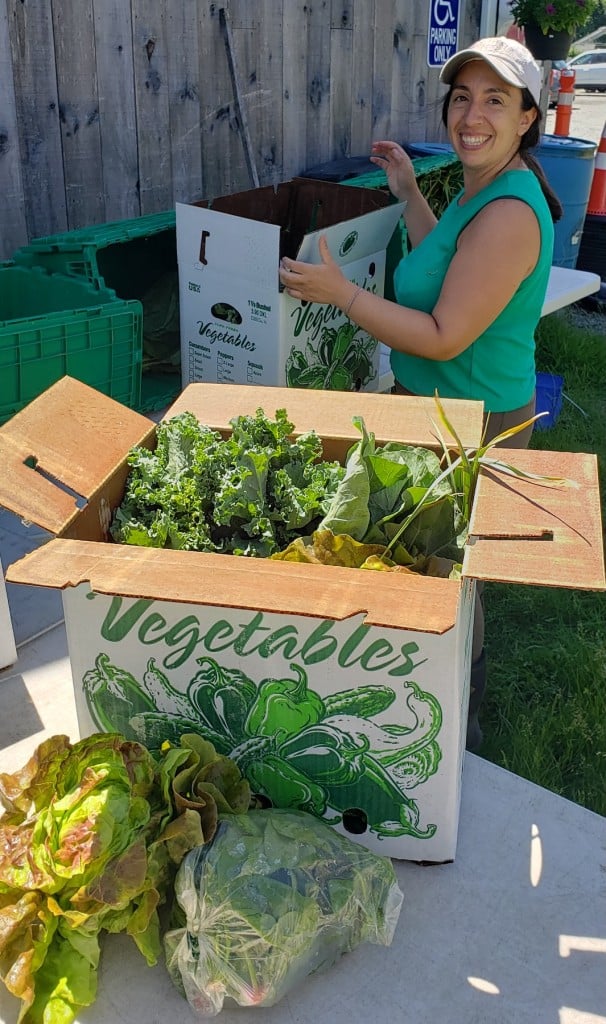
Getting your prescription filled from a farm may seem incongruous, but that’s the strategy behind the VegRx program at Waltham Fields Community Farm, and participants say this initiative is making them feel healthier.
Now for the first time solid data demonstrates the effectiveness of VegRx, thanks to a collaboration between researchers at Brandeis University and farm staff. The data is highlighted in a newly published academic paper.
Sara Shostak, a medical sociologist and professor at Brandeis, and her co-authors said their study is the first to take a comprehensive look at the perspectives of farmers, clinicians and participants in a program that treats produce as a prescription.
Although the value of healthy diets is well established, the concept of treating food as medicine available through a prescription from a healthcare provider is relatively new, the authors noted. The initiative at Waltham Fields takes place in a larger context recently reported by the Greater Boston Food Bank: For the second year in a row, nearly 2 million adults in Massachusetts either cannot afford enough to eat or worry about the source of their next meal.
Staff at the Beaver Street farm piloted the VegRx program in 2020 in collaboration with Charles River Community Health, said Stacey Daley, executive director of the farm.
The farm’s staff wanted to establish a direct connection between the farm and the people who had received prescriptions from clinical staff at the Charles River facility and get away from the usual practice of distributing vouchers for people to use to buy produce at supermarkets or bodegas.
“We wanted everyone in the program to be able to be present here” and to feel the soil, hear the birds, breathe the fresh air, said Daley. “We still have people who see this brick façade [of the former Waltham Field Experiment Station] and don’t know there is a farm back here.”
Laying the groundwork
Farm staff initially had a lot to learn about logistical and transportation issues, refrigeration when needed, and barriers to accessing food. For example, they couldn’t assume that participants could get to the farm for pick-your-own opportunities.
But they have adapted to many challenges and established good, personal relationships with the people they serve.
Currently, 30 people (mostly Hispanic and Haitian-Creole women) receive a weekly box of fresh vegetables and fruit as well as recipes during the 20-week program. All of the participants have been diagnosed or are at risk of a diet-related health condition and are considered to be low income.
Marina Vergara, community food access coordinator, runs orientation for the pick-your-own part of the program. Each participant receives a welcome bag, donated by tax compliance company Sovos (whose chief of staff, Laura Handler, is president of the Waltham Fields board of directors), that contains three types of beans, rice, garlic, quinoa and various kitchen implements such as child-safe knives, a cutting board, containers and reusable utensils.
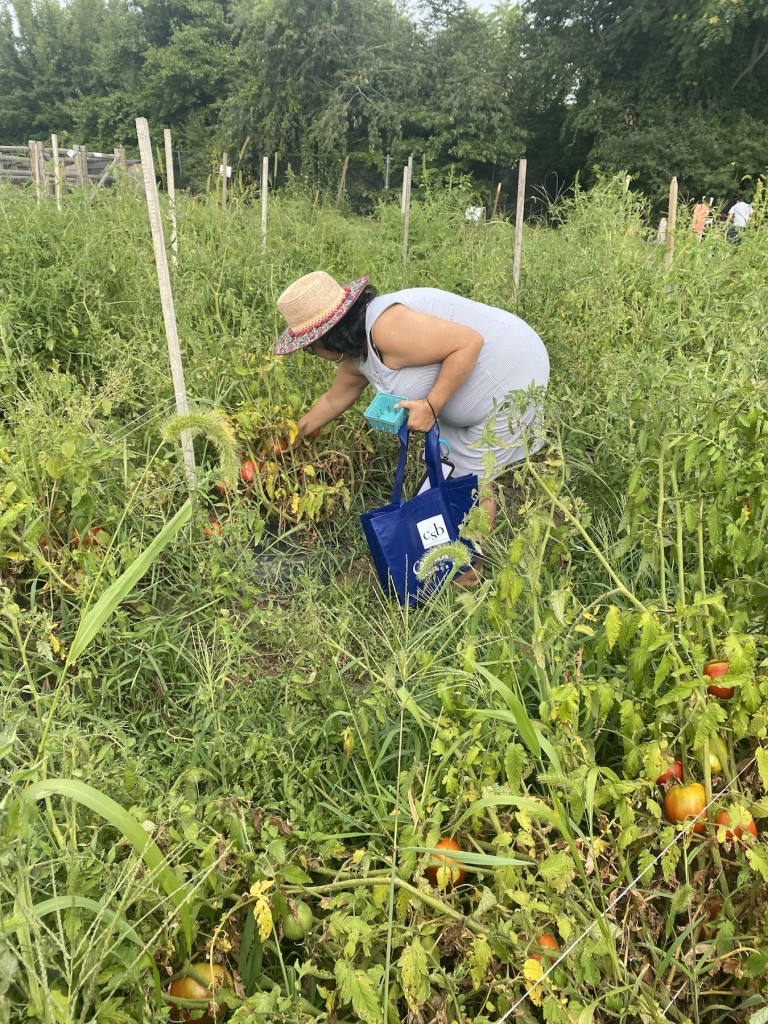
Participants and their families come to the farm to pick crops such as cherry and plum tomatoes, hot peppers, beans, favas, peas, dill, parsley, mint, tarragon and thyme.
“My favorite is the salad turnip,” Vergara said. “People say, ‘What is this?’ I say that it’s like a radish, but less spicy.”
Connecting land and people
Shostak has long been interested in the farm, beginning in 2006 when a colleague brought her there and introduced her to the CSA program.
“I still remember being in the field picking green beans and understanding that I could have a sense of place and a sense of connection to the land and the people who worked at the farm,” she said. “I love this farm. I’ve been inspired by its work over time.”
The opportunity to make a scholarly contribution to the VegRx program appealed to her, and she thought it would be important to showcase the contribution of the farm’s unique approach.
She taught a capstone course during the spring of 2024, in which five groups of students interviewed partners of the VegRx program, analyzed surveys and studied other aspects of the program. Three students, Anna Kehoe, Jolie Black and Rachel Bindman, worked with Shostak after the course and their graduation to develop the paper “Growing community, food sovereignty, and health: A case study of a farm-based produce prescription program,” published in the Journal of Agriculture, Food Systems, and Community Development (May 31, 2025).
“We did see really dramatic improvement in participants’ self-reported physical and mental health,” Shostak said.
Their survey data showed, for example, that at the beginning of the program only 39% of participants reported eating leafy greens five to seven times a week, but by the end of the program that figure increased to 74%.
Overcoming barriers and stereotypes
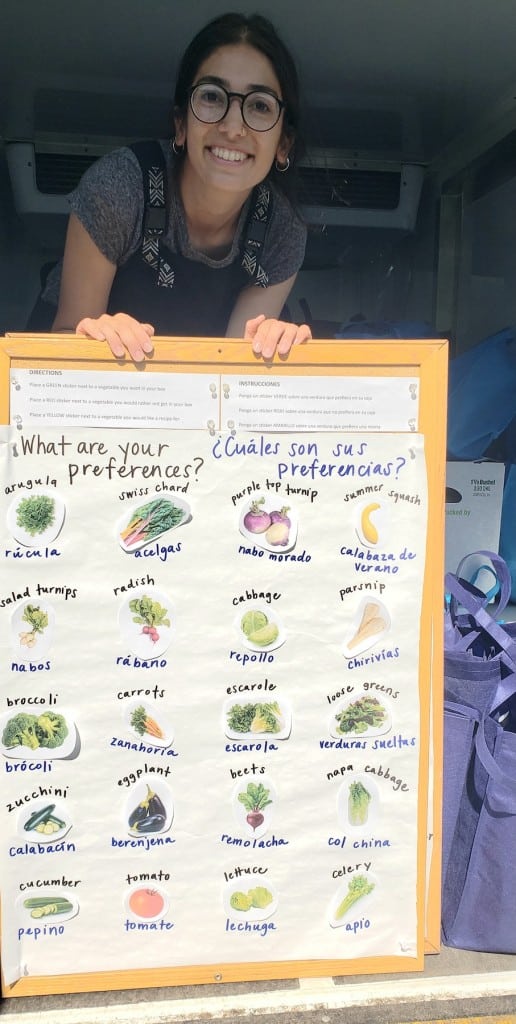
Shostak noted that participants in this program are clearly comfortable in the kitchen and have important food traditions associated with the families and their heritage.
“They are savvy in the skill to incorporate new kinds of produce into dishes they make. That, to me, was an intriguing and unexpected finding,” she said.
Shostack added that their work upends stereotypes that paint certain people as not caring about healthy food and not making time to work on it.
“Part of what this program shows is, no, the barrier is access to the food. This group of people at risk of diet-related illness absolutely care about the food, know about the food and are excited about it. If you give it to them, they absolutely will use it,” she said.
Studies have shown a link between participating in a prescription food program and biometric indicators such as blood pressure, HbA1C and cholesterol, according to Shostak. But program designs vary widely, and it’s much more difficult to generalize about all prescription programs.
“We know people feel better about their health,” she said. “I’m ready to call that a win.”
Building a sense of community has been an important goal of the program, and the farm staff look on VegRx participants as partners who can suggest new vegetables to try growing that are important in their cuisine and heritage. These include tomatillos, corn and watermelon.
The benefits of the VegRx program extend beyond the mental and physical health of the participants. The program provides social opportunities in an extended community and connects different populations of Waltham, which is part of the mission of Waltham Fields. This summer, for example, Brandeis University will provide an intern for the first time to enhance the pick-your-own program.
Funding is an important challenge, and in this regard the program has been fortunate. In addition to a five-year collaboration with Charles River Community Health, VegRx has had multiyear support from funders such as the Cummings Foundation and Mount Auburn Hospital. This support has provided stability for the program and enabled improvements year after year, according to Waltham Fields development director Amanda Smith.
Still, the program is not fully funded by external contributors and relies on contributions from Waltham Fields. “We recognize that for this program to sustain itself, we will need to secure additional funding,” Smith added.VegRx is one of several programs run by the farm. For more information, see the Waltham Fields Community Farm website.
Author

Comments (1)
Comments are closed.

Thanks to all for working to get solid data to back these ideas. The Waltham Farmers Market is also trying to increase accessibility to healthy produce thru their SNAP Match program, which makes a SNAP dollar go a little further.