
Conservation Commission loses agent
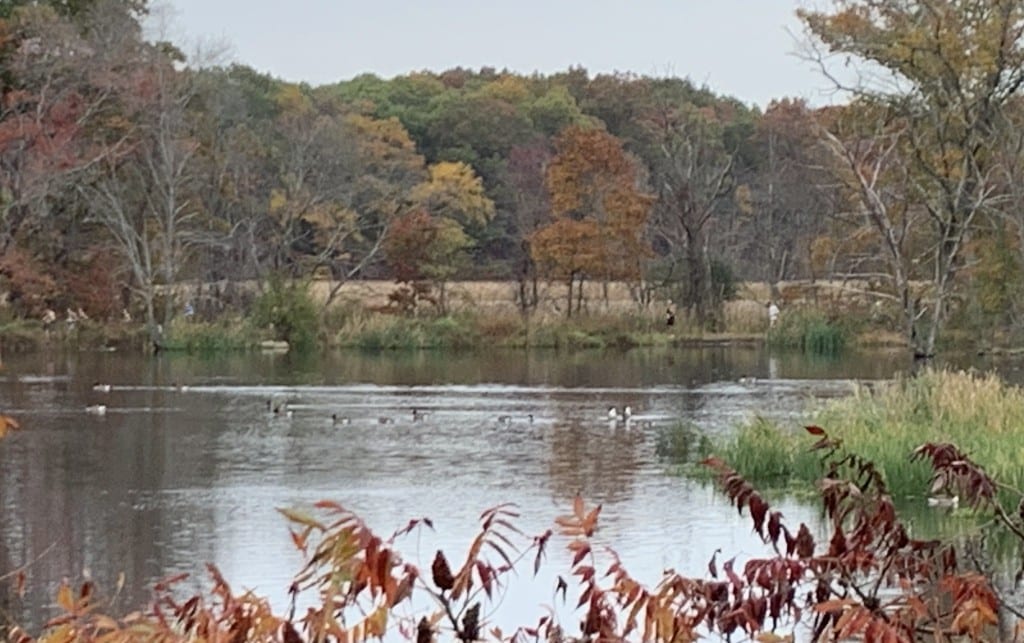
A staff vacancy has created challenges for the Conservation Commission, as the departure of the commission’s conservation agent forces its members to take on more responsibilities.
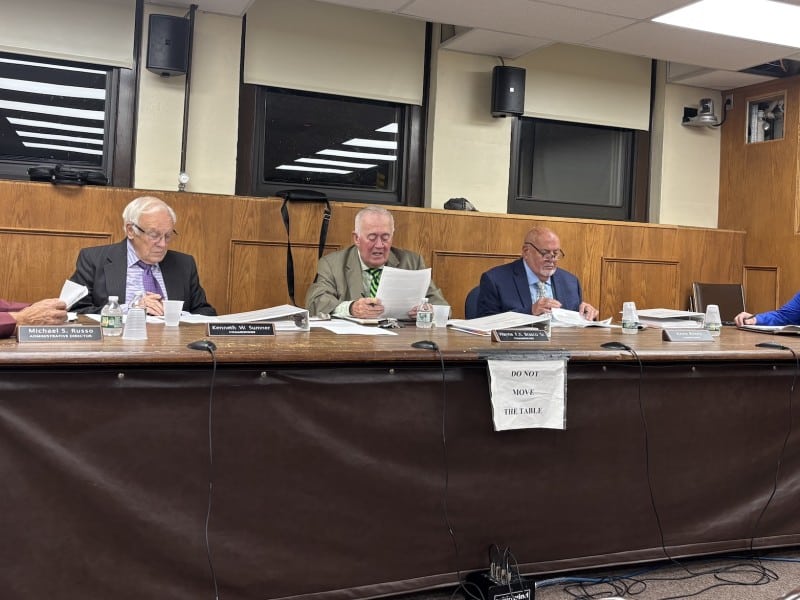
“Since the commission no longer has a conservation agent, the site visits will default back to commission members,” said Christopher Daly, the commission’s principal office assistant, during the board’s July 10 meeting.
The conservation agent helps the commission enforce the Wetlands Protection Act of 1972. The agent conducts site visits to prospective construction sites near wetland areas such as Beaver Brook and the Chester Brook Corridor to ensure that projects won’t harm the area’s ecosystem.
Alexander Sbordone, chair of the commission, explained that Meghan Sullivan left her role as the conservation agent because the city did not turn it into a full-time position.
Sbordone said the Waltham City Council last year had approved funds for a full-time conservation agent, but Mayor Jeannette A. McCarthy never signed off on the measure, so the money for the position was not allocated.
Sbordone said this funding issue remains a problem this year, explaining that funds were once again approved for a full-time agent but McCarthy has yet to sign off on allocating them.
Daly said that a report from the Auditor’s Department shows that neither the council nor McCarthy approved funds for a full-time position.
Sbordone said that this was a “discrepancy” and would work to get it resolved.
McCarthy told The Waltham Times that she had originally recommended budgeting for a full-time conservation agent position to the council, but later chose to change her recommendation to a part-time role.
McCarthy declined to share the reason why she changed her proposal.
The demand for an agent is high.
“The office has been incredibly busy,” said Daly. “We [have] had nine orders, certificates and determinations to issue since the last meeting.”
Additional commission action
Other notable items from last Thursday’s meeting are as follows:
- The commission issued a certificate of compliance for an issue with a body of water behind Waltham High School at 554 Lexington St. Commission members said the previous owners of the site had been dumping leaves into a stream on the property, causing concerns. The commission granted the city a certificate of compliance in 2021 after the issue was resolved, but the certificate lapsed this year. This new certificate shows that the city remains in compliance with environmental regulations.
- A Bentley University professor requested permission to place traps for Asian tiger mosquitoes around the Robert Treat Paine Estate. The traps will measure the species’ population in the area. According to the Center for Invasive Species Research, Asian tiger mosquitoes are invasive and can carry a variety of pathogens.
Disclosure: Christopher Daly, who is quoted in this article, is a volunteer copy editor for The Waltham Times. However, he had no involvement with the production and publication of this report.
Author

Comments (3)
Comments are closed.


I do not understand how the mayor has the authority to decide that full-time conservation position approved by the City Council should be treated as a part-time position. If the City of Waltham expects to find qualified personnel to fill important jobs, shouldn’t the wishes of the City Council, as indicated in the budget, be adhered to? Putting the burden of this job onto the shoulders of the Conservation Commission members is unfair. As a former Conservation Commission Chair In Connecticut, I know that serving on such a commission as a volunteer is a great deal of work and it should certainly be supported by paid staff.
Thank you for reporting on this important and avoidable problem. Competent local administration of the Wetlands Protection Act (or lack thereof) impacts all Waltham residents, due to the critical functions that wetlands serve for flood mitigation, wildlife habitat, natural beauty, and avoiding pollution of larger water bodies. Waltham, with its 2 part-time positions, has half the amount of paid staff time that our average peer cities and towns in eastern MA allocate towards conservation. Compounding the problem is the difficulty of retaining professional staff in part-time positions without benefits. The high turnover, combined with the fact that the city bureaucracy takes about 6 months to fill vacant positions, means Waltham’s actual staffing levels are often only half of the [already inadequate] amount listed on paper. With the City of Waltham’s $392,006,005 annual budget and 1,789 full-time equivalent employees (p. 130 of the most recent Annual Comprehensive Financial Report, FY 2023), it would be nice if even 1 or 2 full-time employees were assigned to work on conservation. The only conclusion one can draw is that the current Mayor does not want state environmental regulations to be enforced in Waltham, due to the constraints state regulations sometimes impose on municipal development projects. It’s harder to understand why she won’t allow the Conservation Commission to help clean up any of the long-neglected conservation land in the city (such as the Storer Conservation Land at the Paine Estate, which is specifically deeded to the care of the Conservation Commission), or exercise its fiduciary duty to put the Conservation Trust funds to use for public benefit. But these are positions she has been adamant about any time the Conservation Commission has offered to help take any initiative within its state-defined areas of responsibility. – Phil Moser, former conservation commission member 2015-2025, past chairman 2018-2024.
Not funding a full time conservation agent is a huge mistake and one only has to look at Kerrville TX to understand the importance of conservation based planning. In our case, wetlands should jealously guarded. A few things to know regarding flood prevention, which is important for a city on a river and the increase of super storms with climate change:
Wetlands are vital for flood prevention as they act like natural sponges, absorbing excess water during heavy rainfall and slowly releasing it, reducing the severity and impact of flooding. They can store large amounts of water, acting as natural reservoirs during periods of high rainfall.
The vegetation in wetlands helps to slow down the flow of water, reducing the speed and force of floodwaters.
Wetlands protect shorelines and riverbanks from erosion, preventing sediment from contributing to floodwaters.
By absorbing and slowing down water, wetlands can reduce the height and intensity of floodwaters.
The slow release of water from wetlands helps to replenish groundwater supplies, which can be important for maintaining streamflow and reducing the severity of droughts.
Wetlands in urban areas can help to mitigate the impacts of stormwater runoff and prevent flooding in densely populated areas.
Coastal Wetlands:
Wetlands along rivers and streams can help to regulate water flow and reduce the risk of riverine flooding.
Preserving and restoring wetlands can help to protect communities from the devastating impacts of flooding.
Protecting and restoring wetlands can be a more cost-effective way to manage flood risk compared to traditional flood control infrastructure.
Wetlands provide a wide range of other valuable ecosystem services, including water purification, habitat for wildlife, and carbon sequestration.
Wetlands play a crucial role in flood prevention by absorbing and slowing down floodwaters. Protecting and restoring wetlands is an important strategy for reducing flood risk and protecting communities. Let’s protect the tree canopy, wetlands and open space in our city to make sure that the Watch City is watching out for the future of the land we live on.