ZBA hears debate on rental rules, lodging house definition
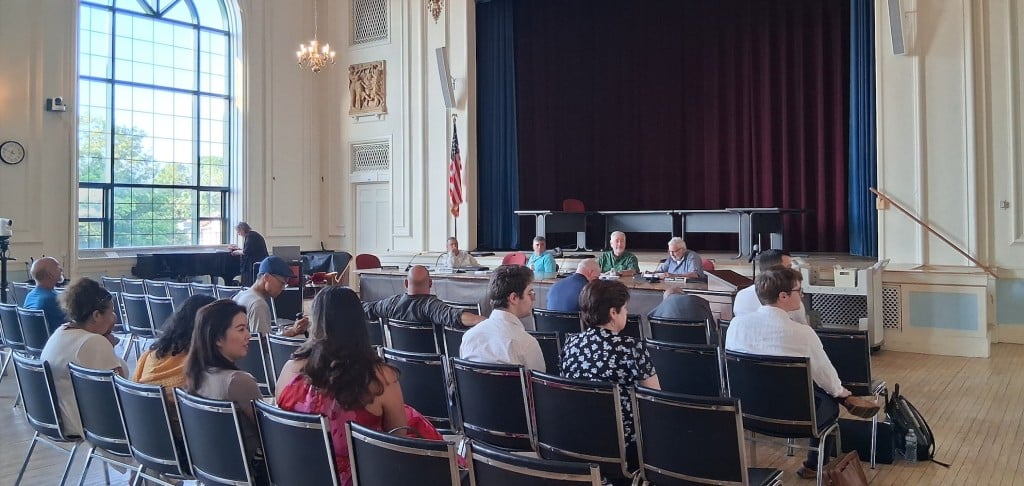
A landlord’s appeal of a Waltham Building Department decision on whether his properties are lodging homes set off a three-hour debate about housing rights and protections at the July 15 Zoning Board of Appeals meeting.
The landlord, David Schwartz of 25 Fuller St., is appealing eight cease-and-desist letters he received from the Building Department last November for rental properties around Waltham. Schwartz’s company, GradBnB, rents the properties to tenants that the company groups together through a roommate-matching service.
The Building Department’s letters assert that Schwartz’s properties, most of which are in Waltham’s South Side, have been being operated as illegal lodging houses. The department wrote that it made this determination based on online listings for each residence advertising individual rooms “to unrelated individuals.”
Section 3.26 of the city’s zoning code defines lodging houses as locations where “rooms are rented to four or more persons not within the second degree of kindred to the owner.” Waltham requires special permits for lodging houses and allows them only in districts designated as Residence C or Business A through C, including along long sections of Main Street as well as around Moody Street, Winter Street and Maple Street.
Schwartz’s lawyer, Michael Kelly of KSPR law, said Schwartz’s apartments are not lodging houses but rather should be classified as “dwelling units,” defined as “one or more rooms designed for… a place of abode by one person or by one family.” A family is defined as a domestic, permanent and cohesive “bona fide single housekeeping unit.”
Some current tenants of Schwartz’s properties testified at the meeting that they and their roommates lived, socialized and maintained their units together.
Kelly also cited the 2013 Massachusetts Supreme Court decision establishing that four unrelated roommates similarly renting an apartment together could not be deemed a “lodging house” under Massachusetts General Law, which Waltham’s zoning code definition draws from heavily.
Schwartz’s team clashed with the city on the pivotal parts of the lodging house definition and the motivation behind it.
Kelly argued that lodging houses were defined by renting individual rooms to tenants, claiming the short-term tenants they attracted were less desirable and the rooms weren’t maintained as well as they were when properties rented to long-term tenants.
Schwartz told the board that his tenants had access to the entire apartment in each case and are not allowed to add locks to internal bedroom doors.
However, City Solicitor Katie Laughman presented a report sent from Waltham Fire Department Deputy Chief Scott Perry to Chief Building Inspector Brian Bower that contradicted Schwartz’s testimony; according to the report, firefighters “needed specific codes to enter bedroom spaces” when responding to a fire at GradBnB’s 23 Washington St. property on July 8.
A tenant who lives in that building, Marco Bezzi, later told the board that was not true.
Schwartz said he has modified advertisements to no longer advertise single rooms at Bower’s request, noting that all new leases make it clear that roommates are jointly and severally liable for their units.
Laughman said the city’s lodging house rules aim to regulate the increased density that they create. She told the board that Schwartz’s renovations to the properties shrunk their common areas and greatly increased their bedroom capacity. She also said that the city “has been enforcing against the use of dwelling units for university and college housing since 1999.”
Roommate rights
Some 17 people showed up to support Schwartz’s appeal, with eight of them speaking about the implications that this case could have for housing rights in Waltham.
Tom Benavides, a policy coordinator with affordable housing advocacy group Waltham Inclusive Neighborhoods, also spoke to the board directly, saying, “[Living with roommates is] how people have always been able to afford living in Waltham … we can’t start saying that’s not allowed, because that’s insane. That goes against everything Waltham’s always ever been. And it’s just another step toward making us a million-dollar community.”
Benavides submitted to the board a petition signed by 37 Waltham residents in favor of overturning the cease-and-desist letters. WIN also posted about the issue on Facebook, writing that the case threatens the rights of people living with roommates and asking people to write to their city councilors.
Adam Powell of 102 High St. said he was concerned about what the Building Department’s action could mean for the current residents of Schwartz’s properties and Waltham tenants in general.
Because Waltham’s definition of lodging houses doesn’t directly mention density or number of bedrooms, “it feels like any decision you make [on whether this is a lodging house] is going to set a precedent with taking issue with smaller configurations of roommates as well,” he said.
Heather May of 41 Mokema Ave. argued that a decision that didn’t protect the rights of roommates, who can play a significant part in each others’ lives, was an attack on housing affordability for “chosen families.”
Schwartz said all GradBnB-associated properties received approval for renovation and occupation between 2016 and 2023 under two of the city’s former building inspectors and was told in inspections that his properties were compliant.
A dozen or so individuals, many of them residents in neighborhoods where Schwartz maintains property, shared their concerns about the density of those properties, problems with parking in the South Side and trash and noise disruptions, which some said had been increasing in intensity since Schwartz’s properties started operating.
Gail Drakos of 173 Adams St. said the traffic in the area has increased significantly as a result of insufficient parking at the buildings.
The hearing lasted nearly three hours, making it an unusually long ZBA meeting. Laughman’s appearance before the board to testify and to speak on Bower’s behalf was also unusual, according to ZBA Vice Chair Mark Hickernell. “In the two decades, give or take, that I’ve been on the Zoning Board … we never get the city’s attorney coming here and telling us what to do,” he said.
As discussion wrapped up, ZBA Chair John Sergi called for a board member to submit a motion for a vote.
No board member made a motion, so Sergi proposed a continuance to give the board more time to deliberate.
The zoning board then voted to seek additional legal advice from the city’s Law Department, a move that prompted an objection from Kelly, who said because Laughman had testified in front of the board, she would not be able to give them objective advice.
The board will take up this issue at its Sept. 9 meeting.
Author