
Zoning Board files for safe harbor against Chapter 40B construction
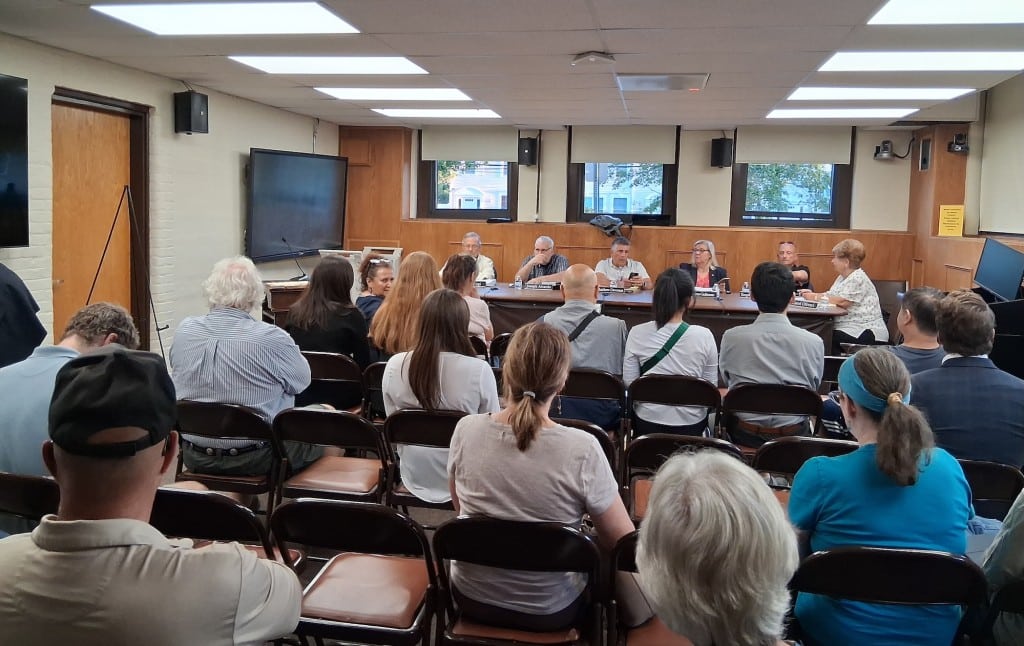
The City of Waltham has officially declared it meets the state’s affordable housing minimum to dismiss new residential construction permits through Massachusetts General Law Chapter 40B.
Chapter 40B allows developers to build housing in areas not zoned for residential use if they make enough of their units affordable. Under the law, the Zoning Board of Appeals in a city or town is charged with putting together a comprehensive permit for such developments, and has to meet a high bar to deny a permit as “inconsistent with community needs.”
Once the city meets one of the criteria for safe harbor status, however, the board no longer has to consider these applications.
On Tuesday, Assistant City Solicitor Michelle Learned asked the ZBA to stay a hearing for a new residential development on Totten Pond Road. The board is already considering two other Chapter 40B developments in this area in addition to a previously built development that opened earlier this year.
Learned said the city is filing for safe harbor on two grounds. First, the city’s legal department has determined 1.67% of Waltham’s total land area is being used for subsidized housing, which is above the 1.5% required to qualify for safe harbor status.
Secondly, Learned cited calculations by Waltham resident Sean Chen that showed that the city met criteria for temporary safe harbor status because of its recent progress on affordability.
The letter Chen provided demonstrated that in the last 12 months, a quantity of subsidized housing greater than 2% of Waltham’s total housing stock has been opened for occupancy. This comes from three buildings — the Alexan Waltham, The 305 and the Leland House — which collectively make up 593 units, equivalent to 2.24% of Waltham’s housing as of the 2020 census.
Learned spotlighted the city’s existing affordable housing ordinances, emphasizing that Waltham “cares about building affordable housing.” She also pointed out previous projects where she said the city and developers worked well together.
She expressed that adding so many residential units in the vicinity of Totten Pond Road, however, places a difficult financial burden on Waltham. Between the recently built apartment building The 305, the two nearby projects with ongoing hearings in front of the board and the currently-stayed Totten Pond project, developers have proposed adding a total of 1200 units.
“What we have is an area that was never designed to handle that residential [population]. So, for example, we don’t have the fire station… in the area that can handle response times that are [sufficient].”
This echoes previous comments from Waltham Housing & Community Development Director Colette Casey-Brenner, who previously asked the board in a letter to scale down the density of development in the area.
The ZBA voted unanimously for Learned to send notification to the developers that Waltham was declaring safe harbor status and staying the case. The developers will have 15 days to respond once they receive this correspondence. After that, the state Executive Office of Housing and Livable Communities will have 30 days to make a final decision on Waltham’s safe harbor declaration, which either party can appeal.
Share anonymous news tips
You can leave a news tip anonymously, but if you would like us to follow up with you, please include your contact information
Author

Comments (3)
Comments are closed.


I grew up in Waltham, as did my children, on Trapelo Road, over the bridge near the Lincoln line. As such, I say CONGRATULATIONS TO WALTHAM TO KEEP UP THE RIGHT AGAINST THE COMMONWEALTH’S DICTATORSHIP OVER THE 40B REQUIREMENTS!!! Totten Pond was always a beautiful lead-up to Prospect Hill. It would be a crying shame to ruin it by the greedy builders’ delight. I wish Waltham the best and hope they win!!
Reaching the 40B threshold returns control over development to the City Council and ZBA, but it also ends the major source of new affordable apartments in the city. As market rate units continue to be built and restrictions on subsidized projects expire, Waltham will eventually fall back below the thresholds and be subject to 40B again.
Now is the time for the city council to adopt ways to increase our housing affordability and show that we don’t actually need 40B to meet our community’s need for affordable housing.
Pun not intended – this is a bad development for those who care about our ability to get affordable units in Waltham. 40B was the only route where this was happening, and this route to safe harbor (based on land area) permanently blocks this route.
The city will have to get serious about reforming our inclusionary zoning ordinance if they want affordable units (as they claim) since developers won’t be bailing them out anymore.