Waltham nonprofit provides short-term mental health care for children and youth
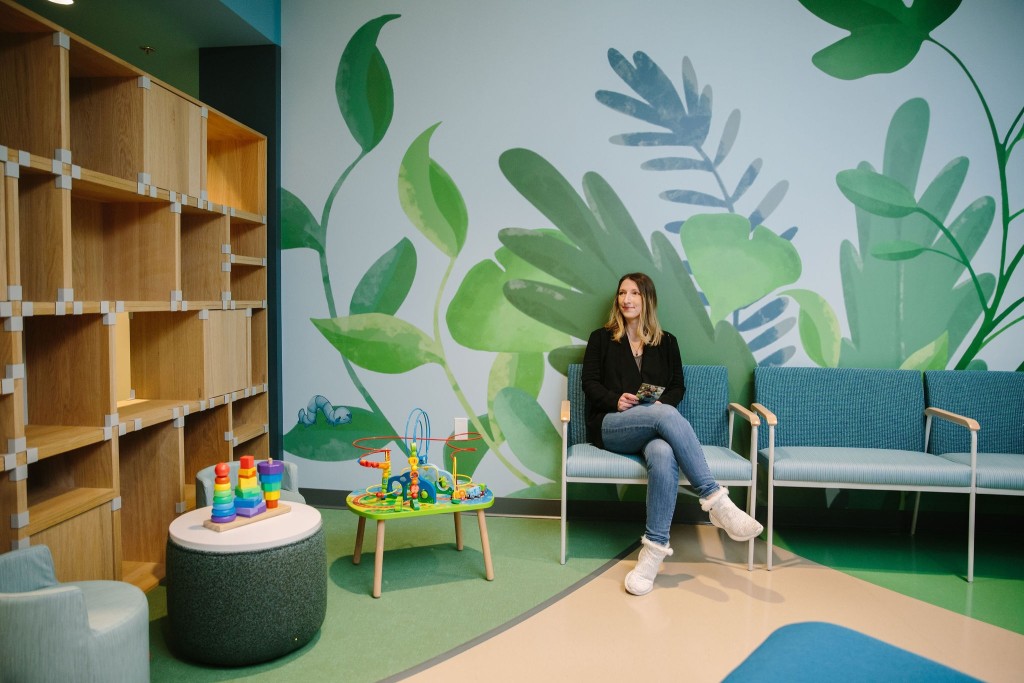
The news is national — parents struggle to obtain specialized care for their children with mental health needs. But it’s also highly local — children’s mental health services are in short supply in the Boston area.
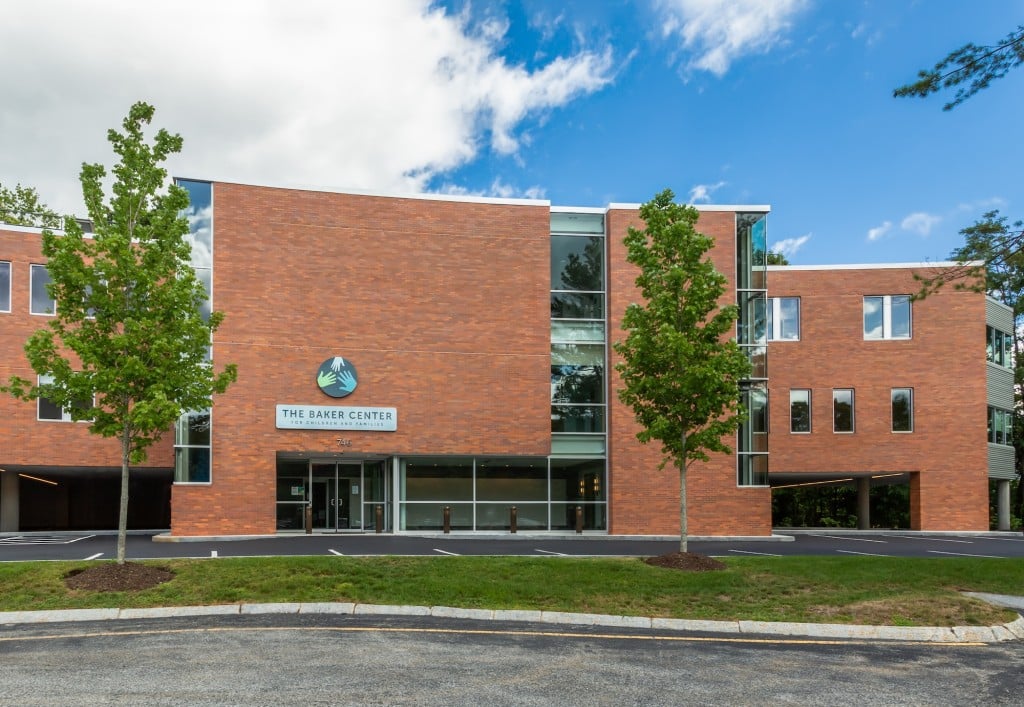
In Waltham, the nonprofit Baker Center for Children and Families has aimed to help fill the gap using evidence-based, short-term psychotherapies.
Dr. Sarah Tannenbaum, a board-certified clinical psychologist who is director of outpatient clinical services, has been eager to get the word out about the Center’s successes, especially at its Center for Effective Therapy, an outpatient clinic focusing on treatments for patients ages 2 to 22.
“We can say in about 4 or 5 months, you can come in with a problem, we’re going to be able to target that problem, we’re going to be able to help you get better, and then we’re going to be able to help you to live your life in more functional, happier way,” said Tannenbaum.
One family’s story
Patricia Oduah, a client, said the CET gave her and her family “an extraordinary support system.” Three years ago, she and her husband Chuck welcomed three young siblings from the foster care system. The oldest child, then 5 years old, had behavioral problems, showed post-traumatic stress symptoms and struggled with school and social life.
With Patricia’s history as a social worker and mental-health clinician and Chuck’s career in special education, she was sure that they could handle any problem. Within a month, though, she knew they needed help. She first tried in-home therapy but “I was meeting someone at my level. And that’s when I realized that I have to go beyond my scope of knowledge. I needed to find something that is evidence-based, something that has worked.”
When she found the Baker Center and the boy entered treatment, changes began: “I started to see the results and to feel that I could trust this process. The evidence was in his behavior. “
Tannenbaum understood the traditional worries that psychotherapy is going to take “years and years and years.” But at the CET, “We can say with really great confidence that our treatments do work. They work quickly, and they’re based on building skills in both the child and the caregivers.”
Oduah praised the psychoeducation she and her husband received, saying, “It helped us to develop new skills and enhance our current skills to manage some of the symptoms he was experiencing.”
Commuting to the Baker Center took over an hour, and Oduah had to find babysitters for the two younger children or bring them along. “It made it easier to know that there was a target end time. If I had thought I would have to do this forever, I probably wouldn’t have done it.”
Proven therapies make a difference
Tannenbaum highlighted CET’s main evidence-based intervention, MATCH (Modular Approach to Therapy for Children), aimed at children ages 6 to 18. Instead of a single-therapy approach, MATCH incorporates proven cognitive-behavioral therapies for anxiety, depression, trauma histories or behavior difficulties into a protocol that clinicians can follow to flexibly serve a patient’s needs. MATCH also involves weekly surveys of the children and caregivers, allowing them to focus on their progress. Scientific studies on MATCH have been published since 2011. (The National Child Traumatic Stress Network lists the studies on this factsheet.)
In 2025 so far, CET has helped over 900 young patients across Massachusetts. The Center accepts insurance and has a sliding-scale fee, as low as $15 per session, for people without applicable insurance. Donations help provide reduced fees and need-based aid for 60% of families at CET.
“What we know about kids and teens is that they come with multiple challenges, and the challenges can compound over time. Using the MATCH treatment protocol, we can serve about 80% of the kids in outpatient care,” Tannenbaum said.
Once the Oduahs’ eldest started doing well and graduated from therapy (CET gave him a little party), his 3-year-old brother began to have behavior problems. The Oduahs returned to the Baker Center. This time, they began a telehealth therapy for younger children that focused on positive communication, cooperation, and diminishing disruptive behaviors. Oduah wore a headset while the psychologist (Tannenbaum) coached her in interacting with the middle child after the training sessions, “It was very prescribed. But it also made me feel seen and heard, because she was able to witness what I was witnessing in my home.”
The Baker Center offers other specialty practices for tic disorders, restricted eating and toileting challenges. It offers a summer “camp” program for children struggling with ADHD and related challenges, a college prep program for teens with social language challenges and social anxiety, and a special education day school for students who experience emotional, neurological or learning difficulties.
Tannenbaum emphasized the importance of using proven therapies. “Our center is about bridging the research and science and then bringing it into practice. We tend to think, ‘Oh if I’m going to a doctor, they should be using the most cutting-edge approaches.’ But unfortunately many clinicians aren’t trained in this specialty evidence-based practice. And what’s really cool about these practices is that we see kids get better faster, and they stay better longer. “
As Oduah put it, “I don’t mind sharing my story because they helped to change the trajectory of my life. My kids are different; my husband and I are different.”
“My goal as a clinician is to make myself obsolete,” Tannenbaum said.
Author