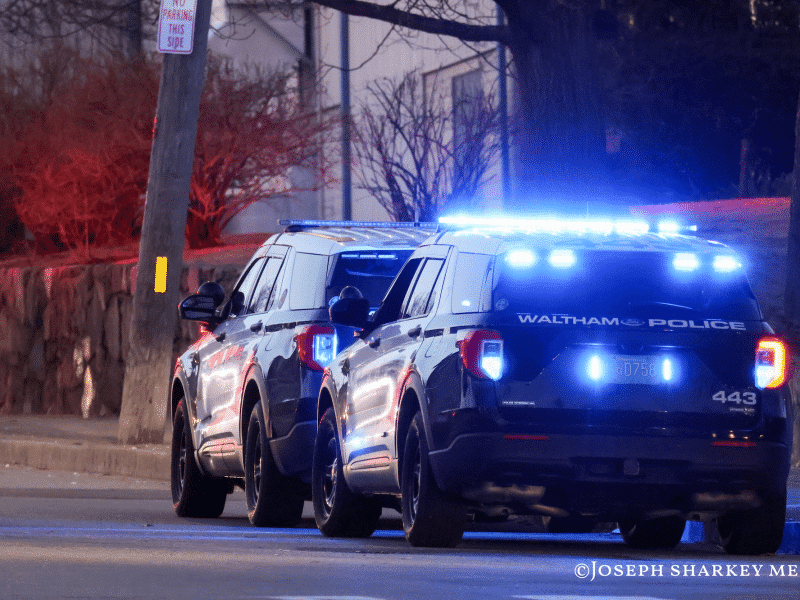
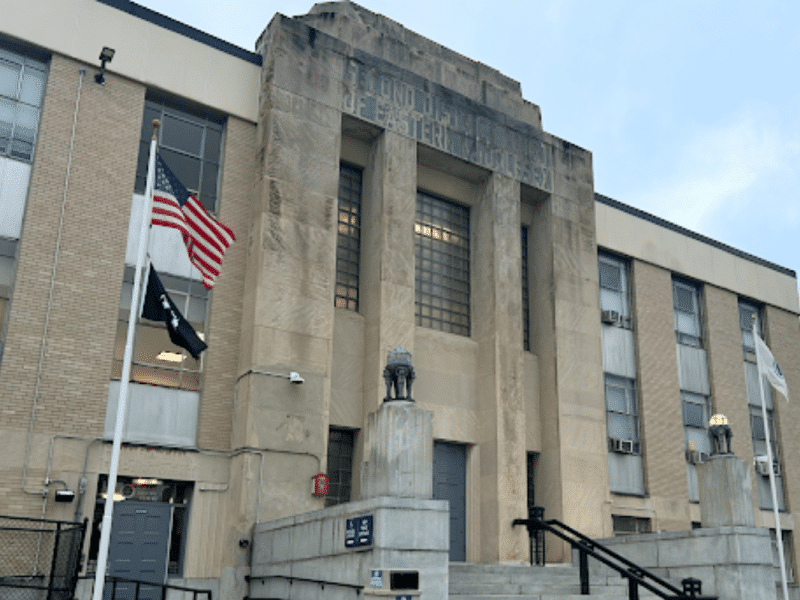
Week 1 at the Waltham Police Department Citizens Academy
EDITOR’S NOTE: Annette Reynolds is enrolled in the current class of the Waltham Police Department’s Citizens Academy and will be posting regular reports on the weekly program.
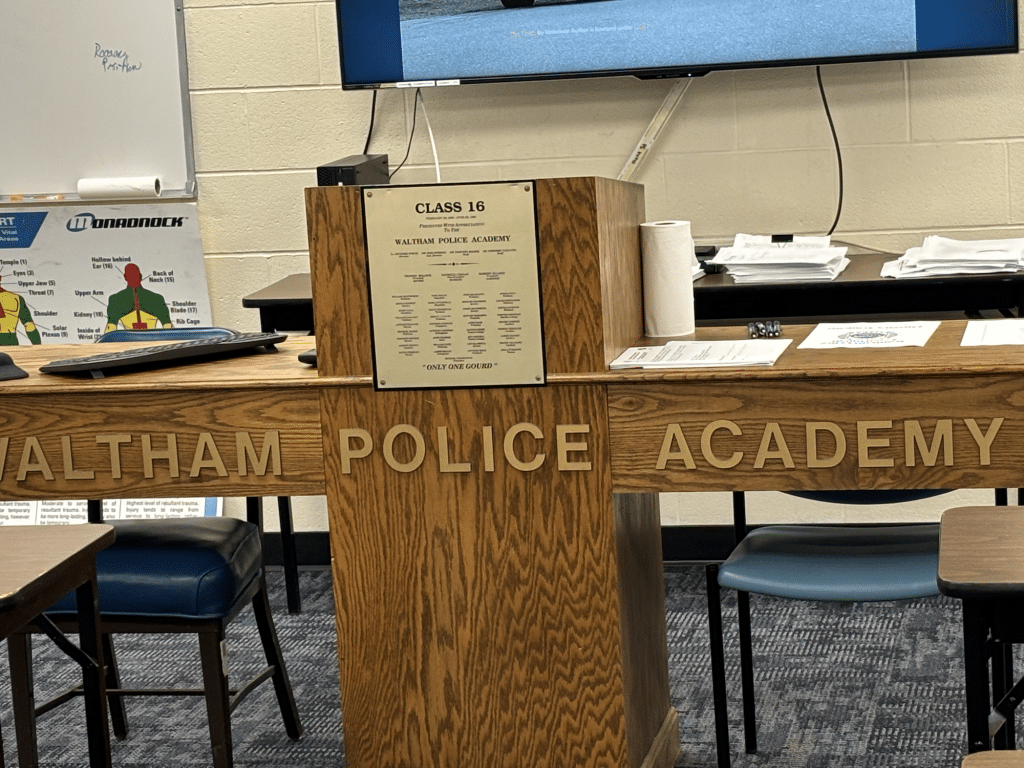
Approximately 30 people gathered in the training room this past Wednesday at the Waltham Police Department for this year’s Citizen’s Academy. The WPD has hosted this program since 1995 to provide city residents with a closer look at policing in Waltham and, the department hopes, to build a partnership between residents and the police.
Chief Kevin O’Connell spoke of the importance of transparency and a partnership with the community to ensure public safety. He said that law enforcement is a noble profession if done the right way, and that the police department in Waltham strives to do it the right way.
Lt. Frank Lombardo provided an overview of what academy attendees can expect over the next 10 weeks. He said training is a major aspect of the WPD and noted that Waltham has the most instructors who teach at the state’s municipal police training academies.
Lombardo highlighted other activities run by the department such as the Police Athletic League, which provides free sports programs to Waltham youth. He also mentioned that the department has added mental health clinicians in recent years. Mental health issues are involved in 40 percent of the calls to the police.
We learned about the structure of the department: administration (which includes training and certification), community service division, detectives division and patrol division. Currently the WPD has 120 officers and 40 command staff.
We learned that to become a police officer one must pass the civil service exam and wait for an opening on the force. There is no maximum age to become an officer, although the retirement age is 65.
Our group then toured the 911 center and the police station. At the 911 center we spoke with the dispatchers and managers and saw how calls are handled. There are police and fire dispatchers in the center, each handling their own calls. They are able to provide backup to one another if necessary. The call center roles are civil service positions and require at least six months of training.
At the police station, we saw where people are booked as well as the jail cells — 11 for men, 3 for women. We learned that people held in the cells are checked on every 15 minutes.
By the end of the evening, we understood there is extensive cooperation within the Waltham Police Department and throughout the state. There are regional groups such as the Northeastern Massachusetts Law Enforcement Council, a consortium of 68 police departments in Middlesex and Essex counties, and two county sheriff’s departments. These departments share resources and personnel.
There are 10 more weeks in the Citizens Academy course. Next week we will learn about women in law enforcement and constitutional law.
Author