Brandeis president lays out vision to reshape liberal arts education
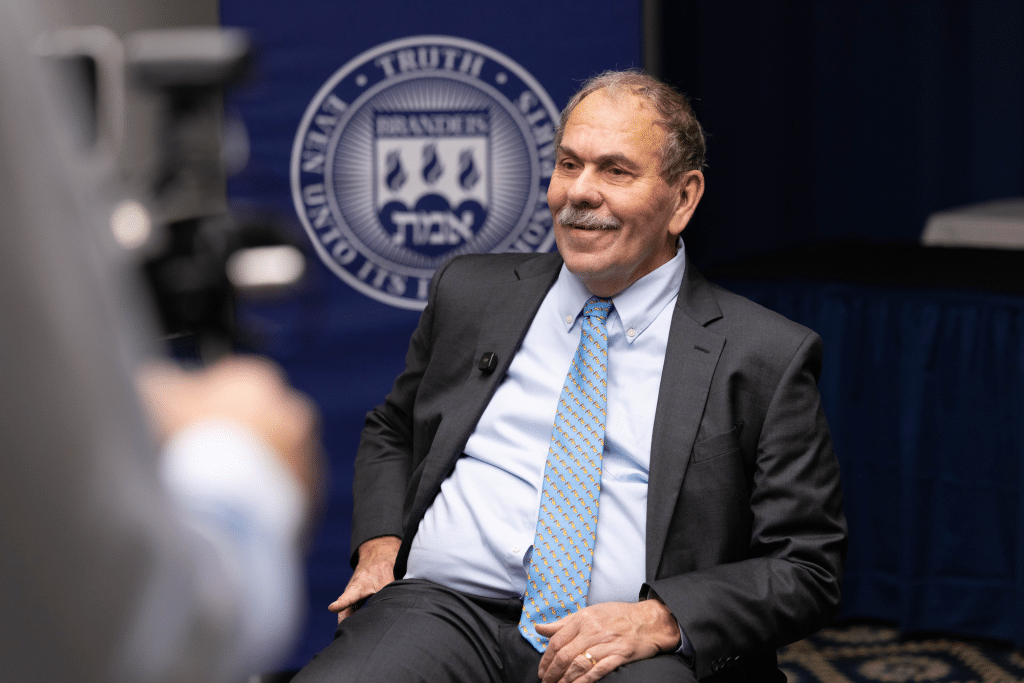
Speaking Wednesday at a livestreamed forum held at the National Press Club in Washington, D.C., Brandeis President Arthur Levine outlined a sweeping plan to reshape liberal arts education that places an emphasis on preparing Brandeis students for careers.
“The Brandeis Plan to Reinvent the Liberal Arts” is backed by $25 million approved by the university’s board of trustees, and the plan gained approval of 88% of the faculty, Levine said. He described meeting with faculty 116 times in his first two months to develop the plan “at a pace I couldn’t even imagine.”
“Brandeis really chose to embrace the challenge of remaking higher education for the global, digital knowledge economy and to lead higher education into the future,” he said. “We concluded it was time to reinvent the liberal arts, rather than discarding them because they are more essential now than they’ve ever been.”
He noted that when he came to Brandeis almost a year ago, he promised he would provide a new vision for the liberal arts that would help transform Brandeis. He praised the faculty for being strong partners in developing the plan.
Applied liberal arts for careers of the future
The Brandeis initiative comes as colleges and universities nationwide are under increasing pressure to demonstrate the value of what they provide students.
In a press statement, Brandeis said the plan will significantly change the educational experience by integrating career preparation into every stage of a student’s career, starting at orientation in the first year. It will require internships or apprenticeships, emphasize career counseling, and implement a core curriculum built around competencies most in demand in the digital and knowledge economy.
Each student will have the support of both an academic and a career advisor — either a professional counselor or an accomplished professional in the student’s intended career field.
The university will launch a new Center for Careers and Applied Liberal Arts, intended to drive innovation across the curriculum and provide students with practical learning experiences in technologies such as AI and virtual reality. Teaching at Brandeis will become more experiential and practical.
The plan presents a unified academic model that unites professional schools with liberal arts colleagues, offering students better access to professional pathways and faculty mentors.
A new assessment test
Levine introduced a partnership with Educational Testing Service, the organization best known for its academic skills assessment tests. Brandeis will adopt an ETS tool known as Futurenav Compass, which is intended to help students demonstrate career readiness and highlight skills sought by employers.
This collaboration will support development of a second transcript for students, in addition to the traditional academic one, that is focused on career competency and will include microcredentials in job-relevant skills.
Amit Sevak, chief executive officer of ETS, joined a panel discussion at the Brandeis forum and said that FutureNav Compass uses ETS’s measurement science and AI to help students link their skills to in-demand roles at internships and first jobs.
Also joining the panel were Ted Mitchell, president of the American Council on Education, and Marjorie Hass, president of the Council of Independent Colleges and a member of the Brandeis board.
In a recorded video message, Massachusetts Sen. Edward Markey said he applauds Brandeis “for beginning to ask important questions and have hard conversations about the future of education.”
For more information, see the Brandeis Plan to Reinvent the Liberal Arts.
Author