April Liles has been directing Waltham’s School Nutrition program for over 10 years. A registered dietitian nutritionist with 20 years of foodservice experience, Liles’ training and experience includes everything from foodservice management to clinical nutrition counseling to solving organic chemistry problems.
Liles and her school nutrition team feed up to 5,550 K-12 students breakfast and lunch across Waltham every school day. They also provide original nutrition education programming, partnerships with local farmers and, increasingly, training for Waltham High School’s Culinary Arts students.
It’s a huge responsibility, made more challenging in recent years due to the COVID-19 pandemic, opening of the new High School, and cuts to the federal Supplemental Nutrition Assistance Program. In 2023, the state made permanent the taxpayer-funded universal school meals — breakfast and lunch — for all K-12 students. The program has significantly increased student participation in the school meal program. Through it all, Liles and her team have continued to innovate.
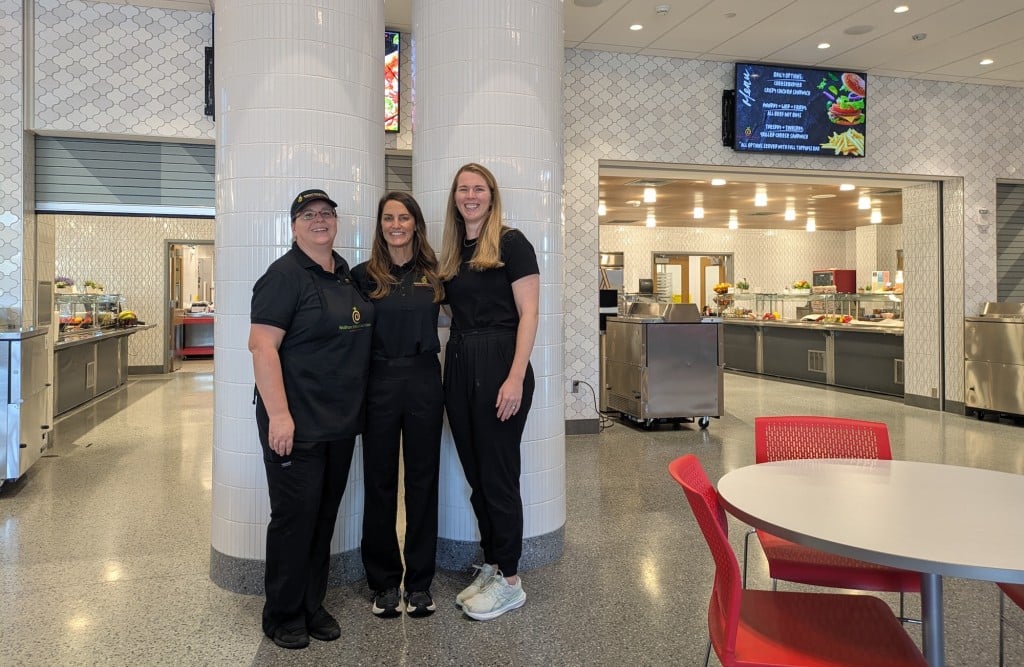
Liles and nutrition coordinator Abbey Hubbell sat down with us at the new Waltham High School cafeteria to tell us more.
School breakfast and lunch
Liles has observed a “big increase in participation” since Massachusetts enacted universal school meals.
“I mean, even families who may have been like, ‘Oh [she mimics scrunching her face], ‘school lunch,’ or ‘We bring our food from home,’ [now say], ‘Just go ahead and have breakfast at school.’”
She explained that “what happens … in Waltham” is that “the food’s good … the [students notice that the] pizzas look really great, and … [students realize] the breakfast was awesome … and so… [they] have breakfast at school.”


Word gets out, and Waltham meal school lunch participation is high. “Eighty percent of our students are participating. Some days closer to 90, depending on what’s on the menu.”
Breakfast participation is historically lower than lunch, at 30-35%, according to Liles. While breakfast numbers vary from school to school, she notes that they are higher at the middle and high schools, and those at the elementary level remain constant throughout the school year.
“What happens with the elementaries is school starts a little bit later and families are up early … so that impacts our participation.”
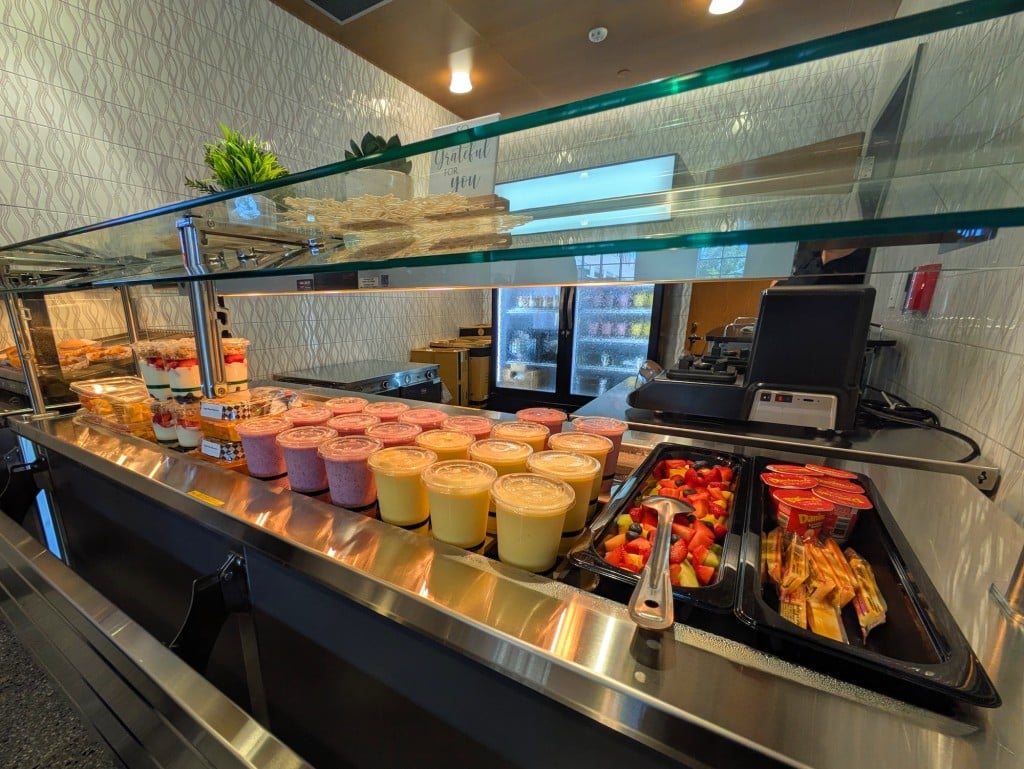
But at the new high school “they can sit outside. They can sit up on the stairs, and so it becomes part of … the day … so we’ve seen a big increase in breakfast since [opening] the new building.
“A lot of what you see today is sort of the vision that I had of getting back to serving food to students, letting them pick and choose toppings and stuff like that.”
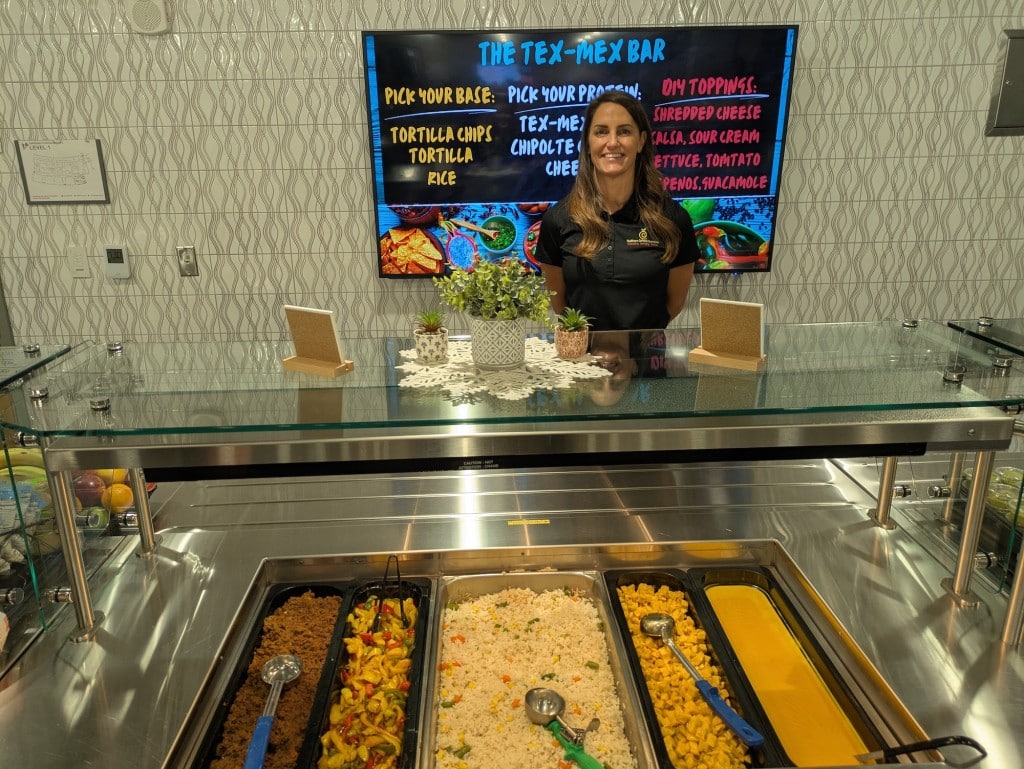
As a registered dietitian nutritionist, Liles is uniquely prepared to work with students who have food allergies, intolerances and preferences.
She explained that when a child in Waltham Public Schools has a food allergy or intolerance known to school nurses, they alert Liles and her team. Liles is then able to provide custom accommodations for the student such as developing personalized menus or helping individual students find what they need at mealtime.
“One child just didn’t know where things were … he was a little shy. Didn’t want to ask. So it just took me going to the school with him one-on-one a couple minutes before lunch started and being like, ‘Here’s what you can eat.’”
When it comes to accommodating dietary preferences, the school nutrition team provides a wide range of options, particularly at the high school. High school meals include a variety of separate, gluten-free options and an entire vegan line.
Liles emphasized how much pride her team takes in serving Waltham students. If there’s a complaint or concern, “they’re like, immediately … let me figure it out.”
Farm to School program
Waltham’s Farm to School program feeds K-12 students seasonal, fresh produce grown by local farmers.
Liles explained that Waltham School Nutrition “prioritize[s] farm to school initiatives and fresh, local produce.” Regardless of ongoing changes to federal funding for purchasing locally grown food, she underscored that “This has been a core value of our program well before the grant program, and it remains a priority today.
“We continue to receive state and federal support for providing students with healthy, nutritious meals, and how we allocate those funds is a business decision based on our program’s priorities. Since supporting local farms and sourcing local ingredients are central to those priorities, we remain committed to purchasing from local vendors for our meals.”
Waltham Fields Community Farm is just one of many local farms that Waltham School Nutrition purchases produce from. WFCF Executive Director Stacey Daley shared that the farm has been providing fresh produce to Waltham schools for over 15 years.
She said that the partnership supports the farm’s mission to cultivate “sustainable and equitable relationships between people, their food supply, and the land from which it grows. We envision communities with equitable access to the beauty, sanctuary, and food of local, sustainable farms.”
This week, WFCF will be providing WPS with 100 pounds of zucchini, 50 pounds of bok choy, and 40 pounds of tomatoes.
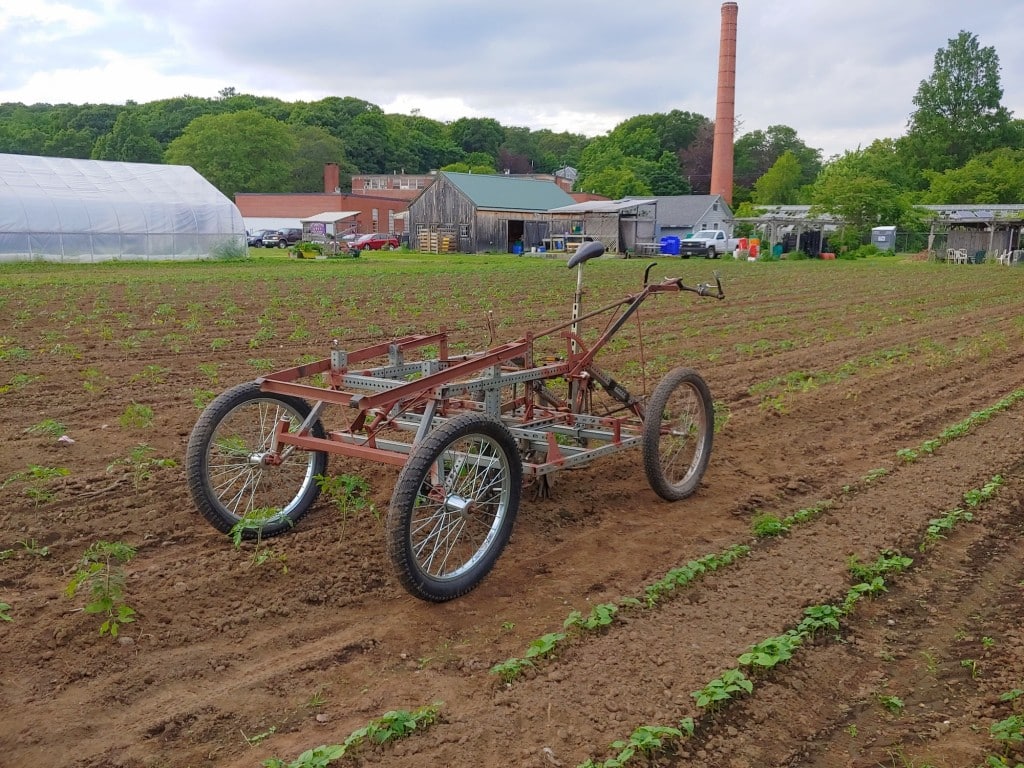
Waltham School Nutrition also purchases locally grown produce through Boston Area Gleaners’ Boston Food Hub. The BFH program connects local farmers with schools as well as local businesses, non-profits, and other organizations.
Annie Broad, associate Food Hub director at BAG, explained that the Hub “sell[s] only fresh produce to WPS, and since our relationship started in 2023 we’ve distributed 26,628 pounds of fresh fruits and vegetables. So far this school year we’ve distributed 1,715 pounds to WPS, including apples, peaches, watermelons, tomatoes, peppers, greens, mushrooms, and more.
“By working with WPS, local farms have increased markets for their crops especially in peak season in the late summer/early fall and throughout the winter and early spring when markets are more limited, which provides year round income, cash flow, and employment for farmers. BFH provides the trucking and logistics, sales, and marketing efforts on behalf of the farm so the farmers can focus on their crops and farming operation. WPS benefits by having access to dozens of local farms and hundreds of local items from a single source.”
Working with ever-changing seasonal produce requires planning flexibility, Liles said. Moving from a monthly menu to a weekly plan has allowed that flexibility to accept farm-fresh produce as it becomes available.
“It’s not nutrition until you eat it,” Liles observed. “With this [weekly menu] plan, it’s [working] much better.”
Fearless Foodies
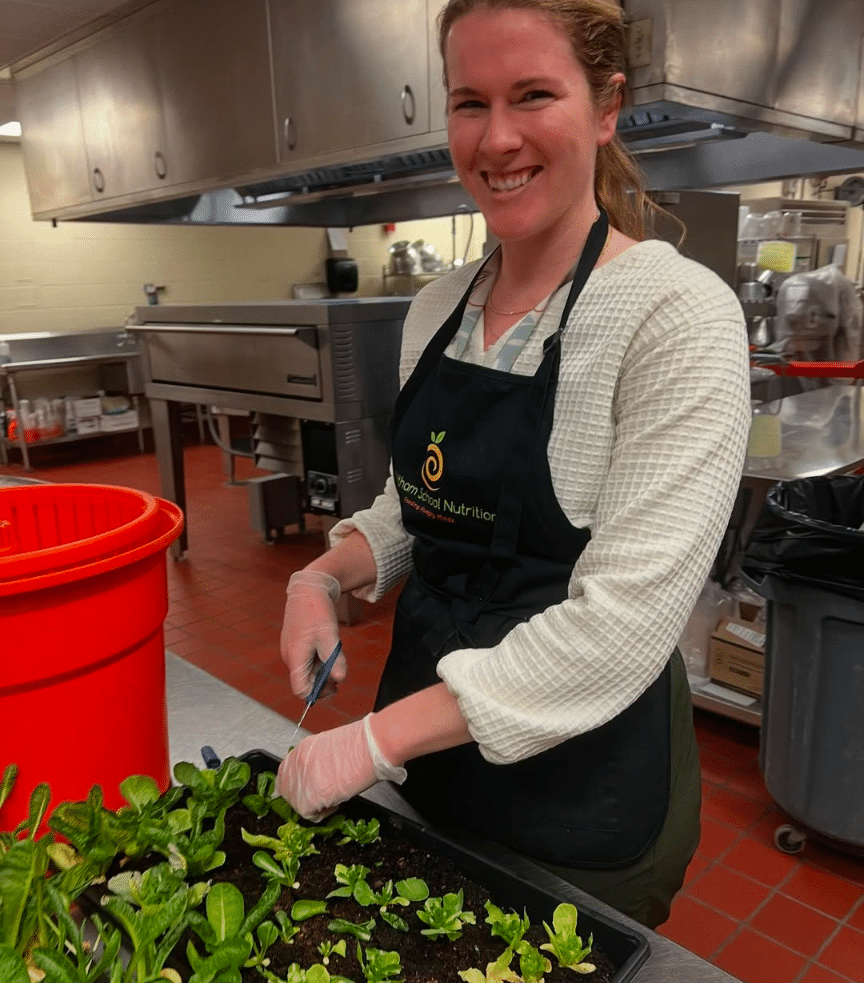
Waltham School Nutrition has long offered original nutrition education programming, including its Fearless Foodies initiative, which was initially developed and implemented in collaboration with Healthy Waltham.
Last year, Liles brought on Nutrition Coordinator Abbey Hubbell, also a registered dietitian nutritionist and veteran K-12 foodservice director.
In her role, Hubbell has been able to focus on building out and implementing Waltham School Nutrition’s existing nutrition education program. She provides hands-on experiential learning with lettuce and herb grow racks, engages students’ senses with thoughtfully prepared nutritious snacks through the ‘Fearless Foodies’ program, and provides topical nutrition learning and activity sheets and recipes in English and Spanish to students and families.
“Not only are [students] receiving those fresh fruits and veggies, but [we’re] tying it back to healthy eating behaviors,” Hubbel shared.
“My team and I can be… proud of what we do for breakfast and lunch here,” Liles said.

Author