
Department of Public Health declares high threat level for West Nile Virus in Waltham
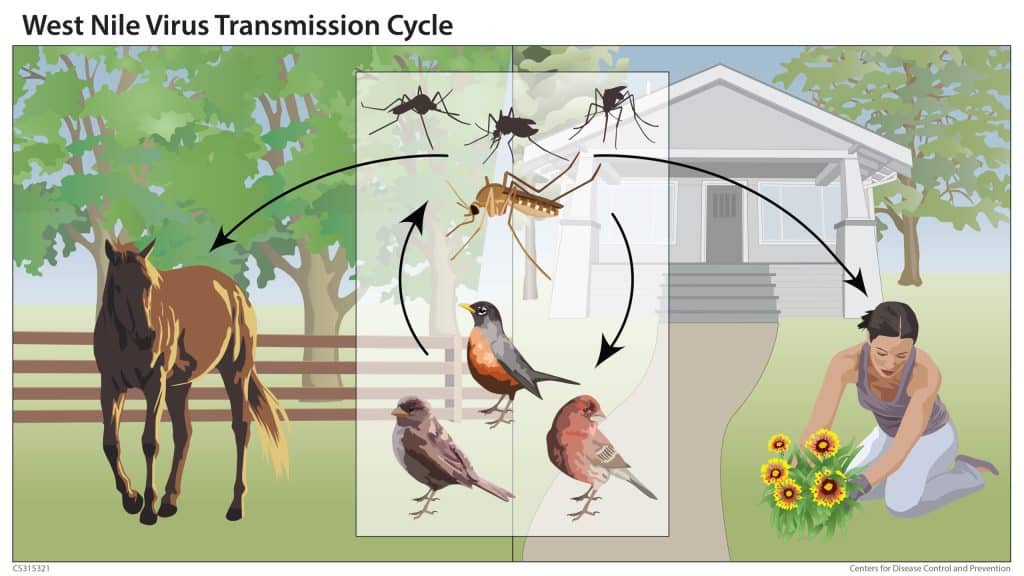
After it identified two new cases of West Nile virus in humans Friday, the Massachusetts Department of Public Health raised threat levels for the virus to “high” in Arlington, Chelmsford, Medford, and Waltham.
WNV is a disease transmitted by bites from infected mosquitoes. The federal Centers for Disease Control and Prevention said that most people infected by the virus do not see any effect, but about 20% develop mild to severe flu-like symptoms.
According to state Public Health Commissioner Robbie Goldstein, peak season for the virus is almost over — in past years, about 80% of human West Nile Virus cases have occurred in August and September.
Still, he encouraged people to take safety precautions by using mosquito repellent and wearing long sleeves, pants and socks to cover otherwise exposed skin.
The state Department of Public Health additionally recommends avoiding outdoor activities in the evening and early morning, especially for populations that are at risk for the virus, such as immunocompromised people and people over 50 years old; installing and repairing screens on your residence; draining standing water at least twice a week and after heavy rains; and using mosquito netting on baby carriages and playpens.
The state DPH has now announced eight human cases of WNV since the start of September, including three who were likely exposed in Middlesex County, and one case of WNV in a goat. All but one of the human cases occurred in people over 50.
The virus’s threat level has been elevated to high in 47 municipalities, including Waltham’s neighbors Belmont, Newton and Watertown. The threat level may be partially informed by mosquito samples captured around the state, 445 of which have tested positive for the virus since June of this year.
The state DPH has also identified 23 samples of Eastern Equine Encephalitis — another mosquito-carried disease — in the state since July, but has not identified any human or animal cases of EEE so far this year. It lists Waltham’s EEE threat level as “remote.”
The department supplies additional updates on West Nile Virus and other mosquito-carried illnesses in an interactive map on its website.
Author

Comments (1)
Comments are closed.


On the health threat front, also note that Hardy Pond has had the worst cyanobacteria outbreak in many years — as of September 10th, volunteer testers from Waltham Land Trust, working with the Charles River Watershed Association, determined that the pond was unsafe for human contact (and pets!). Results aren’t back yet from last week’s test. more info here: https://www.mass.gov/lists/algae-information