Waltham’s do-it-yourself bike repair and education lab aims to bolster riders’ sense of agency
Cyclists riding on a Sunday afternoon along the Charles River Greenway by the Charles River Museum of Industry & Innovation might come across a small group of people sitting beneath a tent, tools and spare parts at the ready to offer a bike tune-up.
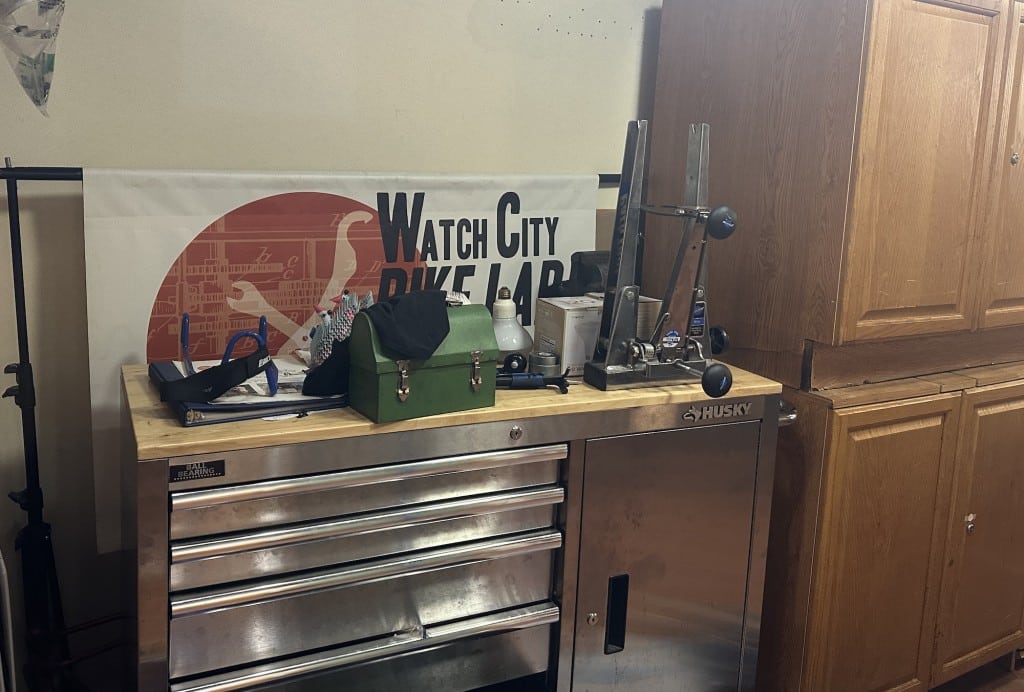
Those repairers are part of Watch City Bike Lab, a volunteer-run do-it-yourself workshop that teaches riders basic bike maintenance.
It began as a small weekly pop-up at the Waltham Farmers’ Market in 2015 before relocating in 2016 to its current home at the Charles River Museum. An educational initiative of the museum, the lab operates Sundays from 11 a.m. to 3 p.m. May through October.
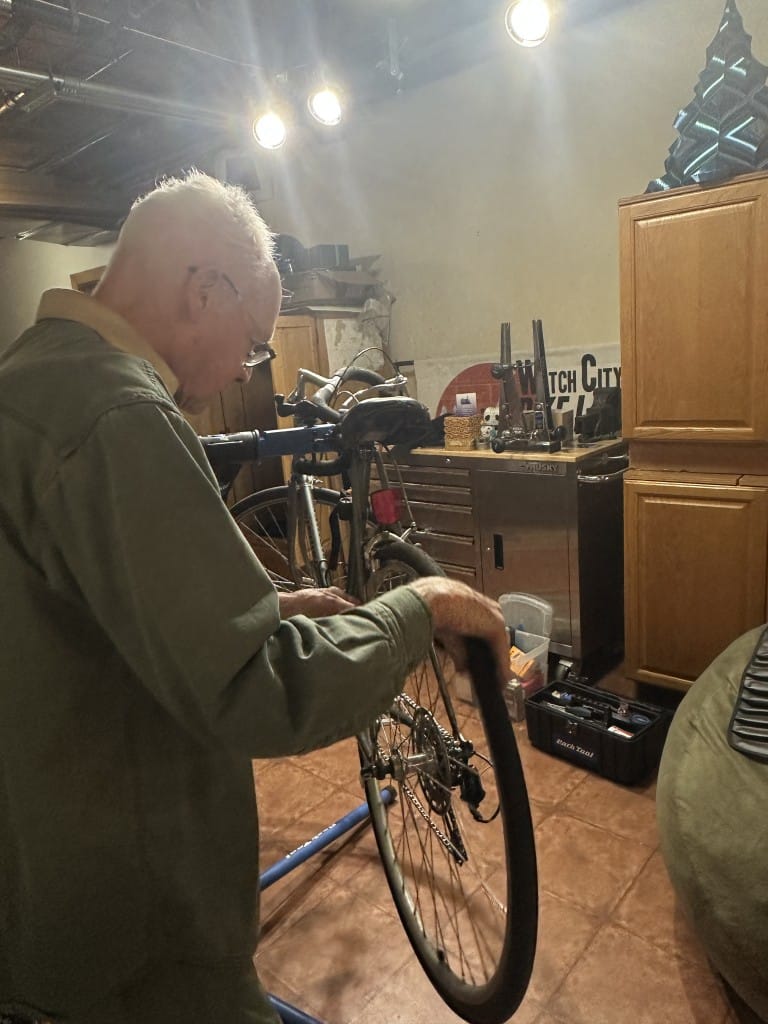
Indispensable to the lab’s operations are the volunteers who dedicate their Sunday afternoons to sharing their knowledge. Many volunteers, including the core group of five who show up weekly, are avid cyclists or former mechanics who are deeply passionate about giving back to their community.
Volunteer Leo Knightley began working with the lab as a bookkeeper before becoming involved with bike repairs and learning — primarily from other volunteers — how to do more complex fixes along the way. Knightley is a longtime Waltham resident and avid cyclist who does not own a car, instead opting to bike anywhere he can.
“I like to do things where I may have some skills and capabilities … and it’s useful for the city or the community [if] I can apply those skills,” he said.
Another volunteer, Harry Friedman, who also doesn’t own a car, has been volunteering with the lab for about three years. He is a Brookline resident who joined after coming across a friend and another volunteer, Adam Scotto, while on a ride. “We’re mostly about … helping people fix the immediate problem but also helping them realize that their bicycle’s maintenance is accessible to themselves,” he said. “I think agency is a huge part of it for me.”
The rewards of fixing things yourself
The workshops emphasize teaching people how to fix their own bikes, rather than operating as a free repair service.
Riders who drop by can be as hands-on with their repair as their individual comfort or skill levels allow, sometimes doing the entire repair themselves over the course of a few workshop sessions.
While the lab doesn’t have an extensive collection of spare parts for major repairs, volunteers are able to show riders what needs to be done if they buy the part and bring it back.
Scotto notes that bikes are a good starting point for someone to gain that sense of agency around fixing their own things, because bikes are unique in their repairability in a world where things are made to be increasingly disposable.
On a breezy late summer afternoon, volunteers gathered under the tent trading stories and snacks. When a rider stopped by, a few volunteers immediately jumped into action. They chatted incessantly as they worked, explaining to the rider what they were doing and occasionally asking other volunteers for input.
Knightley said those who attend the workshops are “all over the map in terms of gender, race and class.” Most people stumble across the lab simply as they are biking along the greenway.
One rider, Vasudeva Bhat, a graduate student at Brandeis University, came by with a flat tire. He said he had learned about the lab from his roommate, who had found its website. “It’s not just a free fix,” he reflected. “It’s good to know how to do it and [see] that it’s not that hard.”
Biking has a storied history in Waltham, from the earliest high-speed dirt track that opened in 1893 to various political advocacy efforts around bike infrastructure. And it only seems to be growing in popularity and relevance: On Sept. 18 the Traffic Commission recommended moving forward with the Metropolitan Area Planning Council on implementing a bikeshare program in the city. The MAPC runs the Bluebikes bikeshare program as a joint venture with the City of Boston and neighboring municipalities including Watertown and Newton. Bike Together Waltham, which conducts group rides advocating for safer city streets, also recently celebrated its third anniversary.
Amid these various cycling-related initiatives in Waltham, the lab has carved out its place by centering education and empowerment at the heart of what it does.
As Friedman reflected, “One of my favorite moments here is when somebody comes in who just has no idea they can fix things themselves. They do a lot of work, they learn, and I watch their hands get busy because they’re eager to learn. And then when they take their bicycle out for what we call a ‘test ride’ to see if we’ve improved it, sometimes they come back beaming. This is because they’re enjoying the whole episode of empowerment, correction and agency. That’s just priceless.”