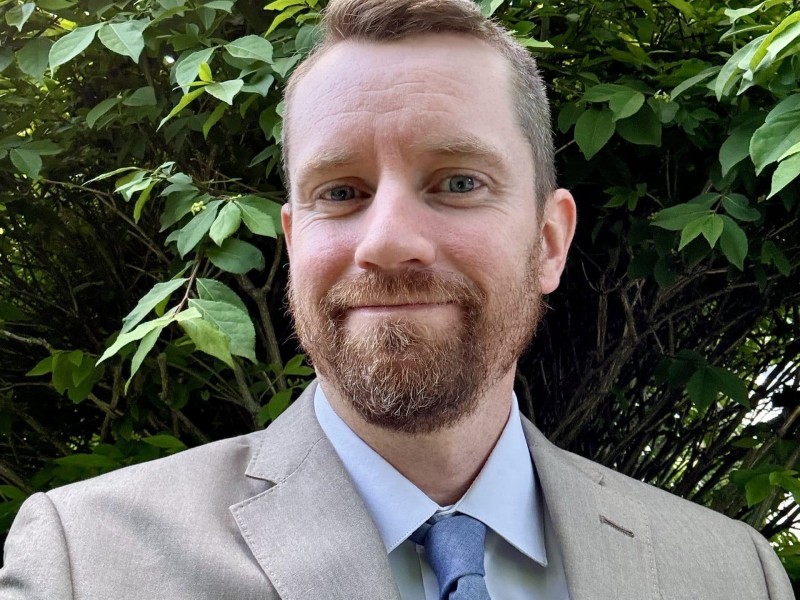
Ward 1 councilor candidate Anthony LaFauci

Anthony LaFauci knows that many of the problems Waltham faces are complicated and has always told people that he doesn’t have all the answers. But he wants people to know that he’s willing to listen and will do what he can to address their concerns or at least find someone who can.
He said he sees a similar attitude in the city’s residents, saying residents are always willing to help each other out. He said he appreciates that attitude.
LaFauci has lived in Waltham since the seventh grade, and he has since planted his own family’s roots here in the city. He inherited a Watertown-based ceramic tiling business that his father started in 1970. He has coached all kinds of Waltham youth sports for around a decade, and he said that whenever there’s a community event or someone needs some kind of help, he and his family try to be there to sponsor it or lend a hand.
LaFauci has been the City Council’s Ward 1 Councilor for six years, and he said he enjoys staying involved and helping his community continue to grow.
He acknowledged that the seat comes with challenges.
As a ward that includes much of Lexington Street, for example, LaFauci’s constituents have had to navigate around the construction of the new high school and then a Massachusetts Water Resources Authority project to replace gas and water mains, which LaFauci said has been complicated by incomplete information from the MWRA. He said balancing traffic requirements around those projects has been difficult. In The Waltham Times’ election readership survey, Ward 1 residents brought up road construction and traffic most frequently as their biggest ward-specific issue; LaFauci said he often receives complaints about speeding as ward councilor.
He also acknowledged that road maintenance often seems slow to materialize. Ward councilors submit a list of roads for repair every year, he said, and the mayor picks projects from each of those lists, so it may take a long time before the city repairs a given road.
Similarly, he said private way repair can be frustrating because the city is only responsible for plowing and patching the roads to avoid public safety issues. He pointed residents toward a city program where Waltham splits some of the cost of repaving private ways.
LaFauci said some of Waltham’s problems aren’t easy to fix. For example, he cited high housing prices as an important issue but a difficult one for the city to affect, especially as construction costs continue to go up. Many potential housing initiatives feel insufficient to him. “[When] you put 50 units online that doesn’t really flood the market,” he said.
He said the MBTA Communities Act, passed in 2021 by state lawmakers and designed to create more density around transportation corridors, was a creative way to address the housing problem. But, he said, it likely won’t have an impact unless the MBTA expands its service area or Waltham finds success with additional solutions such as rezoning to allow mixed residential construction in currently commercial areas.
LaFauci characterized supporting city services as an important part of his job as ward councilor, saying that programs such as its leaf vacuuming, bulk trash collection, and residential tax exemption are particularly impressive.
He said he works to support first responders as a sitting member of the Police Headquarters Selection and Ambulance Review committees. He boasted about the school district and its new school buildings, adding that he’s proud that Waltham High School has added 14 technical education programs to prepare the next generation and give them more options to figure out their futures.
Still, he said Still, he said constituents also play a role in the smooth operation of the city. He pointed to rodent control needs as an example, saying the city needs to be able to count on residents to follow trash regulations.
Similarly, on the subject of government transparency, he said that the City Council livestreams its meetings to make them more accessible and that he always tries to respond to resident concerns when they reach out through his Facebook page, or via phone or email.
At the same time, he pointed out that he doesn’t see residents at council meetings unless there’s a high-profile item on the agenda. “I don’t think we’re doing anything under the cover of darkness. If you want the information, it’s there,” he said. “We don’t hide it. And all are welcome to come visit us in the [council] chamber.”
Author