
Waltham police chief attends Committee of the Whole to discuss Flock Safety cameras
Waltham City Council’s Committee of the Whole heard from the city’s police Chief Kevin O’Connell regarding the Police Department’s use of Flock Safety license plate reader cameras and the department’s contract with the company at its meeting on Nov. 3.
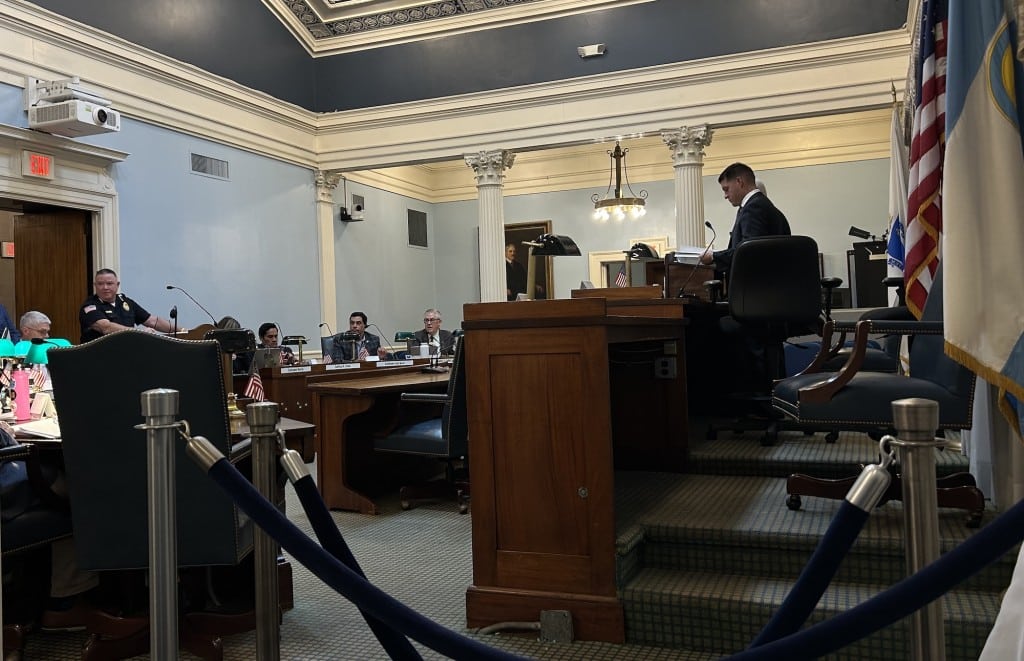
The Police Department signed a two-year contract with Flock Safety. The agreement calls for local police to test the ability of plate readers to assist detectives in time-sensitive investigations and then roll out access to patrol officers as well, O’Connell said.
The city currently has 16 Flock Safety cameras installed: 15 are currently operating, 13 are on city property and three are on private property with permission given to the company by homeowners, according to O’Connell.
Ward 9 Councilor Robert G. Logan, who requested the chief attend the meeting, asked questions regarding the process of acquiring and approving the cameras as well as standards for use.
O’Connell told the committee that the department put in a request to purchase the cameras from Flock Safety in June using funds seized from crimes through court proceedings. He said he assumed that the request went through the Finance Committee and added that the Law Department assisted in drafting it.
Ward 5 Councilor and council Vice President Joey LaCava clarified that going through the Finance Committee is not a requirement for the Police Department to use asset forfeiture money.
In response to a question from Ward 6 Councilor Sean T. Durkee about whether the cameras capture all license plates or require a prompt to capture an image of a particular plate, O’Connell said that the cameras are always running but won’t “hit unless we put a plate in that we’re looking for.”
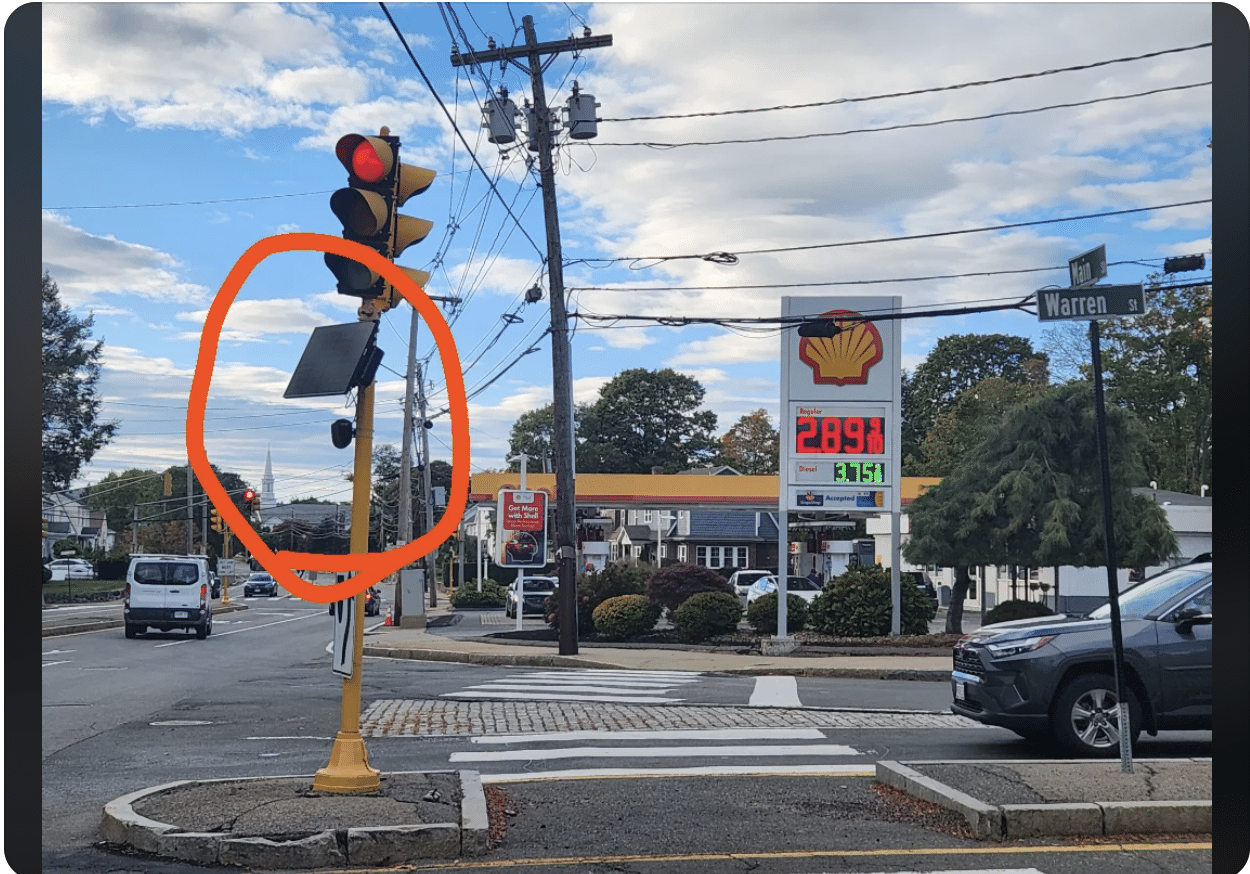
Later, Logan clarified how the cameras actually work. O’Connell confirmed that the cameras capture images of every license plate and store them in a database for users to query.
O’Connell and investigations division Capt. Timothy Maher also said the cameras do not record audio or video. When prompted by a user, the system provides a date and time, license plate number, and vehicle make and model. Further information comes from running a license plate number through the Criminal Justice Information Services database.
Flock Safety cameras photograph the license plate of every car that drives by and then store those images. The images collected in Waltham are only accessible to the city’s Police Department unless it grants access to outside law enforcement agencies or other municipalities to assist in crime prevention and investigation. Officers have 30 days to download stored data before it is erased and inaccessible, O’Connell said.
Questions about data use and transparency
Ward 8 Councilor Cathyann Harris asked a series of questions clarifying the facts of both the user policy and camera capabilities.
In response to Harris, O’Connell and Maher confirmed that the department’s policy clearly states it doesn’t include general vehicle tracking, traffic enforcement or civil code enforcement and bans biometric use. All data is owned by the city under its contract with Flock Safety. The policy clearly prohibits vendor reuse and sharing of data and states the data retention policy of 30 days.
O’Connell also confirmed that users receive training before they are granted login credentials and undergo monthly self-audits that are reviewed by Maher, Sgt. Patrick Dean and Lt. Michael Moriarty. O’Connell said the department tracks all use of the system and all users must provide their names, passcodes, an incident number and their reasons for accessing the system at each login, he said.
Councilor-at-Large Colleen Bradley-MacArthur said she was surprised that she heard from sources other than the police that the WPD had launched the system, given the department’s usual transparency.
Bradley-MacArthur shared that residents had expressed concern to her about potential privacy issues with artificial intelligence analysis of Flock camera data.
Bradley-MacArthur added she lacked trust in the company due to its involvement in lawsuits across the country.
O’Connell responded to Bradley-MacArthur about transparency and confirmed there is no expectation from the company for the Waltham Police Department to contribute its data to the company’s database. He also said the department does not share data from its cameras with either the U.S. Department of Homeland Security or U.S. Immigration and Customs Enforcement.
“In hindsight, maybe I should have come forward and let you know we were going to have this. That’s on me,” O’Connell said. “I’ve been the chief for five years, maybe I should have known better.”
The committee unanimously approved a request made by Logan to hear from City Solicitor Katherine D. Laughman at its next meeting regarding the legal aspects of the cameras.
Author

Comments (4)
Comments are closed.
I appreciate the Council’s attentiveness to this privacy and surveillance issue, and the police department’s willingness to engage.
I question whether the police are fully aware of the ways that Flock cameras actually work and are used. (This is not a jab at them; Flock has very good reasons to try to handwave and obscure how invasive its system actually is.)
Here’s a description from the ACLU (https://www.aclu.org/news/privacy-technology/flock-roundup) of how Flock is building a mass surveillance network that goes far beyond “just” being a license plate reader: “Flock is expanding the power of the system itself. For example, the company is planning to plug its systems into commercial data brokers that offer services such as “people lookup.” Flock has long claimed that their LPRs don’t collect personally identifiable information, as if license plates can’t easily be connected to specific people. That claim was always bogus, but with their new product they make that falsity explicit, boasting that the new product will let police “jump from LPR to person.” […] The company has announced that police departments will soon be able to obtain not just still photos from ALPR cameras, but also video, with the ability to request live feeds or 15-second clips of cars passing by the cameras. And Flock is using AI to let law enforcement search through that data using natural language searches. The company uses the example of searching for “landscaping trailer with a ladder,” but we have to assume searches could encompass descriptions of anything captured by one of their cameras, including vehicle occupants and bystanders.”
Thank you for this article. I live in Waltham and had no idea of the existence of these cameras before I saw the first mention of it in the Waltham Times.
I’m glad the Council is asking these important questions and that the police department is answering.
The Police Chief said that it captures images of every single license plate…. but I don’t see any questions or answers about whether or not the camera captures images of people/ faces.
I think it would be reasonable for the Police Dept to publish a copy of the contract they have with Flock Safety to show us that the images are not being used for biometric data and that they are actually erased after 30 days.
That contract is available via public record request and does not say anything about what the images are being used for or its time of erasure.