
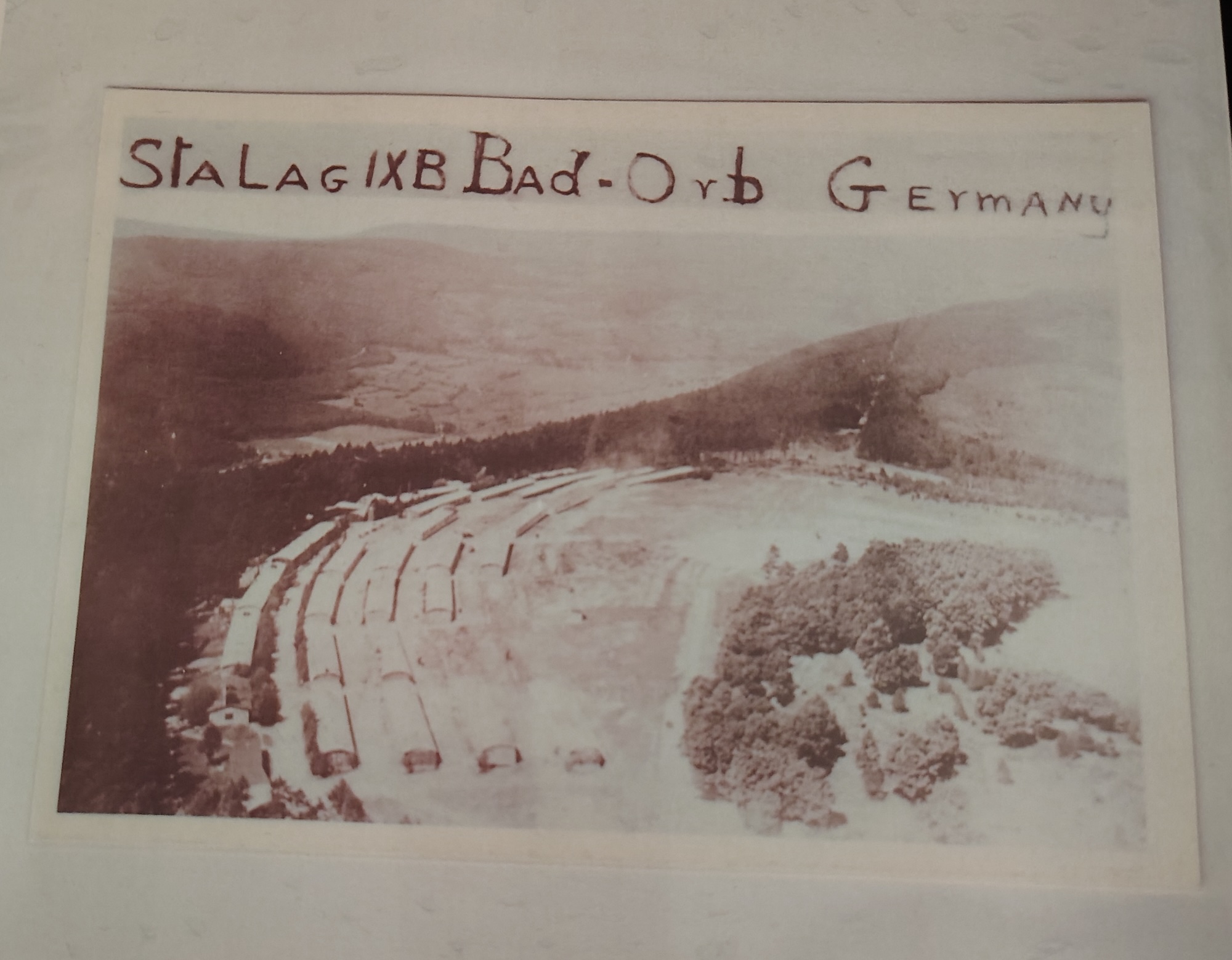
By Dec. 7, 1945 – the fourth anniversary of the attack on Pearl Harbor – Waltham had lost at least 88 young men in WWII. But as the war closed, and the atrocities of the Axis powers became known, new questions arose about the fates of US soldiers. The mass starvation, slave labor, and industrial crematoriums of Nazi Germany served as evidence of one of the most horrifying projects in human history: the mass extermination of millions of people.
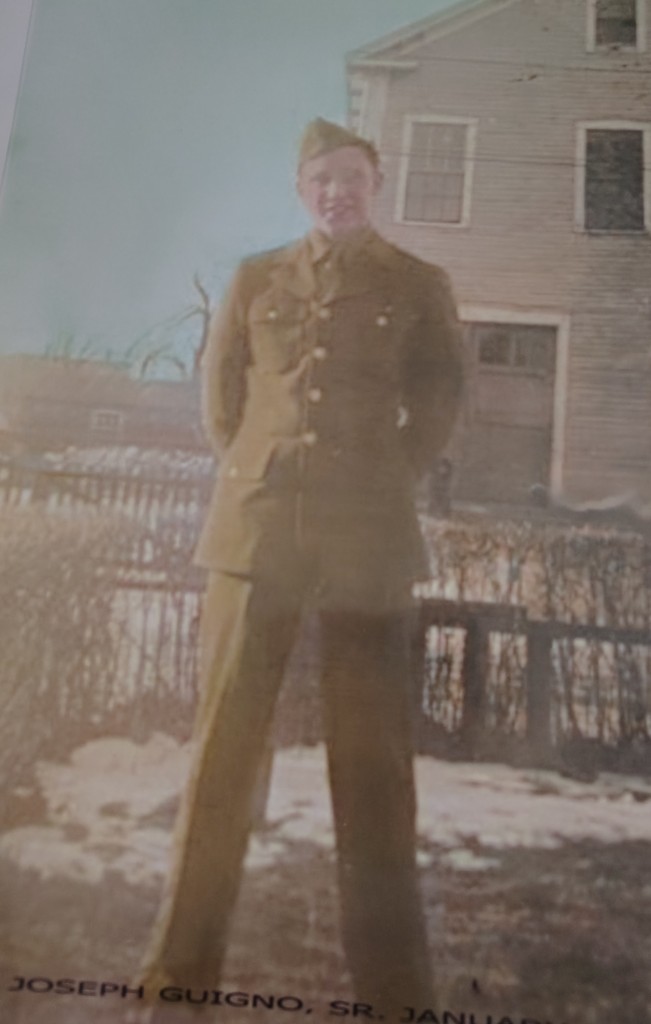
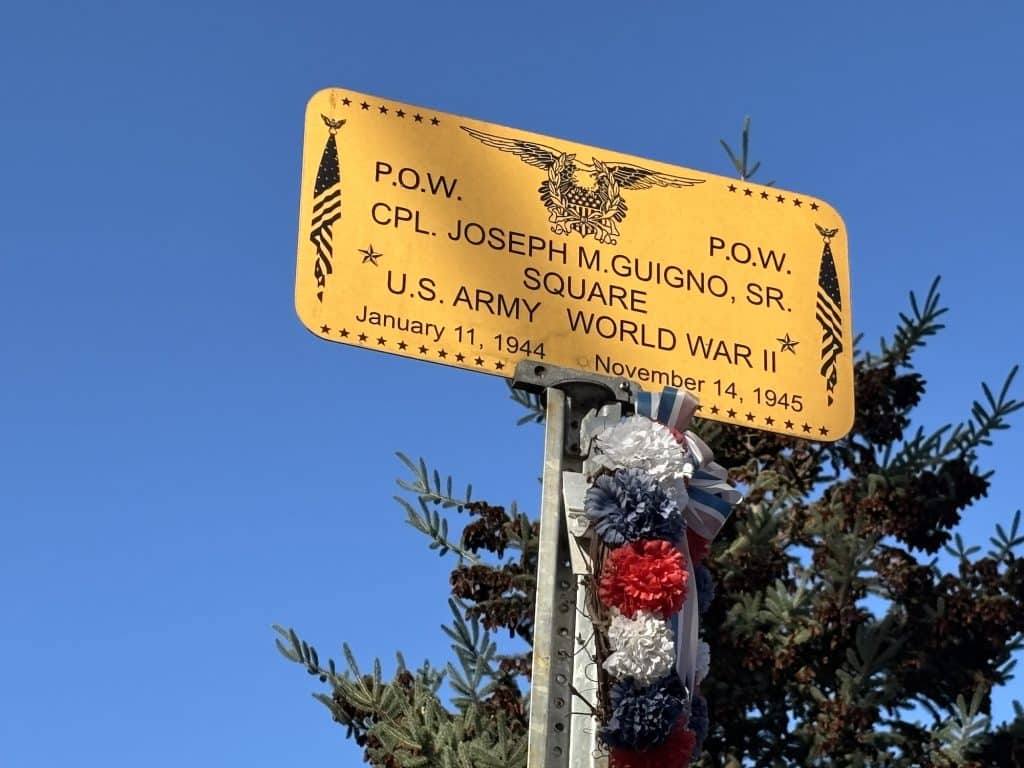
Joe Guigno was 18 years old when he enlisted in 1943. By Dec. 19, 1944, he had only seen two weeks of combat when he was captured by the Nazis at the Battle of the Bulge. Learning that his son was captured, Joe’s father Michael Guigno attempted to enlist to rescue him. However, as the sole provider of a large family, he was turned away. The Guigno family received postcards from the German prison camp where their son was being held captive. But, subject to Nazi censorship, the letters did not accurately reflect the horrifying conditions suffered by prisoners of war.
The journey to Stalag IX-Bad Orb was itself a nightmare. Joe’s son, Joe Guingo Jr., described his father’s memories of four days in standing-room-only boxcars, marches through territory where prisoners were beaten, bayoneted and starved. “The camp had two parts,” Joe Jr. explains. “There was a ‘good’ part of the camp, and a ‘bad’ part of the camp where they sent you if you looked Jewish.” Joe Sr., according to the Nazis, looked Jewish. When he first went into the camp, he weighed 160 pounds. When he was liberated on April 20, 1934, he weighed only 84 pounds.
Joe came home a changed man, but those around him did not know his story. He married his wife, Anna Coco, in 1948 after a year of dating, and was actively involved in bowling, baseball, and coaching his children’s sports teams.
“When I was 12,” Joe Jr. recalls, “he had a heart attack. And that’s when he started to talk about all of this.” Joe Sr. developed some habits from his experience in WWII. He insisted on extremely hot tea, and always wore gloves while driving in the winter. “We hated being cold,” Joe Sr. explained to his son.
No longer able to participate in his previously active lifestyle, Joe Sr. found a new passion: making sure that what he and other POWs had gone through would be acknowledged and never forgotten. Discovering the American Ex-Prisoners of War Massachusetts chapter 1 gave Joe a new purpose. The group championed POW causes, and Joe was at the forefront of getting the POW flag raised at Waltham City Hall, creating Ex-POW license plates, and speaking all across the community and country. When addressing the group, Joe talked about the horrors he had experienced, but somehow never seemed anything other than happy to be alive, his son recalled.
“He never complained,” says Joe Jr. “He never said ‘this sucks that this happened to me.’ He was always happy to be alive.”
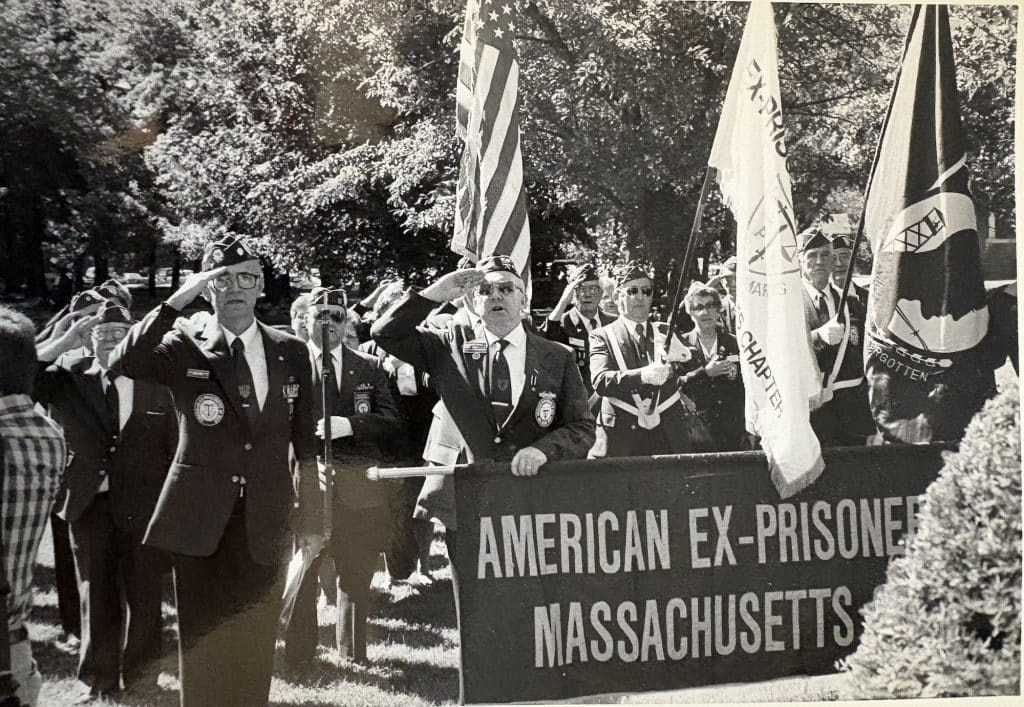
Joe’s role in the American Ex-POW Massachusetts chapter often involved speaking at local schools. “The [ex-pow] group traveled all around,” Joe Jr. remembers. “He [Joe Sr.] was all over the place.” He tried to get the message across that war is hell, and that not only soldiers but also innocent civilians suffer in wartime, his son said.
Joe’s time in prison left life-long wounds. He suffered recurring health issues for the rest of his life and died on March 24, 1992. He was only 66. Joe Jr. recalls that a group of ex-POWs stood vigil with his father and made sure that Joe Sr. was not alone during his wake.
Joe Guigno Sr. is remembered as a happy man who never complained, a loving father and grandfather who loved sports, sci-fi (especially Star Trek), NASA rocket launches and spending time with his family. “He helped everybody,” Joe Jr. said. “He never judged anybody.”
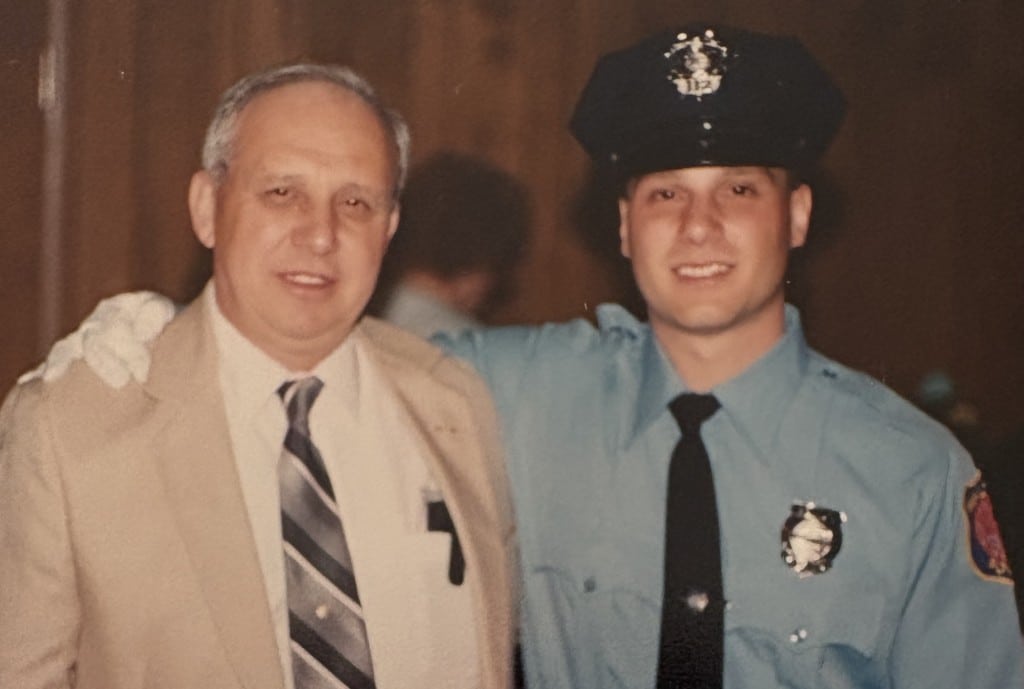
“I can only remember dad swearing once,” Joe Jr. said, “and that’s when he got the letter.”
The letter in question was from the United States government, explaining that Joe Sr. and his fellow surviving POWs were being denied Purple Hearts for their wounds received in captivity. To receive a Purple Heart in 1946, injuries needed to be sustained in combat with the enemy, not from war crimes. This policy was changed in 1962, but WWII POWs were not grandfathered in.
Getting the Purple Heart, Joe Jr. explains, “is a way to remember what they went through was real.”
Joe Jr. has taken up his father’s cause of championing prisoners of war, lobbying the government to retroactively and posthumously award American POWs of WWII their Purple Hearts.
Author

Comments (2)
Comments are closed.






YES, thank you for this story!! More importantly, my respects to the family of this exceptional man.
I think it would be wonderful to publish an honor roll explaining the service and sacrifice of every individual named on the commemorative plaques around town, and if such a thing already exists, to publicize where it can be accessed.
Thank you for this story.