
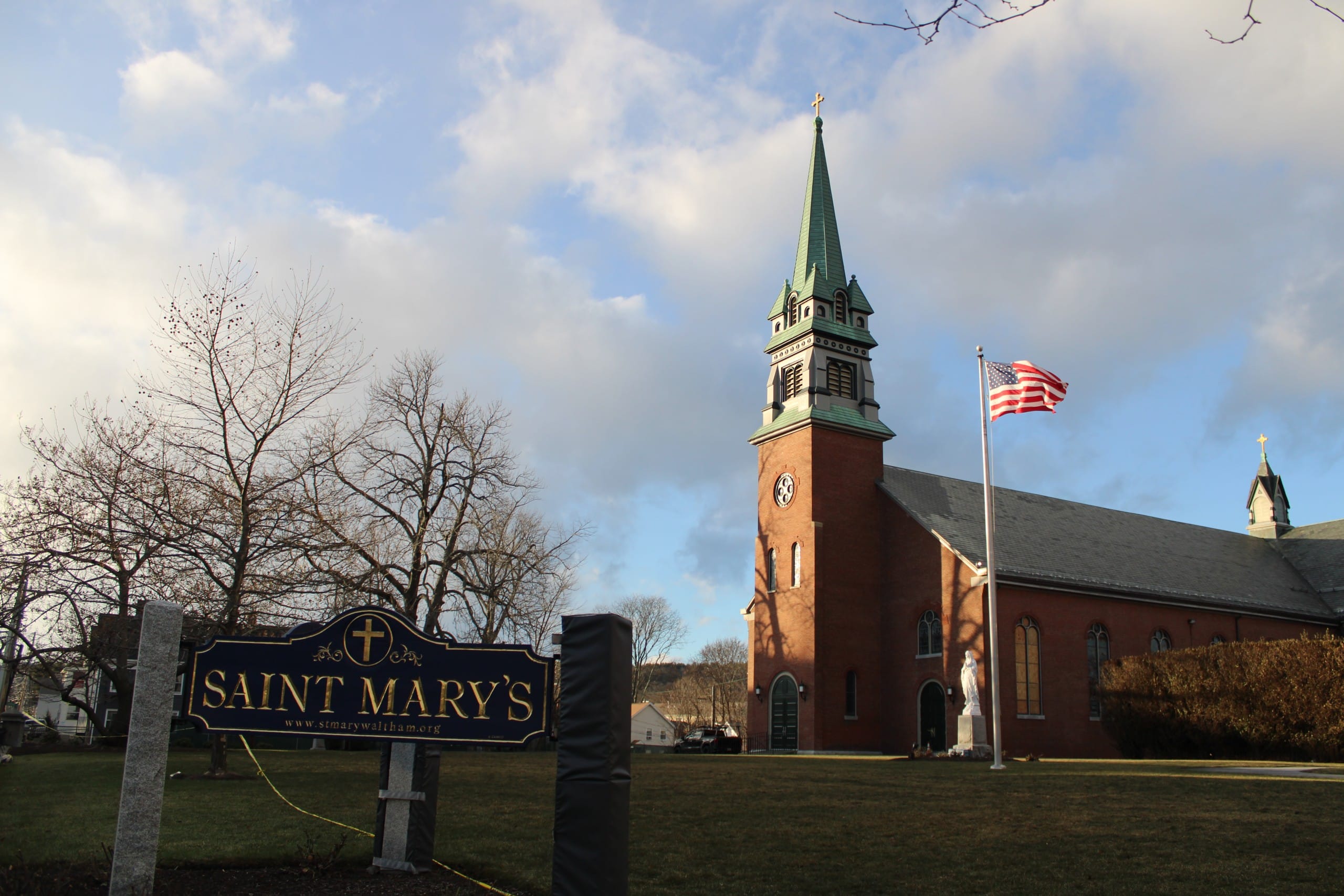
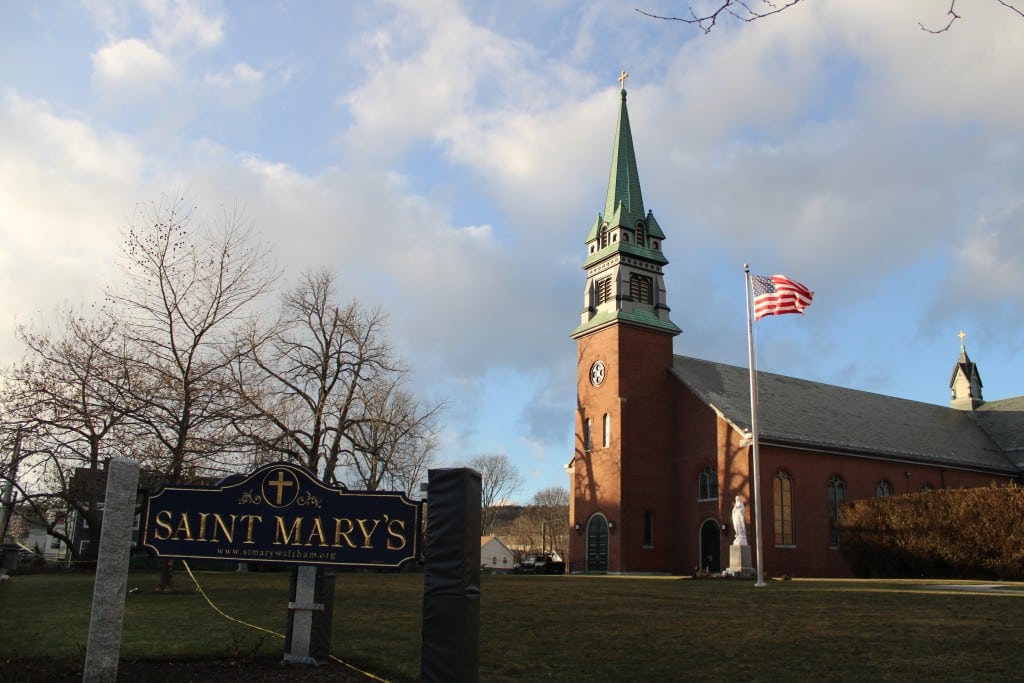
Since its first recorded Mass held in a shed on July 4, 1830, Waltham’s St. Mary Parish has grown to be the sixth largest parish in the Boston Archdiocese. Located on School Street, St. Mary’s was Waltham’s first Catholic church.
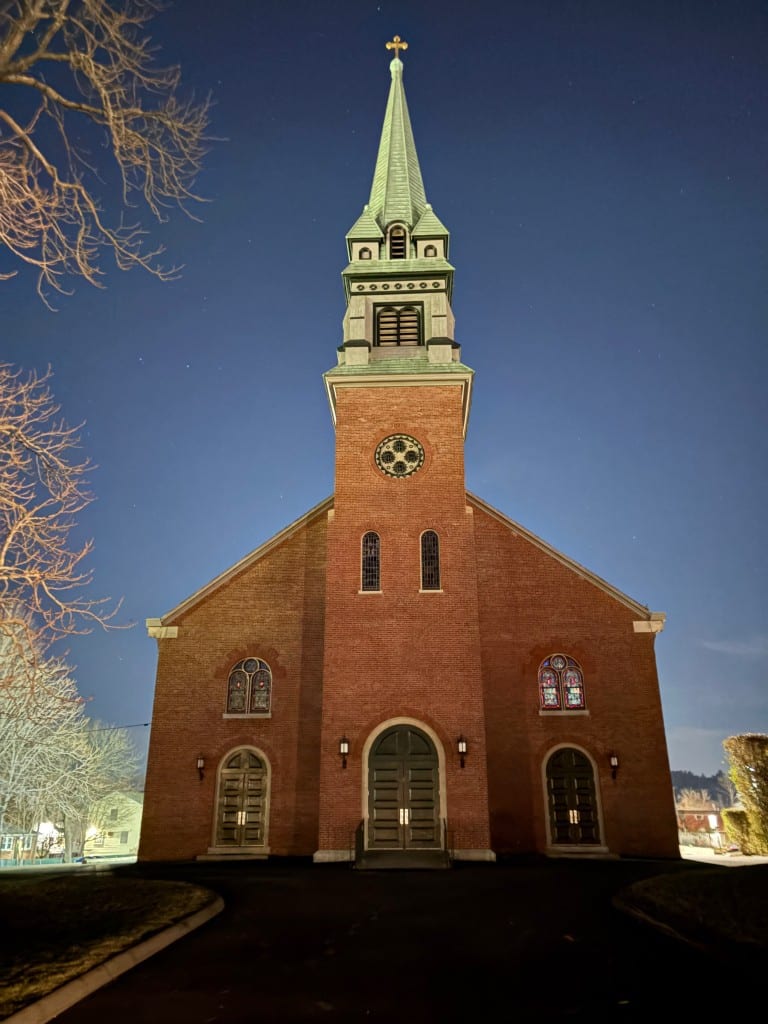
With a simple red-brick exterior, St. Mary’s was meant to appear nonthreatening, as parishioners in earlier years faced anti-Catholic sentiment, said its current pastor, the Rev. Michael Nolan. Built in the mid-19th century with a design mimicking Boston’s Old South Meeting House, the church is plain and unassuming on the outside. Inside, St. Mary’s is vibrant with stained glass murals, detailed mosaics, arched ceilings and glowing colors of blue, red, white, bronze and gold.
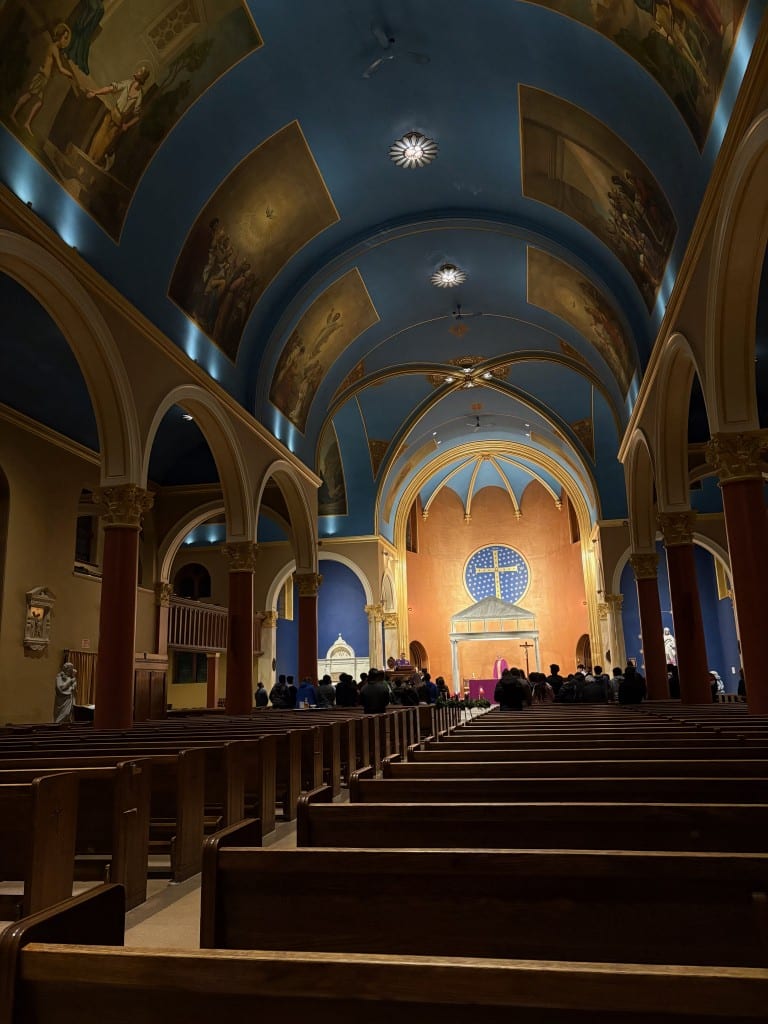
What began as a gathering of Irish mill workers has become a spiritual home for more than 1,000 area residents, with services in English, Spanish and Luganda (one of the major languages spoken in Uganda).
“I believe St. Mary’s is one of the most important institutions in Waltham,” said Nolan, “because we’re the most united and diverse at the same time.”
Outside of services and church celebrations, parish ministries specifically focus on the formation of children.
This was historically done through a high school and grammar school established by the church in the late 1800s before closing in 1973. Today the church’s investment in the community’s children happens primarily through its after-school program.
The program sprouted from tragedy. Franco Garcia was baptized at St. Mary’s and grew up in the parish. In 2012, while a student at Boston College, Garcia went missing. His body was found 50 days later in the Chestnut Hill Reservoir. Nolan, who became very close to Garcia’s family in the weeks that followed, found himself hoping the young man remembered God during his final moments.
“And it made me think: I can’t keep just hoping that kids remember the Lord and know him,” he said. “So I said, we’re just going to start. So we started this program.”
Nurturing the whole child
The St. Mary’s after-school program focuses on the holistic formation of children five days a week, from 3 to 6 p.m. Participants are not required to pay a fee and are not required to be Catholic. One hour is spent in play, one hour is set aside for reading or homework, and the third hour is used for spiritual formation: praying the rosary, singing, catechesis and Holy Mass.
Up to 70 of the 120 children registered in the program participate on any given day. Thursdays connect students preparing for their first Holy Communion and those in confirmation classes with the program, bumping attendance to 150.
“The point is, by the end of the day, no matter how they came to us, they go home different, because their physical needs have been met, cared for, tended to,” Nolan said. “Their intellectual needs have been broadened and expanded, and their souls have been also at work.”
The program’s library is named for Garcia, whose parents are part of the program’s volunteer team. Other volunteers include local university students, parishioners, retirees and on occasion Eagle Scouts.
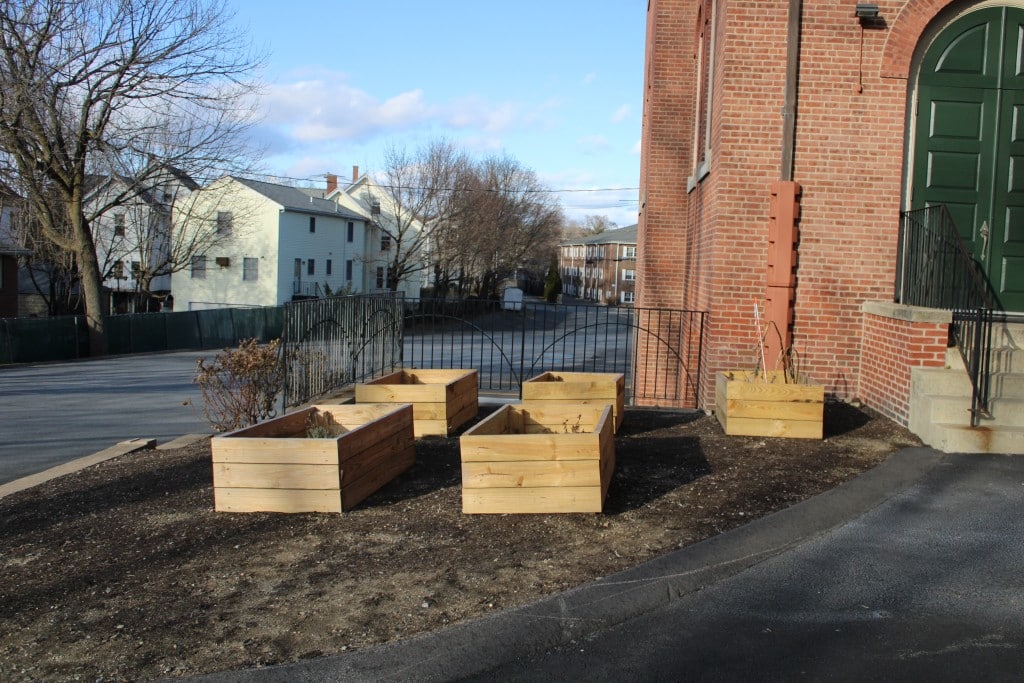
Children are also encouraged to participate in clubs tied to the program, where they sing in the children’s choir or learn skills such as knitting, gardening and establishing bug hotels (a more recent development) .
Connecting through music
When Maria Schellinger became director of the after-school program five years ago, there was no children’s choir. So, having cantored for St. Mary’s since the sixth grade and having pursued a degree in music education, she chose to begin one.
“It’s something wonderful to be a part of,” said Schellinger. “We just got together, sang some hymns.”
The choir has since outgrown hymn-sings and taken on more challenging pieces. Schellinger said they joined a festival for the first time last year, rehearsing every day for five weeks to prepare. They plan to enter again this year.
Both choir participation and program participation, she said, have been driven by the kids themselves.
“They just want to stay connected in some way. We get kids that are in college now that will come to visit when they come home for Christmas break,” said Schellinger. “So, definitely, [the program’s] been a really important piece of their lives.”
For Schellinger, St. Mary Parish has played an equally important role.
“Coming here to pray, to sing, to teach the kids, to direct them and guide them in their faith, it’s been more than I could have asked for when I was pursuing music education,” she said.
A good neighbor
Outside of the after-school program, St. Mary’s has an active presence in the community.
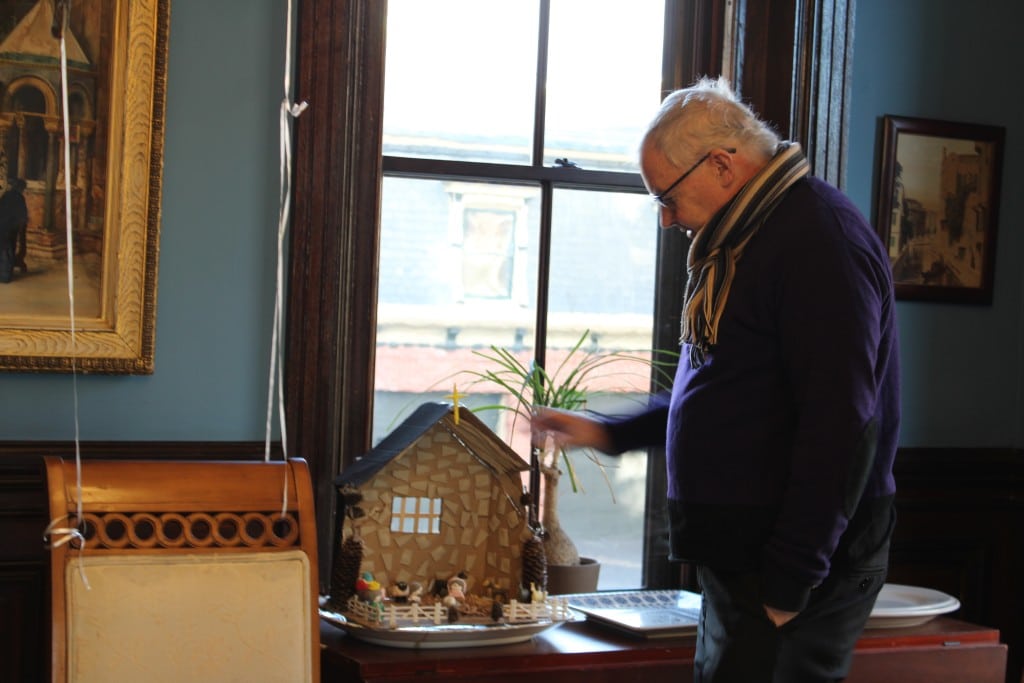
Nolan gathers young adults in the area for trips to Israel, Italy and Jordan; an upcoming trip in January will include more than 65 participants. The parish’s Society of St. Vincent de Paul offers rental housing and furniture assistance as well as access to basic necessities such as heat and food. The society also partners with Waltham High School to distribute Christmas gifts. An annual nativity contest encourages community members to make a nativity scene out of whatever they can find. After the community chooses a favorite, St. Mary’s delivers the scenes to storefronts around the city.
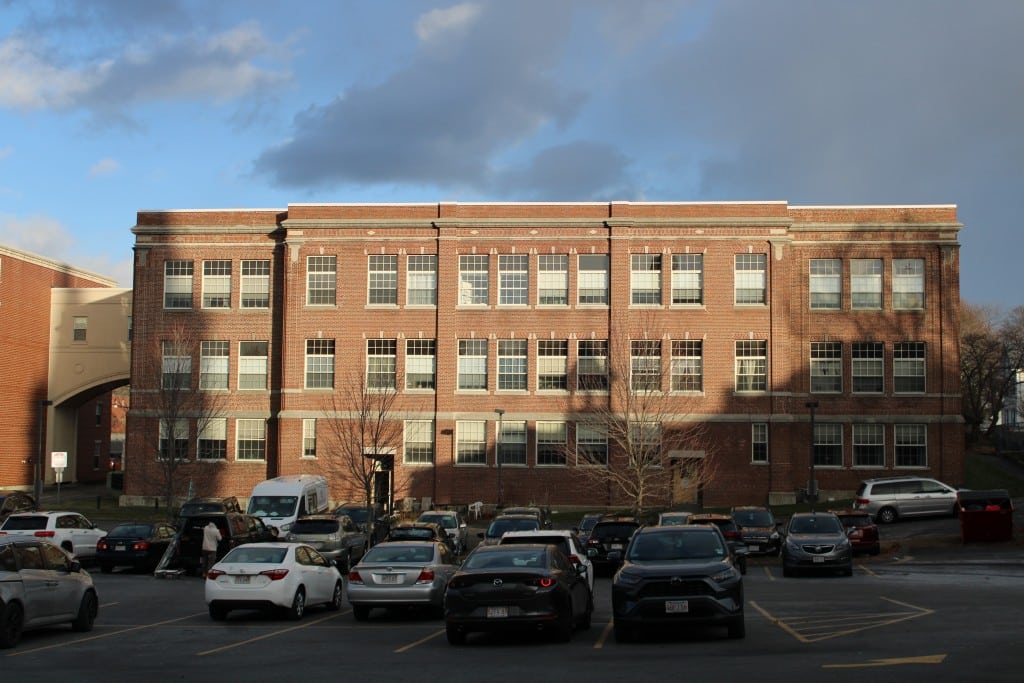
Daughter parishes St. Jude and Our Lady Comforter of the Afflicted originated with St. Mary’s, as did an apartment building for low-income senior citizens located next to the church. When St. Mary’s former schools closed, the parish converted the high school building into 70 one-bedroom apartments.
“It’s more than just coming to work,” said Schellinger about St. Mary’s community. “It’s part of my foundation, who I am, my faith.”
Share anonymous news tips
You can leave a news tip anonymously, but if you would like us to follow up with you, please include your contact information
Author



Comments (0)
There are no comments on this article.