
Photos by David Greenfield
Carl West has a few goals for students who come to learn blacksmithing at Prospect Hill Forge: have fun, learn something, create an object that works, make that item beautiful and, most importantly, be sure to go home with fingers intact.
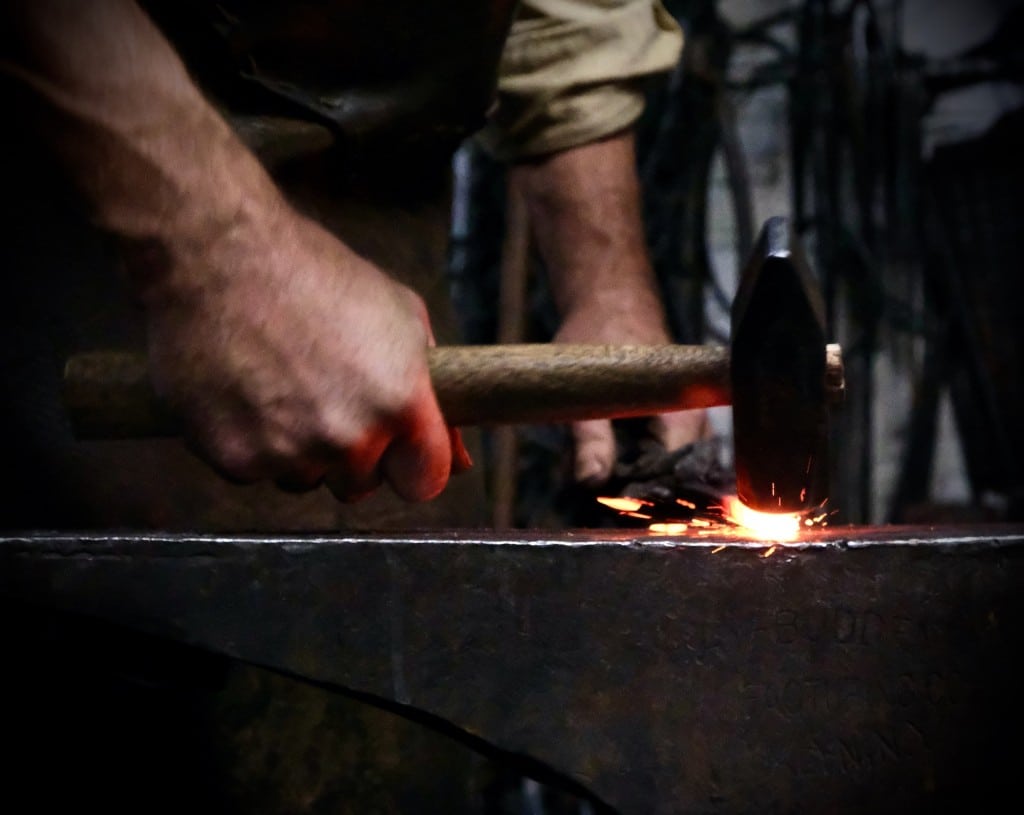
The last goal is particularly important considering that skillful hammering is one of a blacksmith’s main activities.
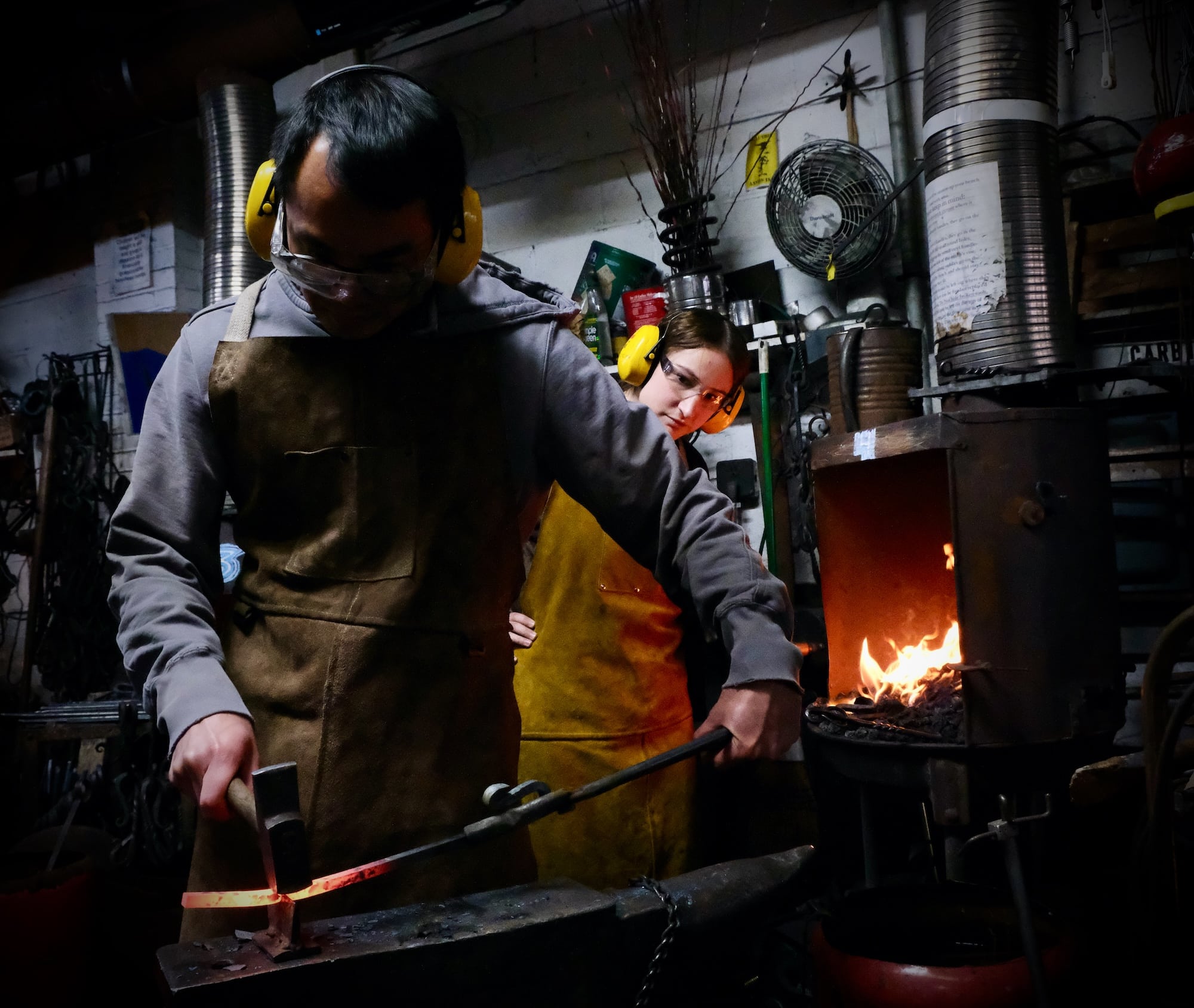
On a recent weekday Patrick Stevens, a Concord ER doctor, and another student stood by coal-fired forges awaiting instruction from West, a Waltham resident who co-owns the Guinan Street space. The business is crammed full of tables and shelves holding handmade iron objects, including various hooks, tools and even a daffodil.
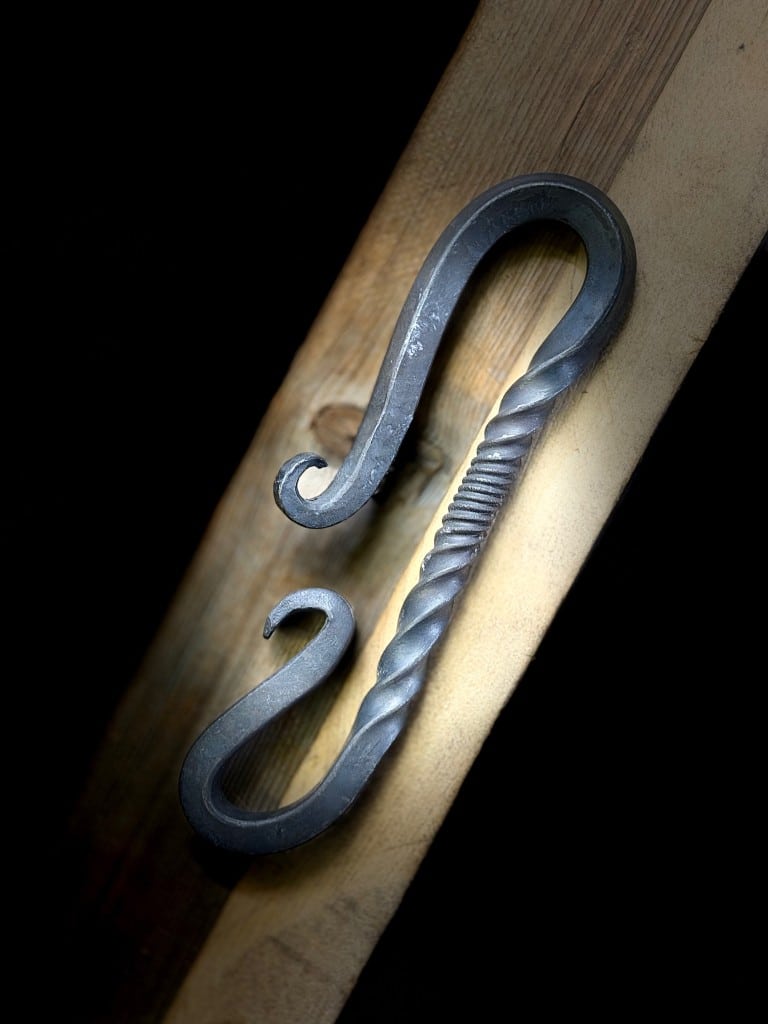
With an emphasis on safety and appropriate attire, including aprons, ear protectors, goggles and closed-toe shoes, West gave precise instructions on how to create the graceful curl of a hook out of a straight piece of metal.
“If you make a nice curve, happiness will ensue,” he told the students with a smile.
Natural teacher
Since opening the forge in Waltham in 2007, West has enjoyed watching students from different backgrounds grow and learn.
All kinds of people take his blacksmithing classes, he said, from zombie-apocalypse preppers, to medieval knight re-enactors, to those who are curious about the craft and want a creative outlet. Stevens, for example, said that repeatedly hitting metal on metal is an “outlet for stress.”
“They come from all over,” added West, who recalled teaching a 93-year-old and a 14-year-old at the same forge.
When he sees his students learning and using the techniques he has taught them, “my heart grows two sizes,” he said.
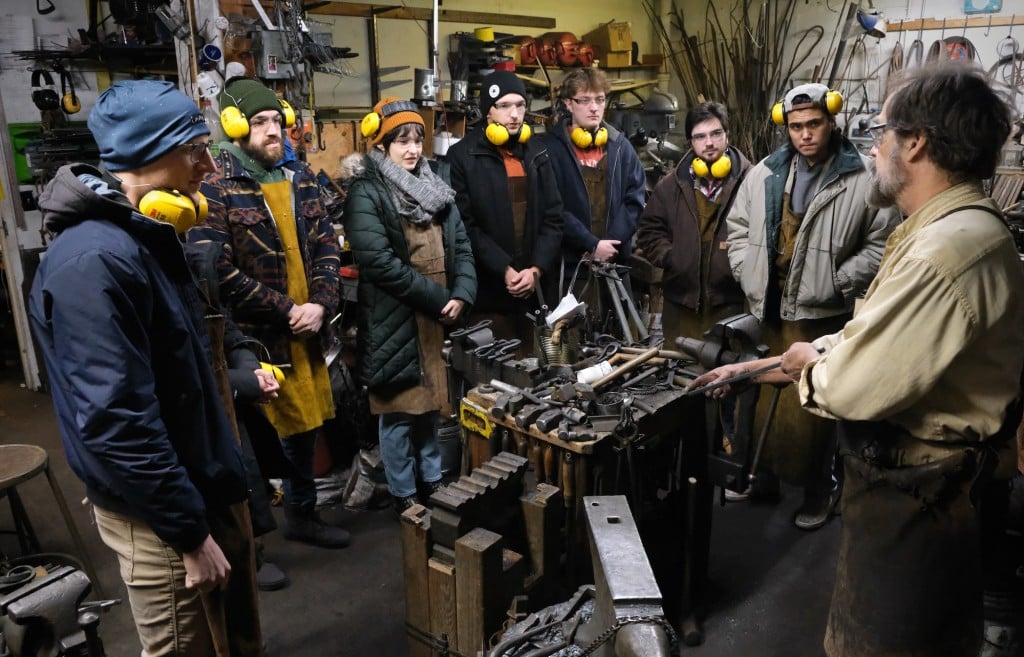
West didn’t always aspire to be a blacksmithing instructor. His friend and forge business partner Michael Bergman observed West’s innate teaching abilities when they were engaged in a very different activity: demonstrating Commedia dell’arte (an improvisational form of theater from the 16th, 17th and 18th centuries) at MIT.
Bergman admired West’s ability to reach students and show them how to break down and perform different characters.
“Different people need different words” to learn and solve problems, West said.
Bergman also knew West was a talented blacksmith, inspiring him to suggest they open a school. West thought, “This sounds like a really good thing.”
He decided if it didn’t work out, he’d become a certified massage therapist.
Irons in the fire
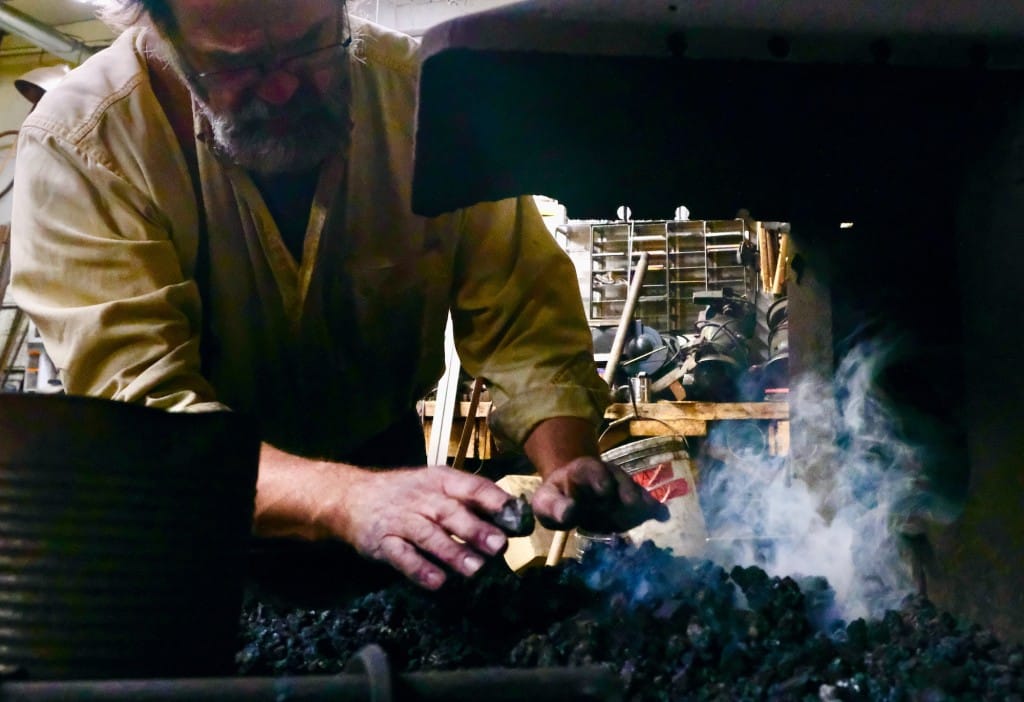
West is a man of many interests – from blacksmithing, acting and dancing to sword fighting and calligraphy.
When students ask for his advice on how to become a better blacksmith, he suggests studying calligraphy and basic material science to learn what’s happening to the metal as it heats, cools and is manipulated.
“You need to understand your materials. That is vital,” he said.
West said blacksmithing echoes calligraphy, describing it as “drawing in space with a piece of iron.” Both art forms focus on edges, lines and beauty.
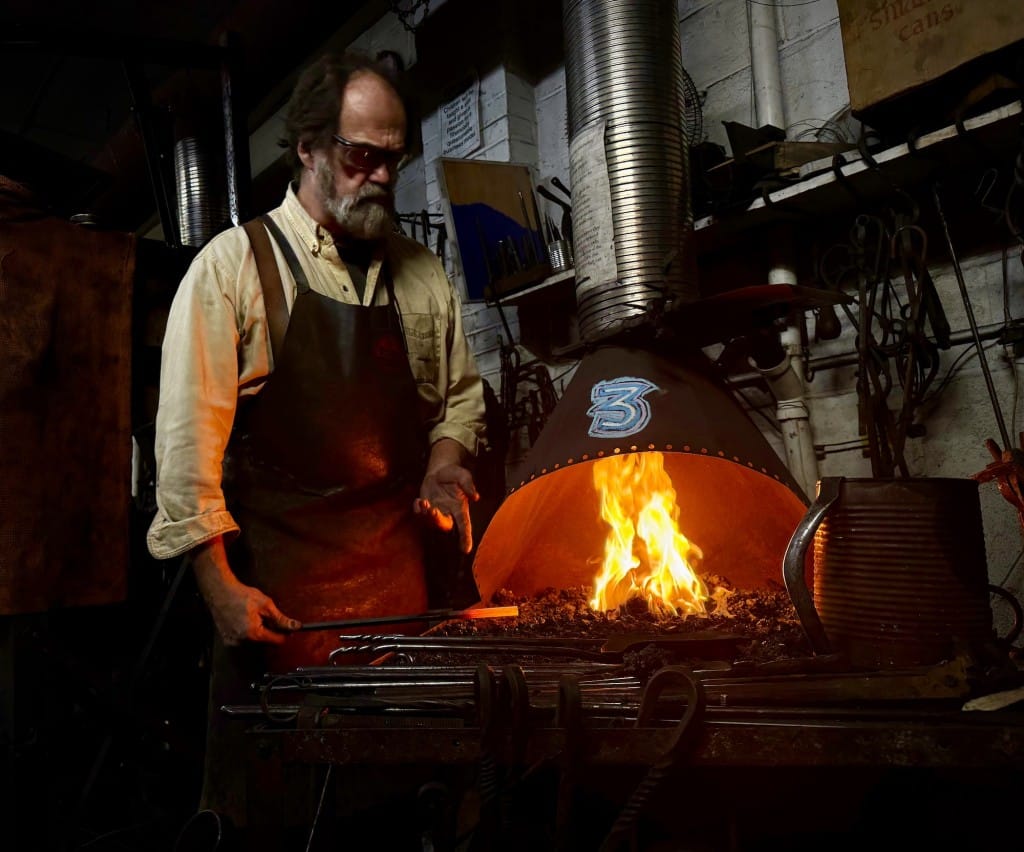
He first became interested in working with hammers, tongs and anvils when he started college in the 1970s. After reading the nonfiction book “The Village Blacksmith” by Aldren A. Watson during his sophomore year, he grew curious about the work.
That summer he got his own anvil, found a job with a Maine blacksmith and learned a variety of techniques.
“By the end of the summer … it [felt] kind of like God just told me I was going to be a blacksmith,” West said.
But the road to opening his own smithy took twists and turns, including a stint in high tech, before he took the plunge at Bergman’s suggestion. Since then Prospect Hill Forge has been inspiring future blacksmiths for 18 years.
As for West’s own repertoire, he has created a plethora of objects from practical implements such as forks, spoons, knives, frying pans, cooking tripods, trivets and candlesticks to decorative fairy crowns, flowers, swords and armor. Asked what his favorite item is to make, West answered, “Something I’ve never made before.”
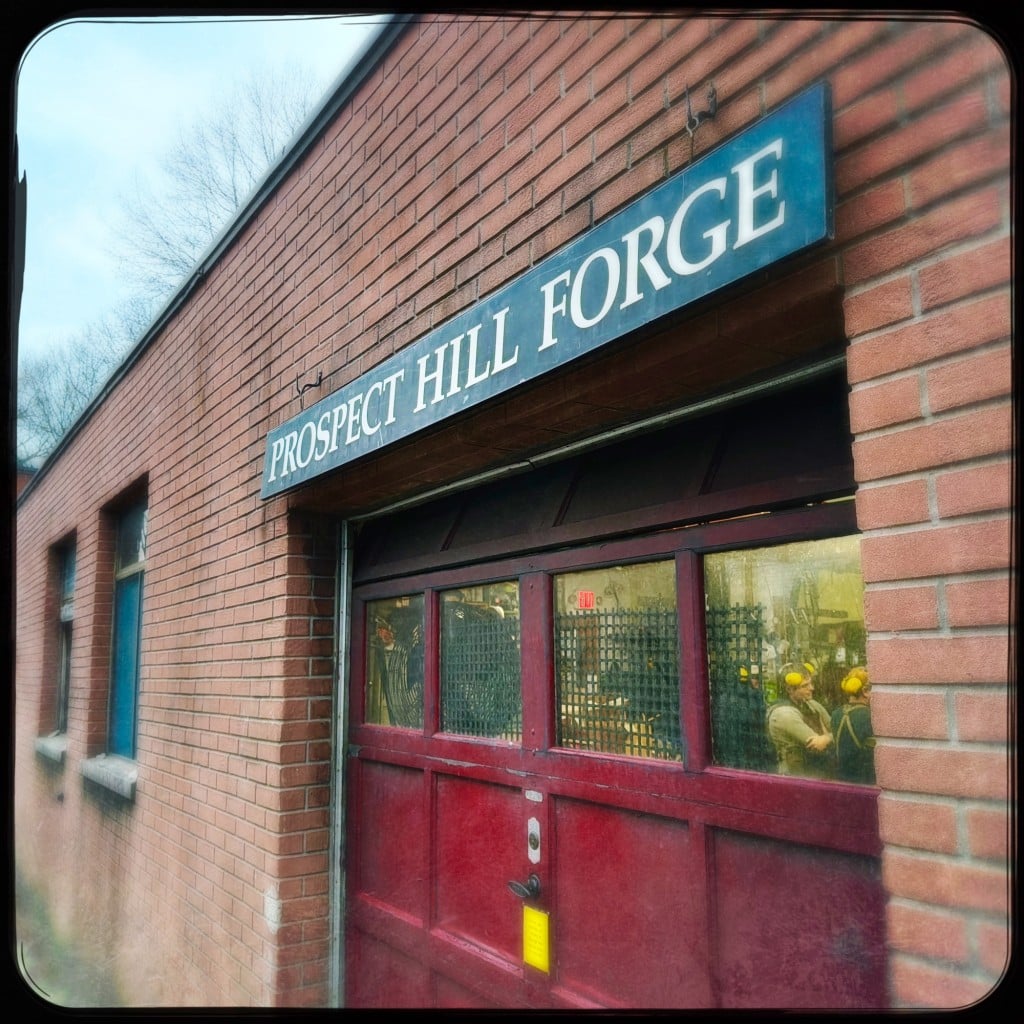
Prospect Hill Forge is located at 38 Guinan St., Waltham.
See David Greenfield’s full album of photos of Prospect Hill Forge.



Comments (0)
There are no comments on this article.