
ZBA delays Main Street multifamily parking case over unclear legal questions
The Zoning Board of Appeals agreed with an applicant at its Feb. 24 meeting to put off a decision in a case about parking at a mixed-use development on Main Street.
Waltham business owner Paul Yu owns a 150-year-old building at 719–732 Main St. and has proposed turning its top floors into housing.
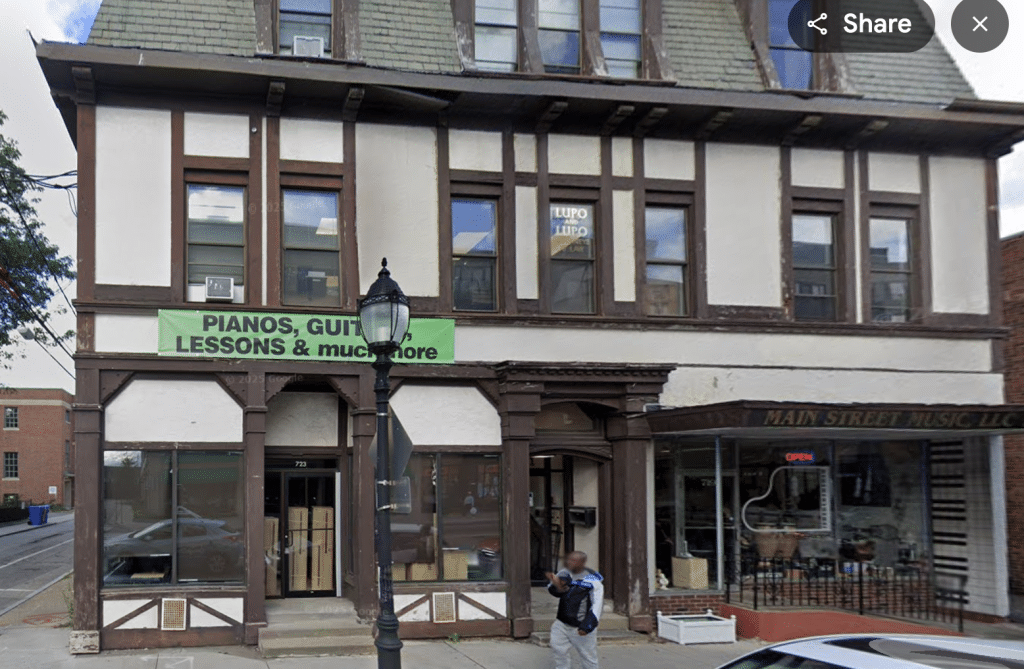
According to papers that Yu submitted to the board, the building is currently in distressed condition, but he is actively restoring it. He said that he plans to keep the ground floor for commercial use and turn the space above from “underutilized” office space into seven residential apartments.
The building itself takes much of the lot’s footprint and therefore only has two parking spaces on site, which Yu said was a result of its original 19th-century design. To build seven residential units in the Business C zoning district where the lot lies, Yu would be required to provide nine parking spaces for residents; Yu asked the ZBA to waive the requirement for all but the current two parking spots.
In documents he submitted to the ZBA, Yu asked for both the parking waiver and a special permit to build seven units at the site, which is more than the number of units he’s allowed to construct by right.
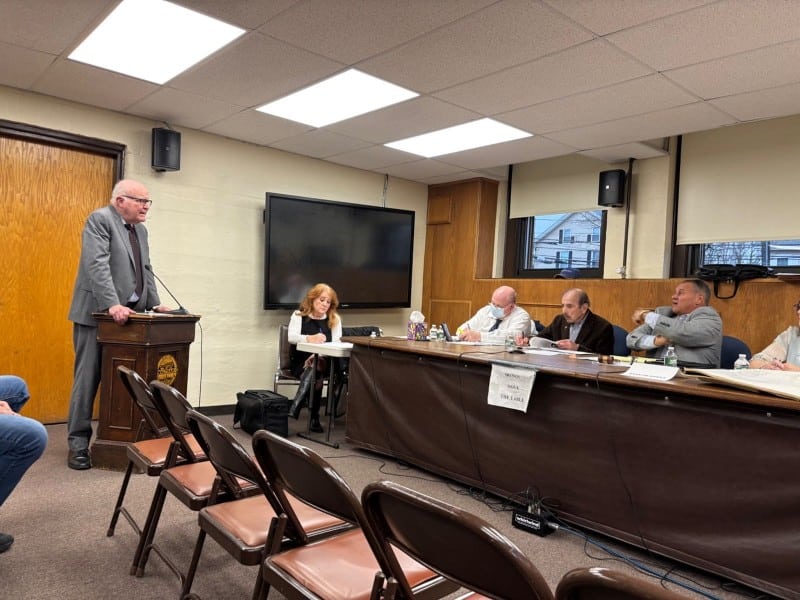
ZBA chair John Sergi said at the board’s Tuesday meeting that Yu is allowed to build three units of housing at the site by right, but stressed to Yu that the ZBA did not have the authority to grant a permit for the additional units.
Yu clarified that he was planning to go to the City Council to seek that special permit, saying he previously talked to the Building Department and Ward 6 Councilor Sean T. Durkee about the process and was told he needed to seek the parking variance from the ZBA first.
In an email to The Waltham Times, Durkee confirmed that, as he understood it, anyone petitioning the City Council for a special permit had to first seek out necessary variances from the ZBA.
Sergi and ZBA member Matthew Deveaux expressed hesitation about granting the parking variance for procedural reasons.
Deveaux said that he would not be willing to make a decision on the variance before knowing whether the City Council would grant the special permit for seven units. “If we said, ‘Okay, yeah, we’ll give you the parking variance,’ that’s kind of like us saying that we think you should have a different use for the building. We cannot do that,” he said.
The board also expressed confusion about the building’s parking requirements. Yu said that according to the city’s parking requirements for the Business C district — outlined in section 5.23 of the city’s zoning code — he would be expected to build nine spaces for the residential units and no additional spaces for the ground-floor commercial space, since it measures less than 20,000 square feet.
Sergi appeared skeptical about this part of the code: “I thought it was four [spaces]. I don’t think it’s zero. So I think you need to do a little bit of research on that to show us,” he said.
Both Sergi and Deveaux told Yu they would like him to engage legal counsel before returning to the ZBA and more clearly prove what hardship the additional parking requirements would incur. “It needs to be more in-depth for us to not muddy the waters before you go to council,” Deveaux said.
ZBA member Mark Hickernell said he supported Yu’s case, but underscored that recommendation. “I’m satisfied with your presentation. For a variance, you need four votes, and, judging from what I’ve heard, you probably don’t have that. So I think you should consider getting legal representation and coming with a presentation that convinces at least four of the board,” he said.
Yu asked to pause the case and to return to the board at a later date, and the board agreed to revisit it on March 24.
Background on the development
Yu previously submitted a traffic analysis that argued the effect of the reduced parking would not be overly detrimental to the neighborhood. He wrote in documents he submitted to the board that he would not be able to construct the units without this variance. “To strictly enforce modern parking ratios on this unique historic lot would be to effectively mandate the destruction of a landmark, as the site cannot physically accommodate both the building and the required stalls,” he said.
He also asserted in his submission to the board that he had received “strong neighborhood support” for the project. The board did not request any public testimony about the project.
Durkee, the ward councilor for 719–732 Main St.,, wrote to The Waltham Times that he “looked forward” to work to revitalize Main Street buildings.
“Paul will be improving the inside and beautifying the outside of 719-723 Main St. As long as people moving in know they have to provide their own parking, I love the mixed used concept at that address and will not oppose intensity of use or the parking variances being requested,” he wrote.
Author

Comments (1)
Comments are closed.
Happy to see a housing development and support from Councilor Durkee for continued mixed use here.
Hopefully the owner can avoid the parking mandate, which seems unnecessary here given access to so many amenities and the commuter rail.