
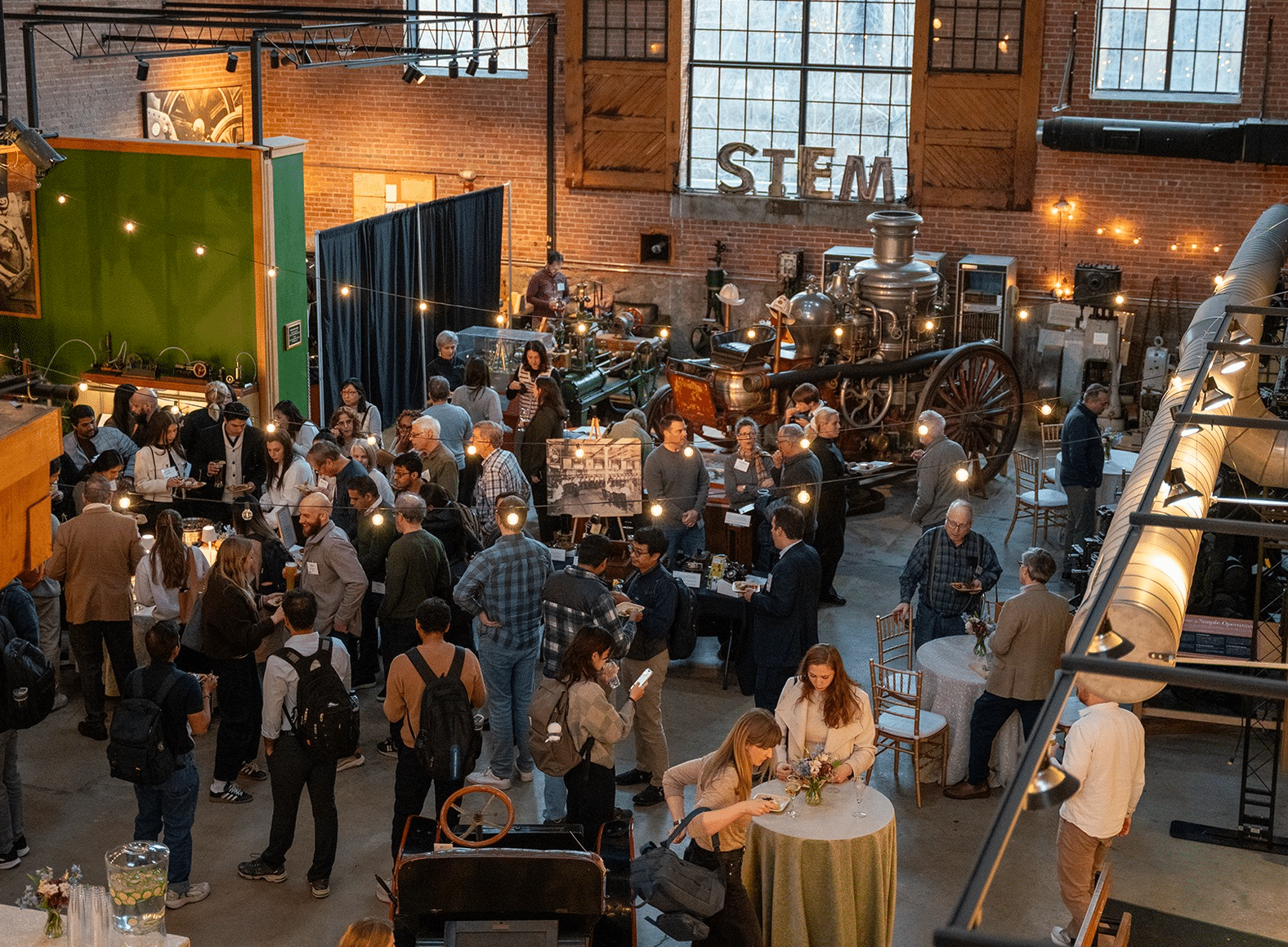
A historic reunion as Charles River Museum of Industry & Innovation celebrates the anniversary
“Mr. Watson, come here, I want to see you!” Every school child knows these words spoken by Alexander Graham Bell in the world’s first successful telephone call to his assistant, Thomas Watson, in March of 1876. 150 years later, the two legendary inventors had a reunion of sorts when their descendants Sara Grosvenor and Robert Mellors met at Waltham’s Charles River Museum of Industry & Innovation.
The museum celebrated the sesquicentennial of the telephone’s invention on the evening of March 27 and had arranged for Grosvener, Bell’s great-granddaughter, and Mellors, Watson’s great-grandson to both attend. It was the first time they had met.
After initially shaking hands with Mellors, Grosvenor exclaimed, “I need a hug.” Mellors smiled, later adding, “Isn’t it so wonderful, 150 years later for the families to be part of the history?”
The event, led by Boston University’s Mehrotra Institute for Business, Markets & Society, drew more than 100 guests including students, faculty, telecommunications leaders and museum volunteers and staff. Waltham’s own legacy of innovation made the museum a fitting venue, and Bell had been a BU professor, inventing the telephone while on paid sabbatical.
Marcel Rindisbacher, faculty director of the Mehrotra Institute, set the tone upfront: “We’re marking 150 years since the patent of one of the most consequential inventions in history. It became a technology that reshaped communications, technology and society.”
The gathering celebrated how the telephone’s invention continues to have far-reaching impacts. Steve Guerriero, the Charles River Museum’s director of education, noted that the event’s focus aligned with the museum’s goals.
“Our mission is about how the past can inform the present and future,” he said. “History is a series of stories that helps us put that into perspective.”
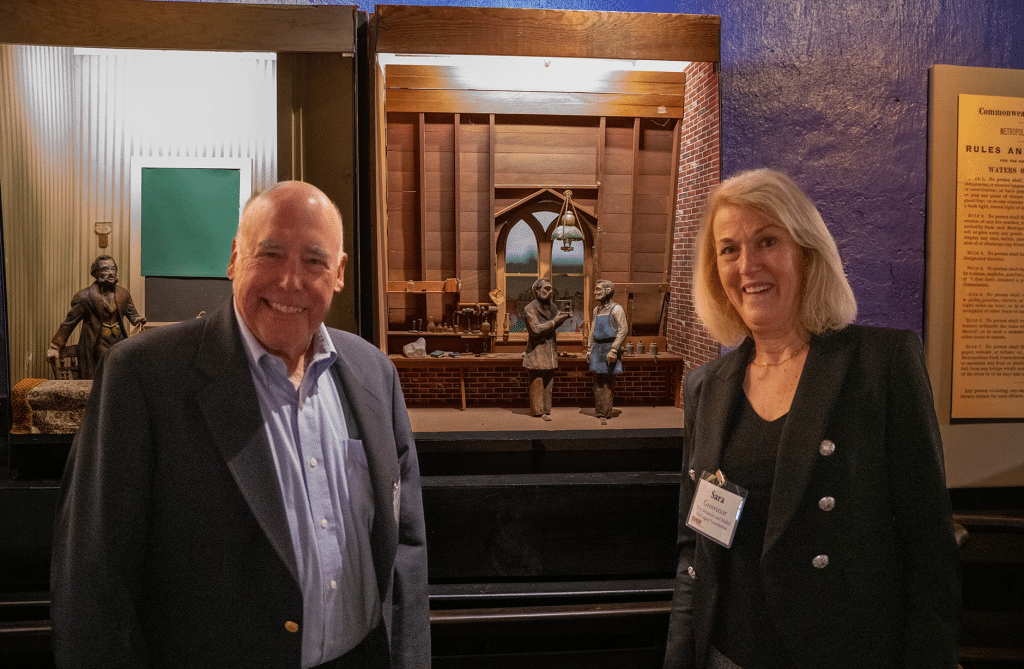
The Family Behind the Inventor
Grosvenor, who serves as executive director of the Alexander and Mabel Bell Legacy Foundation, emphasized the importance of Bell’s wife, Mabel, in both his personal and professional life. “She was the woman behind the throne,” said Grosvenor of her great-grandmother. “We joke that Bell wouldn’t be anywhere without her.”
She also highlighted Bell’s achievements beyond the telephone, from inventing a precursor to fiber optics technology, to helping fund National Geographic and advocating for the deaf community.
Bell’s parents taught the deaf, his wife Mabel was hard of hearing and he met Helen Keller after receiving a letter from her father. “He wanted deaf people to participate fully in life,” said Grosvenor.
Asked what might surprise people about Bell, Grosvenor smiled. “He wouldn’t have a phone in his office, it was too big a distraction.” She then shared a lighter anecdote: Bell enjoyed “swimming naked on his back smoking a cigar.”
Bell’s love of nature was evident in his frequent family retreats to their Nova Scotia residence, a tradition his descendants continue today.
Bell’s Trusted Partner
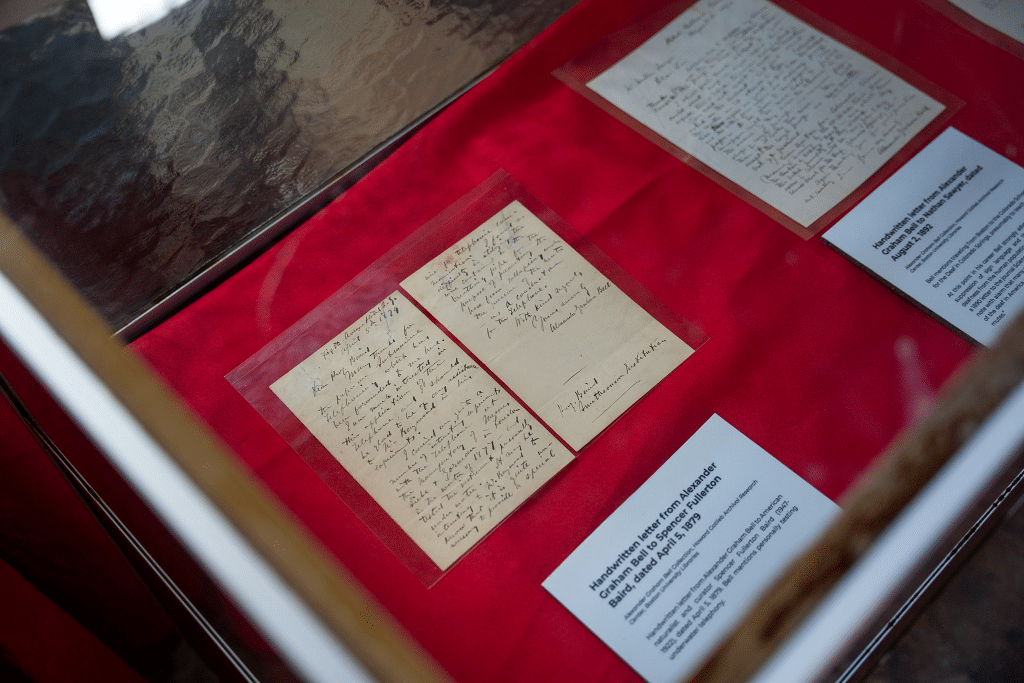
Grosvenor emphasized that the greatest innovations are rarely achieved alone. She quoted her great-grandfather Bell, who often credited his assistant Watson: “He took my ideas and turned it into reality.”
Mellors, Watson’s great-grandson, attended the event with several family members. He described Watson as a “tinkerer,” whose skills first caught Bell’s attention at an electronics business in Boston. “Bell was impressed by how good he was with his hands,” added Mellors.
At the time of the telephone’s invention Bell was 29, while Watson was just 22. “He was the first to hear words over the telephone,” Mellors shared, adding there was urgency to Bell’s historical call because he had just spilled battery acid.
Like Bell, Watson’s talents extended far beyond the telephone. “He was a painter, he did a lot of other things,” said Mellors. “He very much liked being an innovator.”
After the telephone’s invention, Watson went on to co-found (with Frank O. Wellington) the Fore River Shipyard, pioneering the construction of steel ships for the U.S. Navy. That business would eventually become part of Bethlehem Steel and, later, General Dynamics, an aerospace and defense company.
The Living Descendants
The event’s sense of history was heightened by the presence of the Bell and Watson descendants. Kris May, executive director of the Mehrotra Institute, reached out to Grosvenor months earlier after finding her foundation online. Meanwhile, Guerriero of the Charles River Museum discovered Watson’s descendants had local roots through a decade-old news article. After they were contacted about the event, the family agreed to participate.
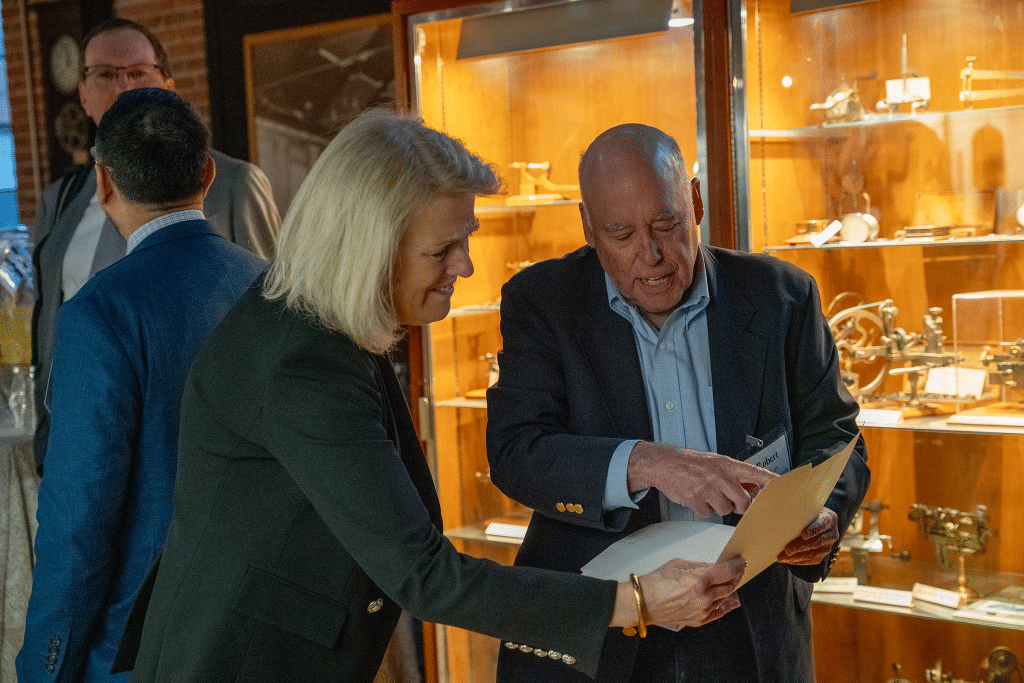
As the celebration continued, Grosvenor and Mellors met with Guerriero at the museum’s in-house display of Bell lab dioramas: miniaturized folk-art-styled recreations of the telephone’s invention. The descendants exchanged stories and memories passed down through generations.
“It’s incredible that the history is within living memories,” reflected Guerriero.
The Charles River Museum of Industry & Innovation is located at 154 Moody St., Waltham. Parking can be found at the public lot behind Embassy Theater at 42 Cooper St. Take a short walk across the footbridge next to the lot’s lower level and follow signs to the museum. For more information, visit the museum’s website.
Author

Comments (0)
There are no comments on this article.