
Potter Place inspires confidence, purpose for people with mental health conditions
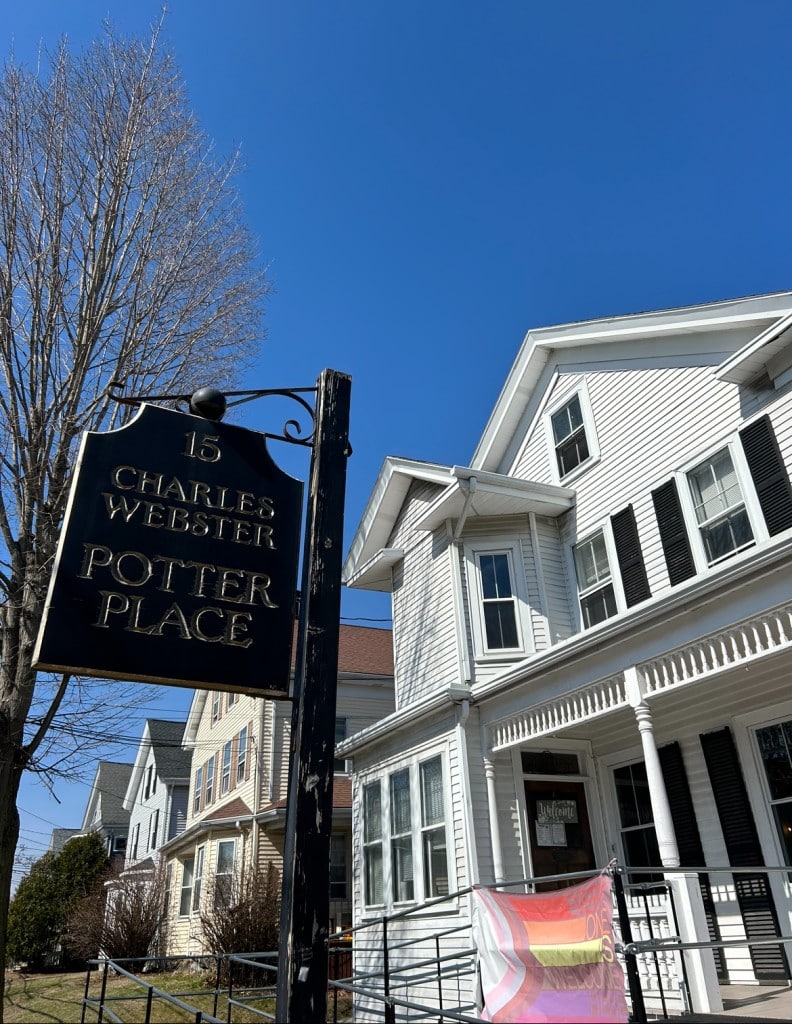
Ruth Torres, 55, has been showing up to Potter Place Clubhouse in Waltham four days a week for nearly three decades — not just to pass the time, but to build new skills, from math to French, with the help of staff who guide her progress.
“I decided to come to the clubhouse to find a job, to work dependably by myself, to help my family,” she said.
Community unit coordinator Menucha Krinsky began teaching Torres skills when Krinsky first met her as an intern. They began doing puzzles together, and eventually she introduced her to educational French and math videos on YouTube.
“I knew that Ruth had a brain that she wasn’t utilizing in the way that I wanted her to,” Krinsky said.
While most mental health services offer a clinical space for therapy, Potter Place Clubhouse on Vernon Street offers a warm, welcoming space where members like Torres can build confidence and find a sense of community.
They eat meals together, socialize, sweep the floors and answer phones together — all in the name of building community.
“Everything we do is done side by side for the overall mission of supporting members in recovery from mental illness,” said Michael Nderitu, assistant director of Potter Place Clubhouse. “Our model is recovery through work.”
Regaining a sense of purpose
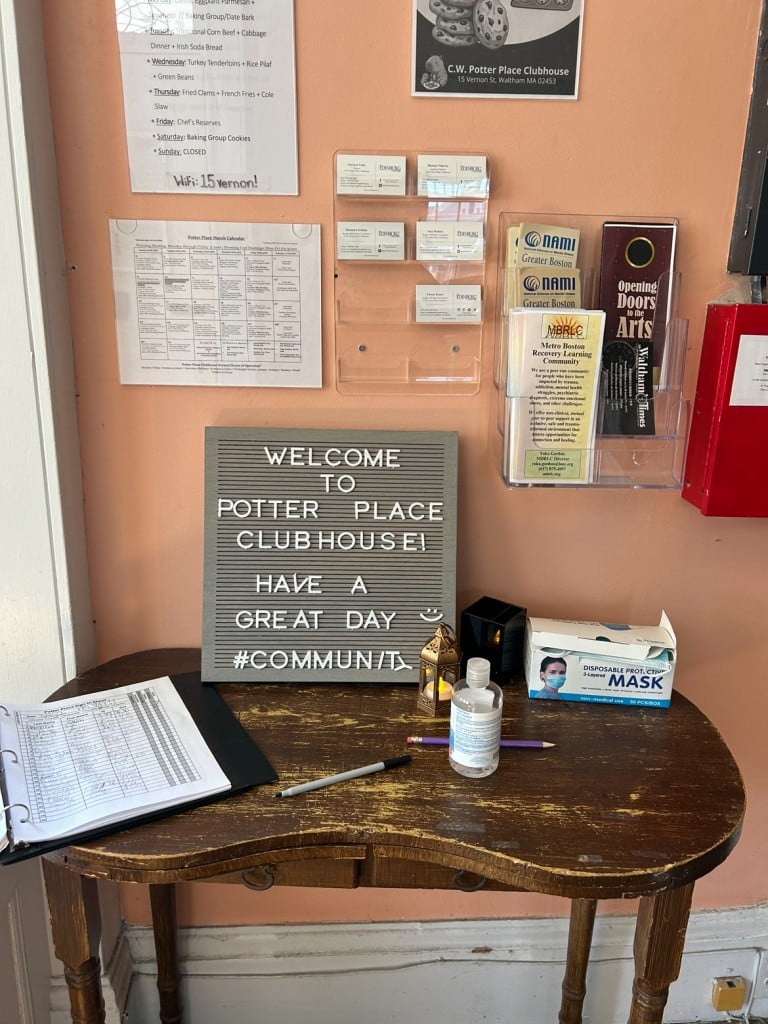
Since 1988, Waltham’s Potter Place Clubhouse has emphasized pre-vocational, vocational and social experiences to support people with mental illness
The program is based on the international clubhouse model, which designs mental health treatment based on helping members regain a sense of self purpose and vocational confidence to be productive in society.
Potter Place has 100 members in Waltham. Its motto states “Once a member, always a member,’’ Nderitu said.
About 20 members with a diagnosed mental health condition come to the clubhouse daily for services, which are funded by the Department of Mental Health.
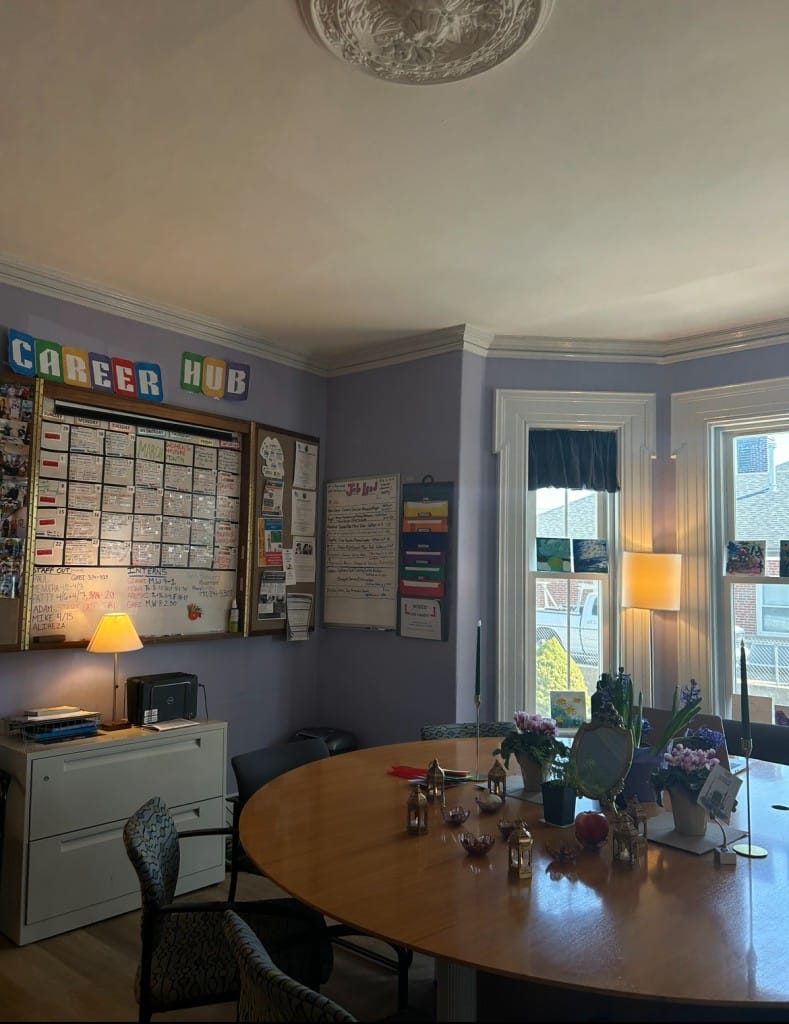
A pillar of the clubhouse’s model is its Transitional Employment Program, which helps members find short-term employment for six to nine months with local businesses, including the Waltham Chamber of Commerce, Brandeis University, More Than Words bookstore and Common Good coffee shop.
The goal is to find jobs that best suit members’ interests, Nderitu said. Members typically get janitorial, clerical or food services work. “[This is] meant to build them up, get them used to working again, so that hopefully, ideally, the next step is moving on to a part-time or full-time position,” Nderitu said.
Peter DuBois, a 65-year-old Belmont resident, has been a member of Potter Place for 30 years and said he prefers the clubhouse model over group therapy.
“If you’re an adult living in the United States, work is important,” he said. “You can do so much group therapy, [but] getting back to work, that’s very important.”
“We help people regain the confidence that they need to go about their life to reenter the workforce, get back to school, or just be part of a community,” Nderitu said.
Building confidence and community
Molyna Richards, executive director of Waltham Chamber of Commerce, hailed the clubhouse hiring program as good for the members and the larger community.
“We tell people how remarkable it is and the benefits of hiring from Potter Place,” she said.
She added, “They do little things, and that gives them the confidence of being back in the workplace. They get to meet other business professionals, and they can network that way, which is really helpful.”
Potter Place offers more than just employment opportunities. It holds socials every Saturday, planned and decided by members themselves, and is even open on holidays.
“Some people do just come here for the social aspect,” Nderitu said. “[They] want a community.”
Krinsky said she’s witnessed members form “strong bonds” with one another, socializing in, and sometimes outside of, the clubhouse.
“[For many members] this is the common ground, this is how we connect,” she said. “This is going to be our place, which puts a lot of reliance on this place being here.”
This story is part of a partnership between The Waltham Times and the Boston University Department of Journalism’s Newsroom program.
Author




Comments (0)
There are no comments on this article.