
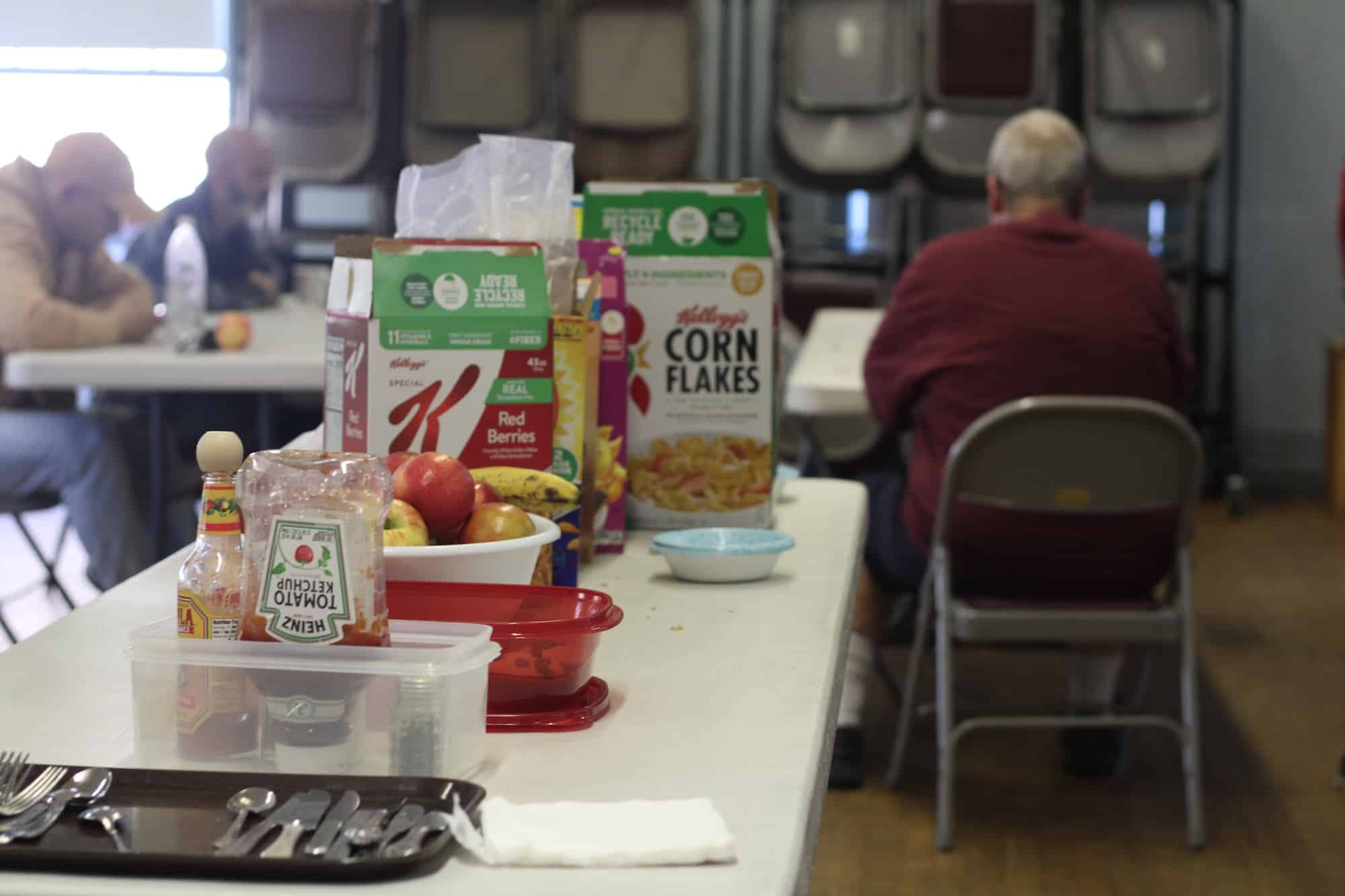
Photos by Kay Matipa
“If people come out at night and see what’s going on, they would know it’s a struggle,” Eric Brown said. “There have been times I slept out in the cold at night — it sucked.”
Brown is one of over 100 individuals in Waltham experiencing homelessness.
Among these are elderly people who have fallen through the cracks, individuals fleeing domestic violence or navigating immigration, those battling mental illness and substance use disorders. A report published by Waltham’s Ad-Hoc Committee on Affordable Housing in December 2020 notes that COVID-19 and the resulting economic crisis also added urgency and difficulty to Waltham’s housing issues.
Originally from the South, Brown moved to Massachusetts as a kitchen prep team member with Chick-fil-A, a job he held for 15 years. Company layoffs led to a domino effect of unemployment and depression.
“Once you go downhill, it’s hard to climb back up,” he said.
Hot breakfast around the corner
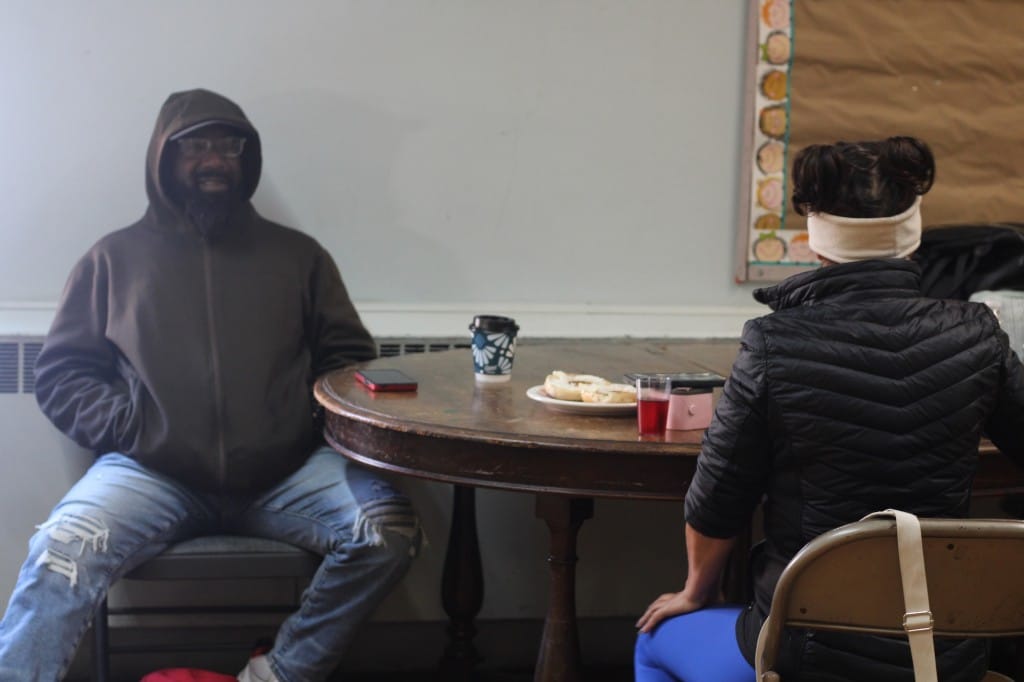
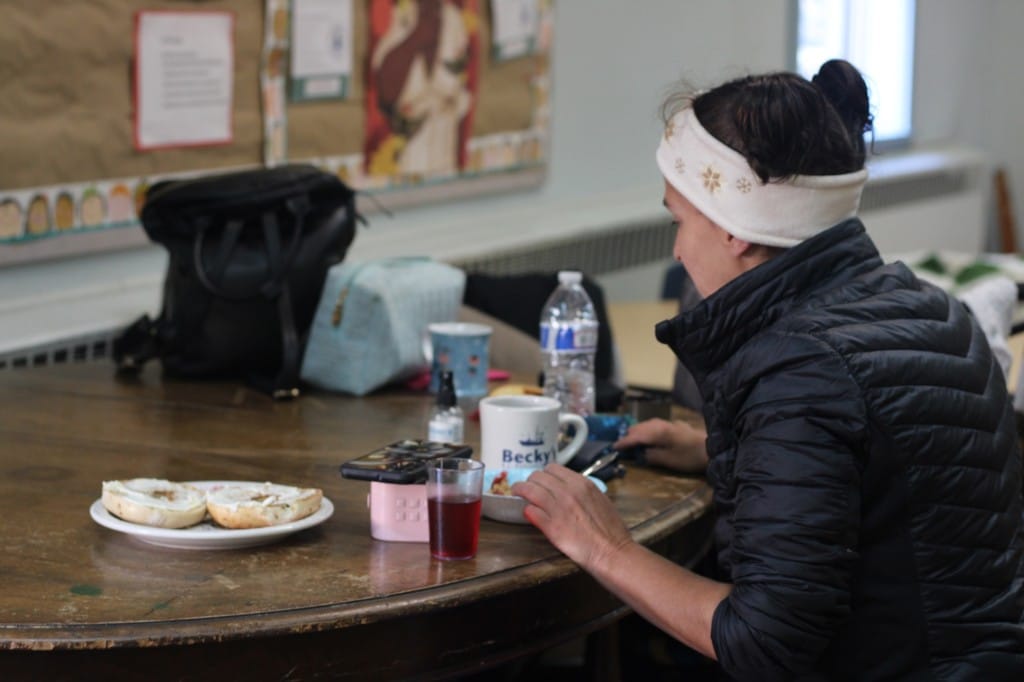
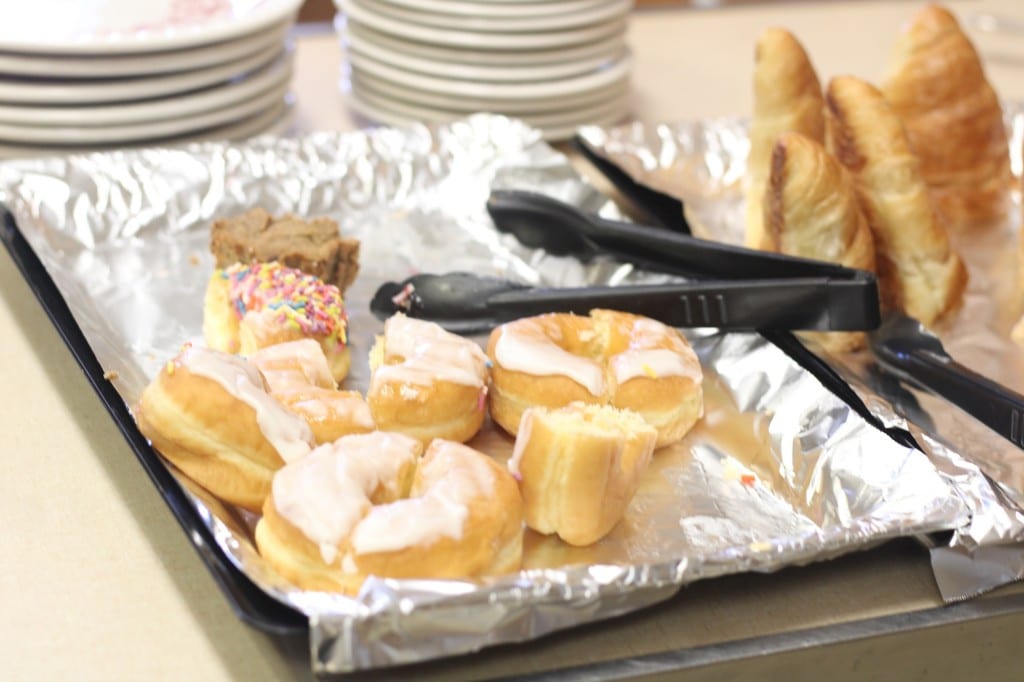
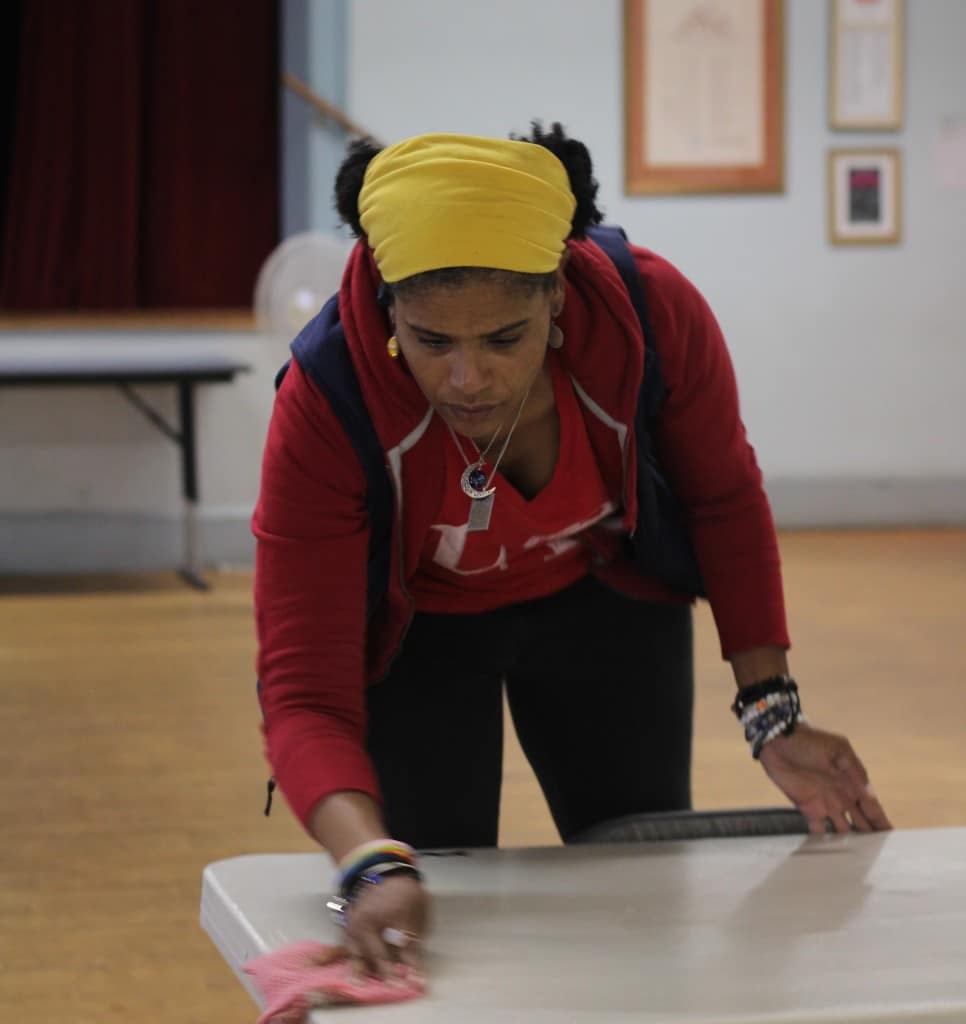
Tuesday morning finds Brown sitting at a table in Waltham’s First Parish Church, enjoying breakfast with friends in the unhoused community. The breakfast is a result of First Parish’s partnership with Chaplains on the Way, a nondenominational, interfaith nonprofit.
The partnership was kick-started during the COVID-19 pandemic, when typical spaces of rest for the unhoused community closed.
“I think everybody was really surprised at how many people wanted to help, [and] how many people there were to help,” Marc Fredette, former First Parish minister and director of Chaplaincy & Programs for Chaplains on the Way, said.
Tuesday to Thursday, June through September, and Monday to Friday during winter months, Chaplains on the Way pays discounted rent for use of church facilities.
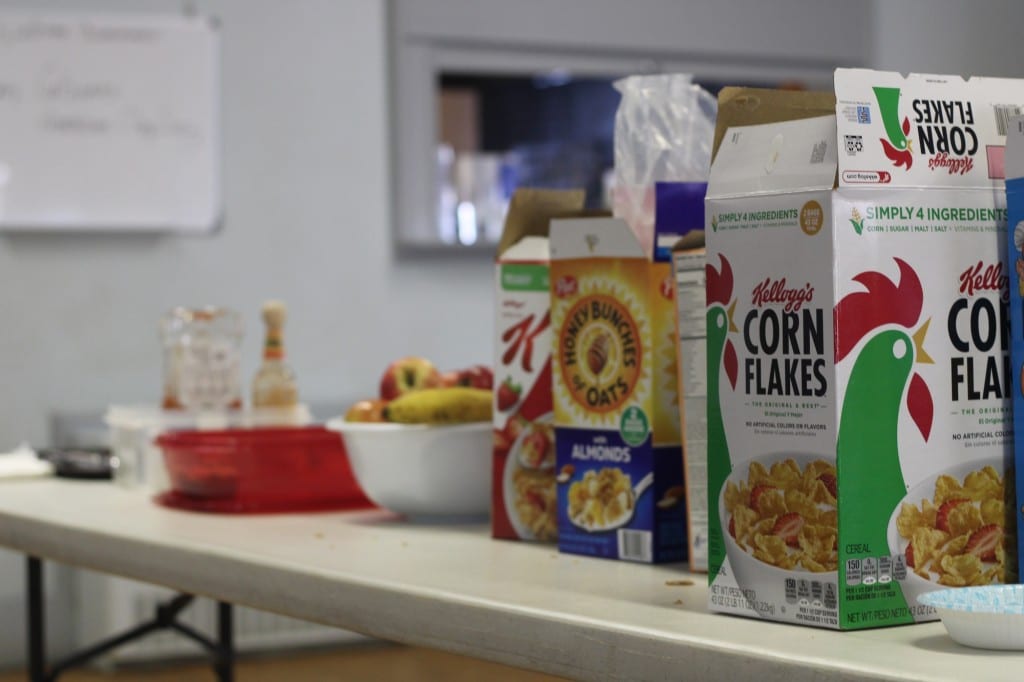
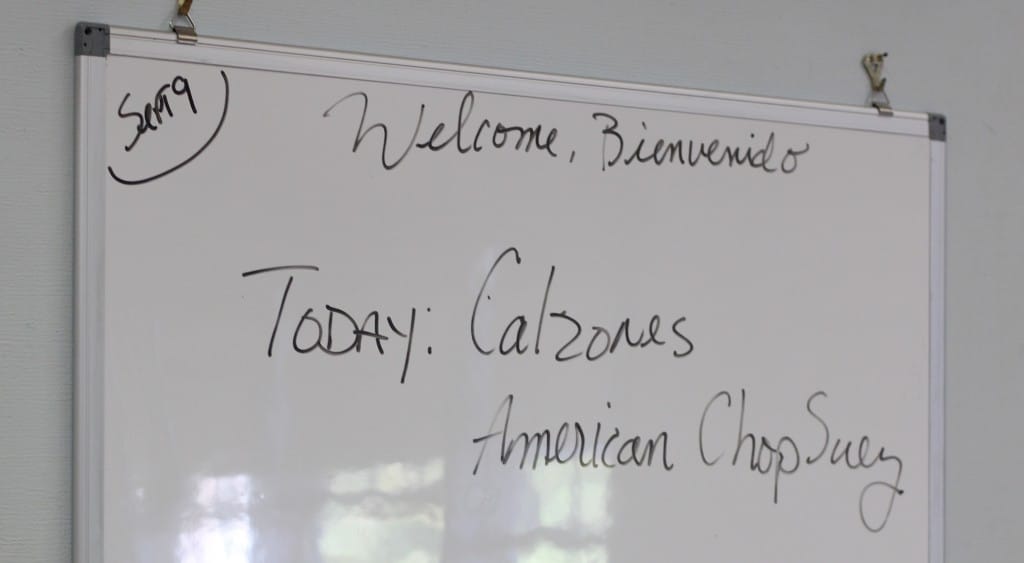
From 7:30 a.m. to 10:30 a.m., guests from the unhoused community are offered a hot breakfast, social gathering space, fully stocked bathrooms and space to sleep. The church is conveniently situated near a men’s shelter on Lexington Street. When individuals are required to leave shelters at 7:45 a.m., breakfast is waiting around the corner.
The program supports an average of 30 unhoused individuals a day during warmer months and 50 during the winter. Volunteers — some of whom benefitted from the program themselves — make and serve breakfast. Arlington’s Food Link, an organization redistributing surplus food from industry donors, fills an order for the program weekly.
“More in common than we think”
Fredette estimates 40% of the program’s guests are partially employed.
“When I sit and talk, especially with the men around my age, I realize that we have much more in common than we think,” said Fredette. “And the fact that I’m running this program and they’re coming in for breakfast is just (the difference of) a couple of choices along the way. We are so much more vulnerable than we think we are.”
Chaplains on the Way’s programs include weekly interfaith prayer services, one-on-one counseling with chaplains, grief groups and Waltham’s Community Leadership Group — unhoused individuals addressing collective issues.
Unlike other initiatives, such as the Community Day Center of Waltham, Fredette notes that Chaplains on the Way’s strength is not social advocacy. Instead, the goal is recognition through relationships.
As the only drop-in day center in MetroWest, CDCW provides a daytime space for unhoused adults Monday through Friday, 12:30 to 4 p.m. The center’s services are two-pronged: case management along with essential services such as meals, mail services, clothing and access to nurse volunteers. During the coldest months, CDCW takes overflow when shelters are at capacity.
Tackling root causes of homelessness
The CDCW focus is on those impacted by homelessness for one year or more: the “chronically unhoused.” Though each case is complex and individual, Chloe-Rose Crouch, executive director of CDCW, notes that many experiencing homelessness share patterns of insufficient financial means and lack of healthy community — among other factors.
“Because we specialize in folks that are chronically homeless, we see a lot of folks with really severe, untreated mental health issues,” she said. “A lot of our folks are dealing with schizophrenia and paranoia [and] really severe PTSD — in fact, our statistics suggest that almost everybody in our case management program has a PTSD diagnosis.”
CDCW estimates over 2,000 case management appointments are made and over 10,000 meals served annually. In the past year, the center placed 28 chronically homeless individuals in long-term, stable housing — one of the highest housing placement percentages of homeless agencies in the region.
Other resources available to Waltham’s unhoused community include Bristol Shelters run by Middlesex Human Service Agency. The city has also made strides in establishing affordable housing units — with a lottery in March offering 53 affordable units to households at or below certain income levels, and the Leland House (also opened in March) offering 68 units to adults 62 and older with low to moderate incomes.
Additionally, the Waltham Police Department’s Social Work team works to de-escalate crises, assist with substance use disorders and connect individuals to resources. The team hosts a station every Friday, encouraging drop-ins from 11 a.m. to 1 p.m. at the Waltham Public Library.
“I like the way that we work together,” Crouch said. “I appreciate the way that city officials invite the Community Day Center to the table when they’re talking about policies and legislation surrounding homelessness.”
Unhoused people also contribute to the community
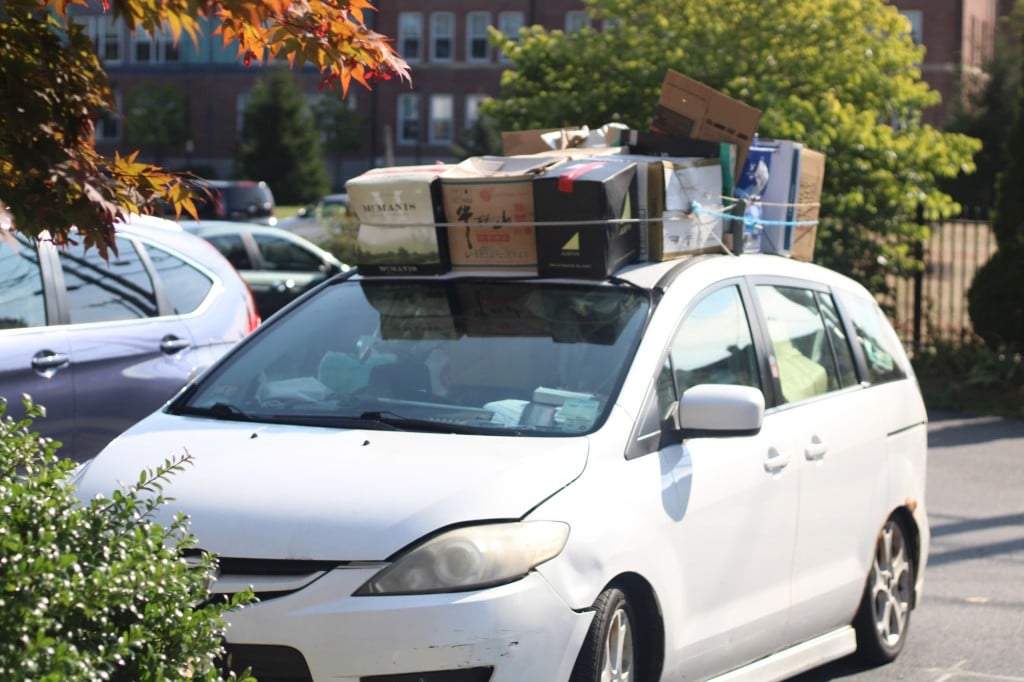
Nonprofits and city-funded initiatives are critical resources for those experiencing homelessness. But, Brown notes, Waltham’s unhoused community is a resource in and of itself — with members looking out for one another’s well-being.
“It’s loving and it’s stressful, sometimes — little cuckoo, also — but everybody, they still communicate with each other and worry about each other,” he said. “They carry people and everybody communicates. Community really helps each other out.”
Crouch and Fredette agree. Crouch describes those she serves as “community-oriented.”
“These people know one another fairly well, and they help one another, and they fight with one another — like a family, very much like a family,” Fredette said.
Barriers to developing more affordable housing in Waltham, as referenced in the Ad-Hoc Committee on Affordable Housing report, are significant: zoning laws, inadequate funding, lack of racially and economically diverse neighborhoods, increased evictions, costs of homeownership, apartments not up to building code and years-long waitlists for senior housing.
In recent years, the city’s zoning code made it difficult to comply with the MBTA Communities Law, which led to a loss in state funding for the Waltham Housing Authority. The city council has since revised its zoning proposal, and will no longer lose state grants — but the aftermath of restricted funding remains.
Potential actions mentioned in the Affordable Housing report are steps in the right direction: funding for Mayor Jeannette A. McCarthy’s affordable housing initiatives, zone changes, allocating 5% of annual building permit fees to the Municipal Housing Trust Fund and requiring landlords to provide tenants’ rights prior to eviction.
More resources are needed
The most significant barrier in the nonprofit sector? Funding.
Events like Chaplains on the Way’s upcoming dinner, scheduled Wednesday, Sept. 17, at 6 p.m., invite community members to come alongside organizational efforts in supporting unhoused neighbors. CDCW hosts similar fundraising efforts throughout the year, with trivia nights and an October gala.
The end goal, Fredette said, is not only to raise funds, but to raise hope — and to generate awareness and compassion among those attending.
“A lot of people walk by unhoused folks and ignore them or move to the other side of the street,” Crouch said. “And I think what’s special about our work is it’s a reminder to the broader community that these individuals have stories. They have complexity. They’re wonderful, wonderful people that laugh and cry and experience things just like us.”
Author

Comments (6)
Leave a comment
When commenting, please keep in mind we are a small non-profit focused on serving our community. Our commenting policy is simple:
- Common sense civility: we’re all neighbors, but we can disagree.
- Full name required: no anonymous comments.
- Assume the best of your neighbors.


If I were to send a monetary donation, to whom should it be addressed.
To whom do you wish to make a donation? Chaplains on the Way or Community Day Center?
You can mail a donation to Chaplains on the Way to 50 Church Street in Waltham. Thank you!
Thank you for covering this issue in a detailed and compassionate way. Sometimes it’s hard for people to remember that misfortune can befall any of us, and that those that need assistance are human, too. I wish there were more resources to help. Frankly, I believe there’s plenty of money around, but it’s a matter of political will. Hopefully, we’ll get there. In the meantime, the city should be very grateful to all that help to look after the unhoused in productive and creative ways. They really are wonderful people.
This is an excellent article, the most comprehensive one I’ve read on this topic in the Waltham media. Thank you!
Excellent reporting!