
Waltham after dark: Rethinking social life in Waltham
Waltham residents discuss their desire for additional places to socialize around the city, including well into the night.
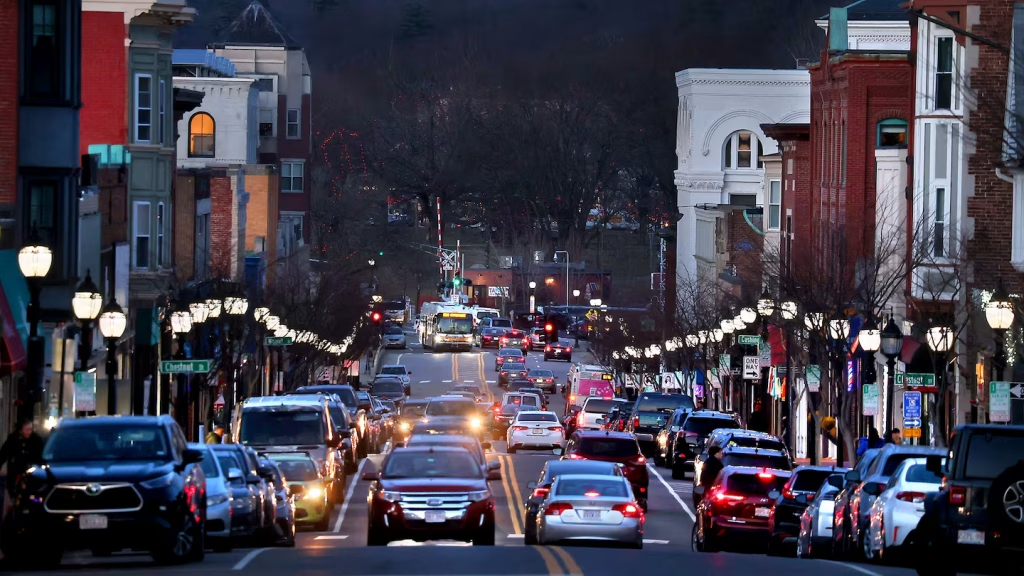
As midnight approaches at the end of a long week, neon signs from bars and restaurants along Waltham’s Moody Street continue to reflect off of the pavement; but the sidewalk traffic is thinning. A few couples linger outside, conversing softly as the laughter of small groups trails off into the distance. By 1 a.m., the laughter fades, music quiets, lights dim, and Moody Street slips into a quiet lull.
To some, this somewhat early bedtime is a welcome sign of balance in a city that knows when to rest. Others wonder if Waltham’s predictable pace is a symbol of a missed opportunity and a ceiling on the potential of the city’s social life. But is Waltham missing out, or simply staying true to itself?
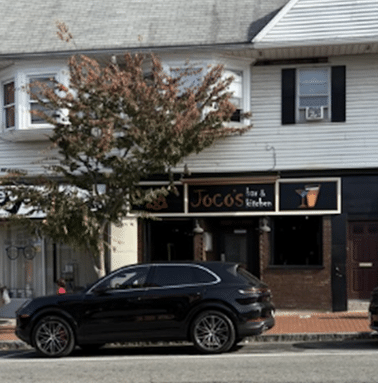
“Waltham’s not going to be that hotspot,” says Jace Varden, owner of Joco’s Bar and Kitchen on Moody Street. Varden recently purchased Joco’s Bar and Kitchen on Moody Street from his brother-in-law, who started the bar 18 years ago, as well as his sister. Varden has been working behind the scenes at the bar for the last five years during the transition away from COVID-19 protocols. “It has what it has,” he continues. “Most people who are going to go out, they’re going to go to Boston.”
Indeed, Zach LaCorte, 24, outsources when he wants an experience that Waltham may not be offering. “I like to go to dance clubs and stuff like that,” he said, explaining how a recent trip to New York City prompted a new love of House/EDM music and clubs. While he thinks Moody Street’s diverse restaurants are worth the hype, he’ll often venture into other neighborhoods if he’s looking for a clear-cut dance club. “You’ll mainly find me in Back Bay if I’m going out,” he added.
However, for locals like Lisa Kelly, 39, a lifelong Waltham resident, the draw that Moody Street currently provides is enough. “Moody Street is still the place to be.” Kelly said. “It’s a really easy way to get a good food and bar vibe without having to go into the city.” For her, the appeal isn’t in its excess or flair, but in the fact that you can park nearby, find a good meal, see familiar faces, and find your way home at a reasonable hour. “Some of the bars are not open late enough for some people,” she continued, “[but] I don’t really think it’s lacking.”
Business owners like Varden agree with this sentiment. Their closing hours aren’t necessarily a constraint so much as a reflection of what works. He explains how his regulars follow their routine: they linger until last call, and then go to neighboring towns like Brighton or Watertown if they decide the night isn’t over. “I’m sure our numbers would be bigger if we stayed open later,” he added, “but I just don’t know if that makes sense socially.”
There are also other practicalities to keep in mind. Waltham’s liquor license policy does not allow an establishment to remain open beyond 1 a.m. Additionally, businesses without a liquor license must be closed between midnight and 6 a.m.
A craving for ‘third spaces’
Still, there is a developing sense that maintaining Waltham’s identity could also mean recognizing where the city has room to grow. “There aren’t many outlets,” Zach continued. “We have so many beautiful restaurants on Moody Street, but you don’t always want to be in that setting, in a sit-down restaurant or a bar. You might want something a little more lively.”
Anthony Mariello, a risk consultant who has been living in Waltham full-time for the past year and a half, also believes Waltham may benefit from establishments that go beyond the average bar or restaurant. He craves something that is a “mix of doing an activity, while also having fun, drinking and eating,” listing a number of businesses that fall into that category, like Putt Shack at the Natick Mall, ax-throwing bars and a Formula 1 Arcade located in Seaport.
Zach and Anthony’s comments might appear as a call for more entertainment, but they point towards something more subtle and potentially more essential. Zach and Anthony are describing third spaces, or those increasingly endangered environments that exist between home and work, where community happens and people are able to gather.
Post-pandemic, third spaces have become harder to find. Digital substitutes never quite capture the organic nature of chance encounters or neighborhood familiarity at places such as a coffee shop where people sit and linger rather than grab and go.
Anthony said he feels this most in places like the Farmers’ Market and Waltham Common, where the city supports events in the summer. “A lot of it’s geared towards children and families,” he said. “I’d love to see more consistent events that bring a mix of people out there too. Classes, workshops, something where you can meet people from the community.”
Local organizations have recognized the lack of third spaces and the vital role they play in a city, as groups such as Waltham Social look to host “low-pressure events” that are “designed to help people connect naturally.” The Boston Public Library’s current strategic plan for 2025-2030 also mentions the potential of third spaces, as it looks to reimagine its branches as a “place of belonging,” where people can connect, create, and celebrate their communities.
The search for nightlife then reveals something much simpler and more heartfelt: people miss each other. The promise third spaces provide is not just livelier streets or busier weekends for businesses, but a renewal of the small, sustaining moments communities have together. It’s not about staying out later; it’s about staying together longer.
This story was produced in collaboration with the Brandeis University Journalism Program, overseen by Professor Adriana Lacy with mentoring for student journalists by Waltham Times editors June Kinoshita and Mary Pratt.
Authors



Comments (1)
Comments are closed.





Yet another reason for us to modernize our zoning code to allow these uses! The Substation in Roslindale is a great example of a ‘third place’ or ‘the community’s living room’. It’s family friendly with kids’ games until a certain time in the evening, at which point it becomes a low-key hangout for adults:
https://thesubstation.space/