‘Who Will Draw Our History?’ showcases women’s Holocaust testimonies in art
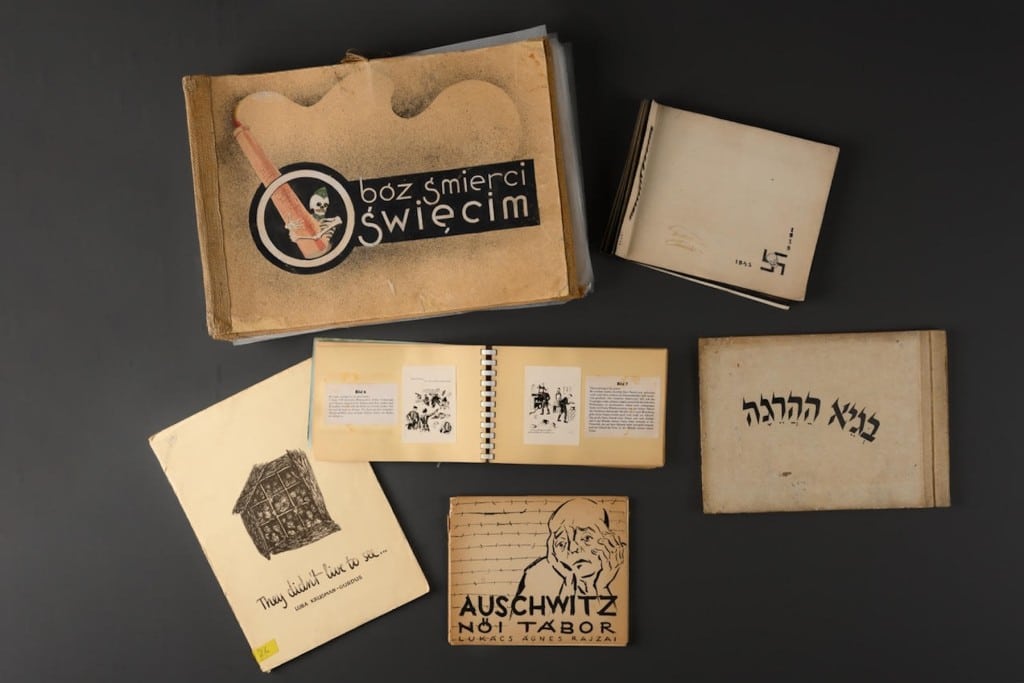
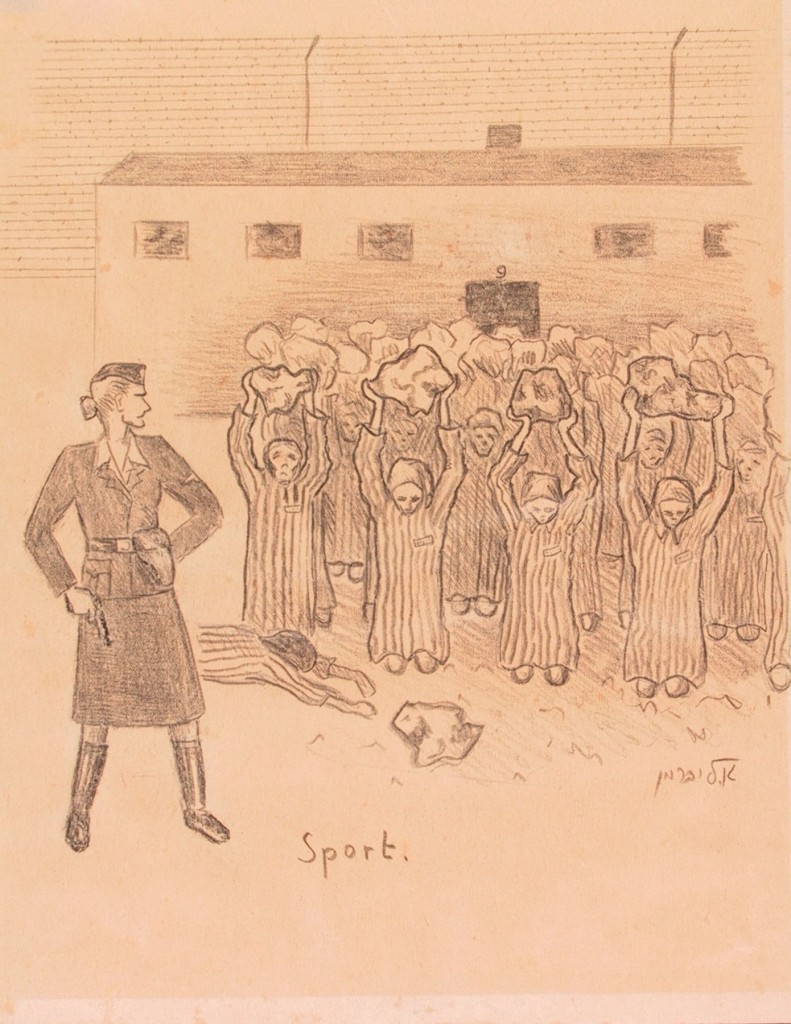
In the years immediately following World War II, as the world was struggling to absorb the scale of the Holocaust, a small group of Jewish women survivors turned to art to document what words could scarcely convey. Their evocative drawings, diaries and illustrated books are now the focus of an exhibition at Brandeis University’s Kniznick Gallery, titled “Who Will Draw Our History? Women’s Graphic Narratives of the Holocaust, 1944–1949.”
Organized by guest curator Rachel E. Perry, Ph.D., the exhibition runs through April 30 and sheds light on ten women who survived Nazi concentration camps including Majdanek, Auschwitz-Birkenau and Ravensbrück, as well as those who endured years in hiding. In the absence of cameras or photographs, these artists — Lea Grundig, Luba Krugman Gurdus, Mária Turán Hacker, Edit Bán Kiss, Regina Lichter-Liron, Ella Liebermann-Shiber, Ágnes Lukács, Zsuza Merényi, Elżbieta Nadel and Zofia Rozenstrauch — used visual storytelling to preserve the record of their suffering and survival.
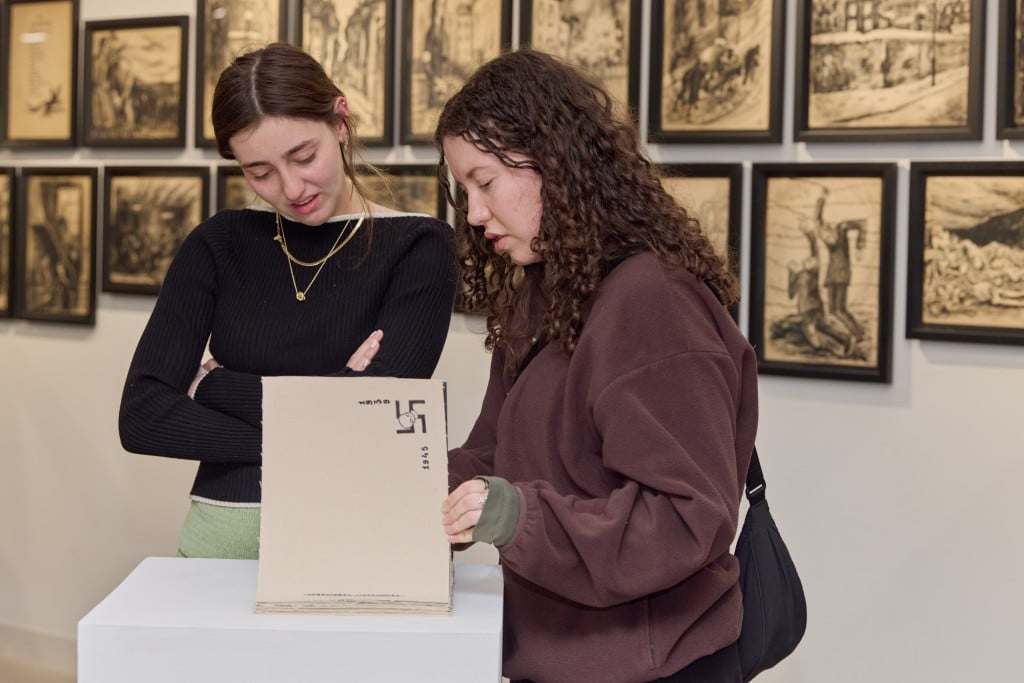
The exhibition presents rare works gathered from museum archives and private collections around the world. Viewers encounter wordless novels, handmade albums and pictorial diaries that serve as both personal testimony and historical evidence. Many of the pieces combine raw immediacy with striking artistry, revealing how these women grappled with trauma while reclaiming creative expression.
“There is a belief that after the war, the survivors didn’t speak … that survivors were too busy rebuilding or too traumatized by the war,” Perry said in a WBUR interview. “What this exhibition shows you is that the survivors were intent [to speak] even when they were displaced and deterritorialized and dispossessed, they felt compelled to document what they had experienced.”
Brandeis’s Kniznick Gallery, located in the Women’s Studies Research Center, serves as an apt venue for this exhibit. The show arrives at a poignant time, as scholars mark a transition into what some call an “age after testimony,” when survivors’ voices are fading from living memory.
“Who Will Draw Our History?” invites visitors to consider how art endures — not only as witness, but as resistance. “I’m really struck by their call to duty and what they were able to create,” Perry said.
The Kniznick Gallery is open Monday through Thursday from 10 a.m. to 4 p.m., and Friday and Sunday from noon to 4 p.m. It is closed on Saturdays.
Author