
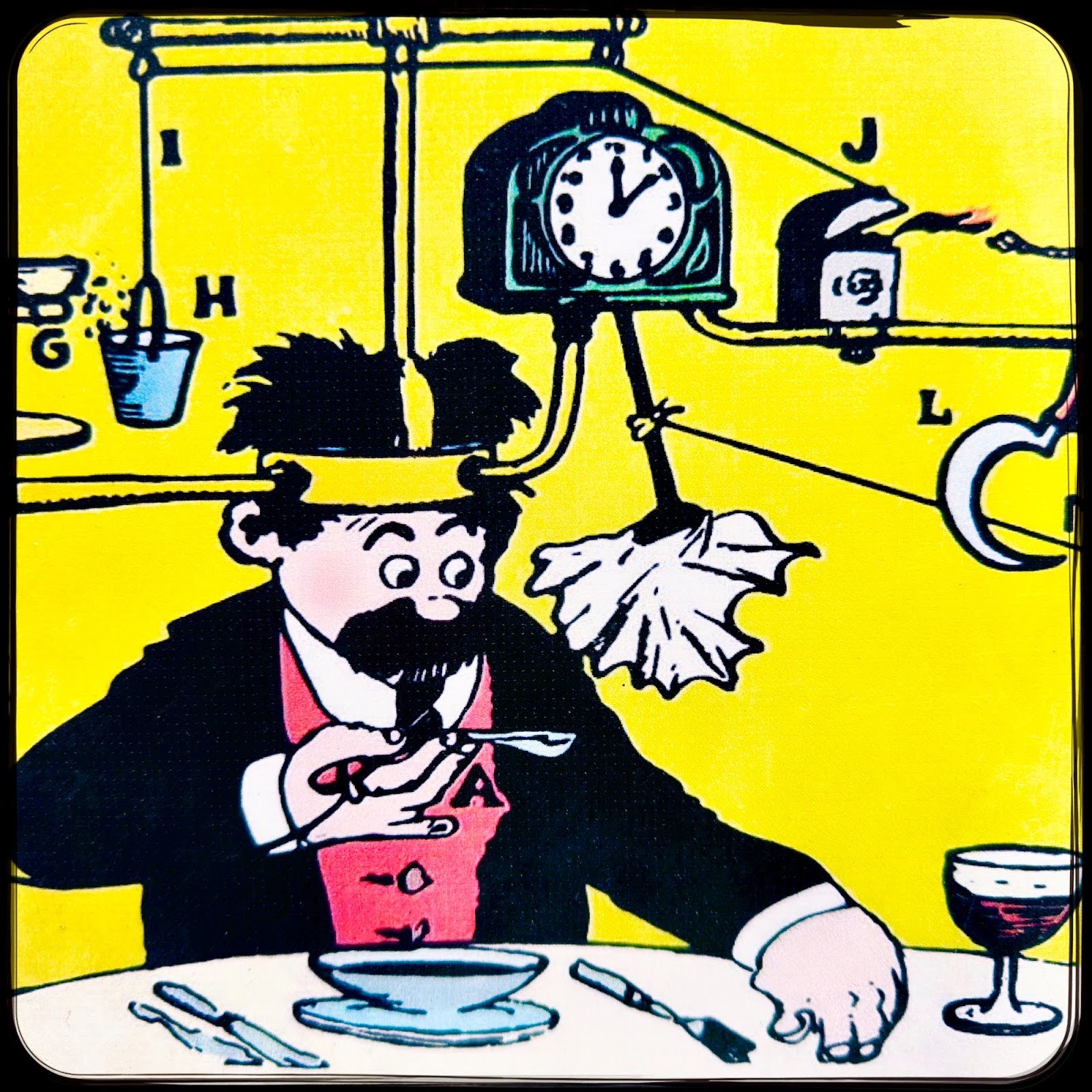
Who doesn’t love the Hasbro game Mousetrap? There’s something primally satisfying about turning that crank, sending a steel ball rolling down a set of switchbacks, through a twisting gutter, knocking a larger ball into a bathtub that tips, sends the ball falling onto a teeter-totter, which propels a diver into a tub, shaking loose a basket that rattles down a pole to trap the mouse. Sure, it would be so much easier to set a snap trap, but where’s the fun in that?
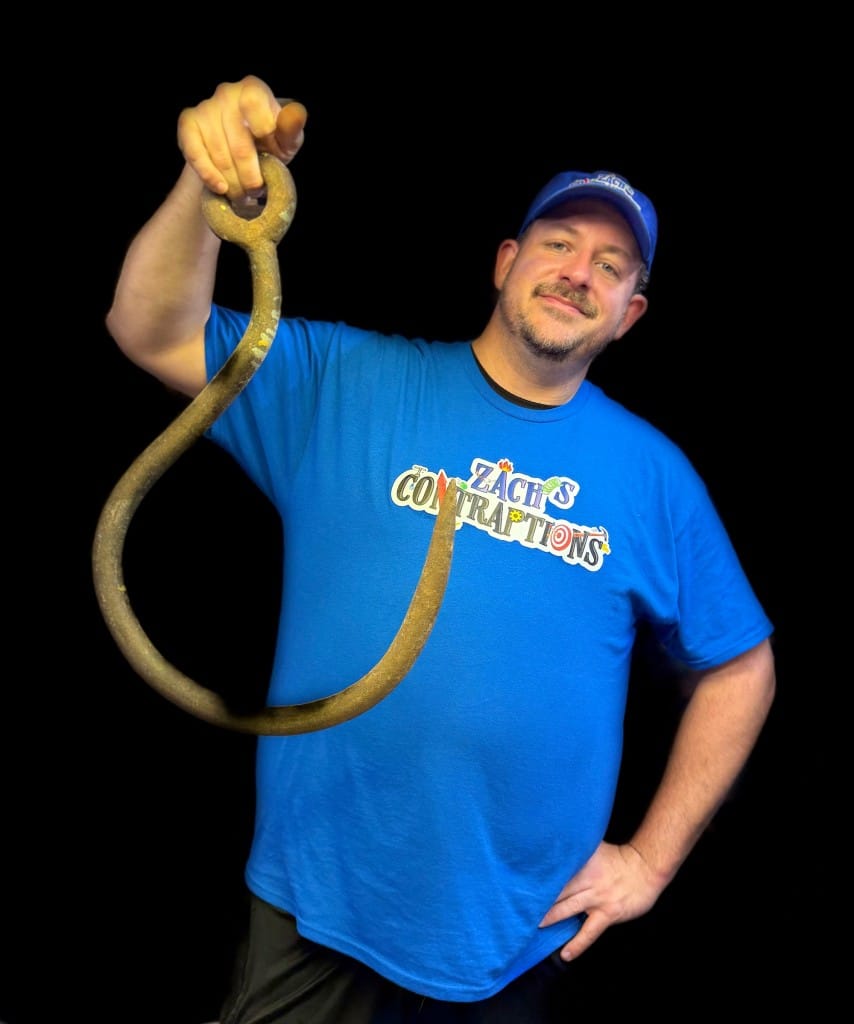
Mousetrap is a classic example of a Rube Goldberg machine, named for the American engineer and Pulitzer Prize-winning cartoonist who loved to draw outlandish contraptions. According to Zach Umperovitch, the self-styled “world’s leading authority” on the subject, Rube Goldberg machines “take a simple task and use as many steps as possible to complicate things using everyday objects in a humorous way.”
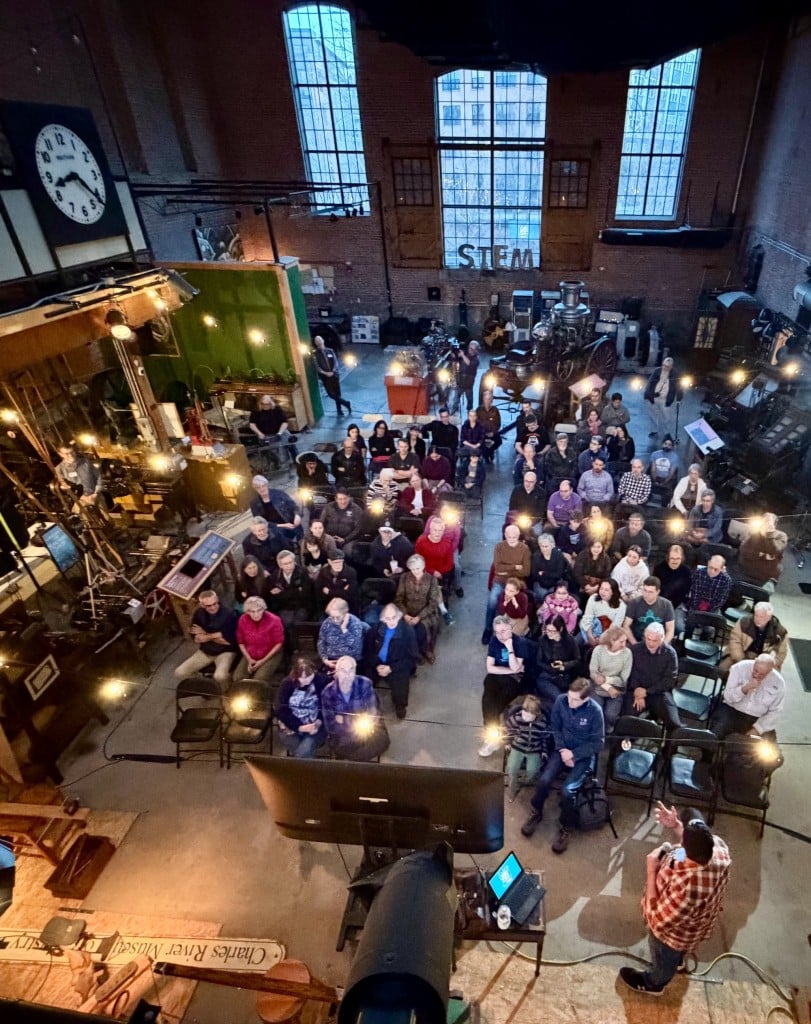
Last Friday, April 3, a sold-out crowd at the Charles River Museum of Industry & Innovation heard Umperovitch give an energetic and entertaining talk about the theory and practice of Rube Goldberg machines. He was supremely well-qualified for the task, with a resume unlike any other. Among his achievements, he is a three-time Guinness World Records Holder, twice for the longest Rube Goldberg machines ever built and once for the largest potato battery in history.
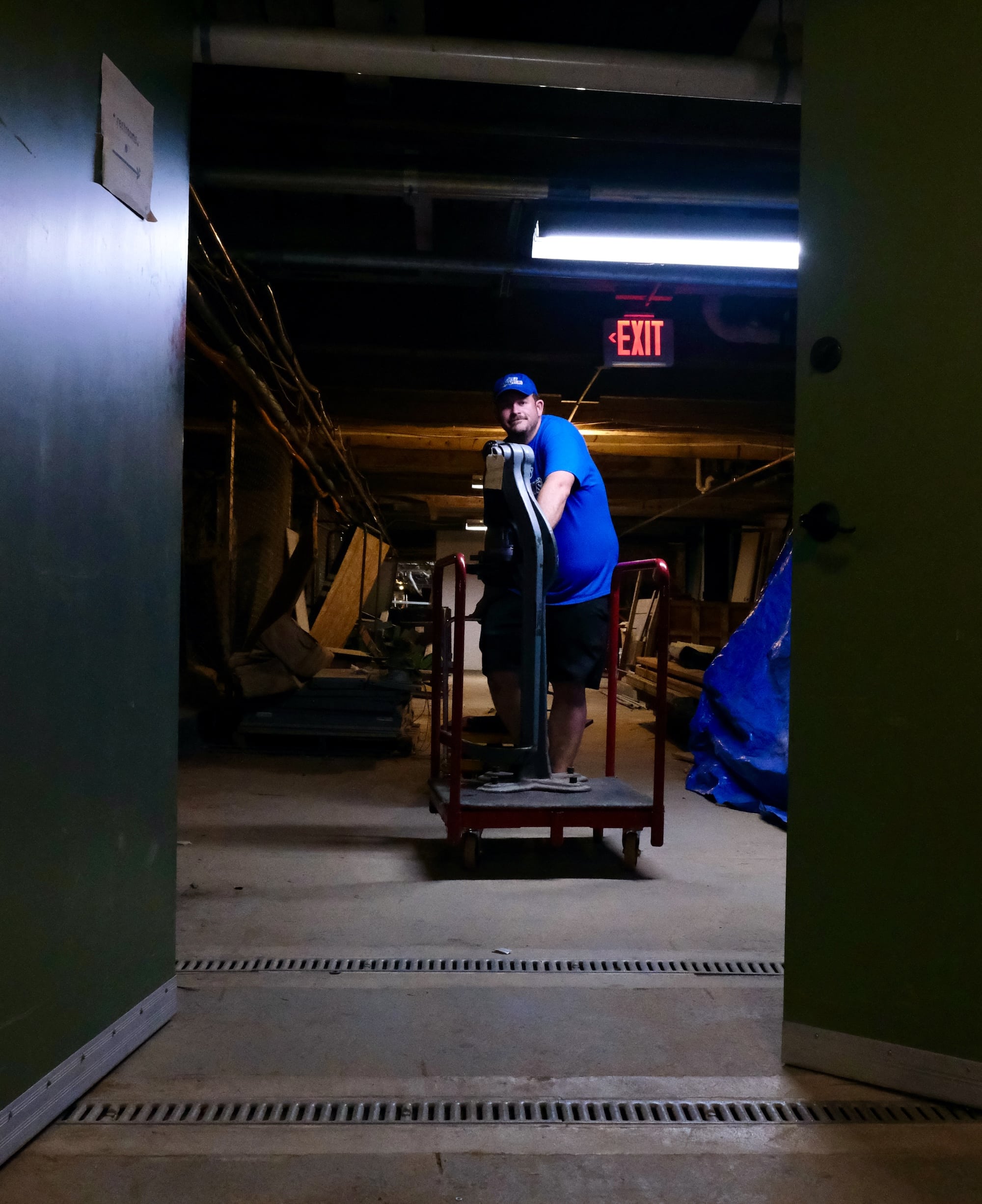
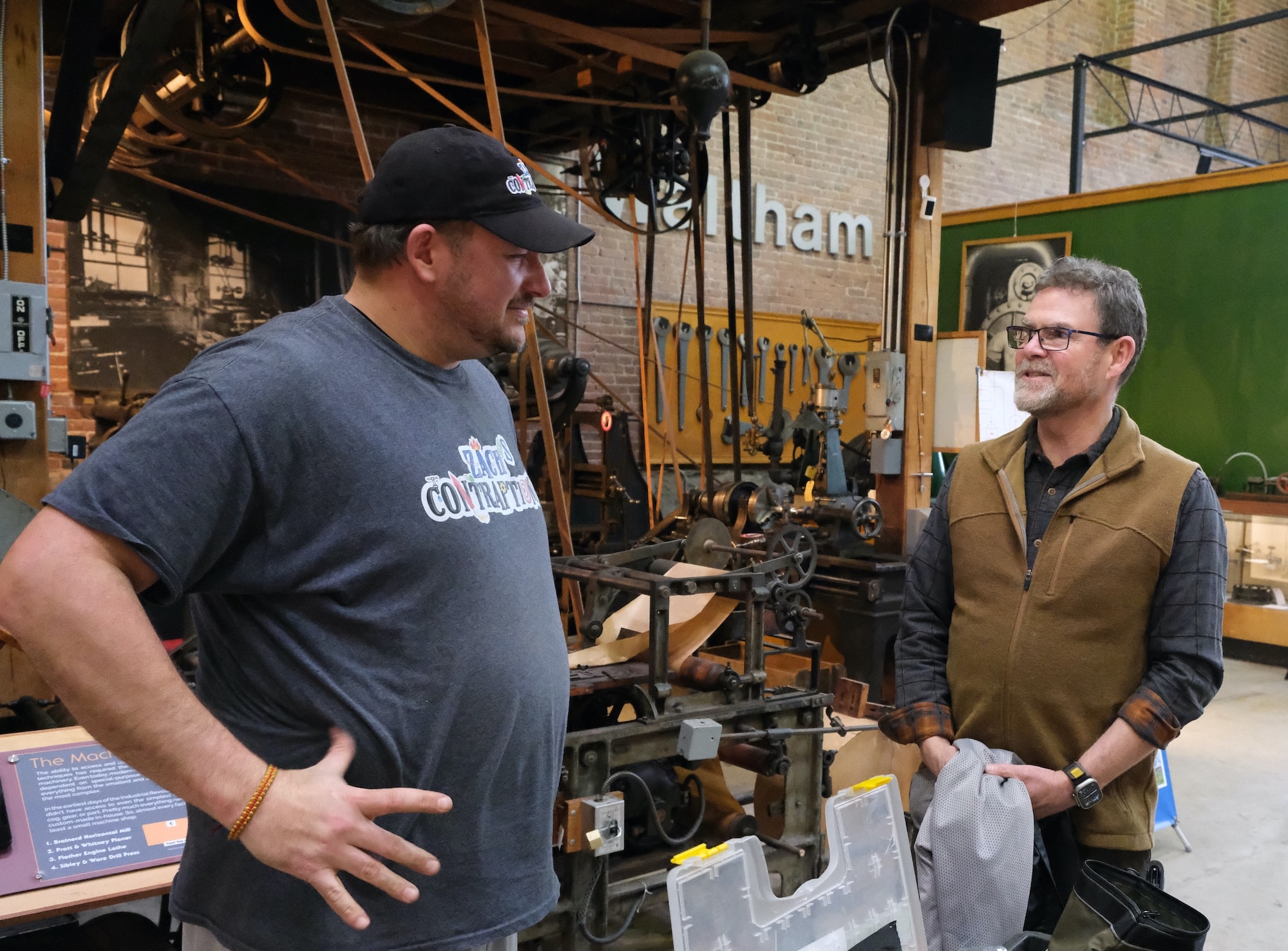
Umperovitch’s expertise and skill at designing, building and explaining Rube Goldberg machines led the Charles River Museum of Industry & Innovation to invite him for a residency. Last week, the museum gave him free rein to rummage through the museum’s storage basement and create a room-size contraption. “They told me I could use the museum exhibits and things that were lying around, which, honestly, is amazing,” he said.
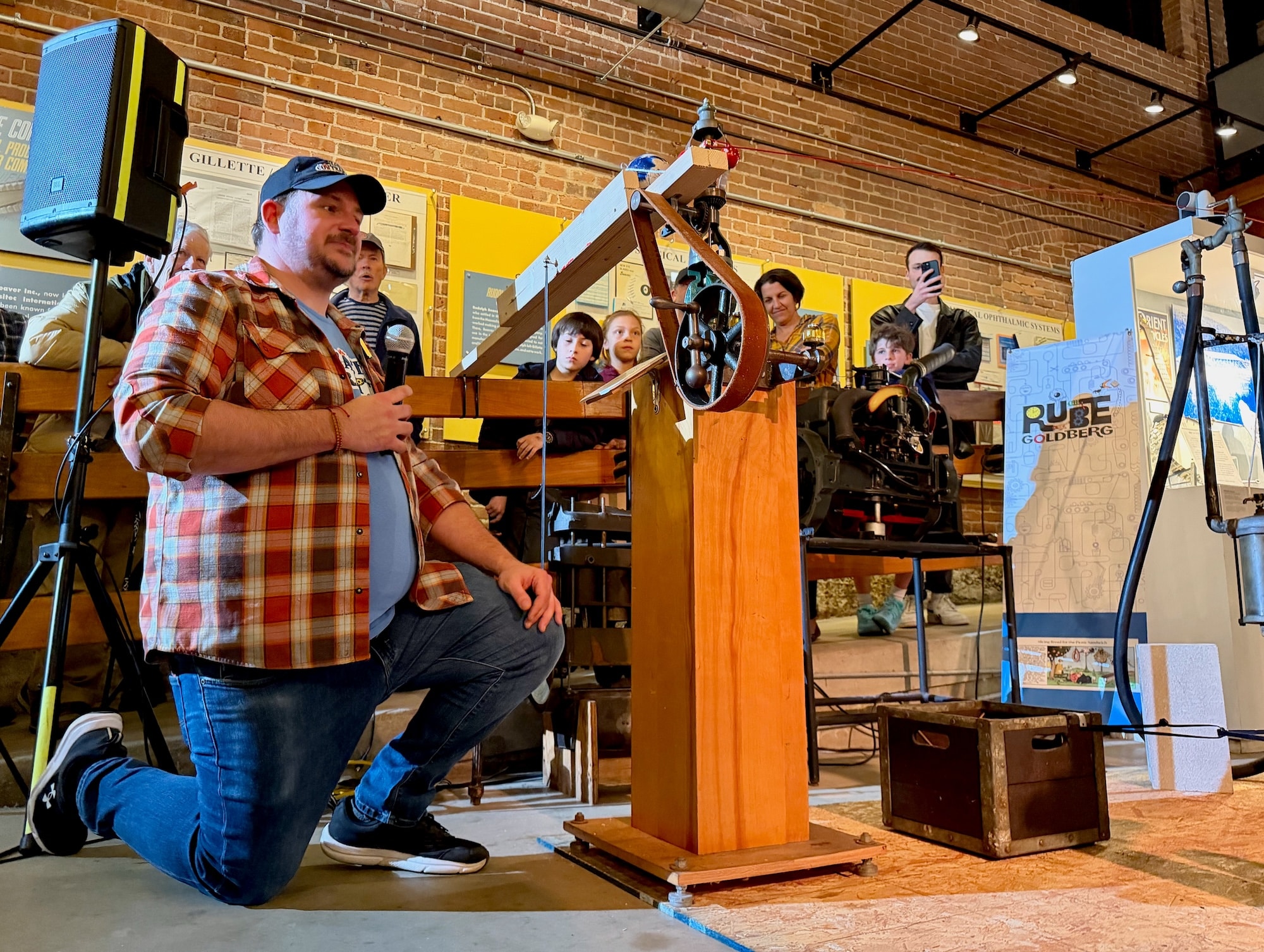
The key to designing Rube Goldberg machines, Umperovitch said, is to improvise, fail, fix and keep trying until one succeeds. He then unveiled his newest Rube Goldberg contraption, which he had designed and assembled earlier that week using parts salvaged from the museum’s storage basement.
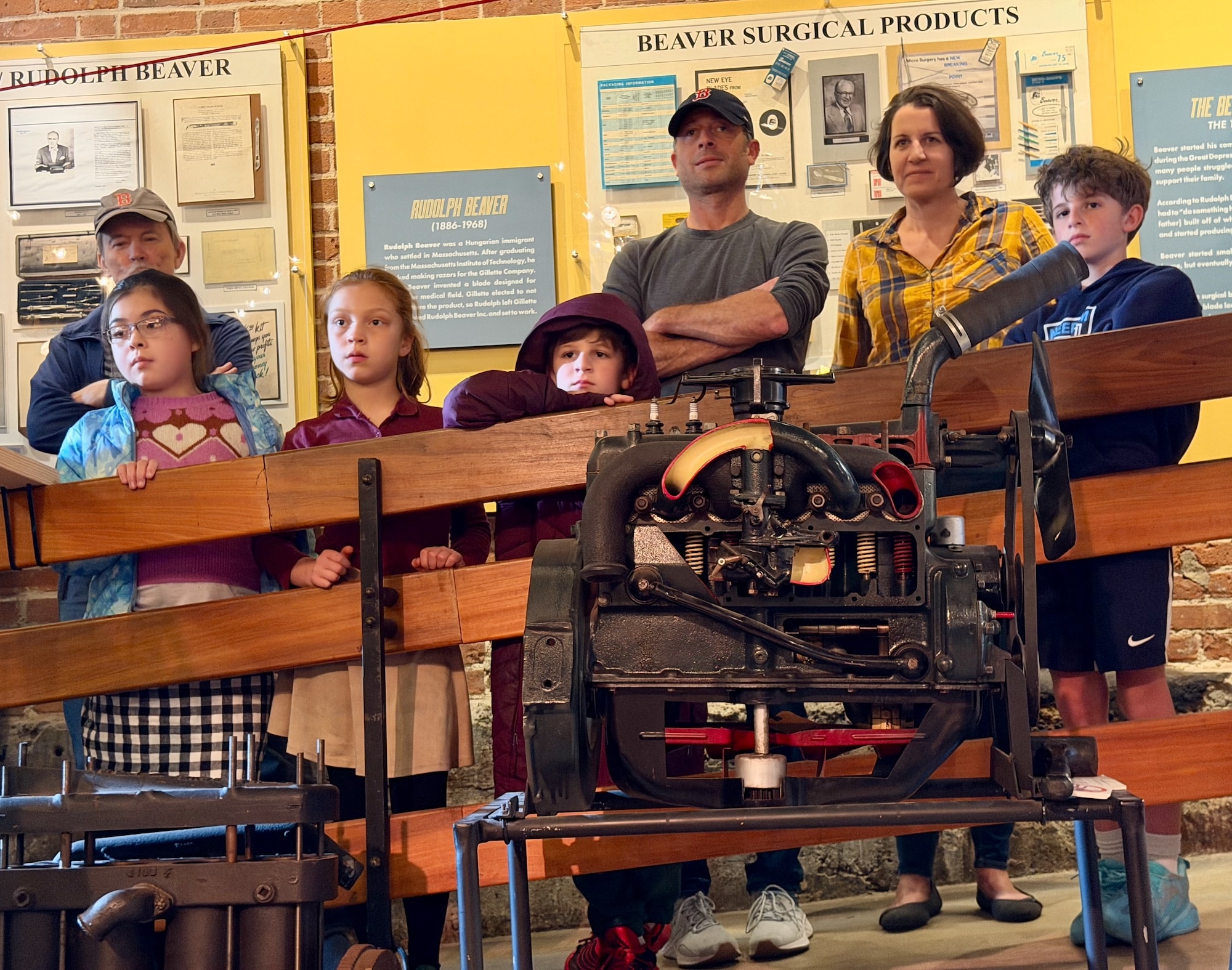
The device was meant to fold a brown paper bag. To accomplish the task, Umperovitch enlisted an armamentarium of gears, levers, pulleys, hooks, spinning devices, lifts, ziplines, a skateboard, an old gas station pump, a giant boot and other bits and bobs. Predictably, and much to the audience’s amusement, the contraption failed on the first try. As audience members helpfully shouted out ideas for fixing it, someone – perhaps also predictably – jiggled a piece and set a chain reaction of spinning pulleys and rolling balls. Much scrambling and adjusting ensued.
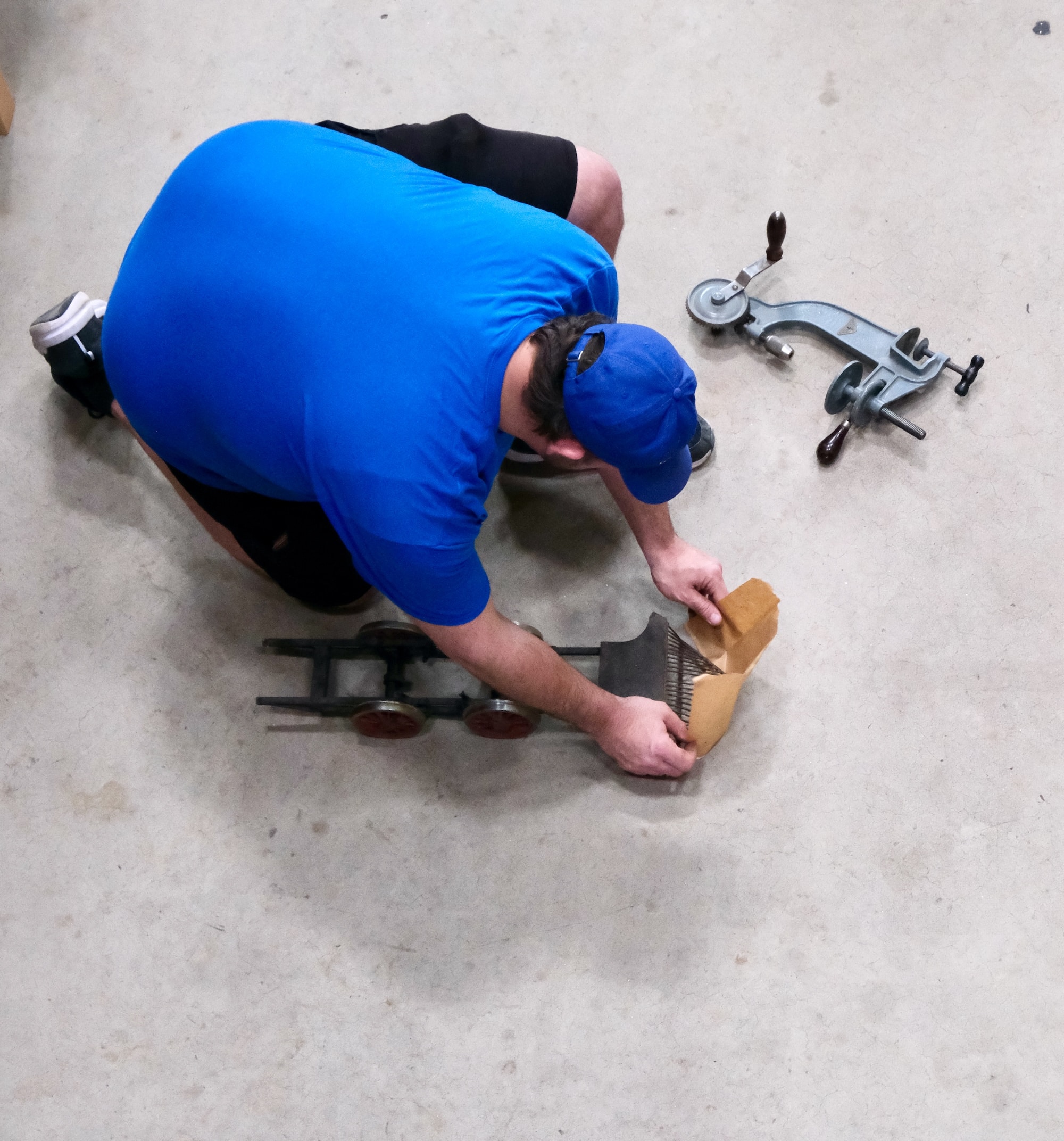
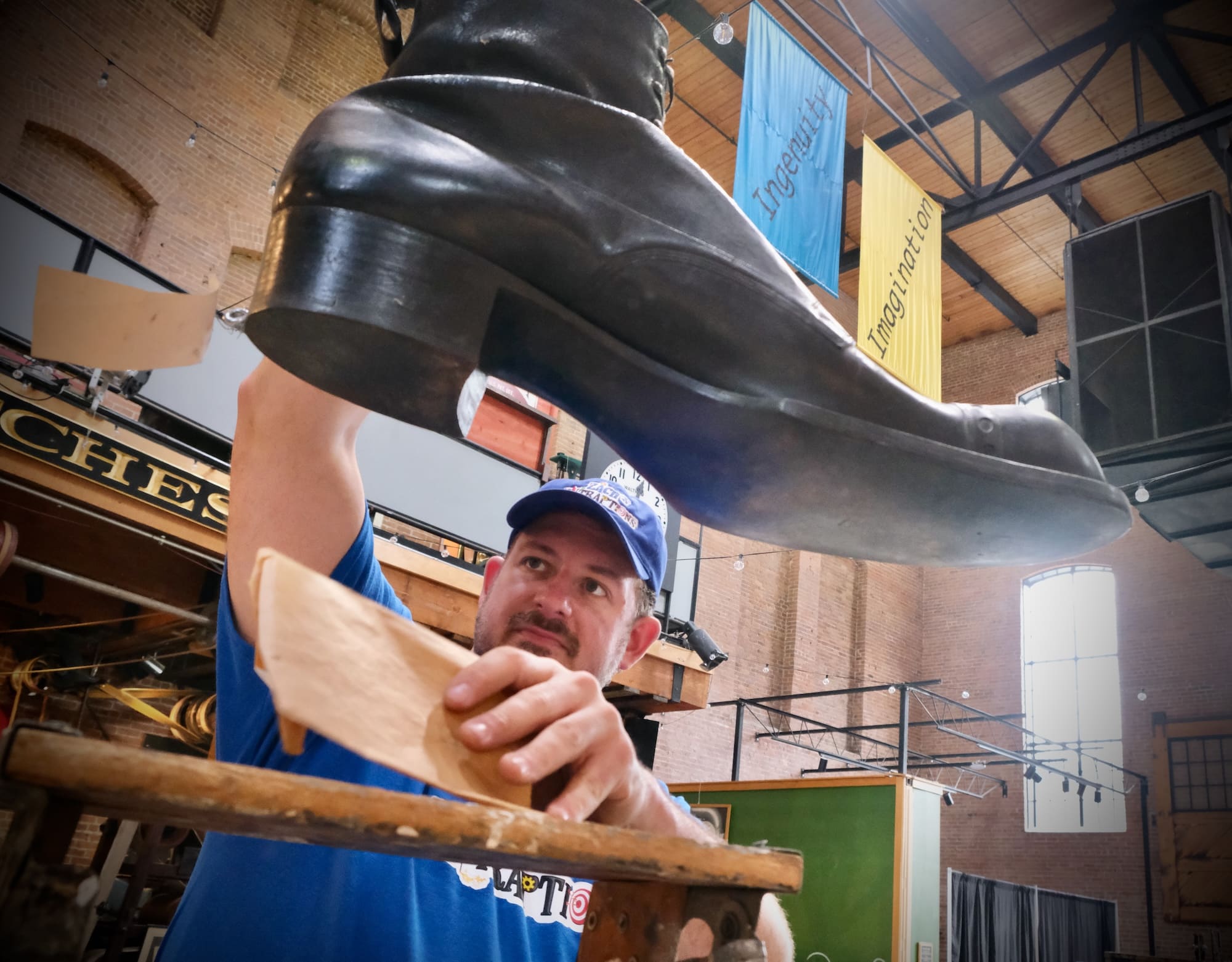
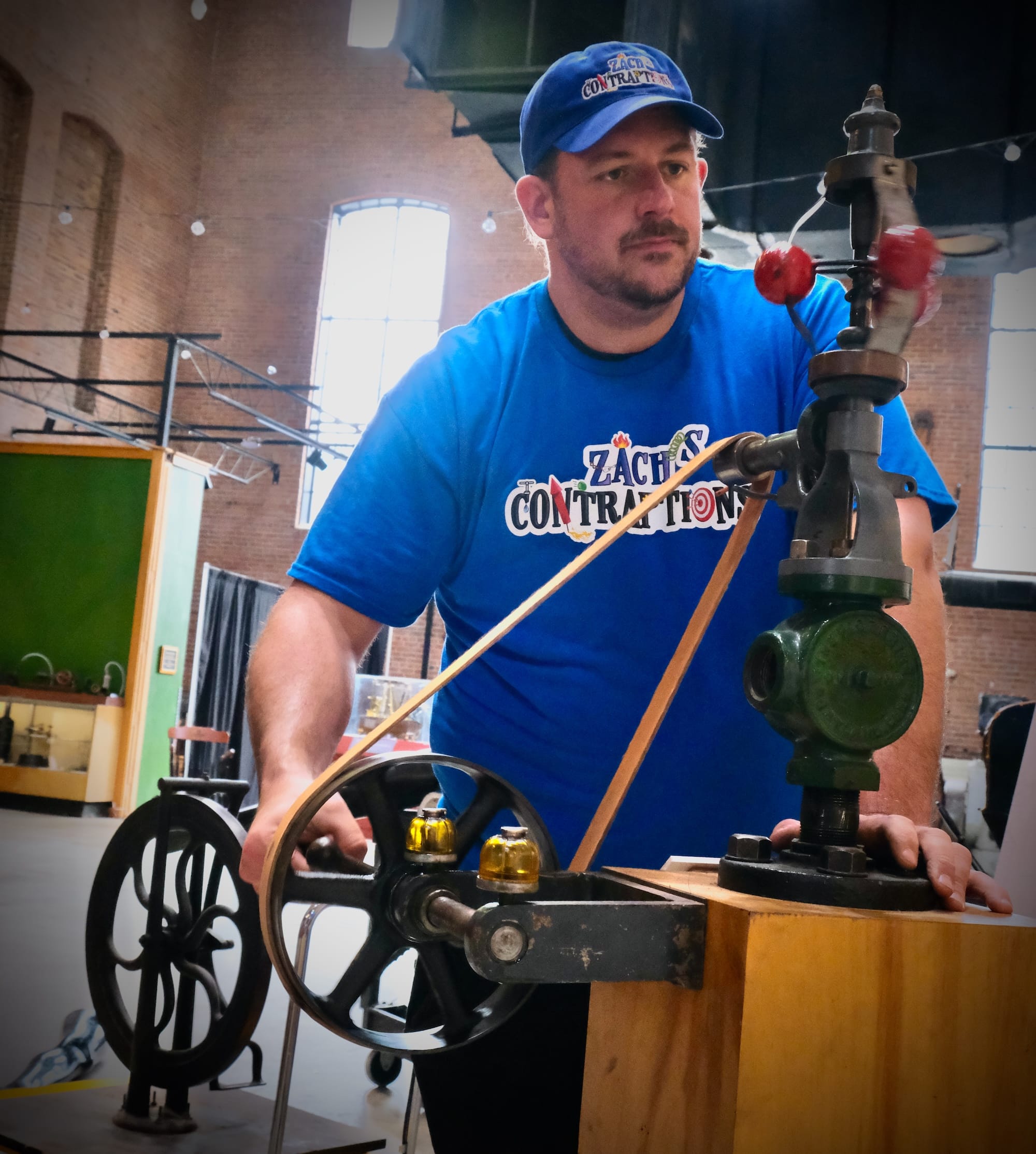
Eventually, all parts were in place, adjustments were made and the world’s newest Rube Goldberg device executed its task perfectly. A ball rolled down a ramp, a giant boot sailed through the air, gears rolled, things flew up and down, and on and on, until air blasted through a whistle, which made a piercing sound and sent a brown paper bag fluttering triumphantly to the floor.
As the applause subsided, Umperovitch invited people to attend the following day and watch local teams compete to build the best contraptions – the more improbable and ridiculous, the better.
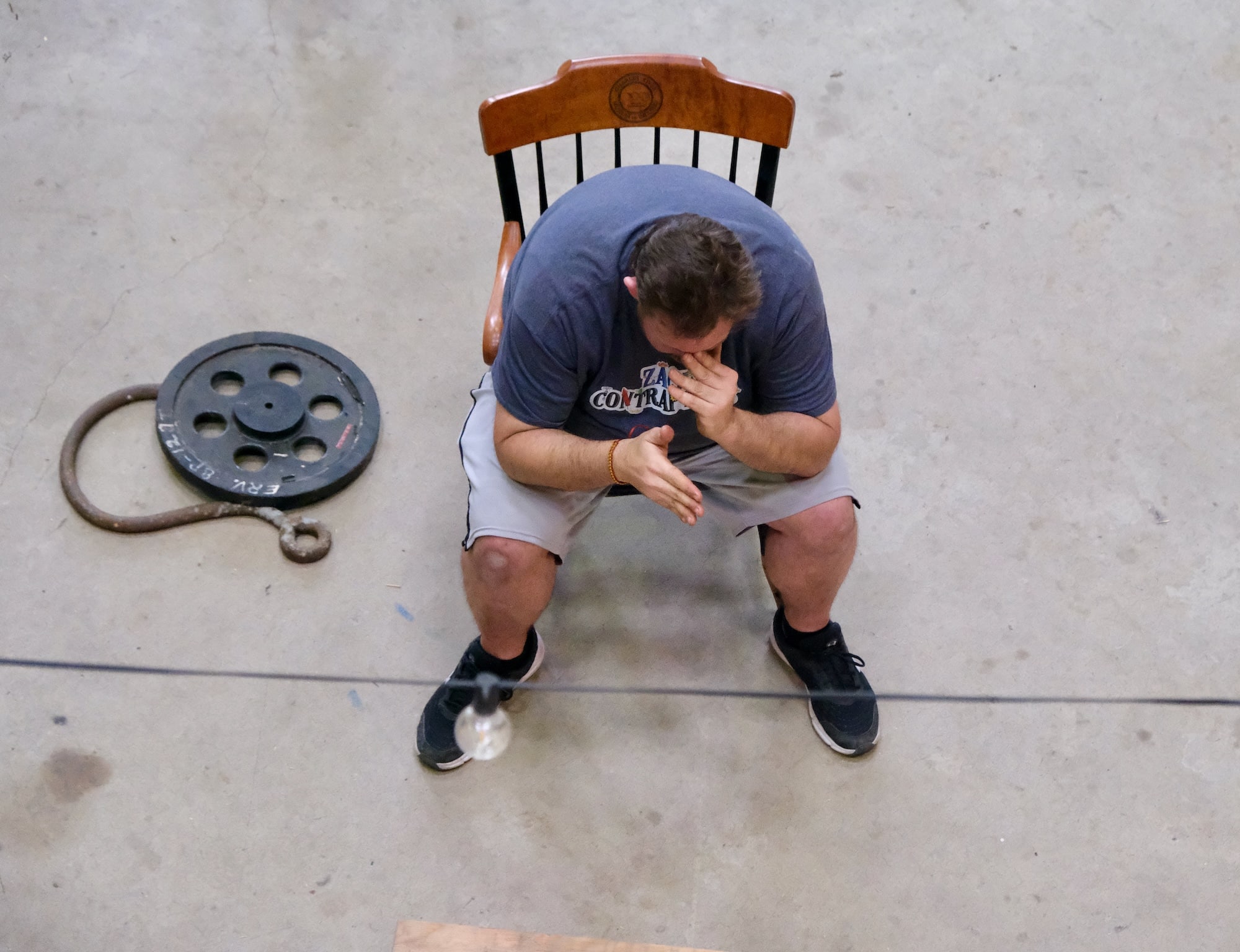
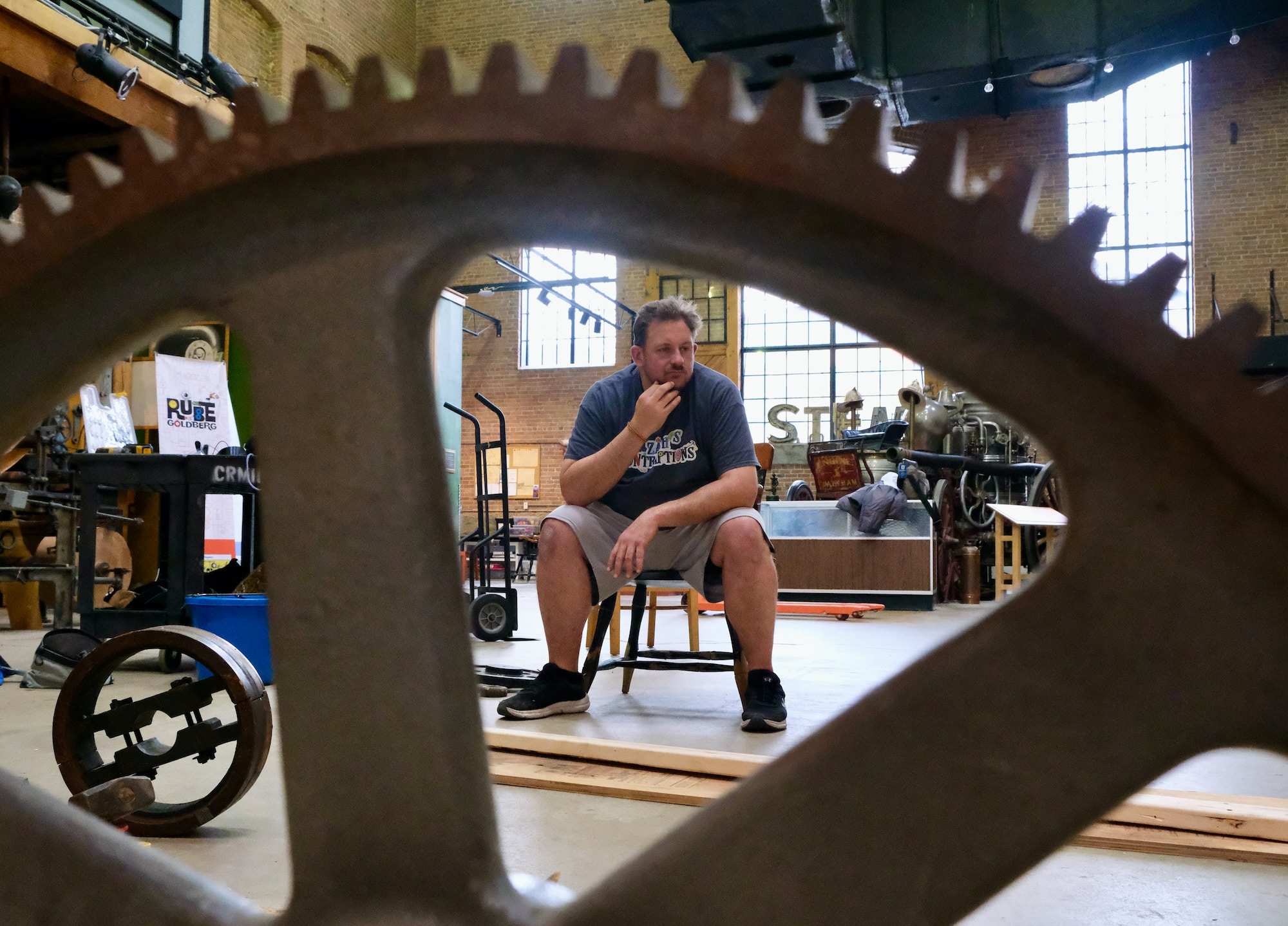
David Greenfield shadowed Umperovitch during his week at the museum and produced a wonderful photo essay. You can view it here.
Related stories
Charles River Museum of Industry & Innovation to host first-ever Rube Goldberg machine contest
Authors




Comments (0)
There are no comments on this article.