
Zoning Board rejects proposed Totten Pond Road apartments
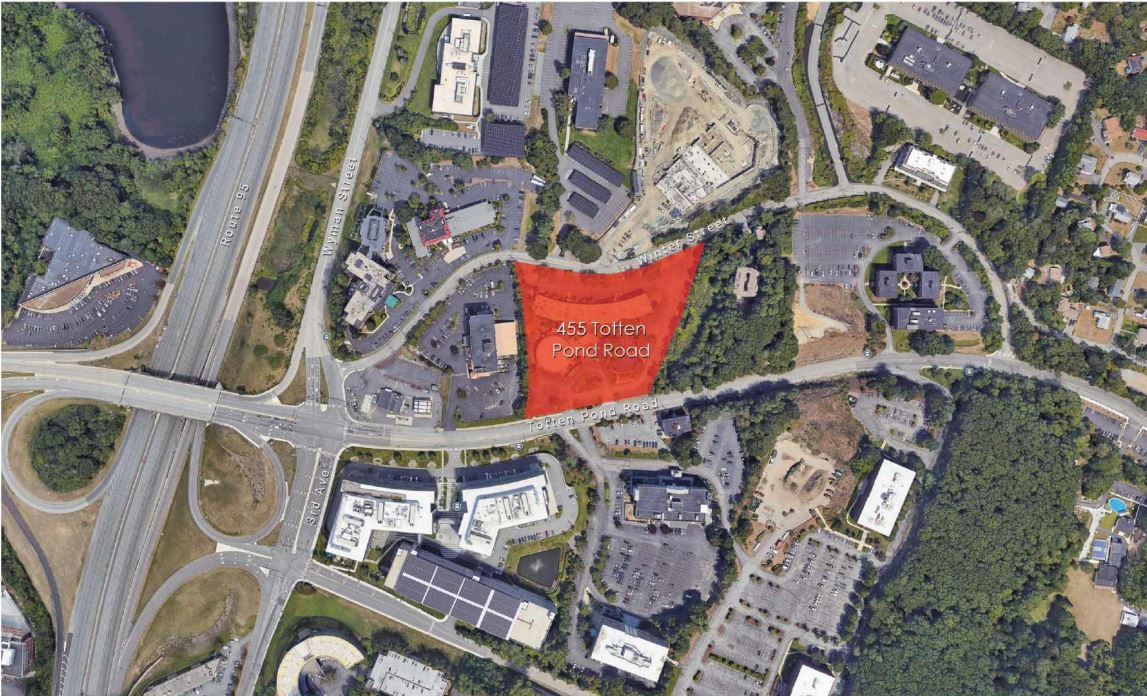
A proposed new development at 455 Totten Pond Road has been halted in its tracks after more than a year of negotiation at the Zoning Board of Appeals.
At its meeting this Tuesday, ZBA members voted 3-2 to reject an application from The Davis Companies to build a seven-story, 340-unit apartment building at the site of the former Naked Fish restaurant and Home Suites Inn called The Residences on Winter.
The building was originally proposed in March 2025 under Massachusetts General Law Chapter 40B. This state law allows developers a workaround to zoning legislation, fast-tracking housing developments that pledge to dedicate a quarter of their units as affordable housing based on regional need by giving them an avenue to negotiate directly with a municipality’s zoning board.
Glenna Gelineau, Matthew Deveaux and Stephen Taranto all voted against the proposal. Before the vote, Gelineau told developers that Totten Pond Road, which sits in a commercial zone that saw a 315-unit residential building go up in the past year at 305 Winter St. and is looking at a potential 323-unit development at 245-265 Winter St., cannot handle the proposed influx of residents.
“I understand that we have to take each project on its own merit. However, I do not believe that the state or even the housing court intended for any city to absorb over 1000 units on one city block,” she said, echoing an earlier letter from the Housing Department that also referenced a since-rejected development at 379-395 Totten Pond Road. “It benefits no one if our city resources and infrastructure cannot support the project.”
She asked the developers to increase the project’s affordable unit offering, arguing that the state’s base affordability requirements were insufficient.
Mike Cantalupa, a representative of the developer, told the board that his team could not offer any more affordability concession.
“I understand it’s the board’s job to push us and make sure that we’re contributing as much as we can to the community in which we develop,” he said. “From my perspective, you’ve done just that. You’ve pushed us to the point where we cannot contribute any more.”
He pointed out that Waltham is considering lowering its own local affordability requirements to make housing construction more financially feasible for developers. “This particular project [with an] affordability percentage at 25% will probably be the highest that you’ll see in years and years to come,” Cantalupa warned.
The developer of the building has 20 days after the hearing to appeal this case to the state Housing Appeals Committee. Generally, the HAC has required municipalities to meet a high bar to claim a permit is “inconsistent with community needs.”
Assistant City Solicitor Michelle Learned told the board that if the developer didn’t agree to address any sewer capacity issues it caused the city, she was confident the HAC would uphold a permit denial from Waltham. She warned that it might not uphold other concerns about infrastructure, however, on the grounds that Waltham could address any such issues with the tax revenue new development would bring.
“It is very clear that these impacts are happening and occurring and falling on the city’s financial shoulder,” she said. Still, she added, “[The HAC’s] decisions you see repeatedly are in favor of the applicants, the developers. Their mission is to create affordable housing… I couldn’t say definitively that we would be successful.”
If the Housing Appeals Court rules in favour of The Davis Companies, it can require the ZBA to issue a permit for the development, and may include restrictions on the conditions ZBA members are allowed to impose, limiting the city’s influence on the new permit.
Background
In August, Waltham blocked another proposed development on Totten Pond Road by declaring that the city had met state criteria for safe harbor, meaning it had enough affordable housing and would no longer be obligated to accept new Chapter 40B applications. At that meeting, Learned argued that the neighborhood around Totten Pond Road “was never designed to handle that residential [population].”
Because The Residences on Winter had already filed an application with the city, however, its permit application wasn’t halted by the safe harbor declaration.
Previous hearings on the project saw a number of points of friction, including an expansion from the initially proposed 315 units to 340 units, a partnership with a proposed rental assistance program for recently unhoused veterans that board members contested did not fit the spirit of affordability, pushback from neighbors and concerns about sewer and sidewalk infrastructure in the area.
The rejected permit
The final agreement rejected by the ZBA offered 25% of its apartments — 85 in total — at affordable rates set by state requirements. That meant the apartments would cost no more than 30% of the monthly income of someone making 80% of the area median income. The developer agreed to make 13 of those units affordable to residents making 60% AMI, cover any additional water utilities costs, allocate 36 surface-level parking spaces to residents and implement a veterans’ preference for 10% of the affordable units.
The city had also negotiated $2 million in mitigation payments for infrastructural impacts caused by the development. That would include sewer improvements in the area, if the city determined them necessary; a new sidewalk along the north side of Winter Street; and, if money was left over, additional funding for Waltham’s schools, fire and police services to cover the costs of expanding to fit the new district. Contributions to these departments have been included in agreements with previous Chapter 40B developments approved by the city.
In addition, the developer had committed to funding an update of the city’s sewer model in the area to determine if it would be able to handle the new development; traffic light adjustments at three nearby intersections; a survey of parking and driveway use after the project was occupied to ensure there were no new traffic issues; a shuttle service to the commuter rail for residents; and a new shelter for a relocated bus stop.
Additionally, the ZBA:
- Delayed a hearing for an ongoing case about the redevelopment of a property at 719–732 Main St. to May 12 so owner Paul Yu’s lawyer could appear.
- Delayed a hearing for the proposed 245-265 Winter St. Chapter 40B development to May 12 to give board members more time to review new material from the applicant.
- Granted a six-month extension of time to on previously granted zoning variances for a proposed hotel at 220 Moody St.
Author

Comments (1)
Comments are closed.



I don’t see the argument about the city not handling the influx of people holding water. The city had no problem permitting commercial developments supporting thousands of workers in this area. Nor will the ask about requiring more affordablilty (this project was already providing more than our new IZ changes will require). And the city attorney also dismissed the infrastructure support angle as well.
I think the ZBA is asking too much here and we’ll lose this case.