Nonprofit selling jewelry and crafts helps educate children in Africa’s largest slum
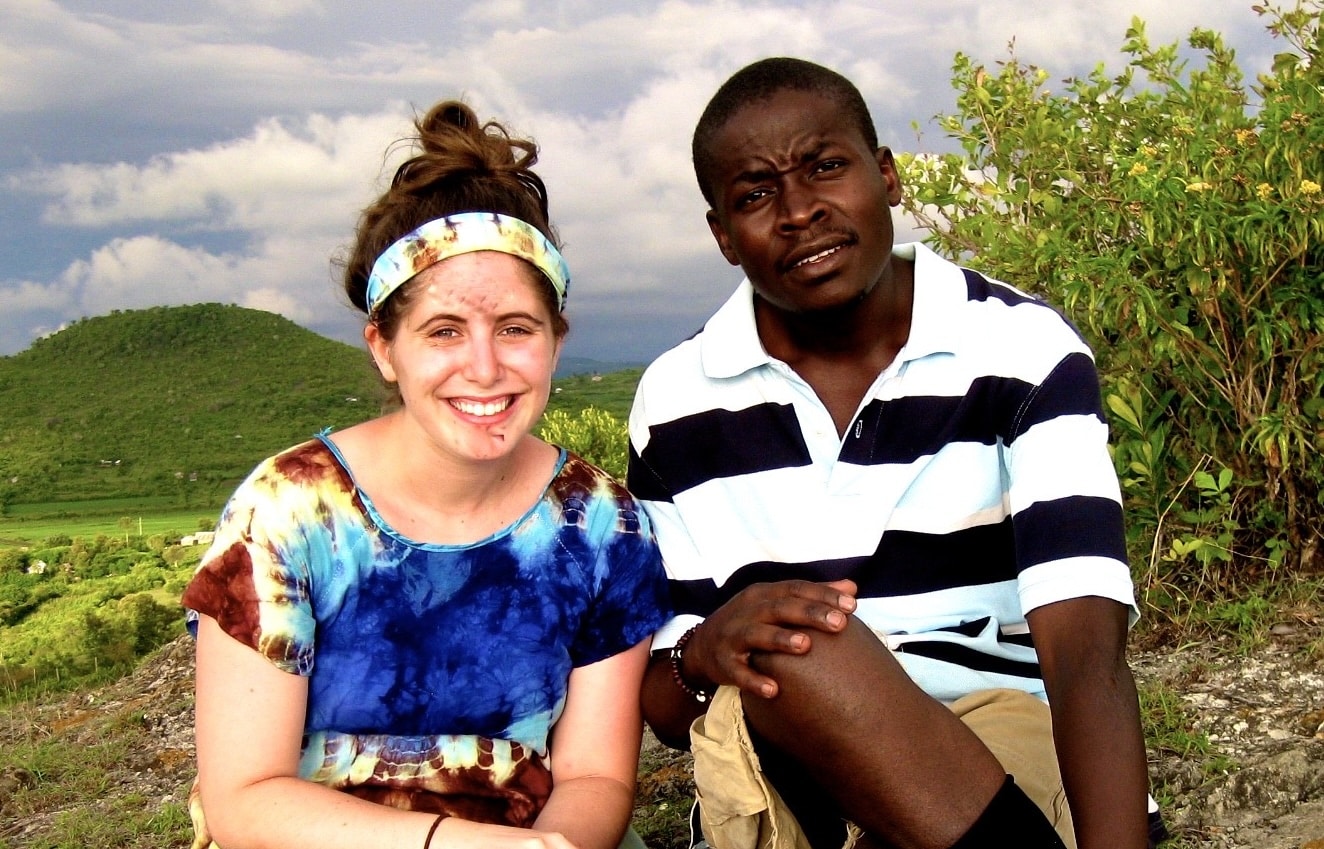
Starting a nonprofit was never the intention of Waltham resident Sarah Hodin Krinsky when she was a college student in Kenya in 2012 for a year abroad. But then she met Frederick Gor on an organized tour of Kibera, an impoverished area in the capital city of Nairobi notorious for being the largest urban slum in Africa. The two struck up a friendship.
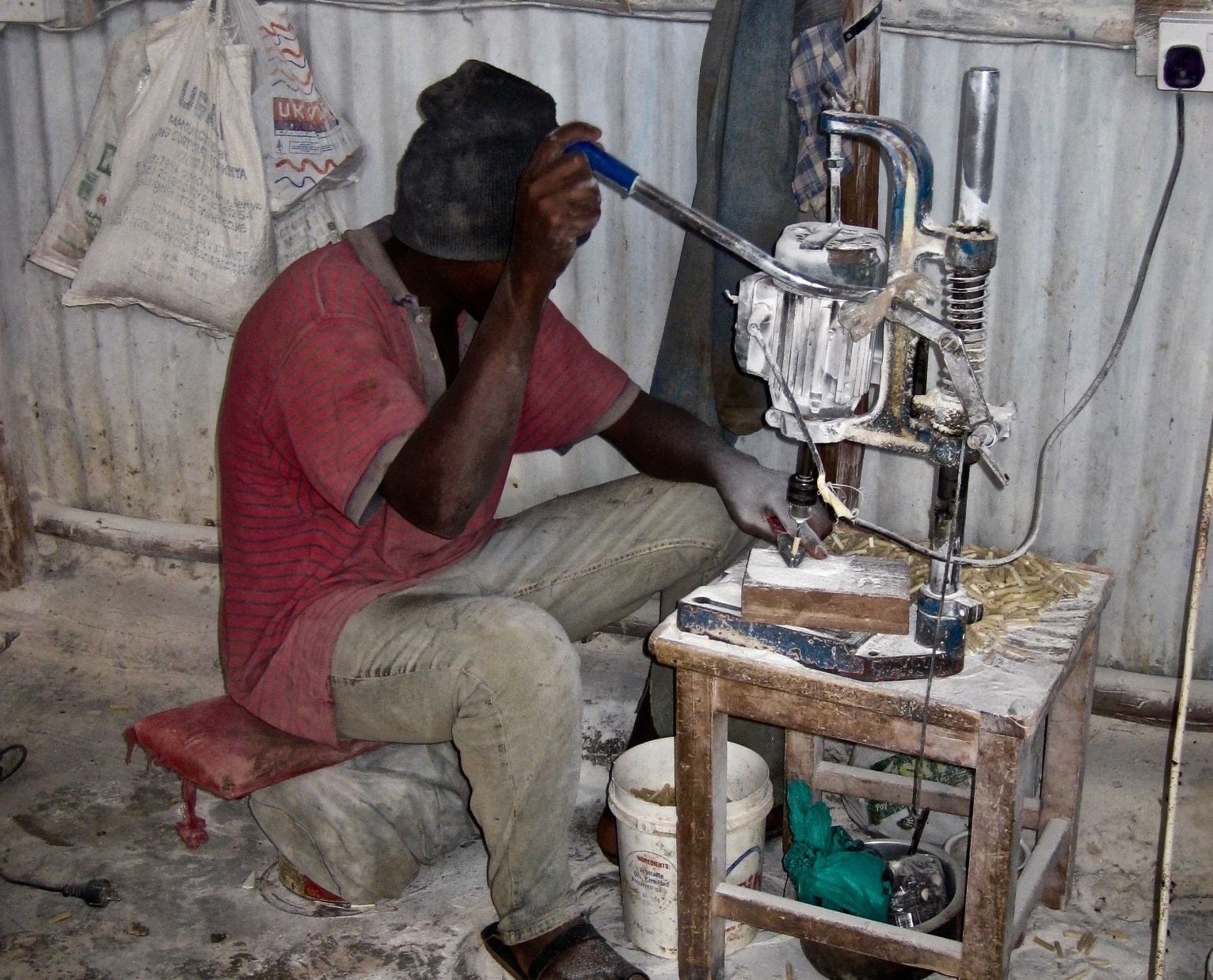
Gor was a resident of Kibera and a talented artisan who worked hard to support his family and had a deep interest in helping his community. He was making crafts, including beads fashioned from cow bone, which he decorated and sold locally. Krinsky was interested in jewelry-making, and she needed help on her college project featuring ethnographic interviews with Kenyan women about their childbirth experiences.
“I kind of made a deal with Frederick: ‘I can take your beads and turn them into bracelets with hemp and return them to you to sell,’” said Krinsky. Gor in turn offered to identify women willing to participate in Krinsky’s project, located translators and accompanied Krinsky to the interviews.
But all along Gor had a bigger dream: to start a nonprofit in order to build a school in Kibera.
Krinsky was hesitant about the large scale of the project at first. She and Gor eventually agreed that establishing a scholarship program was a more doable goal.
The need for financial assistance to poor students in Kenya is great. School fees are mandatory, and fees for high school can be prohibitively expensive. A large percentage of children, especially those in poverty-stricken areas, are forced to drop out of school around the age of 13 or 14. But education is crucial in order to fight the cycle of poverty.
Transforming ten young people’s lives
When Krinsky returned to the U.S., she registered Nyora Beads as a 501(c)(3) nonprofit organization. The goal of the small-scale organization is simple, according to its website, which states, “You buy our handmade, fair trade jewelry and crafts — we send children in Kenya to school.” One hundred percent of the proceeds go to the scholarships.
“I completely bootstrapped,” Krinsky recalled. She had to learn coding and web design to develop the website and figure out how to sell the crafts. She returned four or five times to Kenya to consult with Gor.
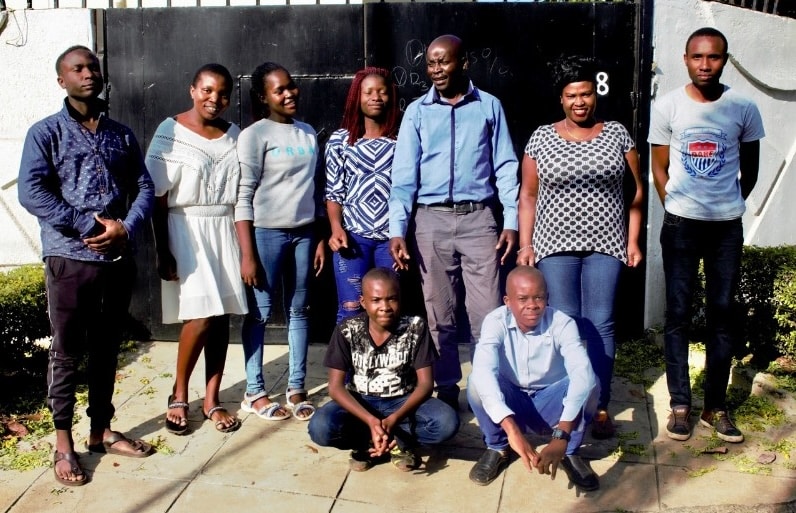
For 13 years she and Gor have been volunteer co-directors of Nyora Beads. A third volunteer, Sabina Ayot, runs all aspects of the scholarship program in Kenya.
So far Nyora Beads has given four-year high school scholarships to 10 residents of Kibera. When the students showed interest in postsecondary schools, the co-directors chose to continue providing tuition as the graduates entered college or training programs. Eight students have continued their education, gaining specialty certificates or continuing with university studies.
Larger organizations have a bigger impact, Krinsky admitted. “It’s only 10 students, but hopefully the trajectory of their lives will be different.”
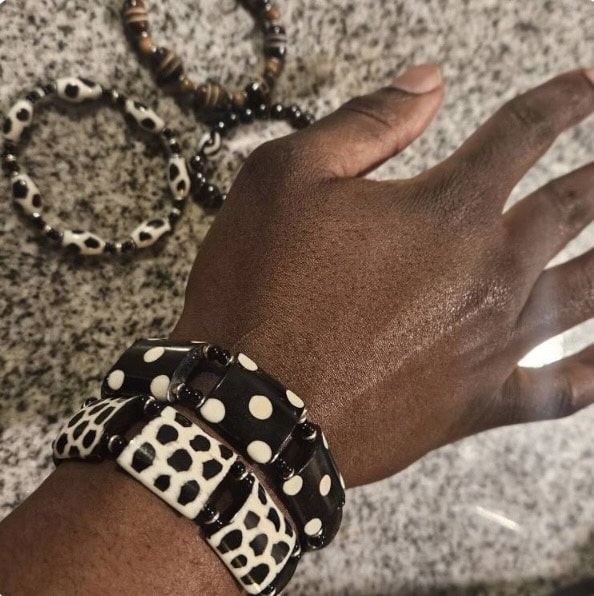
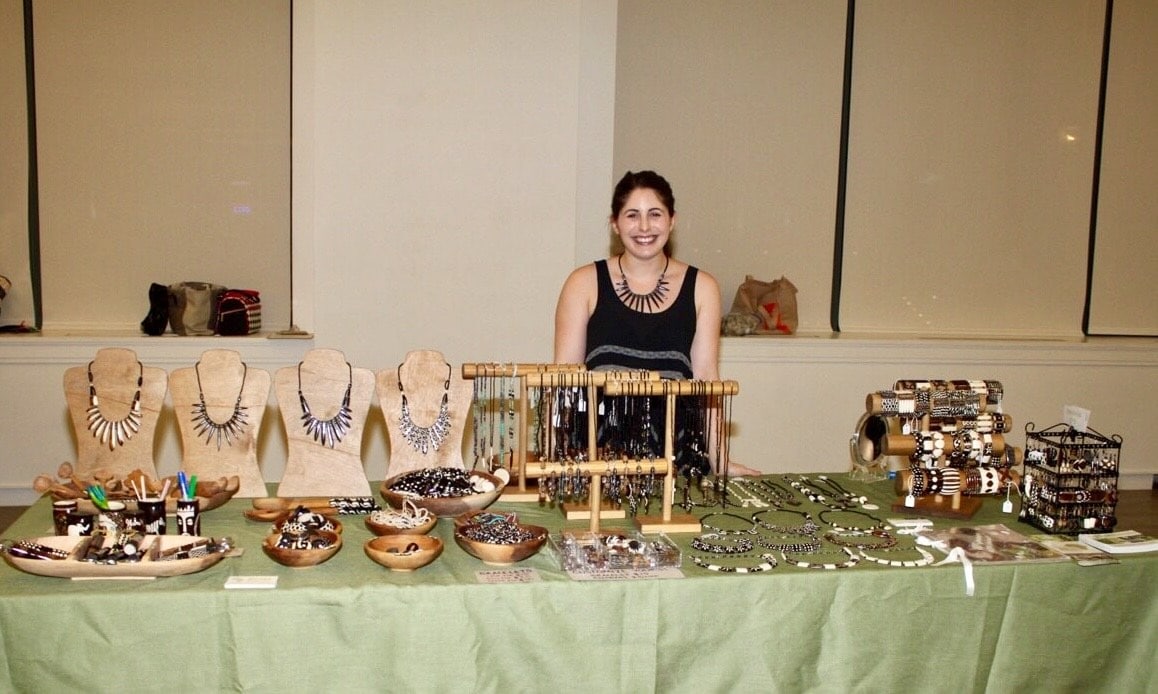
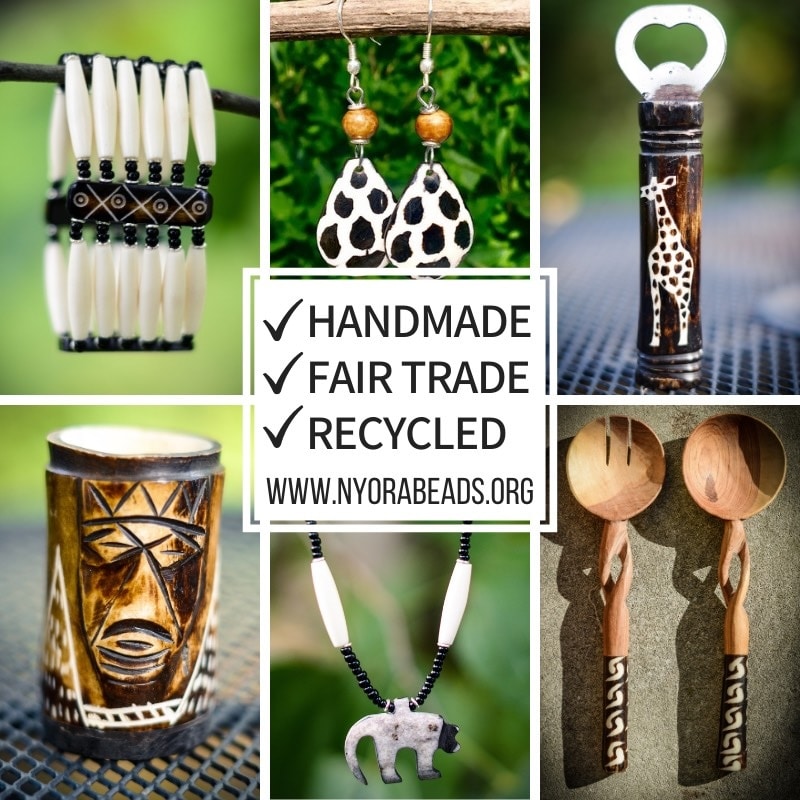
Gor designs the jewelry and crafts, which are delicately carved from recycled cow bone, with intricate brown, black and white patterns. Necklaces, bracelets, earrings and charms are available. Crafts include bottle openers, toothpick holders, napkin rings and wooden utensils. Items are for sale at Nyora Beads’ website, through Etsy and at occasional crafts fairs.
Krinsky, who grew up in Newton, moved with her husband to North Waltham in 2019. They have a 3-year-old daughter and a dog. She worked as a doula for a while and enrolled in graduate studies at Harvard. Nowadays Krinsky juggles parenting and managing the Nyora Beads website and sales with her job at MassHealth as deputy director of perinatal and maternal health policy.
When asked to describe how she feels about her work with Nyora Beads, she remains focused on the students. “Part of the goal of supporting the kids is for them to go back and give solutions to other people in Kibera,” Krinsky said. “I’m proud of what we’ve been able to accomplish and that we’ve been running the organization for so long.”
Author