President’s attempt to freeze federal funding causes uncertainty among local institutions
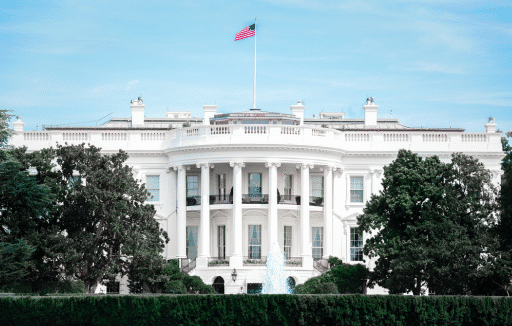
Some local institutions are uncertain about their financial futures after President Donald Trump in late January announced a widespread freeze of federal grants and funding programs.
A federal judge, in response to a quickly filed legal challenge, ordered a stop on Trump’s plans to freeze those federal funds. However, the administration’s move has nonetheless caused concern among many both nationally and locally.
Here in Waltham, officials from several different organizations that receive federal dollars said that although they already have funding for this fiscal year in hand, they are uncertain about the future.
Amarely Gutiérrez Oliver, the executive director of REACH, a nonprofit that assists victims of domestic abuse, said Trump’s actions make it difficult for her organization to plan.
“I think it’s really tricky about how much expansion you can do when things are unsettling like this, and how proactive we need to be about maintaining the current staffing ratio that we have,” she said.
According to Oliver, the nonprofit already received federal funding through the Massachusetts Office for Victim Assistance for its programming this fiscal year.
She said this funding allows the organization to maintain its current services, including shelter and educational programming for domestic abuse victims and outreach which informs the public of REACH’s programs for those in need.
But Oliver said federal funding changes could make meeting increased demand for services in the future challenging.
“I think what’s important for everyone to understand is that the need has increased and our capacity is limited,” she said, stressing that REACH remains committed to offering abuse survivors, including members of the immigrant, Black and LGBTQIA+ community, the support they need despite the funding uncertainty.
Matt Mullaney, chief executive officer and executive director of Charles River Community Health (CRCH), expressed similar sentiments.
“We are concerned, of course, but we are staying focused on our mission and serving patients,” he told The Times in an email.
In 2024 CRCH received a $225,000 grant to cover the costs of training patients to use digital health care technologies. The grant was a part of Massachusetts’ State Digital Equity Plan, which received more than $14.1 million in federal funds from the U.S. Department of Commerce’s National Telecommunications and Information Administration.
Block grants could be impacted next year
The City of Waltham itself could also be impacted should the president move forward with his plans to slash federal grants.
For example, the City of Waltham receives federal money through the Community Development Block Grant (CDBG) program, which funds projects that primarily benefit low- to moderate-income individuals in the city. The city awards and distributes the funds to local nonprofits through an application process.
Frank Nakashian, the city’s principal planner, said CDBG funds for this fiscal year have already been awarded.
However, he said the city can’t say for sure whether funds for the next fiscal year will be forthcoming or paused. The city had expected to receive $875,000 in CDBG money for fiscal 2025-2026.
Some federal grant money would not be frozen under President Trump’s plans. A memorandum released on Jan. 29 clarified that the SNAP food assistance program along with Medicare, rental assistance, the Head Start school-readiness program and public student loans would not be paused, and that only programs falling under jurisdiction of some of President Trump’s recent executive orders would be affected.
But executive orders do not explicitly name programs and only state the intention to end funding for what the administration defines as environmental justice; diversity, equity and inclusion (DEI); elective abortions; and gender ideology.
Whether the freeze will go through is also unclear, as the judicial and executive branches engage in legal strife.
Loren L. AliKhan, a judge for the U.S. District Court for the District of Columbia, blocked the funding freeze before it would have gone into effect on Jan. 28.
On Jan. 31, John J. McConnell Jr., the chief judge for the U.S. District Court of Rhode Island, issued a temporary restraining order further blocking the administration’s actions.
President Trump tried to appeal the block but was denied by the U.S. Court of Appeals in a decision released on Feb. 11.
Legal battles aside, nonprofits that rely on federal funding for their services are left behind a veil of uncertainty — despite what they say is the criticality of the money to their missions.
“The funding is important — it’s how we do our work,” said Oliver.
Author