Waltham residents speak out on regulations on accessory dwelling units
By AUBREY HAWKE and JUNE KINOSHITA
Waltham Times Contributing Writer and Waltham Times Co-Founding Board Member
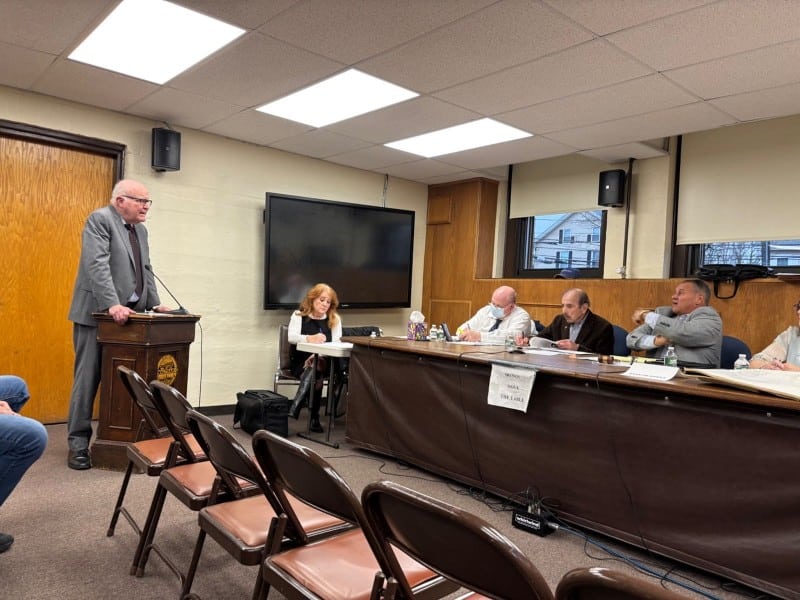
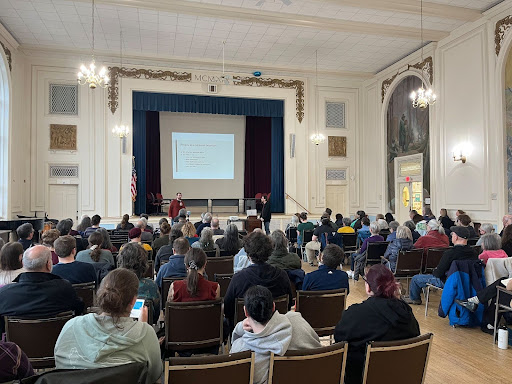
Residents attending the City Council meeting on Feb. 24 voiced divergent opinions on a draft ordinance regulating accessory dwelling units (ADUs) in the city.
Nearly a dozen residents testified that more permissive rules on ADUs would make housing more affordable and provide better options for homeowners to live near family members and helpers.
Others expressed concerns that the ordinance would be detrimental to single-family home neighborhoods and questioned whether adding units to the city’s housing stock would actually reduce housing and rental costs.
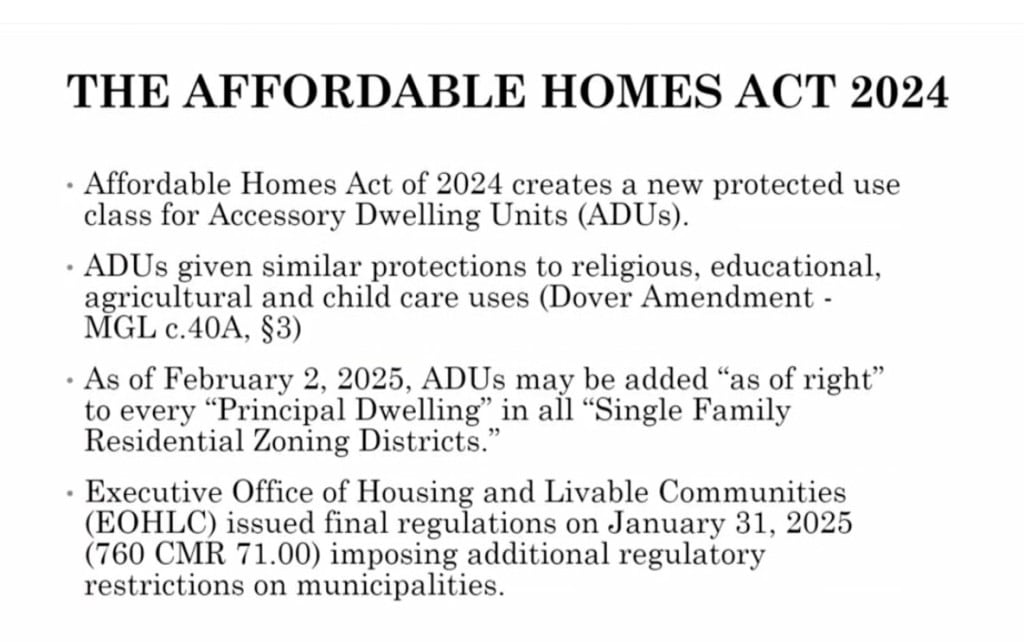
The state’s Affordable Homes Act of 2024 mandates that municipalities cannot prohibit a variety of restrictions on accessory dwelling units (ADUs). These units can be built by homeowners, often as new freestanding buildings or through renovations to existing structures such as a garage. ADUs can provide housing for family members or be rented for income to homeowners.
Proposed regulations still in flux
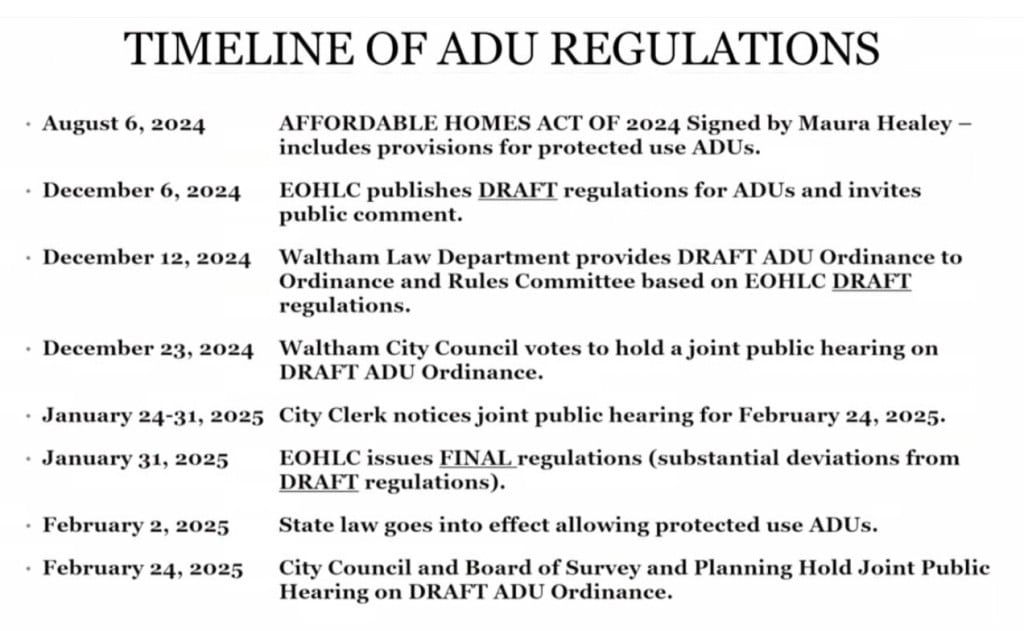
The state’s Executive Office of Housing and Livable Communities (EOHLC) submitted draft regulations on Dec. 6.
Waltham’s Law Department released a draft ADU ordinance on Dec. 12 based on the state’s draft regulations.
The City Council voted on Dec. 23 to schedule a joint public hearing about the proposed ordinance on Feb. 24.
However, the EOHLC then issued final regulations on Jan. 31 that included substantial changes from the Dec. 6 draft.
As a result, the Waltham City Council hearing on Feb. 24 addressed the Dec. 12 draft ordinance, which did not comply with state law. The draft included rules that are more restrictive than the state law and therefore prohibited.
An amended draft correcting these noncompliant rules was sent to the City Council earlier in the day on Feb. 24. Many council members and residents who spoke at the hearing therefore addressed points in the Dec. 12 draft.
Recommended changes to the draft ADU ordinance
Waltham law currently allows residents to build ADUs only if they first go through an extensive process to get Zoning Board of Appeals (ZBA) approval. Under the proposed ordinance, homeowners would no longer need to obtain a special permit from the ZBA.
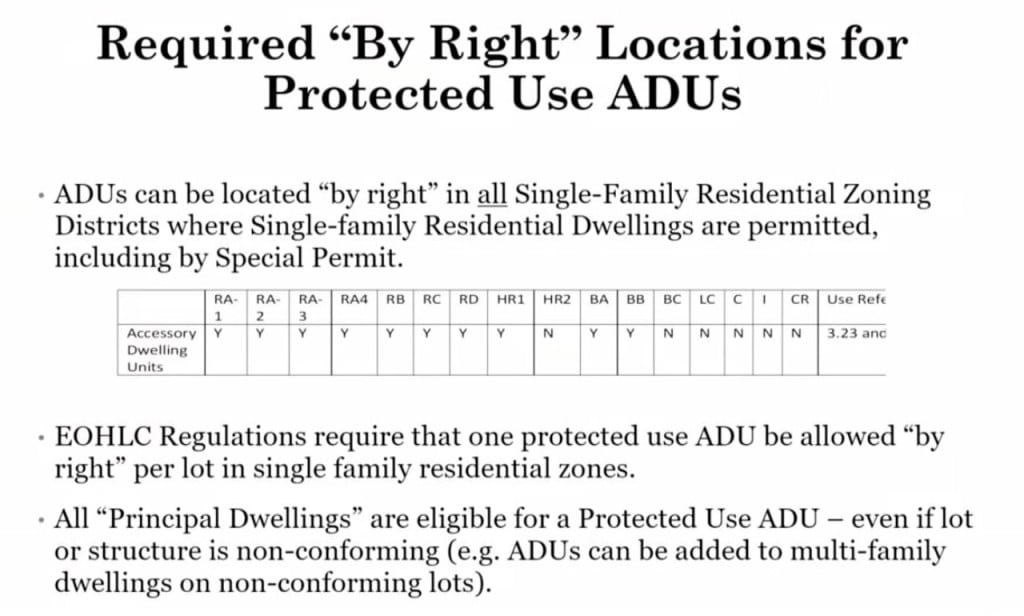
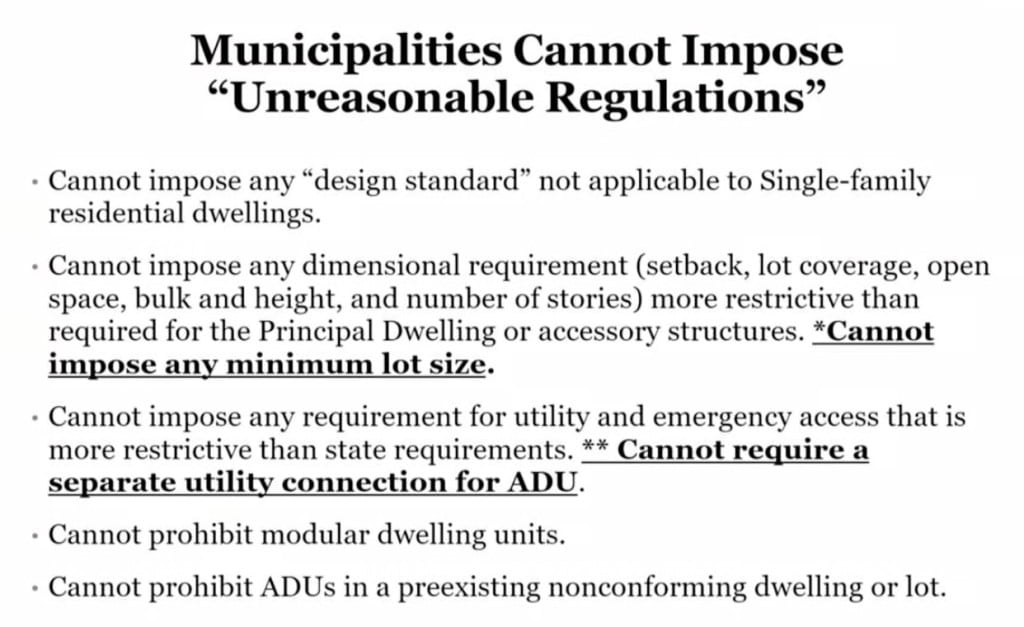
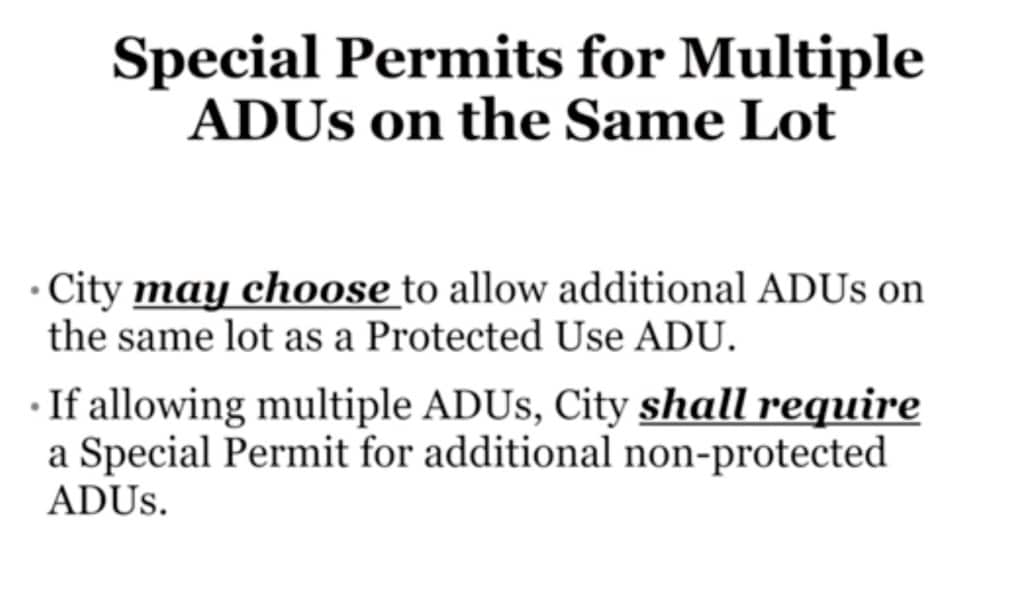
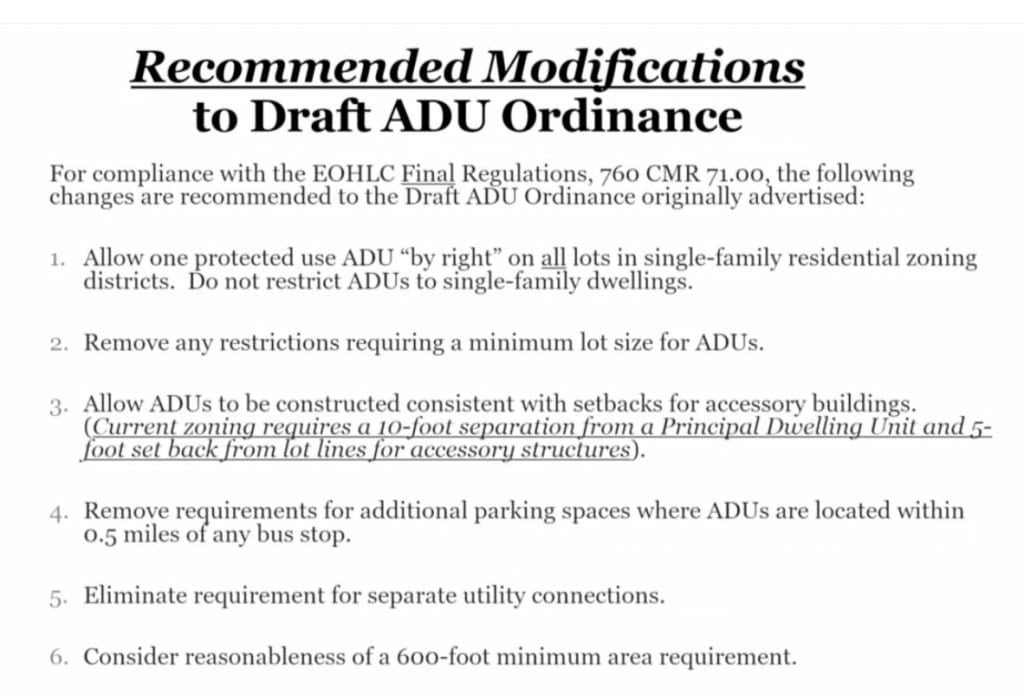
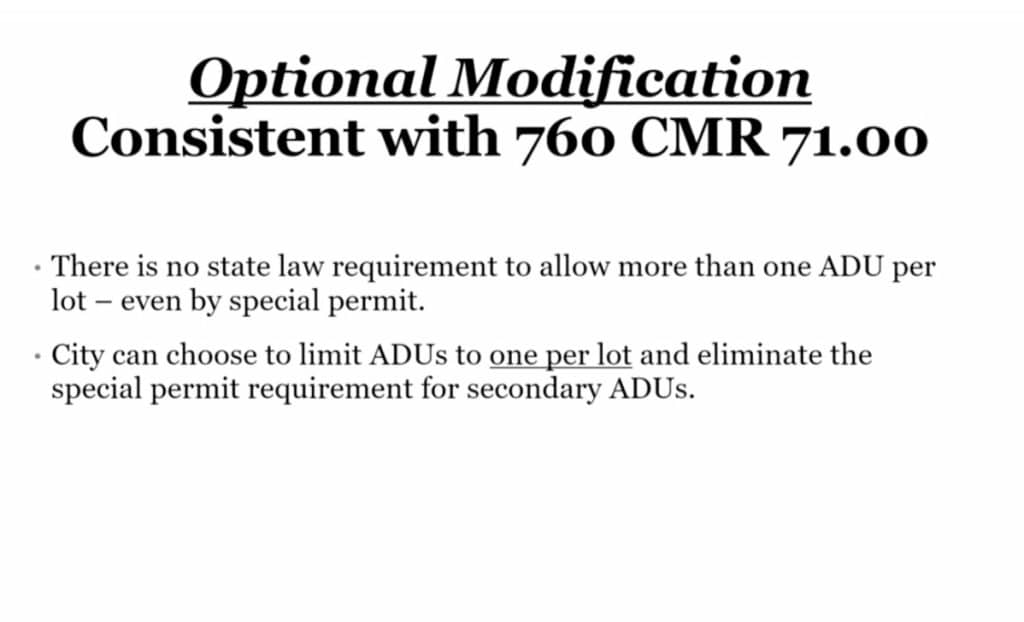
City solicitor Katherine D. Laughman reviewed the requirements of the state law (see slideshow below) and the recommended changes to Waltham’s ordinance.
These changes would:
- allow one protected-use ADU “by right” on all lots in single-family residential zoning districts, and to not restrict ADUs to single-family dwellings.
- remove any restrictions requiring a minimum lot size for ADUs.
- allow ADUs to be constructed consistent with setbacks for accessory buildings. Current zoning requires accessory buildings to have a 10-foot separation from a principal dwelling unit and a 5-foot setback from lot lines.
- remove requirements for additional parking spaces where ADUs are located within a half mile of any bus stop.
- eliminate requirements for separate utility connections.
- consider the reasonableness of a 600-square-foot minimum area requirement.

ADUs as a solution to housing shortage
Residents told city councilors that they believe allowing more ADUs would increase housing options.
“Increased access to ADUs not only improves supply in our housing, but it improves flexibility in that supply,” said William Grindle.
Many residents shared personal stories of how ADUs could help families support older relatives, noting that it creates affordable living options for seniors struggling with health issues or living on fixed incomes.
“ADUs provide an opportunity for elderly parents who have a large house and who want to downsize, to downsize into an ADU and encourage their kids and grandkids to move in,” Richard Laing said.
Mitchell Dipanni said he and his fiancee want to build an ADU so that her mother and grandmother can live close to them.
“For seniors with few options, ADUs are a lifeline to comfortable living as opposed to expensive care in a facility or worse,” Dipanni said.
Concerns cited
Carl Cincotta said he was concerned about the motives of residents who favor more ADUs. “What actually is happening is there are people who want to get rid of single-family homes,” he said.
Cincotta said he wants to preserve the single-family home character of his neighborhood. “People buy homes for certain characteristics and expect it to stay that way,” he said.
He worries that without the requirement for owner occupancy, predatory speculators are going to buy up single-family homes and turn them into multifamily units attracting a transient population.
These decisions “should not be driven by agenda-driven outsiders who have no roots in Waltham, and that’s what we have here,” he said. “Homeowners in Waltham should be making these decisions. If people want Cambridge or Somerville, they should move to Cambridge and Somerville.”
Mayor’s response
Mayor Jeannette A. McCarthy said that the state had not issued clear regulations about ADUs.
“I’m not opposed to ADUs,” she said. “I’m opposed to ADUs by right without clear regulations from the state.”
McCarthy said the state has not provided guidance on how properties with ADUs would be assessed for taxation. “We have to submit property valuations before we can have them certified or issue any tax bills.”
Laughman, the city solicitor, noted that questions about tax assessments would not be addressed in a zoning ordinance. They are issues that would be looked at by the Assessors Office and Department of Revenue, she said.
Affordable housing in Waltham
Councilors and residents concluded the hearing by discussing the issue underlying the ADU ordinance: how to increase the availability of affordable housing.
Councilor Randall J. LeBlanc questioned whether allowing more ADUs would improve affordability. He noted that student dormitories at Brandeis and Bentley are expensive, creating incentives for students to pay high rents for rooms in rental units because they are still more affordable than dormitories.
Tom Benavides said that tax assessment of properties with ADUs should not be a concern, as there are already precedents within Waltham for how to tax similar properties.
Benavides noted that the vacancy rate in Waltham is only 2.6% for rental units and 1.5% for owner-occupied homes. He said prefabricated, modular homes designed for ADUs cost $250,000 to $400,000. This is “insanely inexpensive” and “an opportunity to make more starter homes available.”
Waltham’s City Council must adopt a new ADU ordinance to comply with Massachusetts law.
After hearing resident input at its meeting, the council sent the matter to its Ordinances and Rules subcommittee, which will amend the draft ordinance then send it back to the full council. The full council can also amend it and then go through its voting procedure to send it to the mayor.
Here is WCAC-TV’s coverage of the meeting.
Editor’s note: Tom Benavides is a founding member of the Waltham Times.
Author