Floods in Waltham – local memories help prepare for climate-related challenges


A trio of Brandeis University faculty members have undertaken a project to look at the history of flooding in Waltham through the memories of city residents.
By revealing the undocumented history of flooding in the city, the researchers hope to provide a resource for understanding and mitigating climate-related challenges.
“We knew there were people in Waltham who knew a lot more than we did,” said Sara Shostak, professor of sociology and health: science, society, and policy. “There are people with deep knowledge of where flooding has happened over time.”
The goal of the project is to collect oral histories that will be publicly available and to produce a digital mapping platform.
Joining Shostak in this research effort are Sarah Mayorga, department chair and professor of sociology, and Rachel McKane, Jack Meyerhoff Chair in American environmental studies and assistant professor of sociology. They hope to build connections across generations and culture by helping residents understand the history of flooding in their neighborhoods.
The study welcomes anyone with memories to share
The researchers are casting a wide net to collect oral histories from anyone with a knowledge of flooding in the city—and Waltham has seen dramatic flooding in the past.
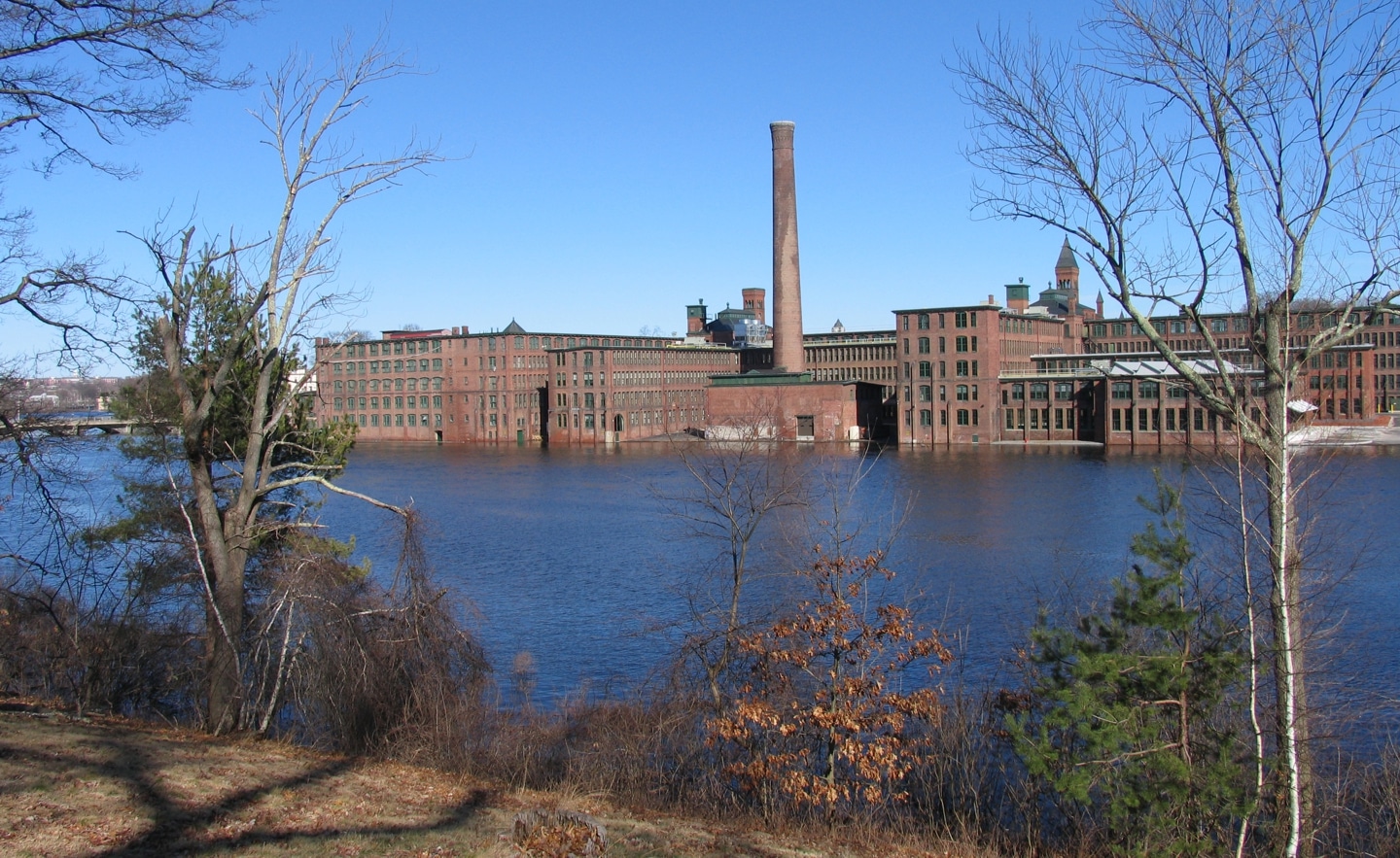
They interviewed Marie Daly, a commissioner on the Waltham Historical Commission and one of the founders of the Waltham Land Trust. She recalled the flood of 2010 that inundated the Charles River Museum of Industry and forced it to close.
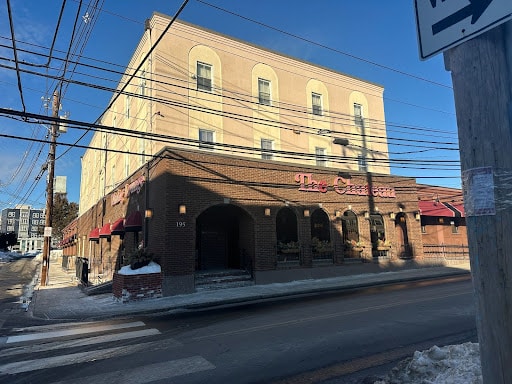
She also described a flood several decades ago when the Moody Street dam froze, causing the river to back up into the Crescent Street area. The National Guard considered demolishing the dam, but a Department of Conservation and Recreation employee courageously walked across the dam and raised the locks.
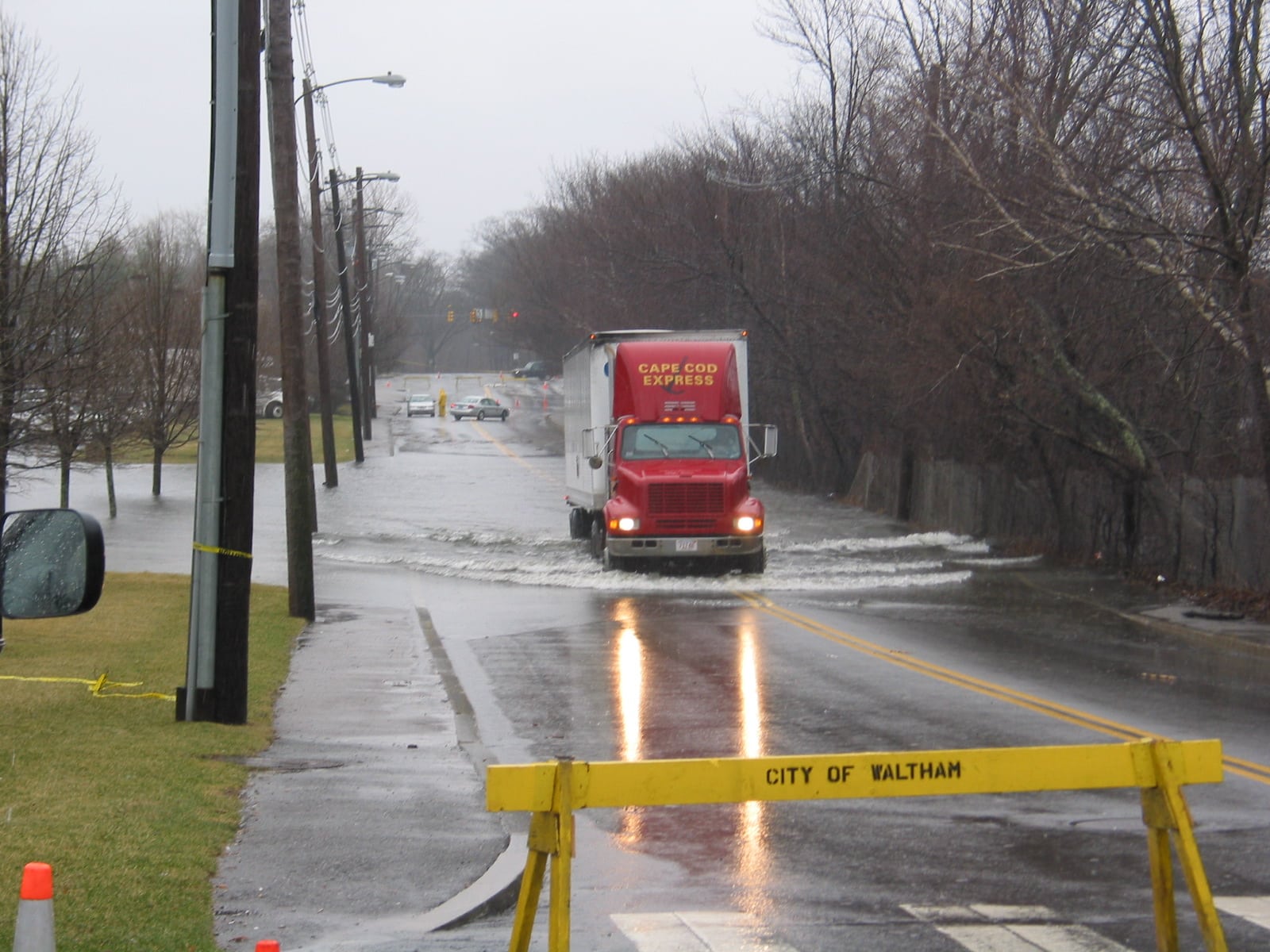
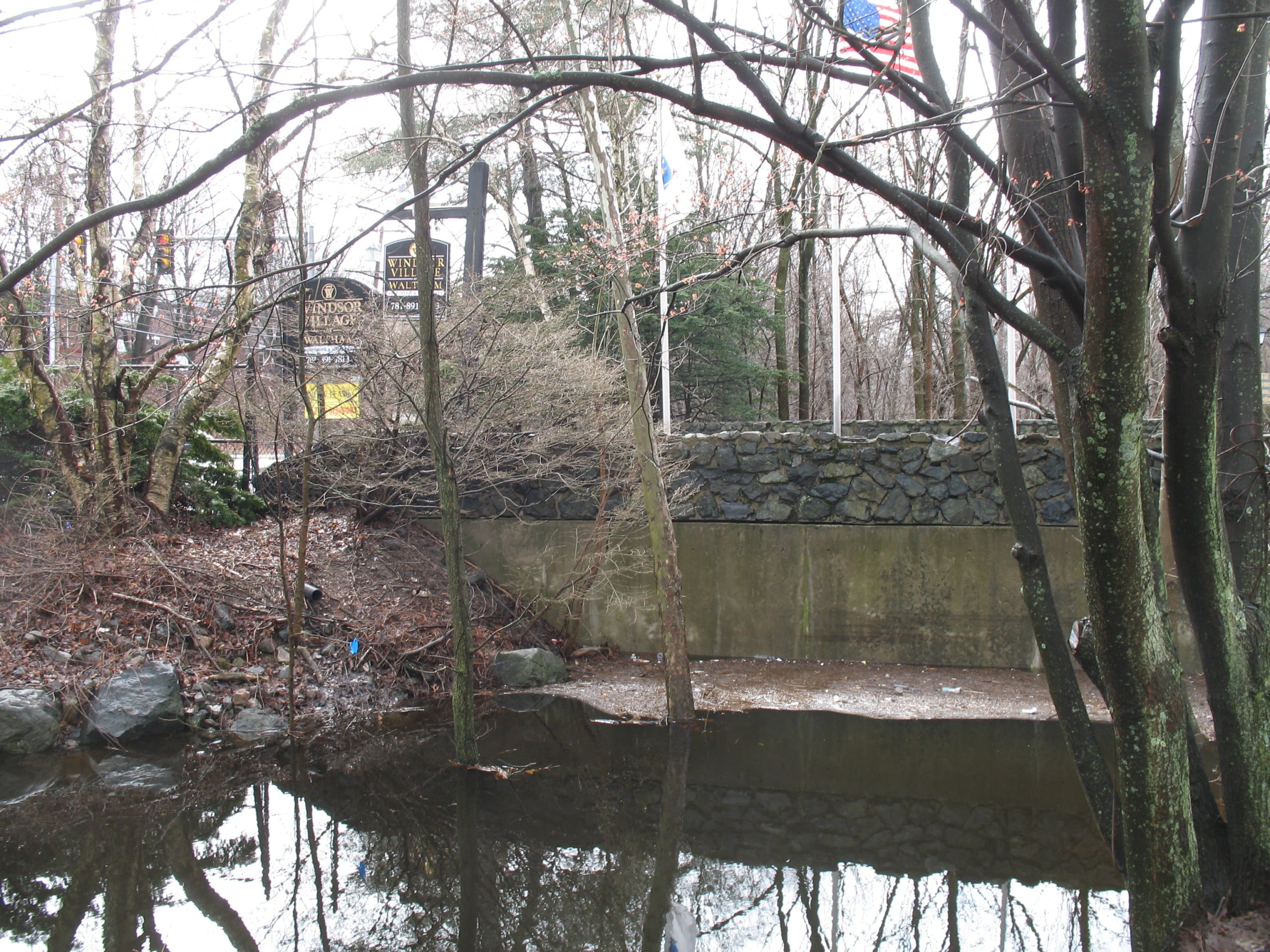
Flooding in the city is by no means limited to the Charles River area. Several areas along Lexington Street have histories of flooding, as do areas along Waverly Oaks Road and Trapelo Road near Beaver Brook.
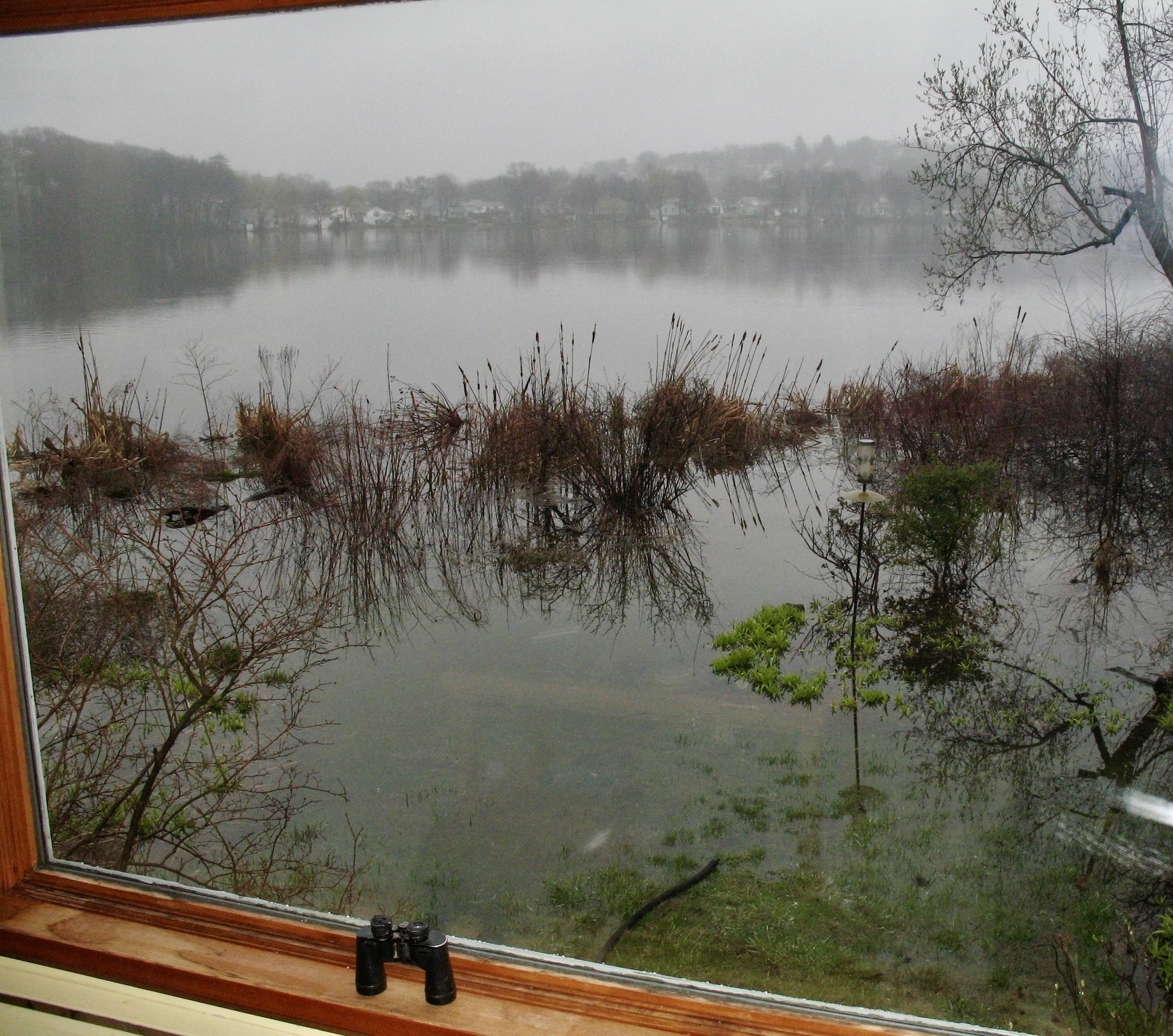
Mayorga is a resident of the Hardy Pond area and is familiar with flooding problems there.
The researchers, she said, are also interested in more mundane flooding that doesn’t make headlines and in the ways residents mitigate problems. These can be as simple as one resident who removed his driveway and installed pavers to help with drainage.
Shostak, who directs the project, said, “Preserving and sharing flood narratives not only creates a lasting and accessible resource, but it also cultivates social cohesion and community solidarity.”
Lived experiences, she added, “are vital to creating effective responses to climate challenges.”
Toward resilience in the face of climate change
The researchers have a particular interest in Waltham’s environmental justice communities — areas that face disproportionate exposure to environmental hazards and risks, often due to race, income or social inequality.
A Mass Humanities grant of $19,800 is supporting the project and will provide funding for two undergraduate research assistants and to engage community partners in creating an online platform. Brandeis is one of 12 Mass Humanities grant recipients exploring how climate change affects Massachusetts residents.
The project is titled “Building Climate Resilience via Collective Memory: An Oral History of Flooding in Waltham, MA.”
The Samuels Center for Community Partnerships and Civic Transformation (COMPACT), described as part of the university’s long-term commitment to Waltham, is also supporting the project.More information is available at the project’s webpage. Those interested in being interviewed may contact the researchers at walthamstudy@brandeis.edu.
Author