Community Preservation Committee supports funding repairs for Bright School roof
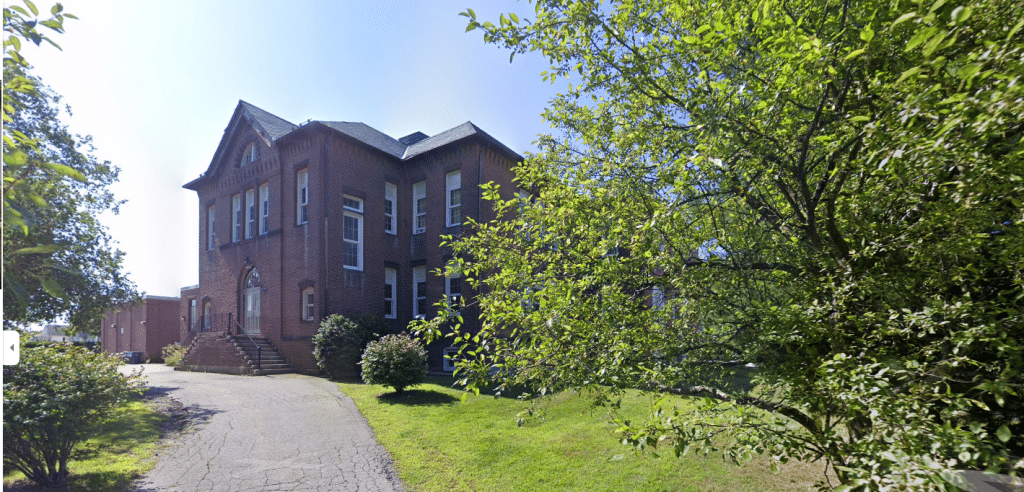
The Waltham Community Preservation Committee this week approved spending nearly $473,000 to repair the roof of the Jonathan Bright Elementary School.
If the expenditure is approved by the City Council and its Long-Term Debt and Capital Planning Committee, the former school building would receive the repairs needed to prevent water from leaking in.
Waltham City Clerk Joe Vizard submitted the initial application for the repairs to the CPC.
The building, also known as the Rosario Malone Archives and Records Center, currently houses several historical collections and is located at 260 Grove St.
It is one of the last “old” school buildings in Waltham, according to Vizard, and its exterior is currently being maintained as a historical structure.
On the inside, the building serves as a place to store pieces of Waltham’s history. The Waltham Historical Society currently has a space there, and the city’s historical collection — which goes back to Colonial times — is currently housed within the building in climate-controlled, secure vaults.
“It is really a building that is dedicated to preserving the city’s history,” said Vizard. “We’d like to preserve the building by stopping the water from getting in.”
Waltham Building Maintenance Director Jon Millian said he and his crew have tried patching the roof multiple times to repair the damage but water continues to leak into the building.
The CPC then hired an architect, Tom Scarlata, who works for the Boston-based Bargmann Hendrie + Archetype Inc. architecture firm, several months ago to evaluate whether the roof needed more repairs or to be replaced entirely. Scarlata determined that only a repair was needed, at which point the CPC put out a bid for the project.
The bid was awarded to the lowest bidder at $472,660, which the CPC unanimously approved during its Tuesday evening meeting.
Plans call for repairs primarily to the historic parts of the roof, with replacing the shingles being the main goal. Plans also call for work on the chimney, the gutters and the downspouts — essentially anything that could contribute to rainwater entering the building, said Millian.
The committee also agreed to ask the contractor to use composite roofing materials to replace the shingles in order to save money. The composite materials might not survive as long as the existing shingles, which are roughly 130 years old, but will still last 50-plus years, according to Scarlata.
“All of us will be long gone before that roof ever has to be replaced,” he said.
Author