
Charles River Collaboratory summer program spreads a love of STEM
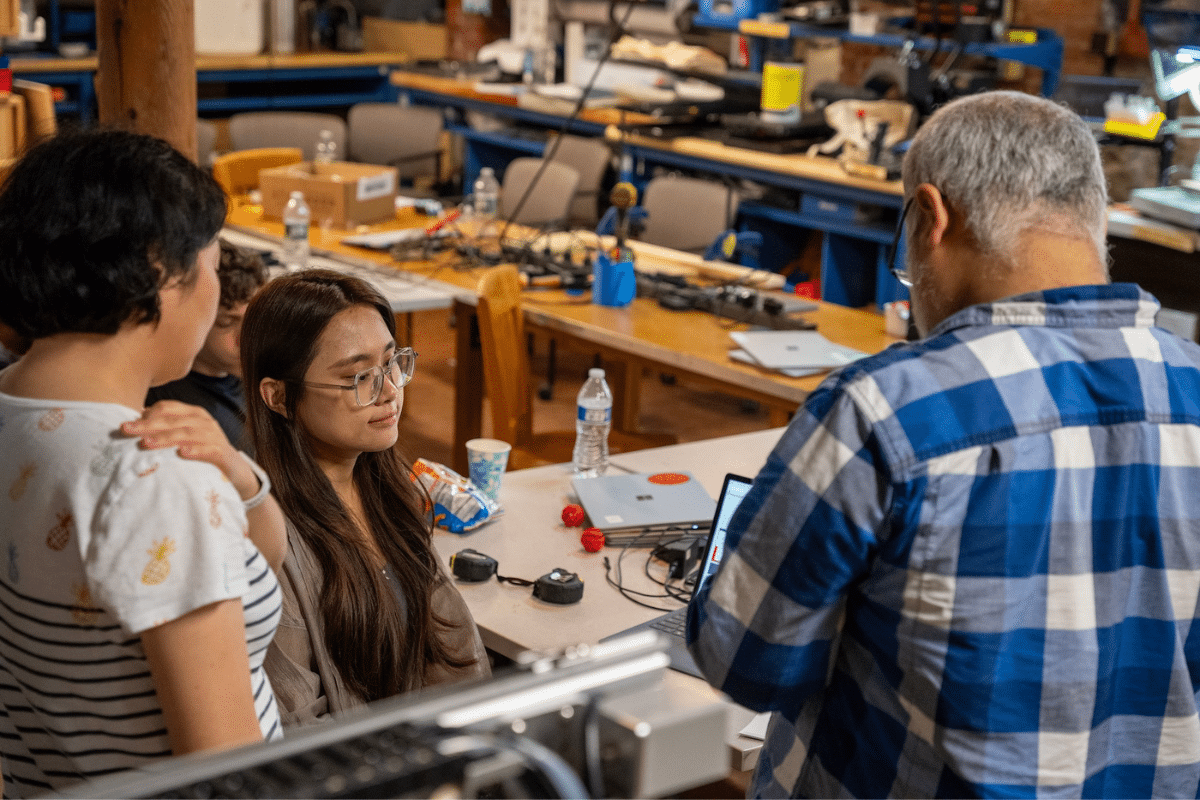
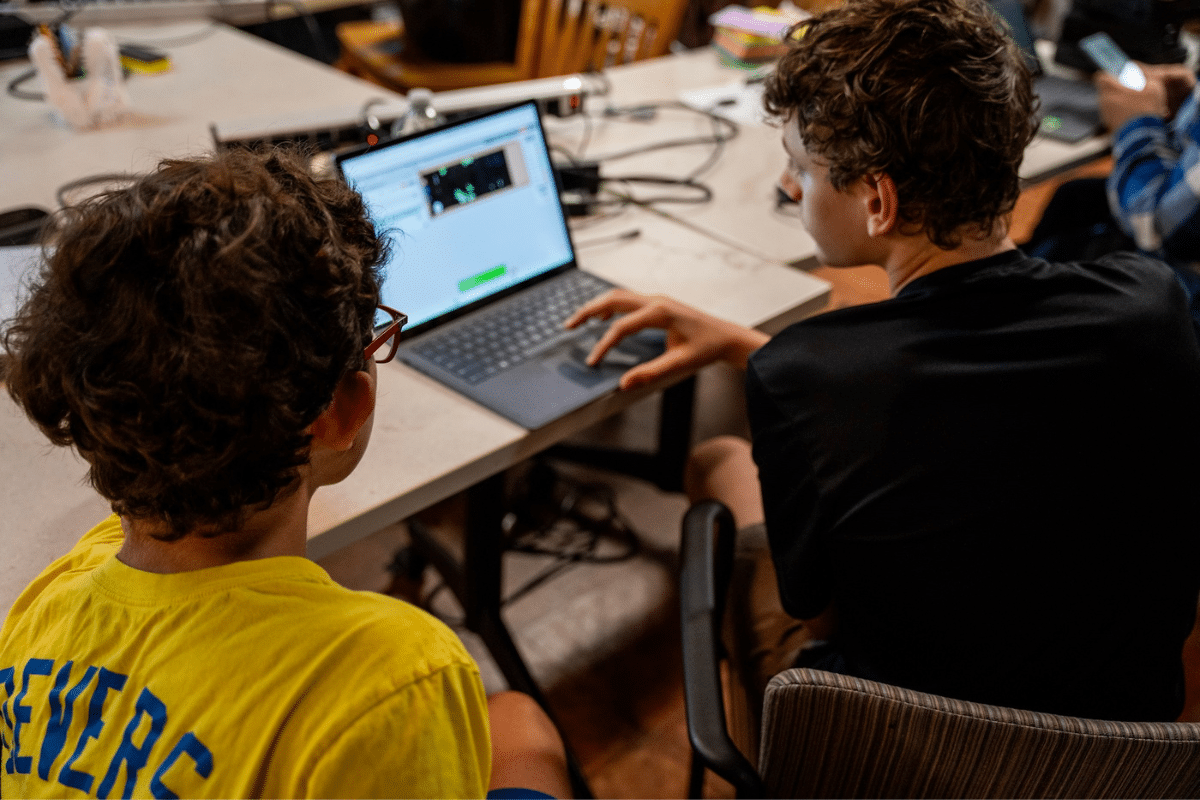
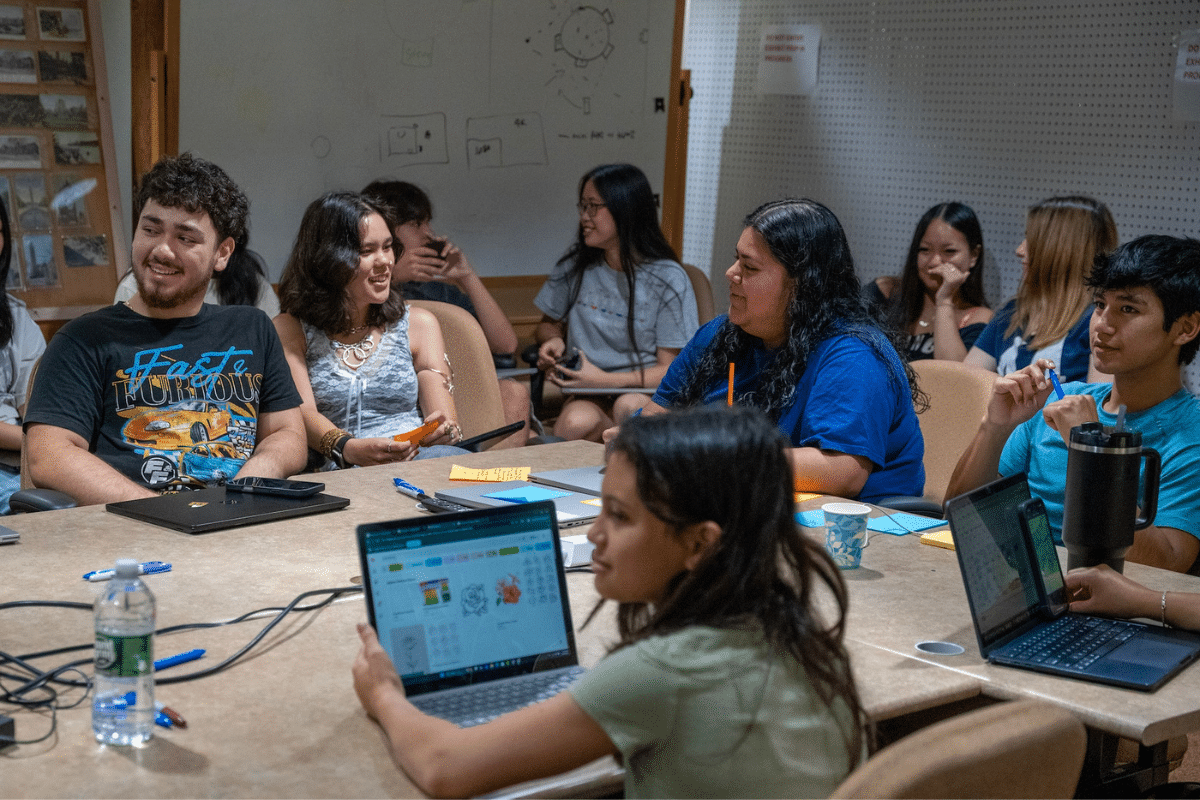
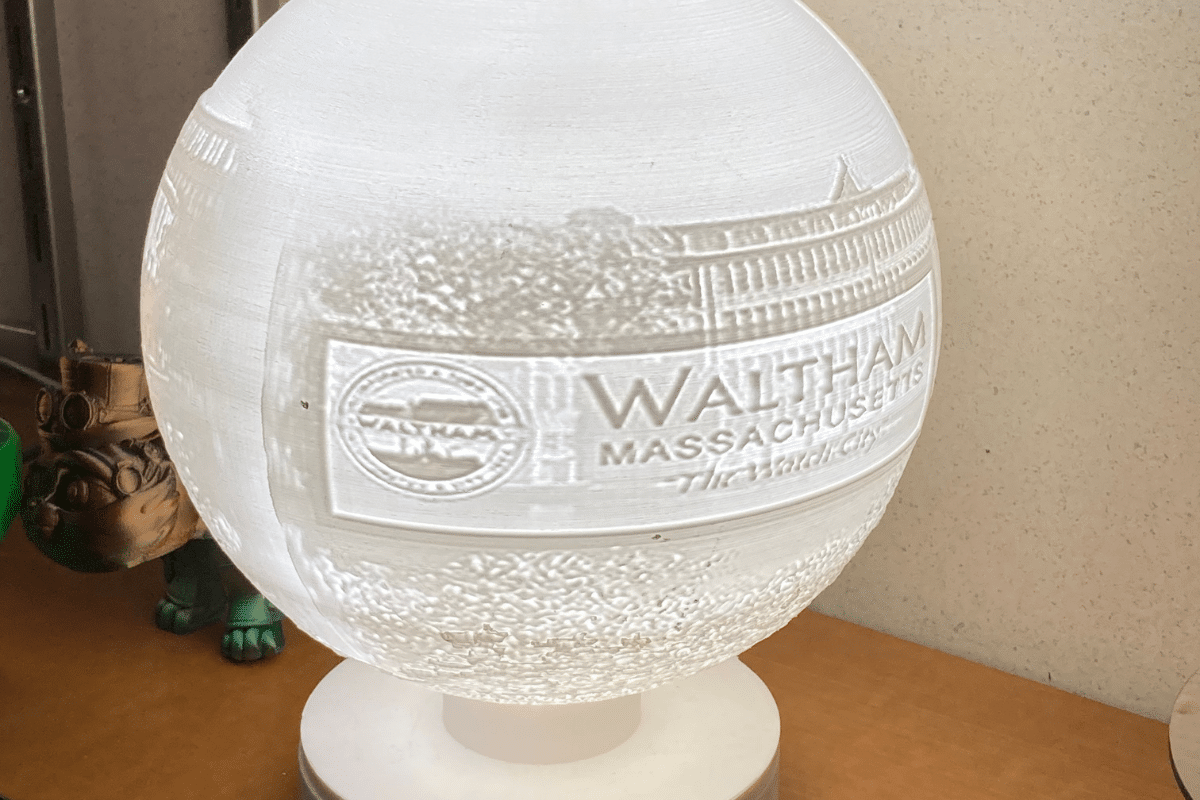
A low conversational buzz fills a room packed with students eyeing laptops as they figure out how to trick ChatGPT into giving fake, or “hallucinatory,” answers to questions, part of a larger discussion on ethics and morality in AI. Music from an AI band, Velvet Sundown, pumps out as students work. This is not a typical classroom.
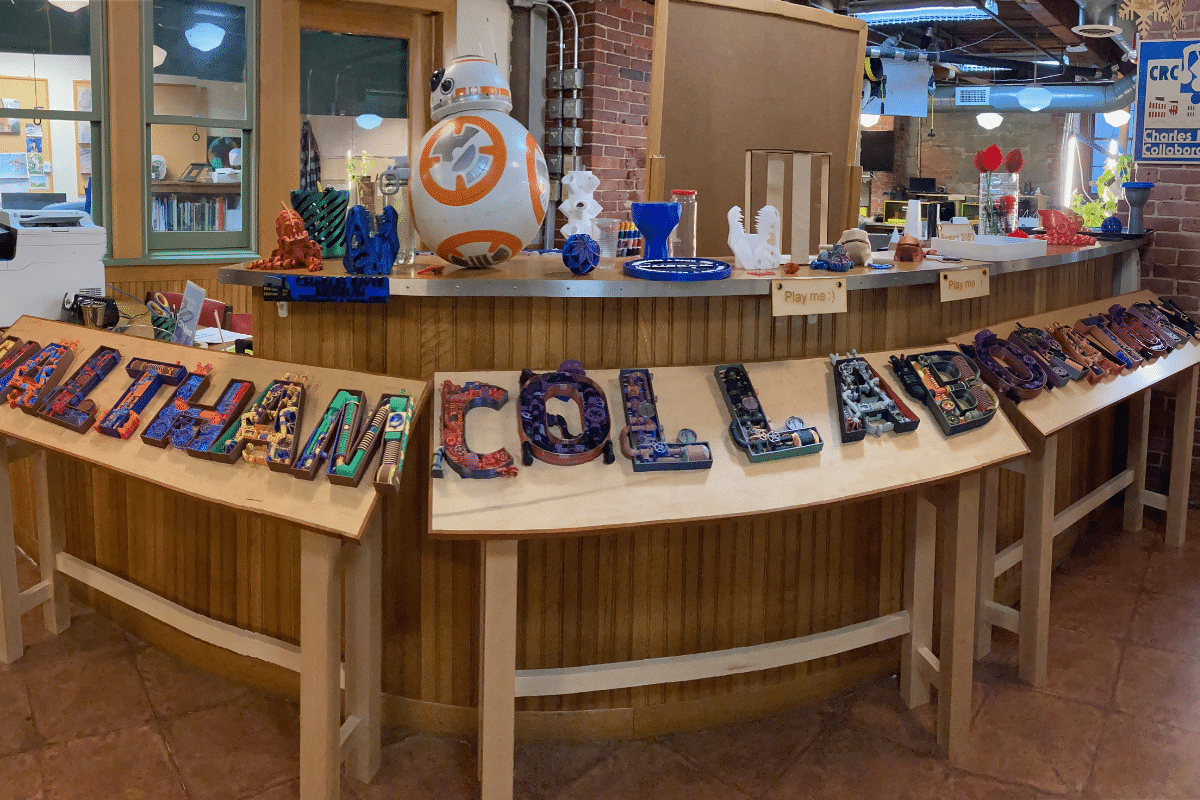
Welcome to the Charles River Collaboratory at the Charles River Museum of Industry & Innovation, where Waltham students this summer are exploring topics as diverse as smart-automated greenhouses, tissue engineering and AI.
The intent, said program director Mike Barnett, a professor of science education and technology at Boston College and a Waltham resident, is to take students who think science and technology is not for them — particularly those from families with lower income, students of color and first-generation immigrants — and help them discover that they are wrong.
“We help each student to begin to realize that you are actually good at it,” he said. “You were always good at it; you’ve just been conditioned to think you are not.”
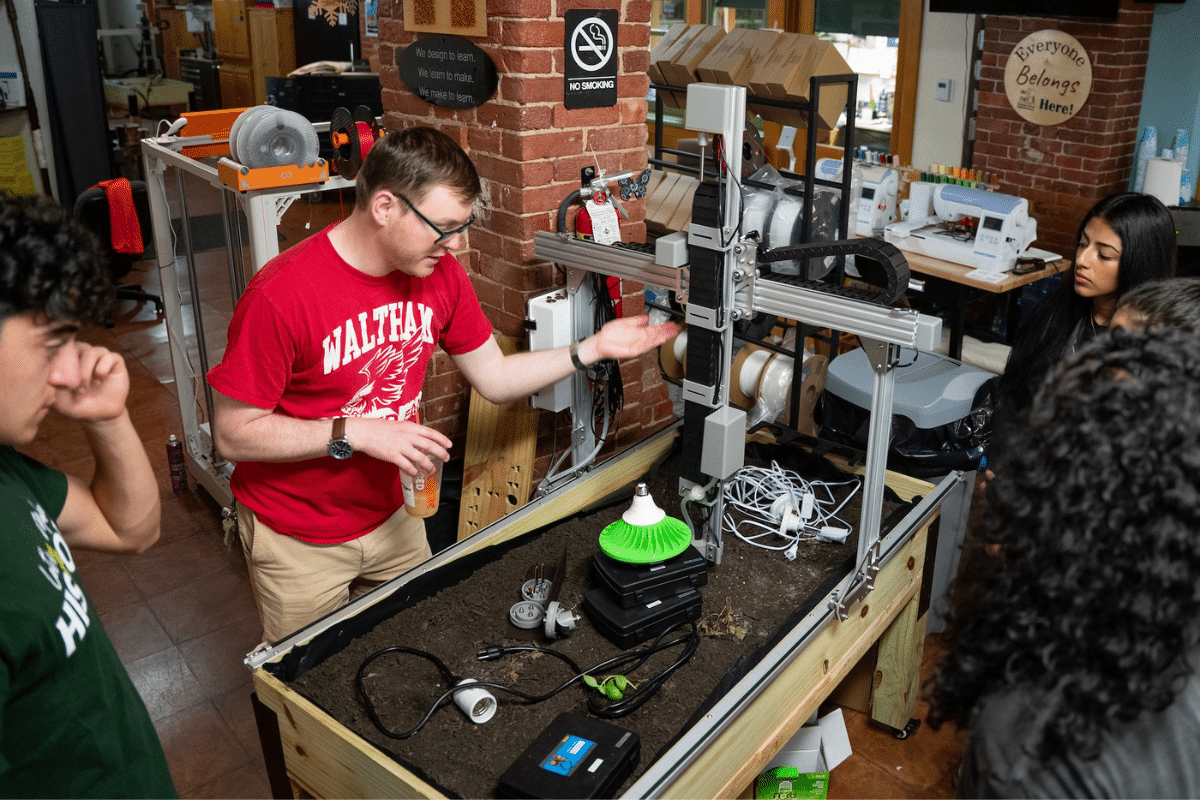
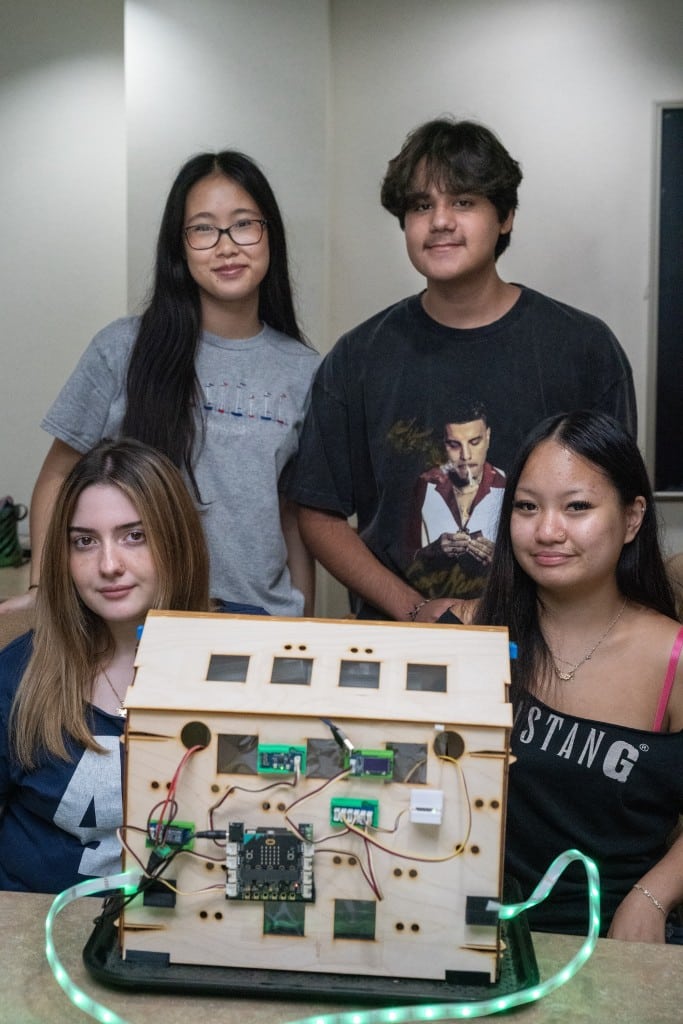
In another room four students display a tabletop automated greenhouse they have constructed using parts they made on one of the Collaboratory’s 3D printers and computer chips (known as micro:bits) that they’ve programmed to turn on LED lights and monitor temperature and humidity. In a related project the students have constructed a farmbot that digs holes, plants basil and provides water — automated through the students’ programming.
The projects connect the physical world with the digital world, interweaving building and programming, which makes coding meaningful to students. Students may take their greenhouses home with them to continue work with mentors and families.
Jona Bajrami, a rising junior at Waltham High School, said the greenhouse project was “very fun,” but she particularly enjoyed a subsequent workshop in which she and her Collaboratory peers taught middle school students how to make the greenhouses and code the chips.
A youth-driven learning space
The notion that students learn from one another and often respond best to help from near-peers is fundamental to the educational approach adopted by the Collaboratory. Barnett has found that students who are reluctant to engage deeply with adults in the program will much more readily talk with young people from their neighborhoods.
“This space became very much youth-driven,” said Barnett. “That’s its goal. Most maker spaces are led by old, bearded white guys. Once that happens, the kids don’t feel welcome.”
Barnett’s background makes him well suited to lead this project. He grew up in a small Kentucky town with a high poverty rate and was the first person on either side of his family to attend college. He had no idea how to handle college and often tells a story about scoring his age on his first physics test (17%). But he had mentors who believed in him and encouraged him at every step in his progression through the academic world.
“These experiences,” he wrote in a description of his work, “have formed the key principles in my mentoring philosophy: centering on empathy, building trust and being present and available to provide help.”
Barnett started working with youth from groups underrepresented in STEM in 2005 and has since mentored close to 2,000 students at programs in Boston, Springfield and Waltham, and the program is reaching thousands more as it expands in other states.
“I had much to learn, particularly about what it meant to mentor individuals whose backgrounds and cultures were significantly different from my own,” he wrote, describing the effort as “the most significant and challenging learning process of my professional life but also the most rewarding.”
His work has earned him a CASE/Carnegie Foundation for the Advancement of Teaching Professor of the Year award, Massachusetts, in 2012. He also was recognized as a 2024 finalist for the highly prestigious Presidential Award for Excellence in STEM Mentoring.
Continuity is the key to building trust and confidence
The Collaboratory was established in 2022 by the Boston College STEM team and the Charles River Museum, with support from Waltham public schools. Barnett described it as “a first of its kind space in Massachusetts” that is a youth-led learning space where young people use cutting-edge technologies to learn how to design and make objects for themselves, their families and the community.
The program had 305 applicants this year, and 83 youth are participating this summer. Two-thirds are girls, which Barnett said is highly unusual in a maker space. Participants receive a stipend of $300 to $500 per week, and up to $1,000 per week for experienced mentors. The program serves roughly 200 students over the course of the year .
Participants spend an average of 4.5 years with the program, and that continuity is essential. Building trust and confidence is a slow process for both mentee and mentor, Barnett said. The Collaboratory has hired five Waltham middle and high school teachers as faculty.
Barnett and his team will be introducing tissue engineering to students for the first time this summer. A multidisciplinary field, tissue engineering has focused on replacing diseased human tissue, such as repairing heart muscle. In the past decade the field has expanded to include cellular agriculture, such as the generation of foods. Collaboratory students will learn this summer how to build plant “scaffolding” and seed muscle cells onto it, as well as how to use microscopy to assess their work.
Fashioning the future
The Collaboratory has a new partnership with Advanced Functional Fabrics of America at MIT, and some students will be working on fashion engineering this fall. As budding entrepreneurs, students hope to set up a shop to sell products that they design and make, such as customized tote bags.
They are also welcoming the public. Students planned the NextGen STEMFest: Innovate and Create event held in May. Also, the Collaboratory will be open every Wednesday and Thursday from 3 p.m to 5 p.m. during the academic year (check the Collaboratory website for updated hours), and students will be present to teach people how to use various machines to make objects such as toys for babies. They have advertised on Facebook, distributed flyers and created a website to raise awareness.
“You can create whatever you want here,” said Bajrami. Another Waltham High student, Sonia Wong, added, “It’s a good way to give back to the community.”
More information about the Collaboratory can be found at its website.
An anonymous foundation has provided annual funding for Barnett’s work in Waltham and elsewhere for six years. The program has several other funders, including the National Science Foundation, Cummings Foundation, Boston Scientific Foundation, Constellation Foundation, Schiller Institute at Boston College, and the Lynch School of Education and Human Development, Boston College Collaborative Fellows Program.
Author

Comments (2)
Leave a comment
When commenting, please keep in mind we are a small non-profit focused on serving our community. Our commenting policy is simple:
- Common sense civility: we’re all neighbors, but we can disagree.
- Full name required: no anonymous comments.
- Assume the best of your neighbors.


Mike Barnet is a very hard worker and really cares about the kids he works with. Good job Mike
This was a hugely interesting article and I am thrilled that this program exists! I totally agree about how kids learn best. Please try to get The Boston Globe to print this as a special interest piece. We need good, uplifting things to read about and I am sure this will be received with open arms. And no, I don’t have a contact there, sorry.