Waltham will soon be able to limit new development through Chapter 40B

This Tuesday, the city’s Zoning Board of Appeals will open its fourth active hearing for an apartment building permit through Chapter 40B of Massachusetts General Law, which allows developers to build housing in areas not zoned for residential use if a city or town doesn’t offer enough affordable housing.
Although Waltham has seen many Chapter 40B cases lately, their window may be closing. Last month, ZBA member Stephen Taranto moved to accept “safe harbor” defenses from the city’s Law Department into the board’s files.
Municipalities can invoke a safe harbor defense to refuse new 40B applications once they’ve built sufficient subsidized housing, measured by the state as having 10% of their residential units on the statewide Subsidized Housing Inventory.
Members of the ZBA and the Law Department haven’t clarified the status of Waltham’s safe harbor claim, but the 10% threshold is rapidly approaching — as of early this month, Waltham is approximately 63 units from meeting it.
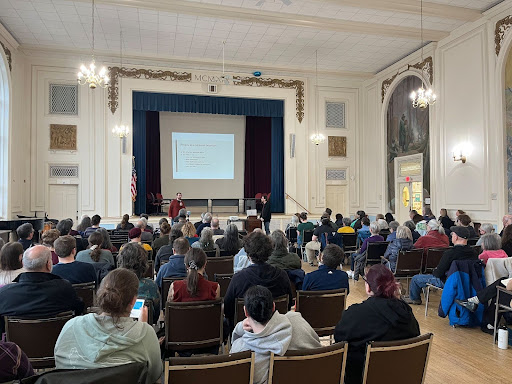
Residents at recent Chapter 40B hearings have recently expressed frustration with the law and the ways it can limit the city’s options and decision-making ability. Still, state housing experts argue the policy has an important and effective role in mediating the housing crisis currently affecting Greater Boston.
How Chapter 40B works
When a developer applies for a comprehensive special permit through sections 20-23 of Chapter 40B, a city or town’s zoning board is responsible for coming up with the terms of the permit
The ZBA can choose not to grant the permit, but if it does so, or imposes restrictions that make the project “uneconomic,” the developer can appeal its decision to the state’s housing appeals committee, which has historically set a high standard for proving the effects of a development will be so harmful to a community it warrants denying the permit.
Once a municipality has built sufficient affordable housing, however — if 10% of all of its housing units are listed in the SHI or if it’s already using over 1.5% of its land for affordable housing — it can claim statutory safe harbor.
This can happen even before housing is built. A municipality can claim safe harbor if it hasn’t reached the affordability minimum as long as it submits a clear plan to the state for how to achieve that threshold and demonstrates significant yearly progress.
Municipalities can also add housing units to the SHI as soon as it has approved all permits those units require.
The approval of a new Chapter 40B development can have a huge effect on a municipality’s SHI numbers, since all of its units — not just income-restricted ones — are eligible for inclusion in the subsidized housing total.
Waltham currently has 2,581 units listed in the SHI — approximately 9.76% of the city’s total housing units as of the 2020 census. That means once Waltham meets that 10%, it can invoke the safe harbor defense at least until 2030 census numbers come out.
Any one of the four Chapter 40B developments in front of the board have over 63 units and could push Waltham over the threshold. What’s more, the inventory currently includes a development — 1486 Main St. — with zero subsidized units. This development already received a comprehensive special permit in 2023, but has not yet submitted documentation of building and occupancy permits. Once it is fully permitted and documented, Waltham will pass the 10% mark.
What 10% subsidized housing means
The SHI only paints a partial picture of the housing situation in a given community, says Aja Kennedy, a research fellow at the think tank Boston Indicators. She points out that because all units from 40B developments are included, regardless of cost, the quantity of affordable housing in a community can actually be much lower.
Housing Navigator MA is a nonprofit that focuses on documenting and connecting people to affordable housing. According to its affordable housing database, there are fewer income-restricted rental units available per renter in Waltham than the state average, with only 12 affordable units per hundred renting households compared to 21 in Massachusetts at large. It also indicates that Waltham has more than average age-restricted affordable rental units available for low-income residents 62 years or older.
Ultimately, though, meeting that 10% means being able to claim safe harbor — which will come as a relief to some Waltham residents.
Three of the current proposals in front of the board are concentrated in the Piety Corner neighborhood of Waltham, which already houses a recent 40B build and doesn’t otherwise contain many residential buildings. At public hearings on some of these projects over the last few months, some neighbors have expressed concerns about light, traffic, privacy and disruptions in their neighborhood from construction. A couple of residents — and ZBA members — have argued these developments don’t provide enough truly affordable housing.
Some have also worried that rapid development could significantly strain local infrastructure, causing problems that will severely impact quality of life for both new and existing residents of the neighborhood. This sentiment is echoed by Colette Casey-Brenner, Waltham’s Housing & Community Development director.
“[These developments] constitute probably 1200 to 1500 units in that little congested area,” she said. “There’s no grocery stores. I believe there’s only sidewalks on one side of the street. It’s a very busy commercial high traffic area, it’s very congested… It’s a challenging location with few amenities in that area that people can walk to.”
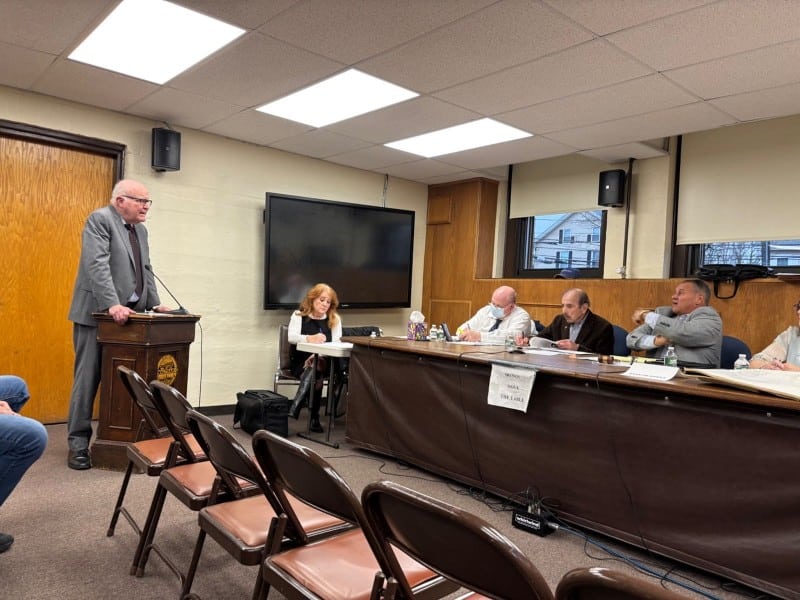
At the ZBA’s August 10 meeting, chair John Sergi expressed that the board’s hands were somewhat tied. “As long as they file before safe harbor is declared, we are obligated to begin the case… that’s why there’s such a scramble right now [where] everyone’s filing, because they know we’re getting close.”
The Greater Boston context
Chapter 40B was passed in 1969, and many in housing research and advocacy say it has been a vital tool for building housing. Affordable housing agency MassHousing has said that the 40B law is responsible for producing around 70,000 housing units in Massachusetts, approximately half of which are rent-restricted based on the area’s median income.
Both Kennedy and Katherine Levine Einstein, an associate professor of political science at Boston University, praised it as an effective and successful tool for constructing housing in communities.
Greater Boston as a whole is in the middle of a housing crisis. The Boston Foundation’s 2024 Greater Boston Housing Report Card — to which Einstein and Kennedy contributed — indicates that Boston is leading the nation in some worrying areas, with some of the lowest home and rental vacancies, highest income inequality, and largest population experiencing homelessness in the country.
Rent and especially homeownership costs have gone up significantly since 2015. Housing production is much slower than in previous decades, and many projects remain unfinished because of rising construction costs. Boston’s housing stock is also so old the report says it “indicates the region has not been producing housing at a meaningful rate after 1940.”
Einstein has studied 40B proposals in municipalities across the region. She says the kind of frustration seen in Waltham right now comes out frequently in public hearings.
“People don’t like 40Bs. They’re really unpopular,” she said. “It makes intuitive sense that if I am a resident of the community that I don’t like [Chapter] 40B, because I feel like my control is being taken away.”
Still, Einstein said, these concerns come frequently when communities consider adding new housing. “Everyone says, ‘My community is built out. Our infrastructure, our schools are overflowing. We are doing so much more than our neighbors.’ ”
This can lead to larger consequences, she added. “When we look at this [on] an individual project by project basis, maybe you say ‘Yes, we should be compromising’… but if you start repeating that process over and over and over again hundreds of times, that is how you create a housing crisis.”
She argued that policies like 40B make sure municipalities continue to add to their housing inventories. “What we know about communities is [that] when they have control over whether or not to build housing, they just don’t do it.”
The future of housing
Still, some communities are setting examples on building affordable housing. The Housing Report Card recognized the cities of the Metro Mayors Coalition for building as much affordable housing as the rest of Greater Boston combined.
Kennedy specifically praised the City of Boston’s housing programs. Einstein pointed to Lexington and Cambridge as examples of communities that have recently gone above and beyond state requirements to pass policies making it easier to build housing.
In the past, Waltham has taken steps to commit to building affordably, including a more stringent definition for affordability for housing built under inclusionary zoning passed in 2020 with the support of Waltham housing organization Watch CDC.
That legislation has recently been criticized, however, by advocates from Waltham Inclusive Neighborhoods who say it’s so stringent that it disincentivizes the construction of new housing.
Still, the engagement from these housing groups may be a good sign for Waltham’s future — one of the important factors to productive housing discussion and policy, Einstein said, is community organization. “You’re more likely to show up to things if someone asks you and tells you that your voice matters,” she said.
Even when a municipality has the best intentions, Einstein explained residential construction is often unpopular for one simple reason — the positive effects of adding homes to a community are distributed throughout the community and difficult to observe, but the negative effects of any given development can be significant on neighbors.
“A lot of times in conversations people worry about property values going down, which — I get it,” Kennedy said. That’s a very big deal for someone who owns a home — a lot of times, it’s your largest asset. It’s worth a lot of money.”
“At the same time, again, the main underlying point of trying to have housing that’s affordable is trying to make sure that people have a safe place to live,” she added. “It sounds basic, but I do think that gets overlooked.”
Author