
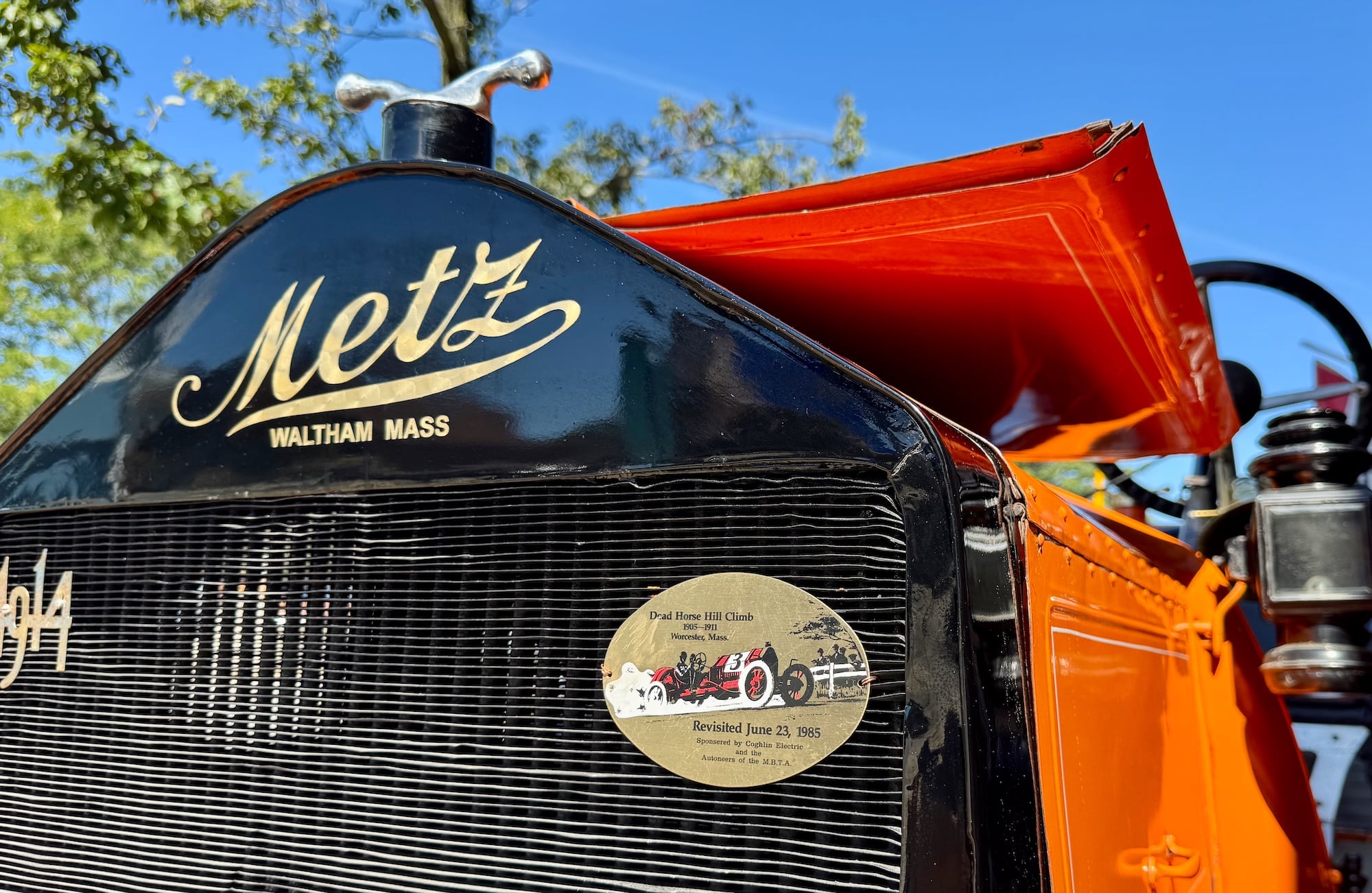
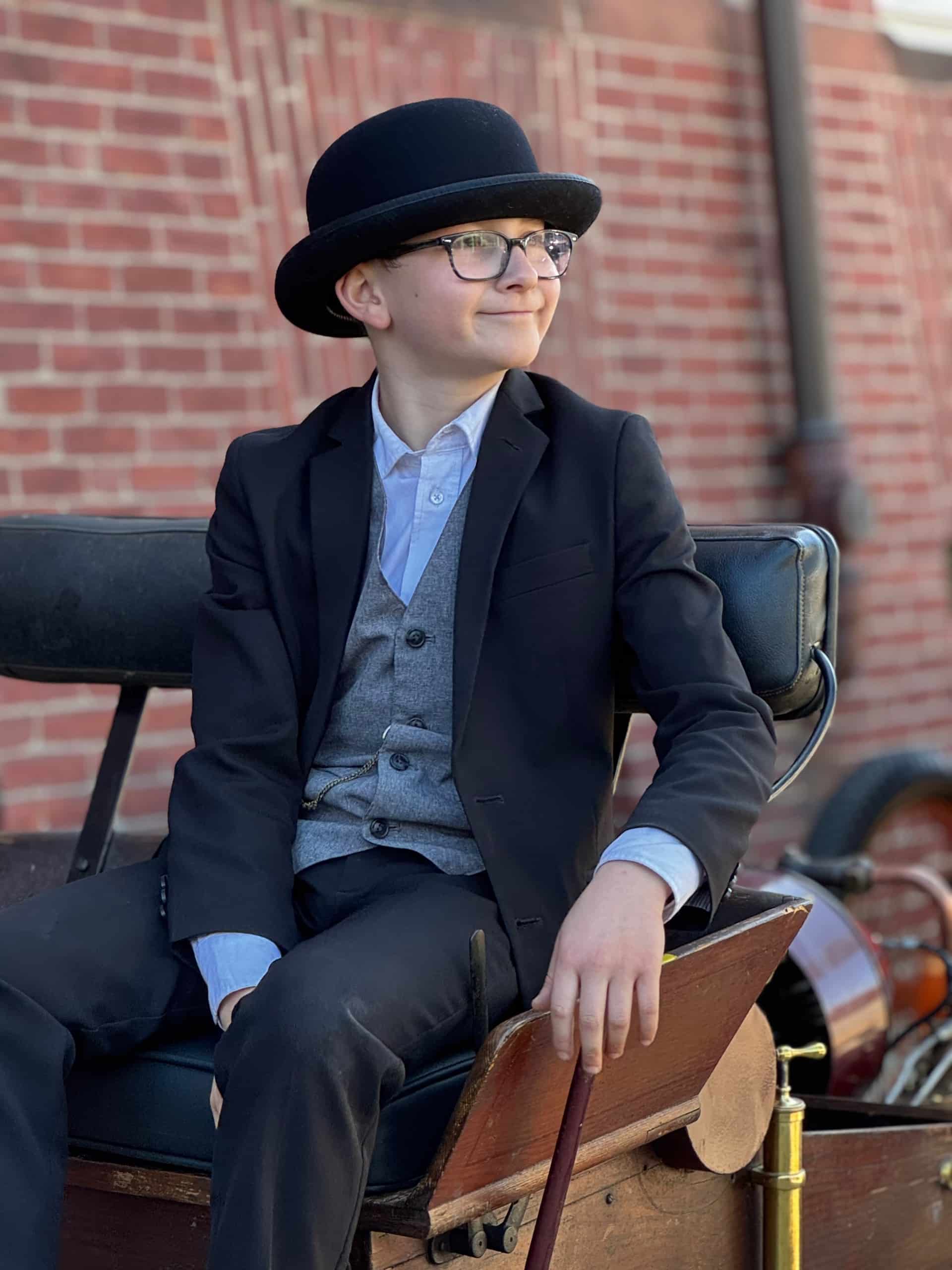
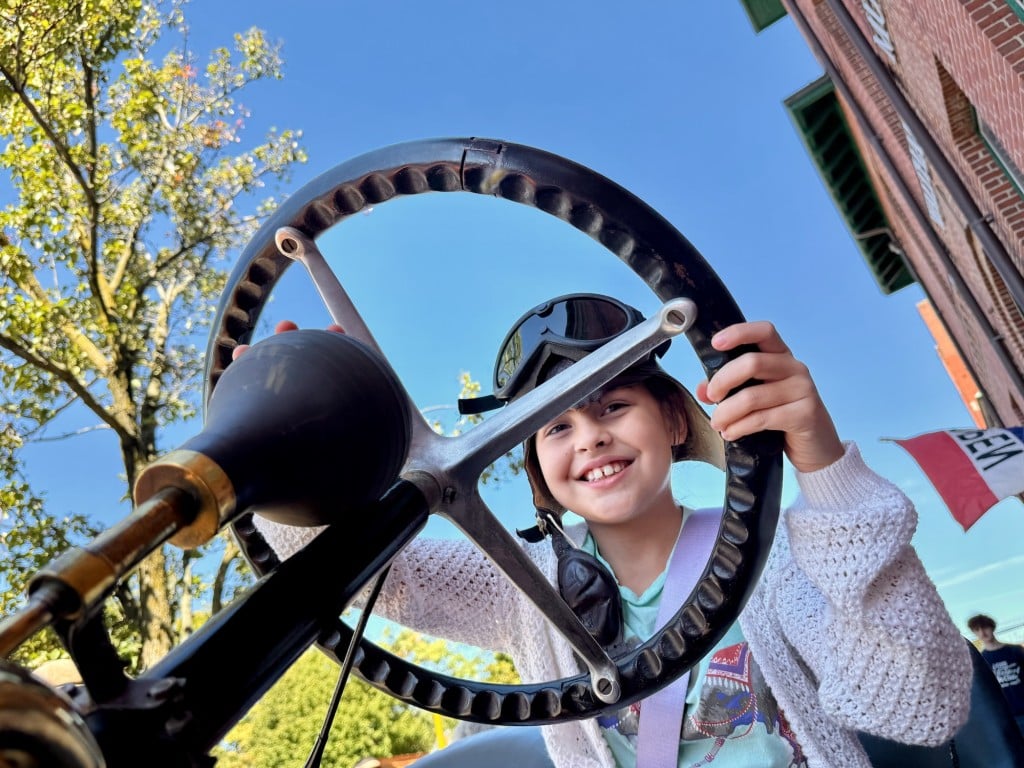
Ten-year-old River Bernstein owns a car.
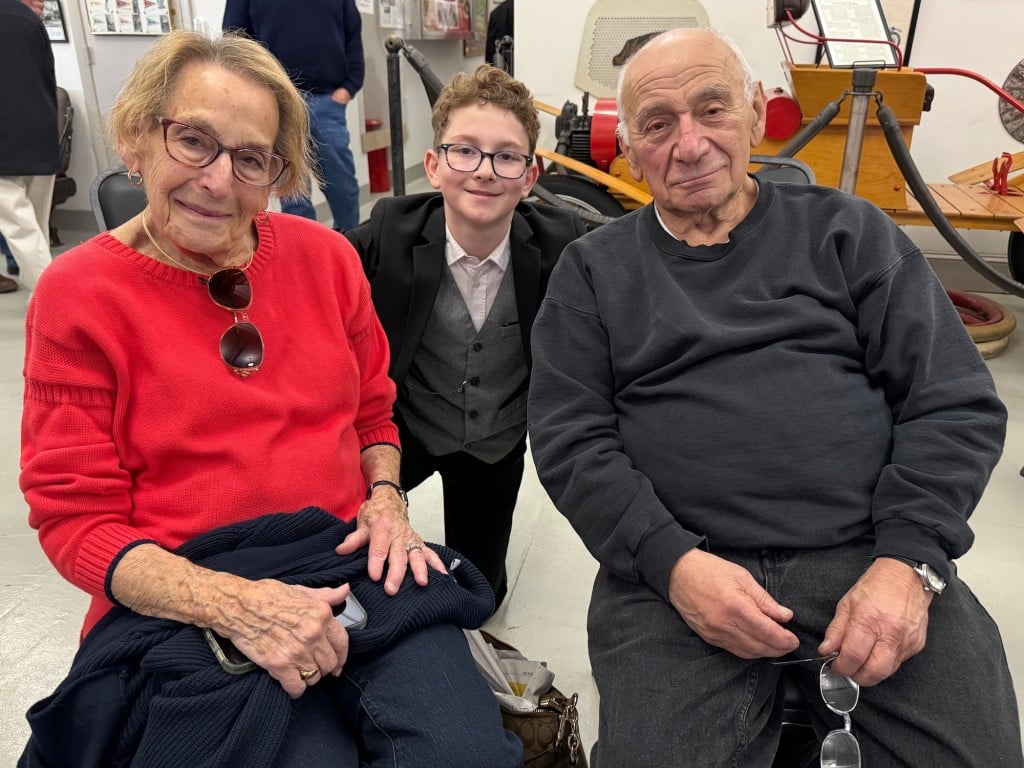
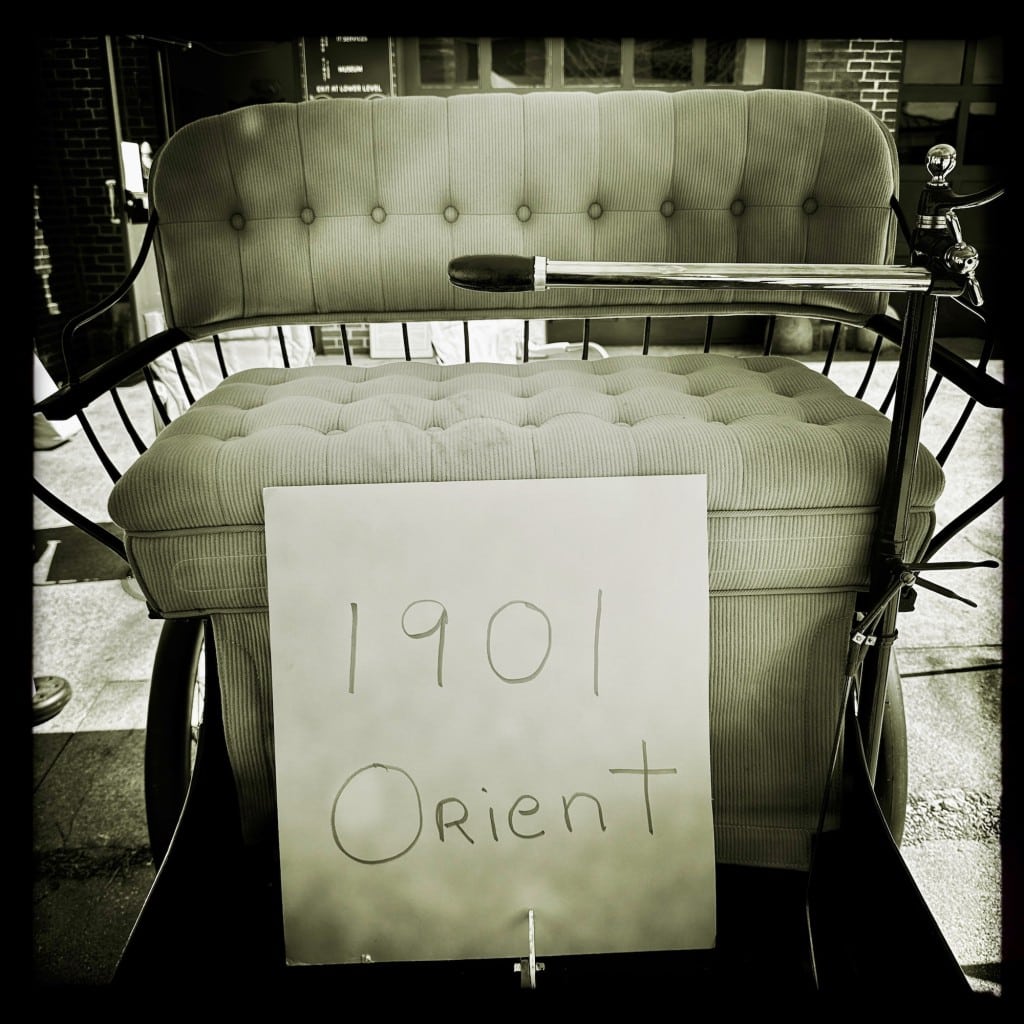
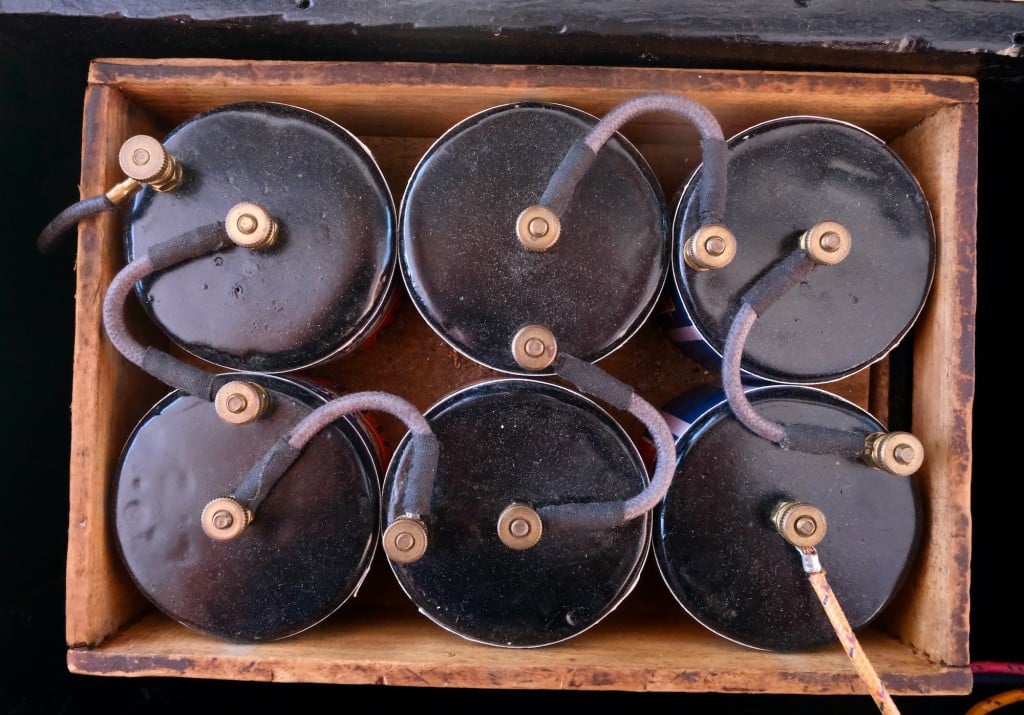
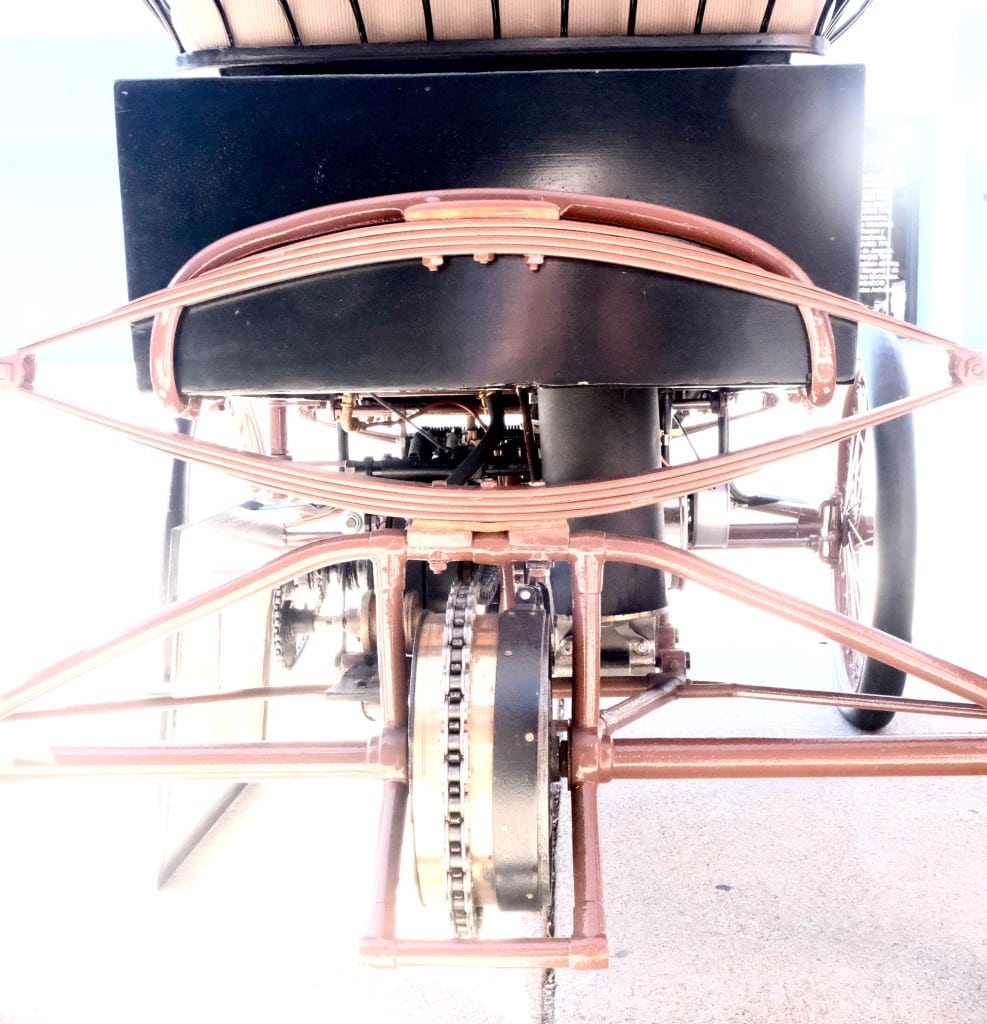
It’s a classic 1906 Orient Buckboard – manufactured by the Waltham Manufacturing Company under the leadership of Charles Herman Metz – and a recent gift from his grandparents, Frank and Linda Bernstein.
But the sixth grader at Gideon Welles Middle School in Glastonbury, Conn., says his classmates are skeptical of his story. “So I say, I have a car. They say, ‘No, you don’t, you’re too young to have a car.’ And I say, ‘Look, I’ll show you a picture.’” But even that doesn’t convince them. “Kids,” Bernstein said, rolling his eyes.
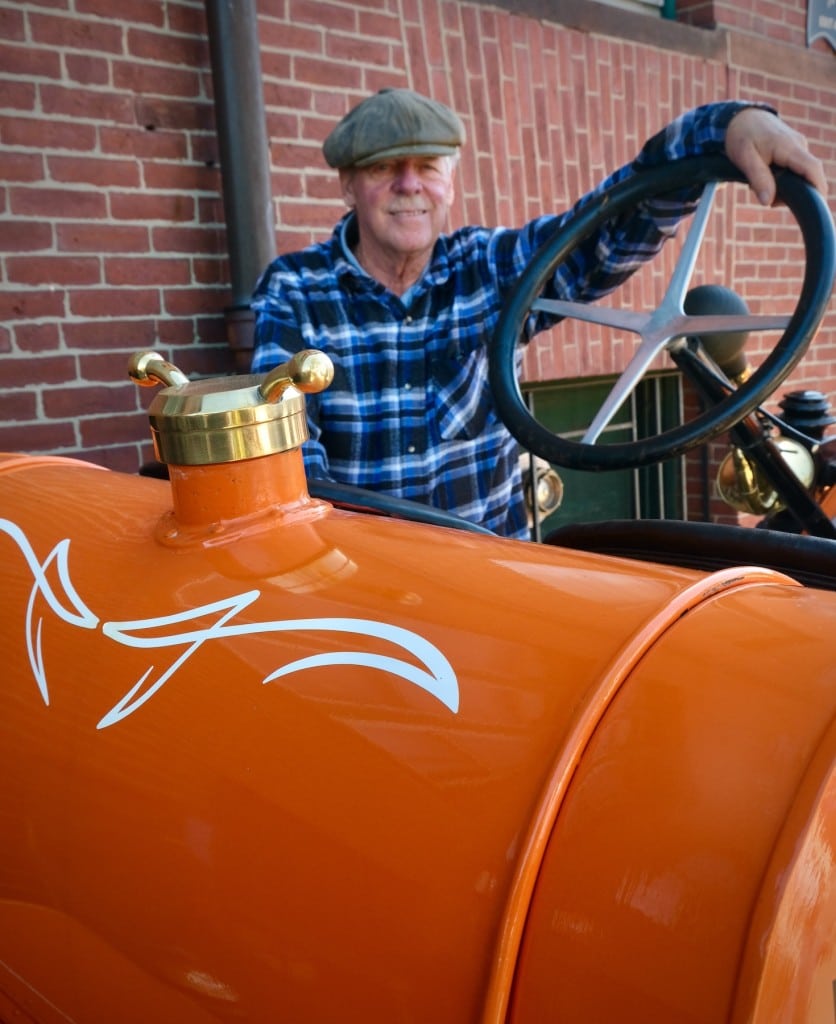
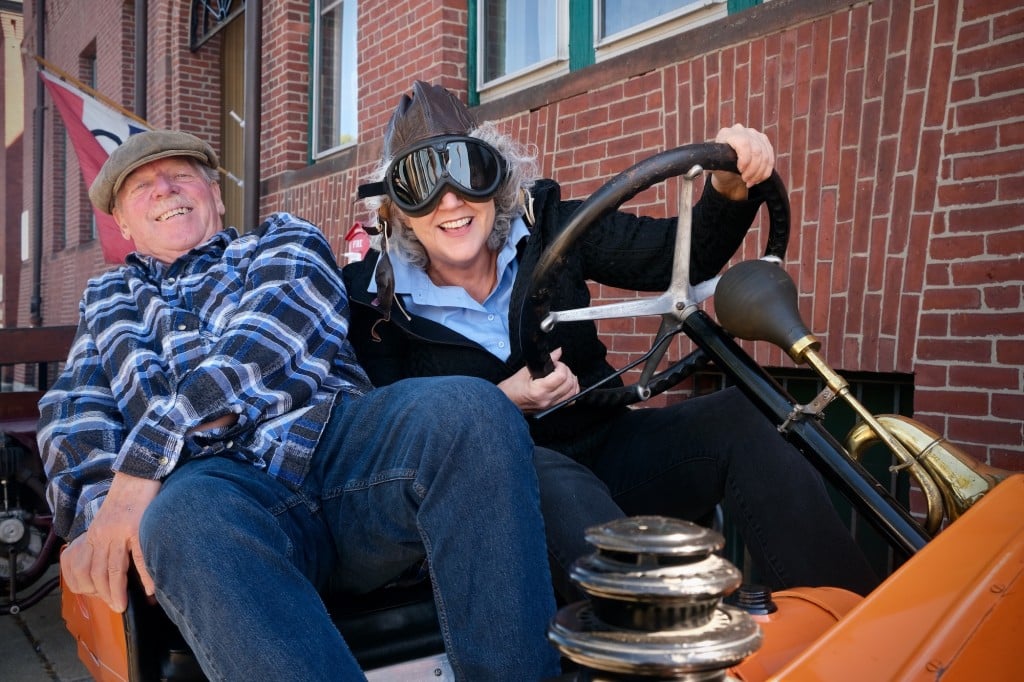
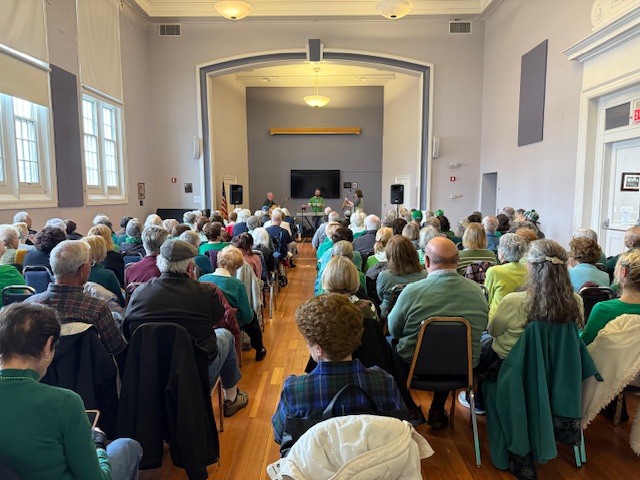
Bernstein’s grandparents hauled the car to the Waltham Museum Saturday from more than 100 miles away. It was one of about a dozen vintage vehicles on display at the 16th annual Metz Day Saturday, a celebration of Waltham’s industrial history.
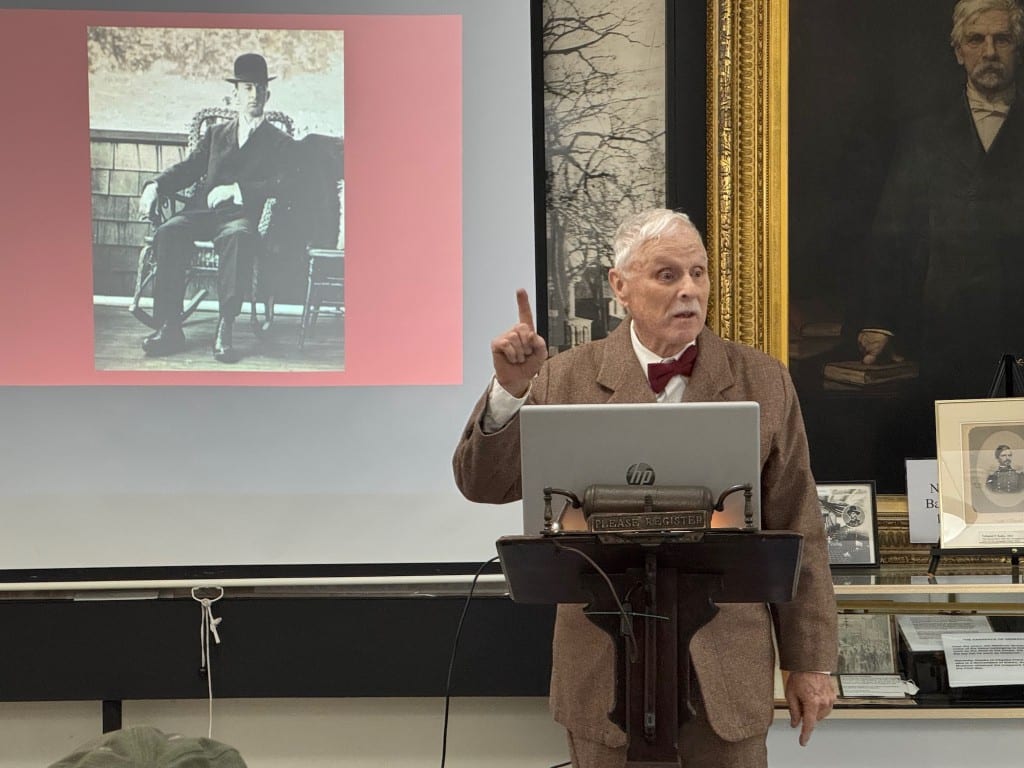
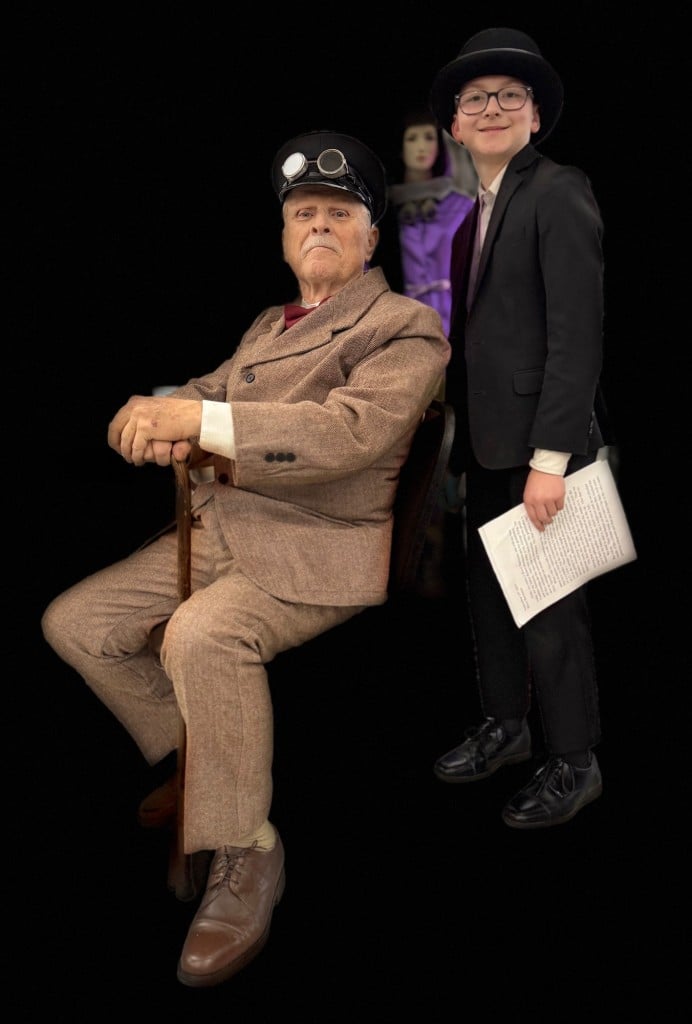
About 40 people admired the Waltham-made pre-war automobiles, which were built from about 1895 to 1931. The event also featured a lecture by George King, a seasoned auto restorer from Franklin, Conn. He spoke about how he restored a 1901 Orient. In fact, young Bernstein restored his Orient Buckboard under King’s mentorship.
“The fact that we are here in the town where [the cars] were built, it’s just the right kind of event,” King said on his first Metz Day.
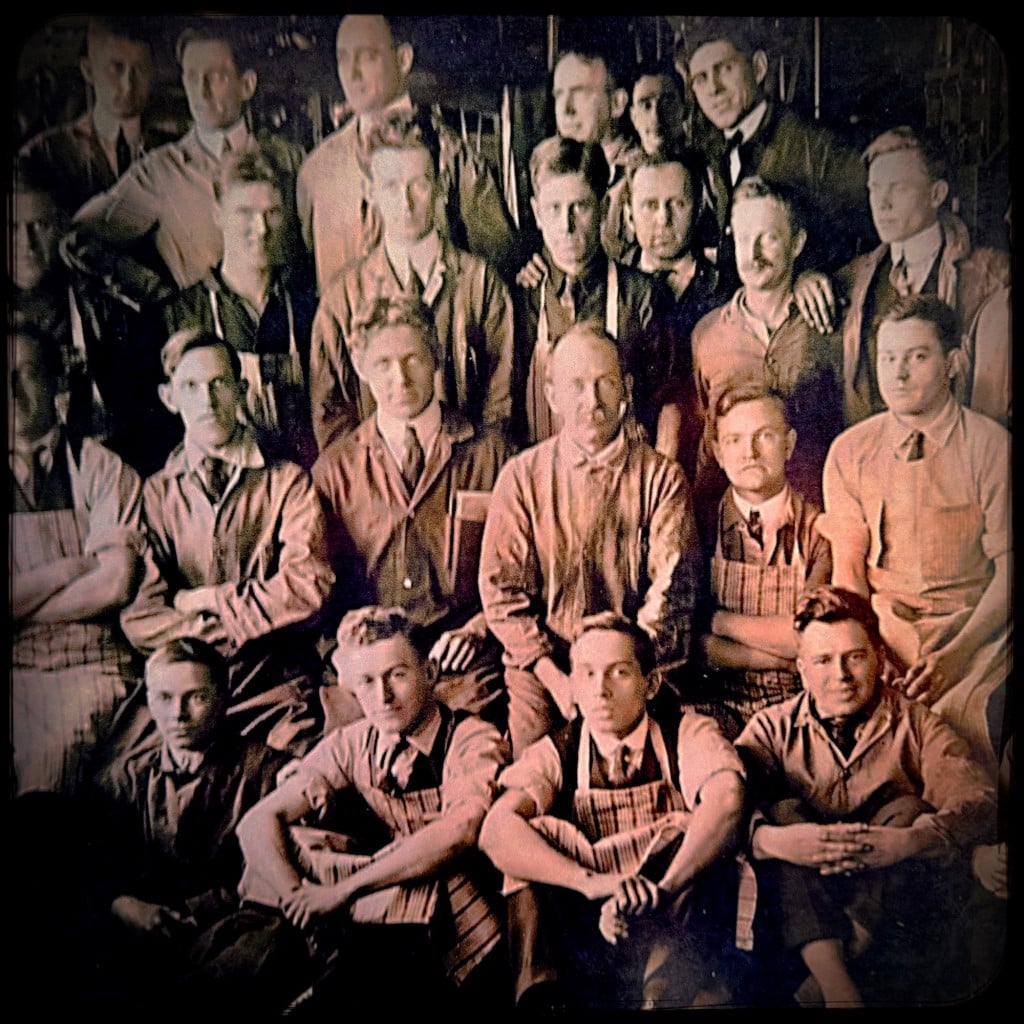
After leaving the Waltham Manufacturing Company in 1902 due to disagreements with investors, New York-native Metz decided to begin his own manufacturing company under his own last name.
The Metz Company, which started soon after the split, specialized in bicycles, motorcycles and automobiles. Metz is actually credited with creating the first American motorcycle in 1898.
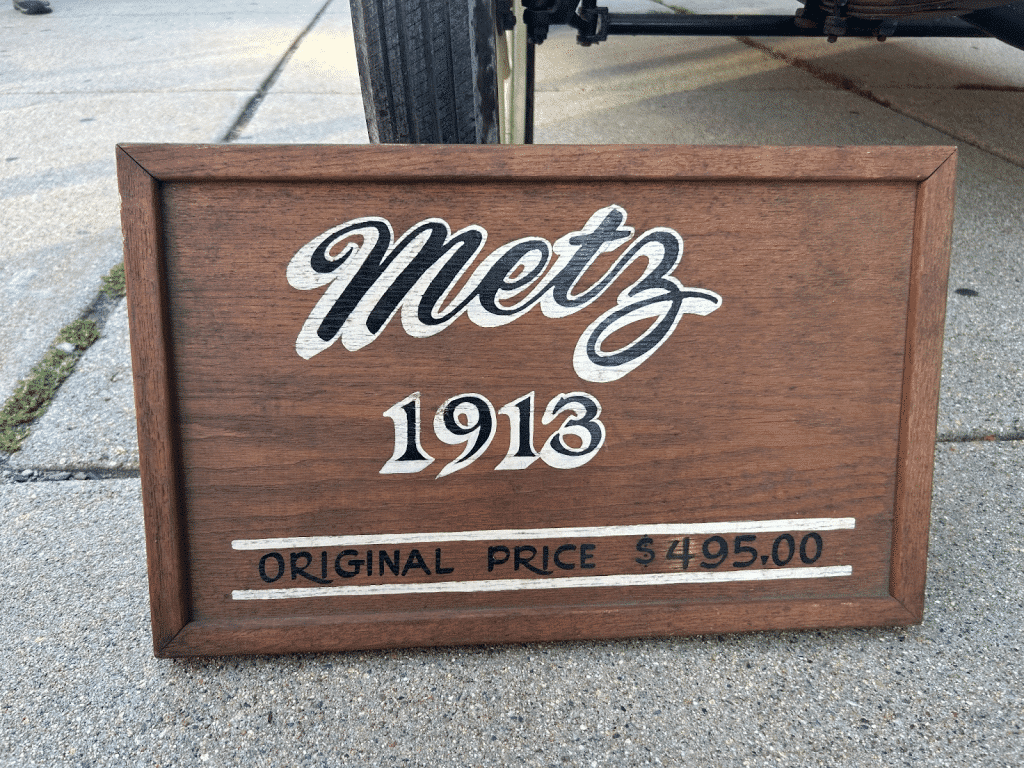
What was special about Metz automobiles, which were mainly sold from around 1909 to 1921, was their offering of the “plan car.” Instead of selling the entire vehicle fully assembled, Metz sold the parts in a kit, which buyers used to assemble their own vehicles. This business model helped make Metz automobiles among the most affordable of their time. About 44,000 were produced at a cost of $495. Today, restorers say it takes about $20,000 to bring a Metz back to life – if you can find or build the parts. A fully assembled car can cost $40,000.
The company eventually lost its traction in the 20’s after the sinking of the British luxury liner RMS Lusitania. The German name “Metz” fell out of favor with many Americans, but not among the brand’s loyalists. Bill Metz is one such devotee. He has collected about three Metz vehicles ranging from 1915 to 1917.
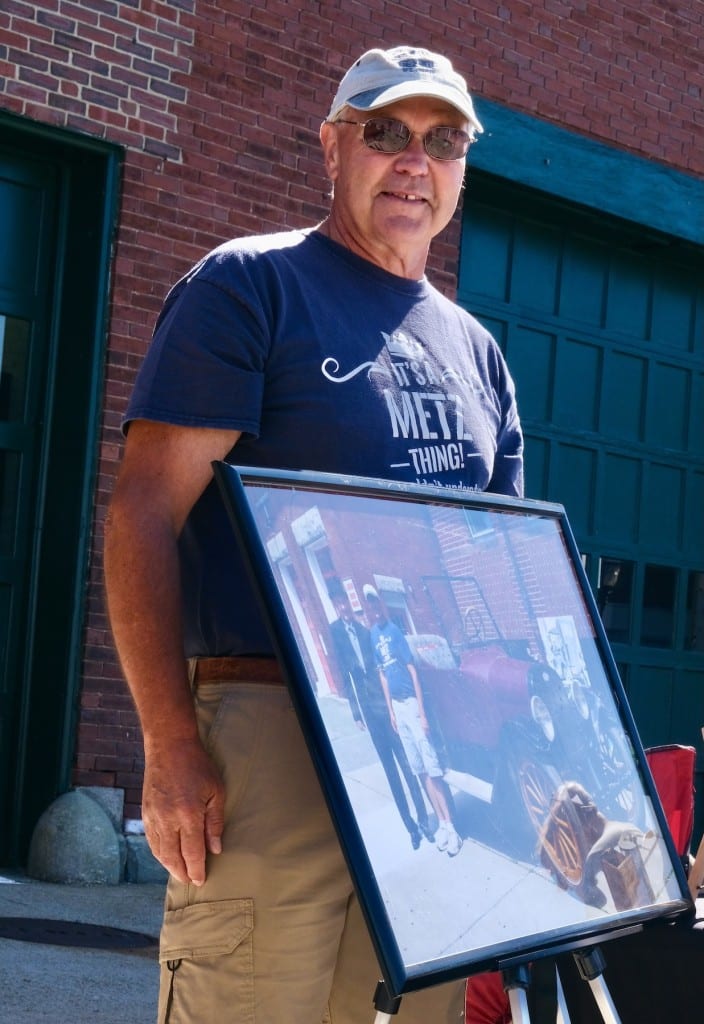
“What brought … a Metz car into my garage, was the fact that my name is Metz,” he said, laughing, knowing he isn’t related to Charles Herman Metz. “The more I looked into it, the more interested I got.”
His wife, Lynette, described her husband’s obsession another way:
“It is an illness,” she said, giggling. “Anything that’s Metz-related, he collects.”
Even so, Lynette noticed that passersby also caught the bug Saturday.
“When they drive by and they see [the cars], they get drawn to them,” she said. “This day actually makes people aware of all of the history that Waltham has.”
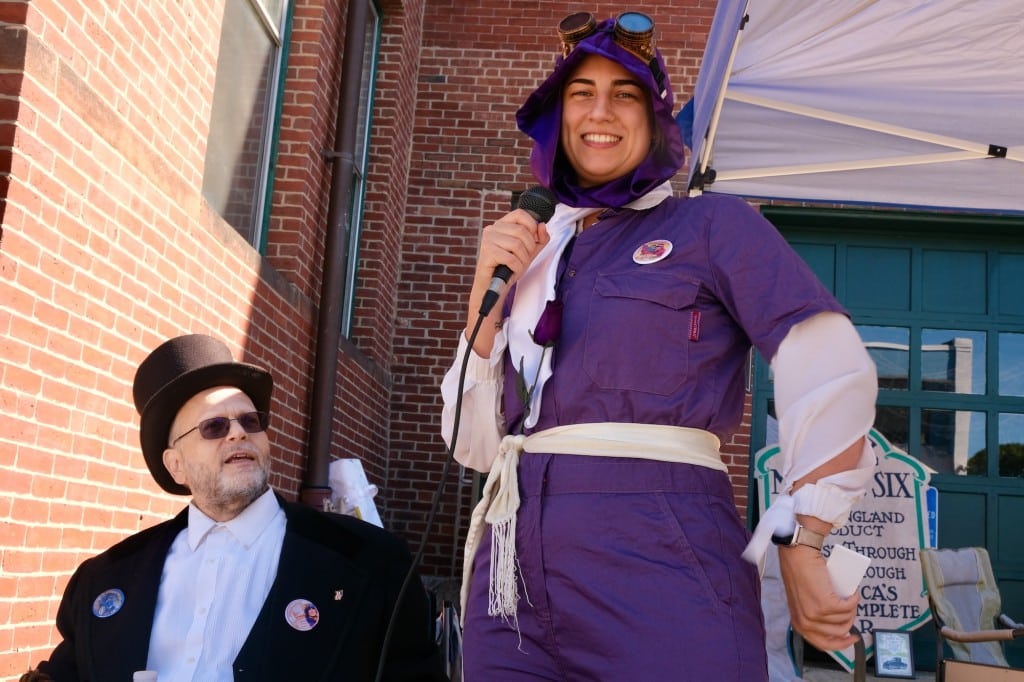
Tom Arena, director of the Waltham Museum’s board, wanted to highlight the Metz company as a way to highlight Waltham itself.
“Part of it’s just civic pride and part of it’s [a desire] not to exist in a bubble,” he said. “History is important… It’s a tip of the hat, an acknowledgement of that effort and that meaning. Hopefully we can preserve some of that and share it with the kids today.”
UPDATE: This article has been updated to include some edits that were missed when it was first posted.
More photos by David Greenfield
This story was written in collaboration with the Boston University local journalism program.
Author

Comments (1)
Comments are closed.

Wonderful story and photos by a very talented BU student.