
Electric-powered two-wheelers present a public safety crisis
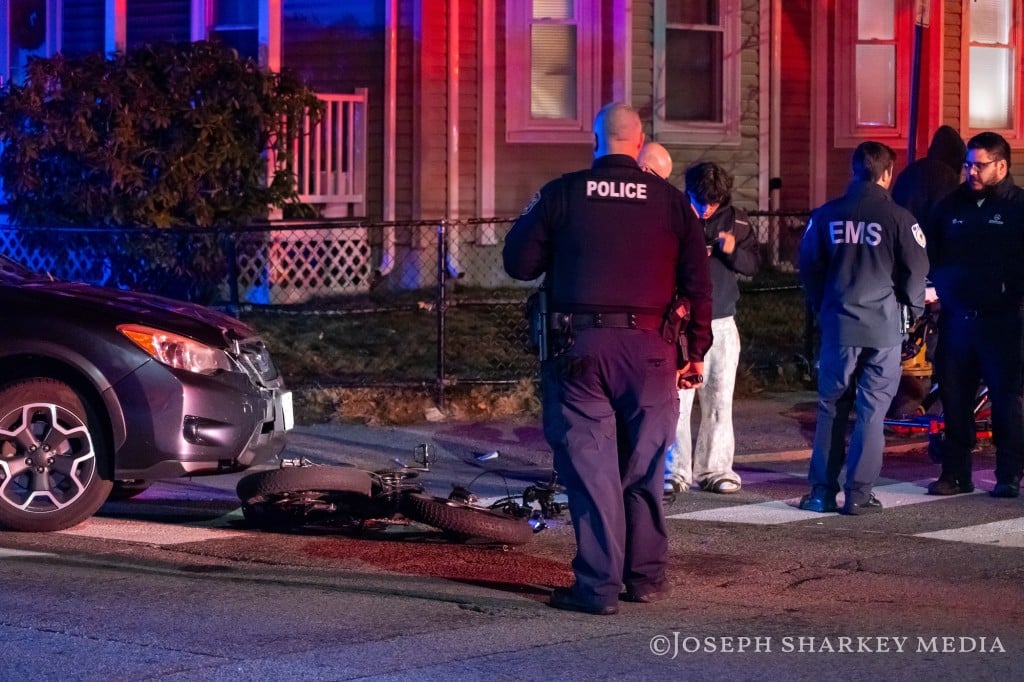
On Nov. 20 a collision at Lowell and Taylor streets in Waltham destroyed an electric two- wheeler and seriously damaged a car. Fortunately, the rider escaped serious injury. The next day in Stoneham, a 13-year-old boy was not so fortunate. Riding what police described as an “electric dirt bike,” or e-moto, at nearly 50 mph on a residential street, he died in a collision with a left-turning car.
E-bikes have gained popularity over the past few years due to advances in battery technology. They have operating characteristics that fall between those of conventional bicycles and lightweight gasoline-powered two-wheelers. E-motos are faster and more powerful than e-bikes.
Safe operation of an e-bike requires skills beyond those needed for a conventional bicycle. E-bikes with throttles and illegal e-motos are even more demanding. They are especially popular with teenagers, who might hound their parents to buy them one. Internet influencers promote e-bikes and e-motos with the promise of independence and freedom for teens who are too young for a driver’s license.
The community needs to take action to prevent riders of these new types of vehicles from endangering themselves and the public.
The law versus real life
Under Massachusetts law e-bikes (Class 1 and Class 2) have an electric motor of 750 watts or less that assists the rider, but the power assist stops when speed reaches 20 mph. Riders under 17 must wear helmets, but e-bikes don’t require a license or registration. Traffic law includes a few special restrictions, including the prohibition of riding on sidewalks.
A faster electric- or gasoline-powered motorized bicycle (moped) is limited by design to 30 mph and by traffic law to 25. It requires licensing but not registration; the rider must wear a helmet. A stand-up powered scooter, or any outside the categories already described, is a motorized scooter. The rider must be helmeted and licensed. Some unusual restrictions include prohibiting riding at night.
A two- or three-wheeler that can go faster than 30 mph is by default a motorcycle.
There is the law, and there is reality. E-bikes are easy to hack, allowing them to go faster than 20 mph. E-motos can go 50 mph or more. Illegal machines are sold over the Internet, evading state laws. Indeed, an “electric dirt bike” marketed as an off-road vehicle does not have to meet e-bike, moped or motorcycle equipment standards. Its appearance allows it to pass as an e-bike, and it often gets used on the road and by underage riders.
Parents may not realize that the “bike” they are buying online for their teen may require registration, driving lessons and a license — or may even be illegal to operate on a street.
Serious problems are occurring nationwide. Hospitals are seeing increasing numbers of emergency room admissions and fatalities related to the growing popularity of e-bikes, e-scooters and e-motos. Surgeons in California reported that in their emergency department, 10% of riders in an e-bike crash died compared to less than 1% of riders in a conventional bike crash. An Israeli study found the pediatric e-bike injuries tended to be more severe than those sustained during manual bicycle riding.
What about Waltham?
Problems exist locally, too.
While riding my bicycle in downtown Waltham, I saw a young man circling blocks on sidewalks at 20 mph or more, past storefronts where people could blindly walk out. He was not pedaling. He rode past me three times on different streets. One time I called out, “Hold it,” because I wanted to talk with him about safe riding, but he kept going. I phoned in a description to the police, but they would have a hard time catching him, too.
There have been reports of unsafe use of the new rail trail. Waltham resident Maureen King reports in a Facebook comment: “The rail trail is unreal. I almost got run down in the dark. Then he laughs. Speeders come on both sides of you and say nothing. It’s very dangerous, this out-of-control bike thing. Electric and manual.”
Two people on an e-scooter had a serious collision with a car in July, with one of the scooter riders sustaining fatal injuries, according to the police.
What can be done to prevent another such tragedy and ensure the safety of everyone?
Police, city government, educators and families all need to work together to address this problem.
- Enforce the law. E-motos must be registered. Police could ticket or impound bikes that are not properly registered. If such bikes are involved in violating traffic laws, registration makes it easier to identify owners and riders and hold them accountable. People riding without helmets should get warnings and tickets.
- Rider education. Law enforcement and community advocates can collaborate with schools to educate riders of all ages about safety and laws for both conventional and electric bicycles.
- Infrastructure. The MassCentral Rail Trail and Charles River Greenway could have speed limits and signs spelling out what machines are legal and how to safely share the space.
- Provide safer alternatives. Build bike parks and hold skill competitions. Skateboard parks helped take skateboard stunts off the roads; a similar approach could work with e-bikes.
- Community involvement. Public safety campaigns, bicycle rodeos and community bike rides such as those organized by the Bike Together Waltham group, which welcomes e-bikes, can spread and promote responsible and safe cycling.
It’s up to each of us as parents, concerned citizens, community leaders and bicycling enthusiasts to be smart, well-informed and an advocate for everyone’s safety, in both word and action.
John Allen is a Waltham-based bicycling safety instructor and advocate. Thank you to BranchFour for assistance with research.
Resources
Bike Together Waltham promotes responsible and safe cycling. The group holds monthly group rides.
Teen Ebike Training is an online course from the American Bicycling Education Association (ABEA).
CyclingSavvy online courses from ABEA for adults include one specifically for e-bike riders. There are also in-person CyclingSavvy courses, where the rubber actually meets the road. CyclingSavvy welcomes e-bikers and teens if accompanied by a parent.
The Caring Parent’s E-Bike Survival Guide is a short information-packed book.
Author

Comments (6)
Comments are closed.


Thanks for a comprehensive discussion of the topic.
One angle that is missing, is that despite the problems you’re highlighting, the state runs a program to encourage ebikes, with little consideration to the concerns you raise (see https://ma-ebikes.masscec.com/ )
The e-whatever’s are the future as automobile operation gets more expensive. Thing to do is ignore the formal classifications of the vehicles and focus on capabilities. If it can zoom only *this* fast it’s legally exempt, *this* fast, then it’s a regulated vehicle. As to enforcement, yeah that would be the ideal but enforcement before bloodshed is a rarity.
Because these are motor vehicles, when driven by irresponsible individuals, these operators must carry insurance to protect law abiding pedestrians from this menace. Keep e-bikes, e-scooters and e-hoverboards off sidewalks and bike paths (bike paths state clearly “motor vehicles prohibited”)
GM — the law already covers some of what you suggest. For details, see Chapter 90 of the General Laws, https://malegislature.gov/Laws/GeneralLaws/PartI/TitleXIV/Chapter90 and search on
* “motorcycle” (includes e-motos, top speed over 30 mph).
* “motorized bicycle” (a.k.a. moped, 20-30 mph top speed, need not have pedals, covers Class 3 e-bikes, with pedal assist up to 28 mph, which are not defined as electric bicycles in Massachusetts)
* “electric bicycle” (Also check Chapter 85, Chapter 11B, sections 3 and 4. Top speed with power assist 20 mph, must have working pedals.)
* “motorized scooter” 20 mph top speed, originally written for mini motorcycles, a fad over 10 years ago, but covers stand-up electric scooters and Segways. Must have handlebars but with no saddle or pedals, not an electric bicycle. Rules for operation are odd, e.g., no crossing to the left side of the road to overtake, and no riding at night, though they are are required to have turn signals, so adding a headlight and taillight is trivial.
Of these, only electric bicycles are permitted on shared-use paths, though a community may prohibit them, and none are permitted on sidewalks. Motorcyclists must carry insurance; riders of motorized bicycles also must be licensed. All must wear helmets except riders of electric bicycles under 17 years of age, when generally at greater risk — parents, insist on the helmet anyway, or preferably don’t buy an e-bike for your underage teen or tween!
* Electric skateboards and monowheels have no handlebars, and so don’t fit into any category yet under Massachusetts laws, other than”vulnerable user” (look it up). The definition requires a greater standard of care by drivers but says nothing about rules for use.
* Users of assistive devices that substitute for walking (wheelchairs, electric wheelchairs etc.) are pedestrians under the law.
Hope this helps!
Amen…
This is a very serious problem already on the Rail Trail. Riders are zooming by on scooters, ebikes, motorbikes at high speed with heavy vehicles. Definitely an accident waiting to happen on the trail.
Thank you. I should add: My ideas piece sends a warning about a real problem but got cut way down and left out my positive description of how e-bikes are useful and appropriate when used properly, “E-bikes can be very useful for people who need a power boost due to age, infirmity or terrain, are transporting children or heavy cargo, or just want to arrive without working up a sweat.”