
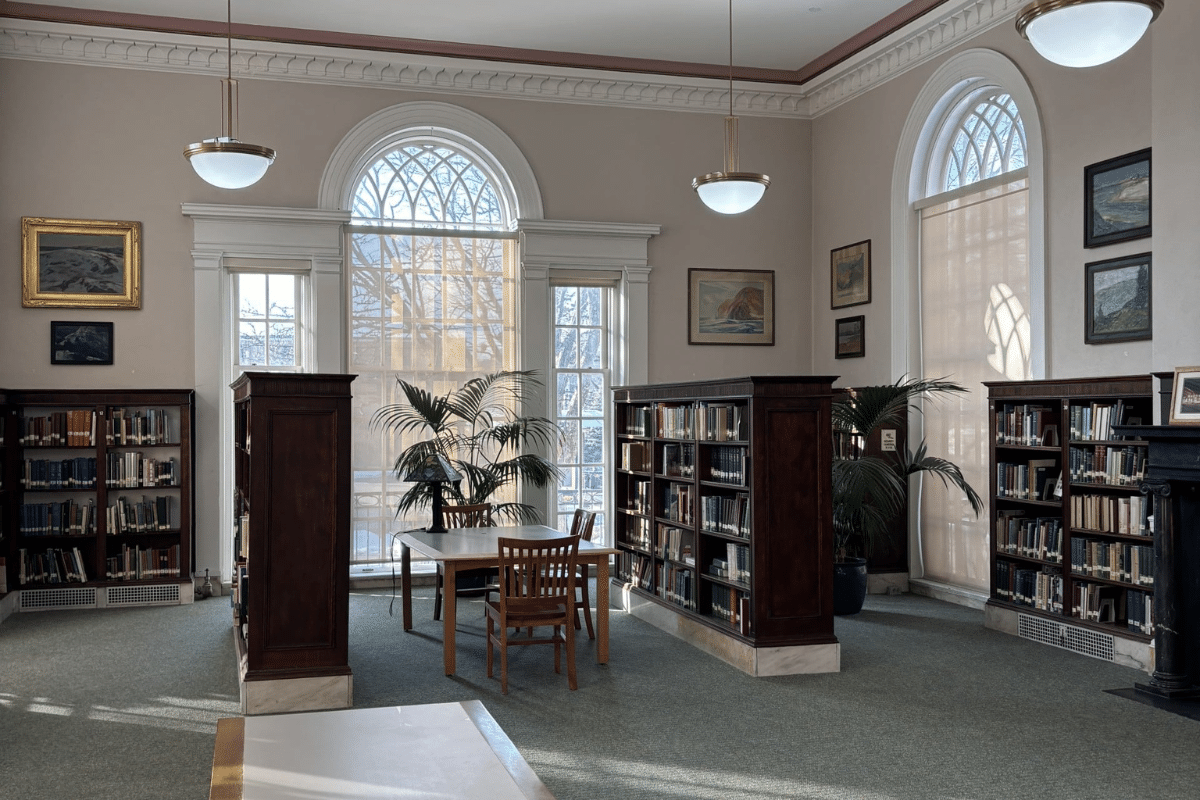
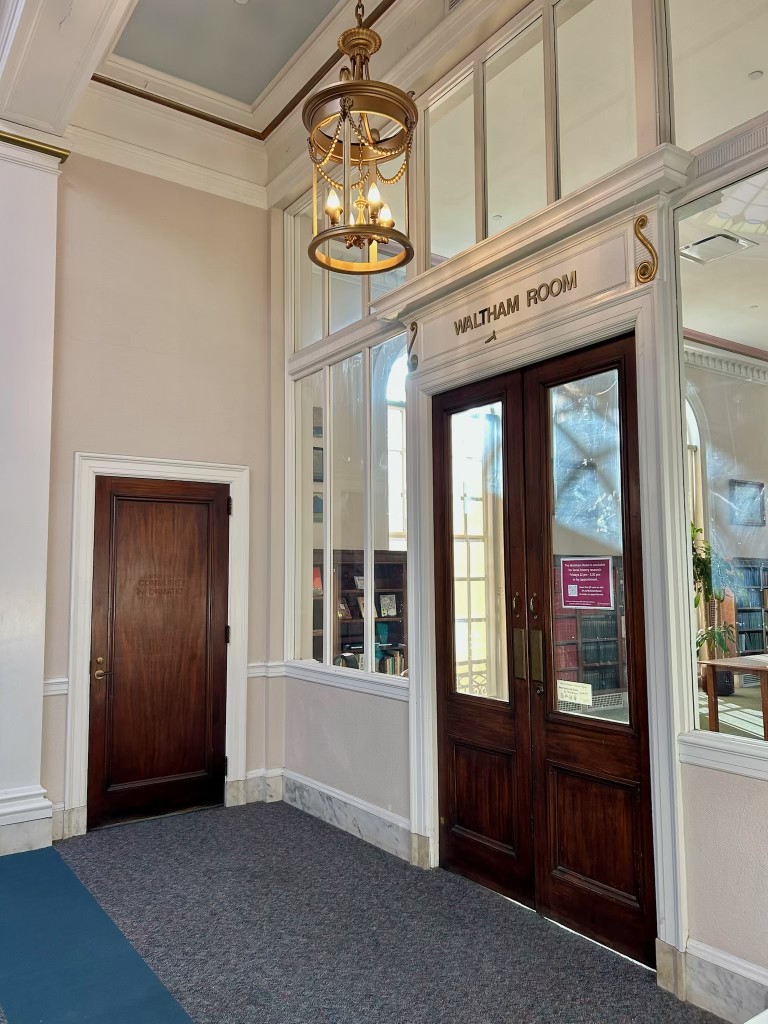
Secured behind glass doors just off the grand foyer of the Waltham Public Library sits the Waltham Room, a resource open to anyone curious about the city’s history.
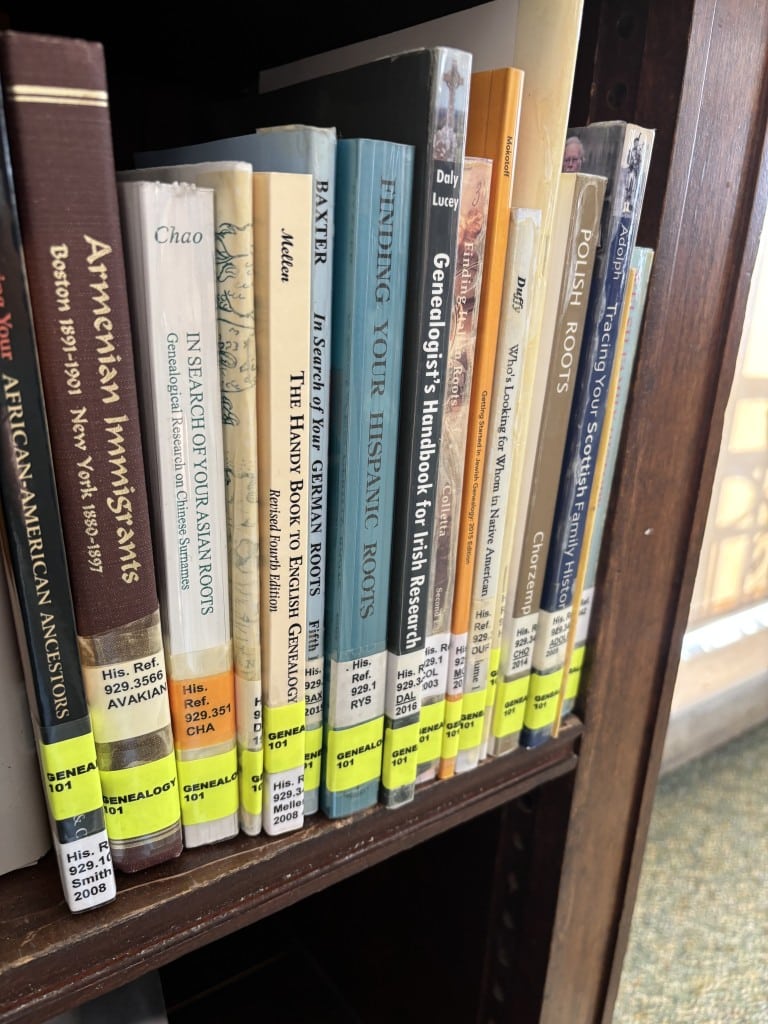
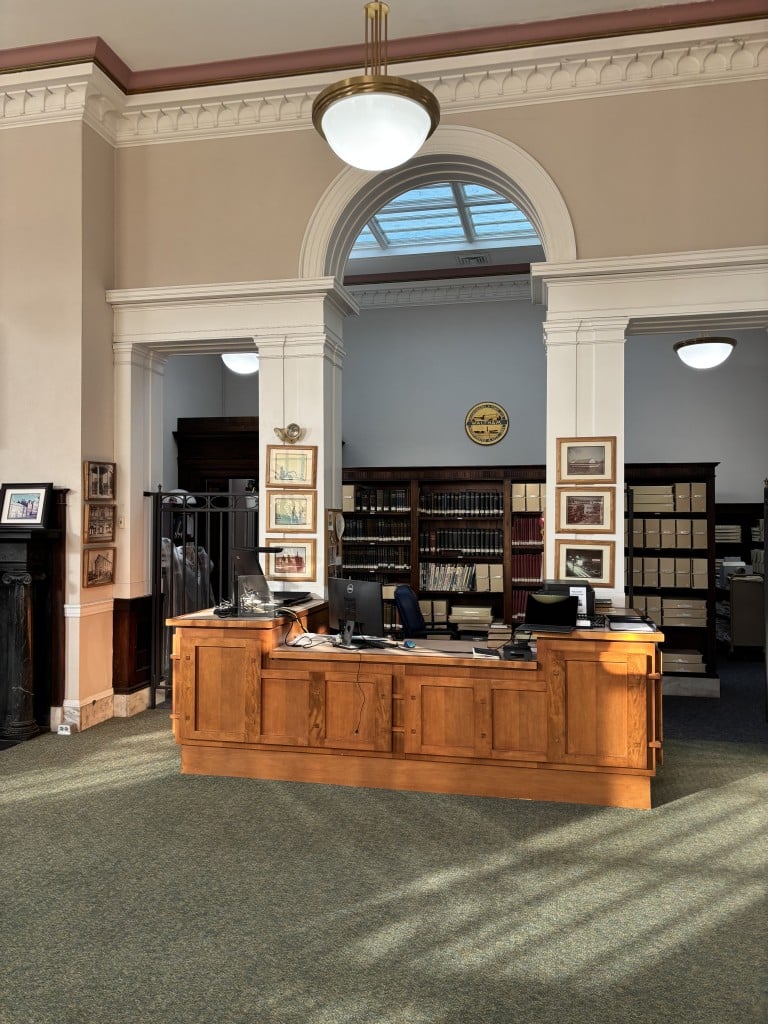
The space is home to bookshelves of resources on genealogy research alongside lush plants and bright, sunlit research tables. There is a large desk with decorative iron gates on both sides that form a wall to protect the more delicate artifacts from being handled without assistance from the archivist on staff, Dana Hamlin.
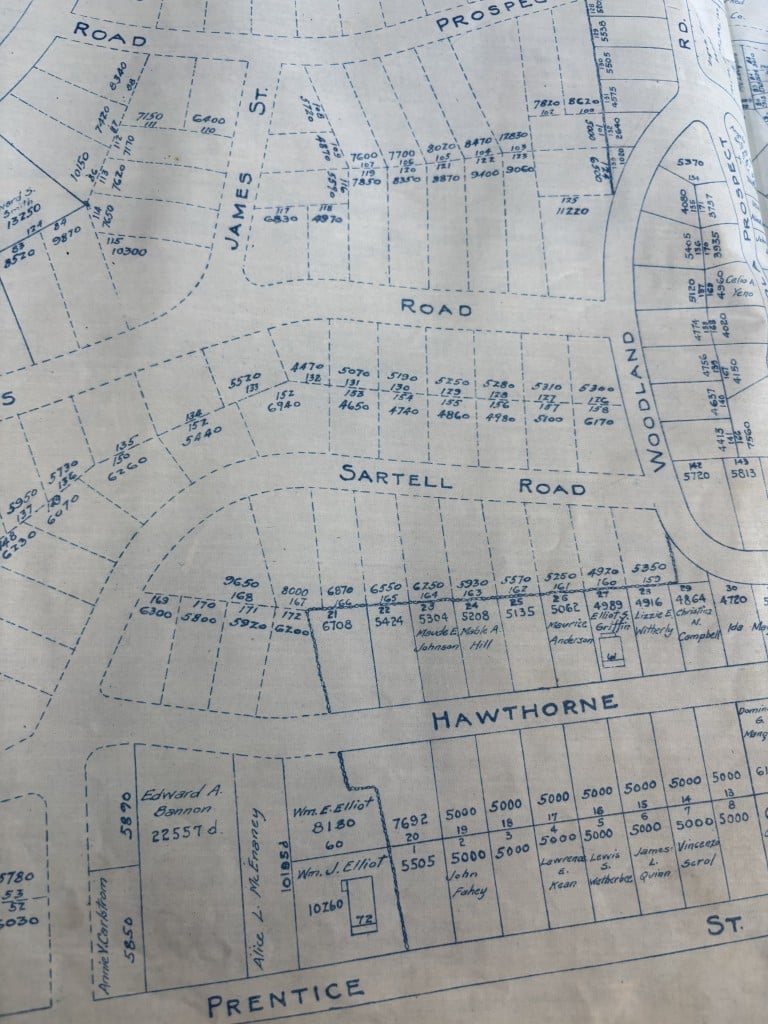
Hamlin assumed the position in 2018, filling a long-open vacancy. Before working at the Waltham Public Library, she worked at the library and archives at MIT. Hamlin spends the majority of her day answering questions from members of the public using the archive resources. The questions range from inquiries about a family member to requests for historical maps of the city.
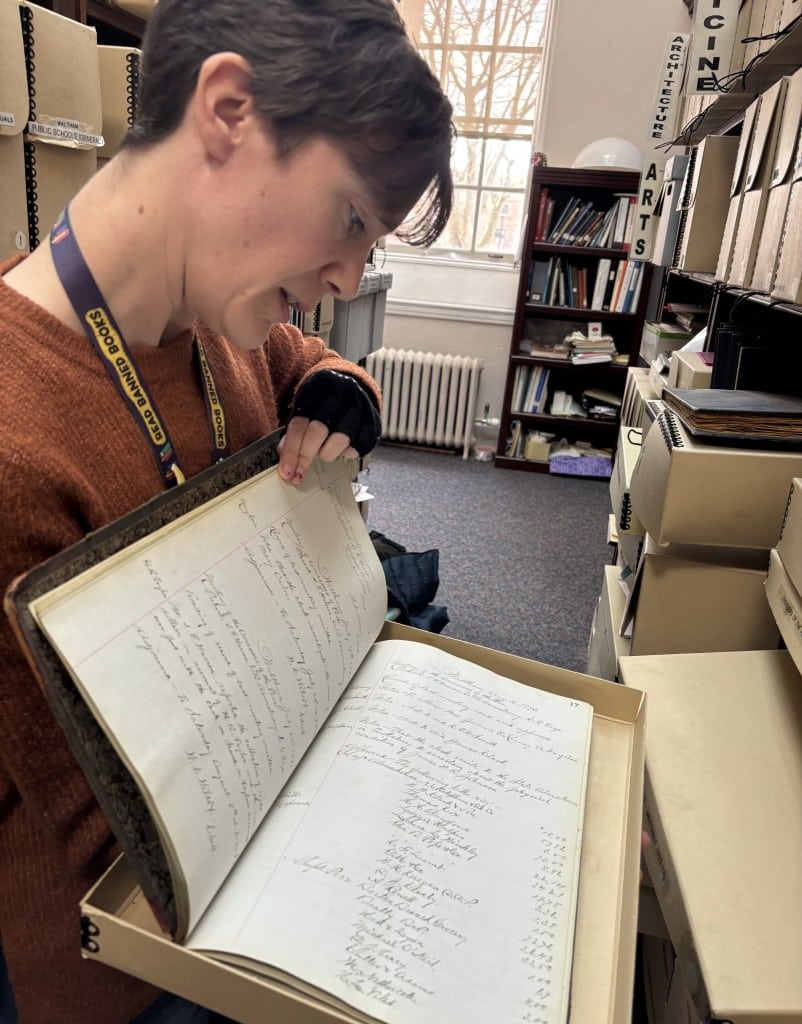
Anyone can visit the Waltham Room and explore its collection by dropping in during open hours or scheduling an appointment with Hamlin, who must accompany all visitors per library rules. The Waltham Room holds a variety of records and memorabilia that help paint a picture of what life in Waltham was like throughout the city’s history.
Glimpses of ordinary lives
Visitors can view annual reports from each city department dating back to the 1850s through the 1960s. Each report gives a detailed glimpse into employees, projects and budgets for each sector.
They can also peruse records from a former city department called the Overseers of the Poor that oversaw the city “poor farm,” a place where the homeless worked in exchange for meager room and board. These provide genealogical data from 1875 to 1935 about individuals whose information might not be recorded elsewhere because they lacked homes and steady employment. Hamlin hasn’t had time to fully dive into the contents due to time constraints, but hopes to do so soon.
The archive also contains records and photographs from the Waltham Training School for Nurses, which once provided cutting-edge training at its location off Main Street near the current Main Street post office. When the school opened in 1885, it was the first nurse’s training school in the nation. It closed its doors in 1935. Annual reports, handbooks and written histories from students are included in the collection, along with reports about the 1918 flu epidemic’s impact on Waltham.
The Waltham Room also houses the original transcripts and photographs for an oral history of the city compiled by Brandeis University beginning in 1983 and culminating in a published book in 1988 titled “Waltham Rediscovered: An Ethnic History of Waltham, Massachusetts.” The anecdotes within the book, grouped by the ethnic background of the storyteller, paint a picture of daily life in Waltham while also documenting the city’s industrial heritage.
Visitors can borrow the book from the library or purchase a copy from the Waltham Historical Society. Family portraits from the book are preserved in a permanent exhibit at the library compiled by former archivist Melissa Mannon. Hamlin and an intern also created an online exhibit of the photos.
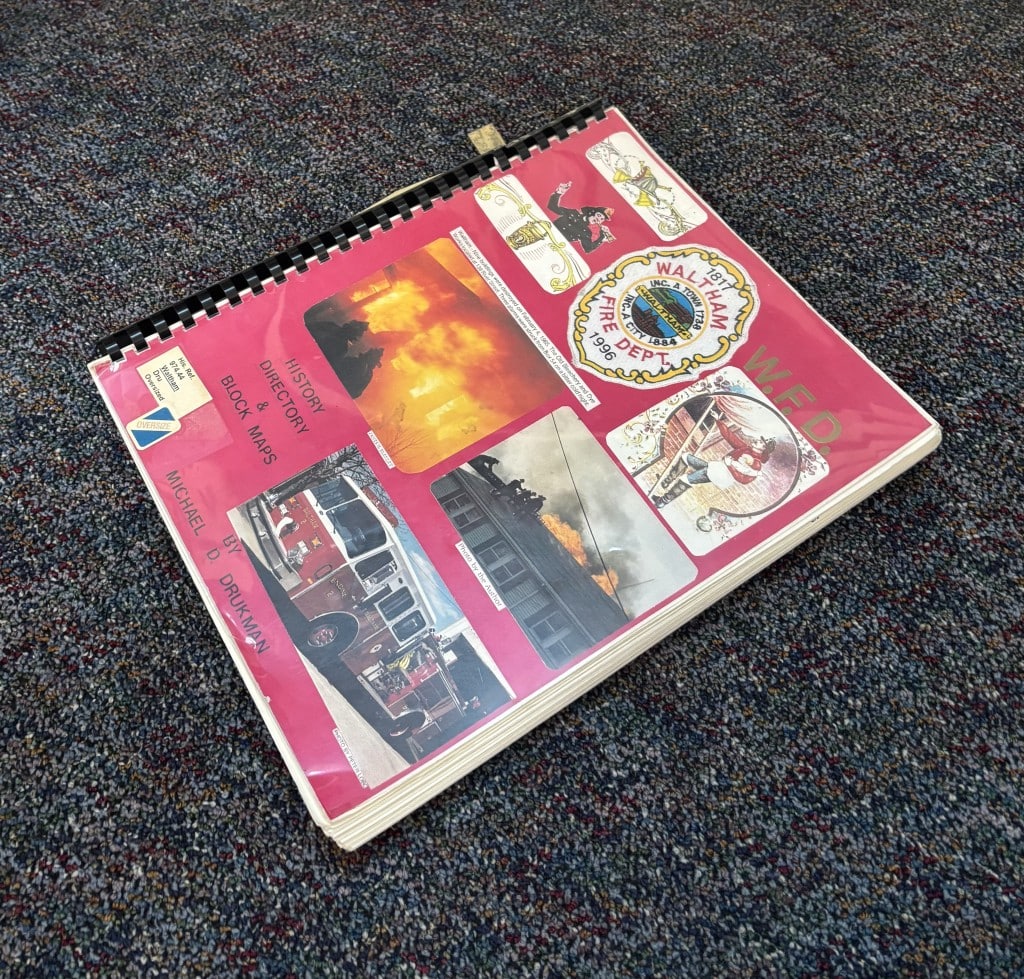
Another archival gem in the Waltham Room is a collection of news clippings about the Waltham Fire Department from 1817 to 1996. Compiled by local fire historian Michael D. Drukman and bound into a booklet, this collection provides an extensive record of the department’s history and documents nearly every fire that has happened during those years. “It’s one of my favorite pieces in the collection because it’s compiled by a resident,” Hamlin said.
A rare Civil War anthology
Waltham’s book of personal war sketches is a unique resource for those interested in local Civil War history. The book contains handwritten accounts of the Civil War from Waltham members of the Grand Army of the Republic veterans organization. According to Hamlin, there aren’t many of these books still in existence, which makes the fact that Waltham has one all the more special. The physical book, available to view in person in the Waltham Room, was conserved via a state grant and was digitized during the conservation process.
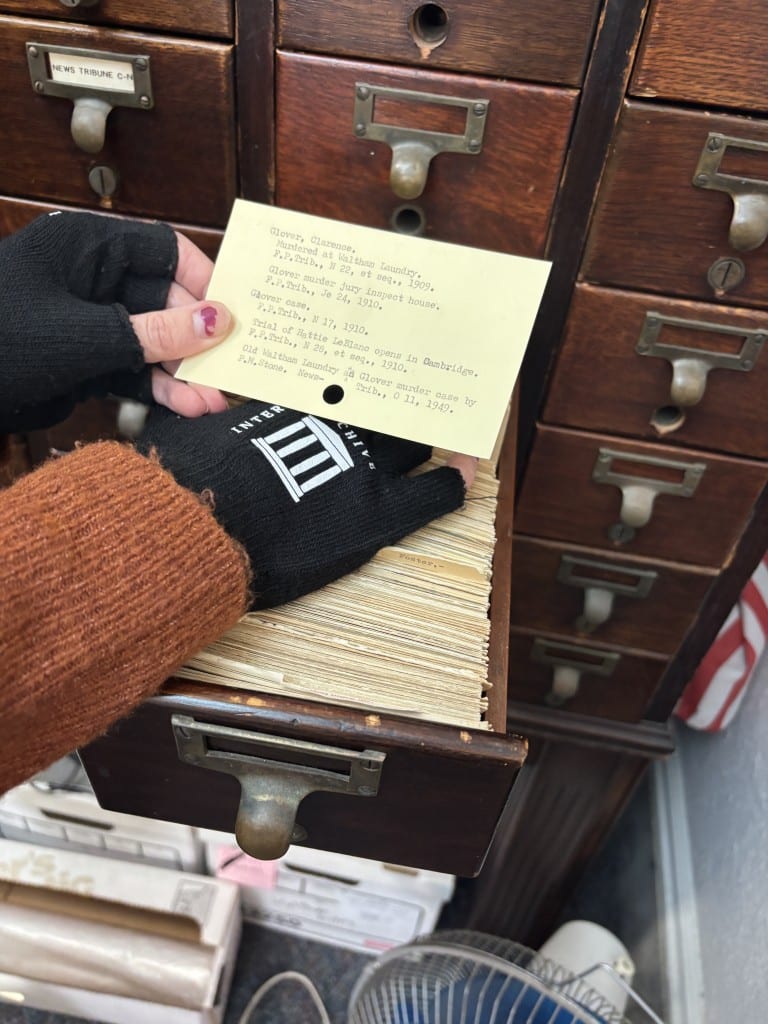
Also available at the library is a microfilm machine which visitors can use to view articles from Waltham newspapers. Some of these articles date back to the 1800s and can provide information about notable city events, as well as birth, death and marriage dates of family members. A catalogue card cabinet in the Waltham Room, compiled by former archivist Betty Castner and touted by Hamlin as “a lifesaver,” is used to narrow down the microfilm that would have the information needed.
Some Waltham Room resources are available online through the library’s website as well as in person. Online resources include city directories that list names, addresses and occupations of Waltham residents; digitized maps of the city; genealogical research resources; surveys of Waltham’s neighborhoods; and Waltham High School yearbooks.
Due to the fragility of the contents of the room, there are set hours for visiting the archives. The Waltham Room holds drop-in hours every Friday from 12 to 2:30 p.m. and one Saturday a month from 10:00 a.m. to 12:30 p.m. Outside of those hours, Hamlin accepts appointments where she can answer questions and pull archive materials to look at. She also answers questions via phone or email.
The Waltham Room accepts donations of artifacts that are related to the history of Waltham. Those interested can contact Hamlin for more information.
Author

Comments (1)
Comments are closed.
Excellent, outstanding article about our Library! The Waltham Room has a treasure of the community’s history. Very impressive. Archivist Dana Hamlin a dedicated professional and extremely helpful to the public. She was instrumental in assisting our research of our family history. Thank you.