
From Camp Ted to Pigeon Hill: Tracing the roots of Waltham Scouting
Pigeon Hill today is one of Waltham’s wealthiest neighborhoods with its large homes and tasteful landscaping, but 50 years ago it was a semi-wild woodland where boy scouts honed their outdoor skills such as fire building, compass use and map reading.
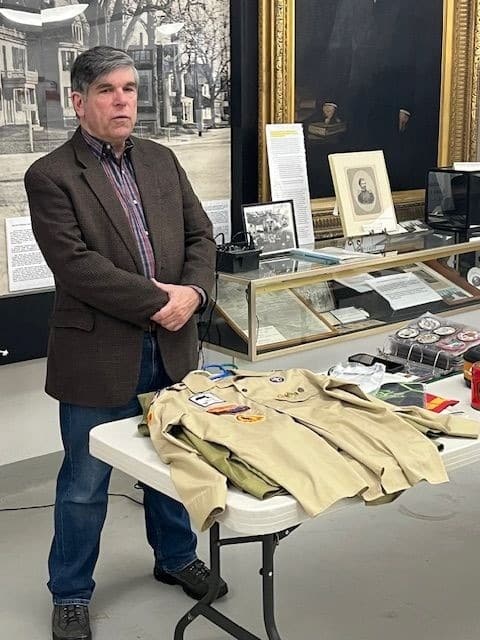
That was one of the findings at Sunday’s Waltham Museum event “Trails, Tents and Traditions: Boy Scouting in Waltham with Robert Logan,” a look back at the history of scouting and its impact on generations of youth and the community.
Logan, a lifelong resident of Waltham, current Ward 9 city councilor and president of the Waltham City Council, is a volunteer scout leader and president of the Waltham Friends of Scouting Inc.
He joined the scouts at age 11 and has stayed involved with the organization for more than 50 years. It’s clear that Logan is passionate about the kids, his shared experiences, and Boy Scout history and heritage.
“Scouting got its start in England as a way to teach young men basic skills like physical fitness and initiative,” Logan said. “That was lacking at the time and needed to be addressed.”
From England to New England
Lord Robert Baden-Powell, a lieutenant general in the British military, is widely known as the founder of the Boy Scouts. In 1907 he established an experimental camp where he brought together a small group of boys and took them hiking, climbing and camping. A year later he published “Scouting for Boys,” a book that encouraged fitness and learning through outdoor challenges.
“It was a way to improve the poor physical condition of British youth, and it worked,” Logan said.
Scouting was an instant hit in England, and it didn’t take long for it to catch on in the United States.
Waltham’s roots in scouting can be traced back to the early 1920s, when the Waltham Council was formed. It was a small, city-based group that supported scouts with training and resources.
Over the years the council expanded to include Watertown, Concord and Wellesley and later folded into the Minuteman Council, which served scouting in the Route 128 area of Massachusetts. The groups merged and became the Boston Minuteman Council in 1993.
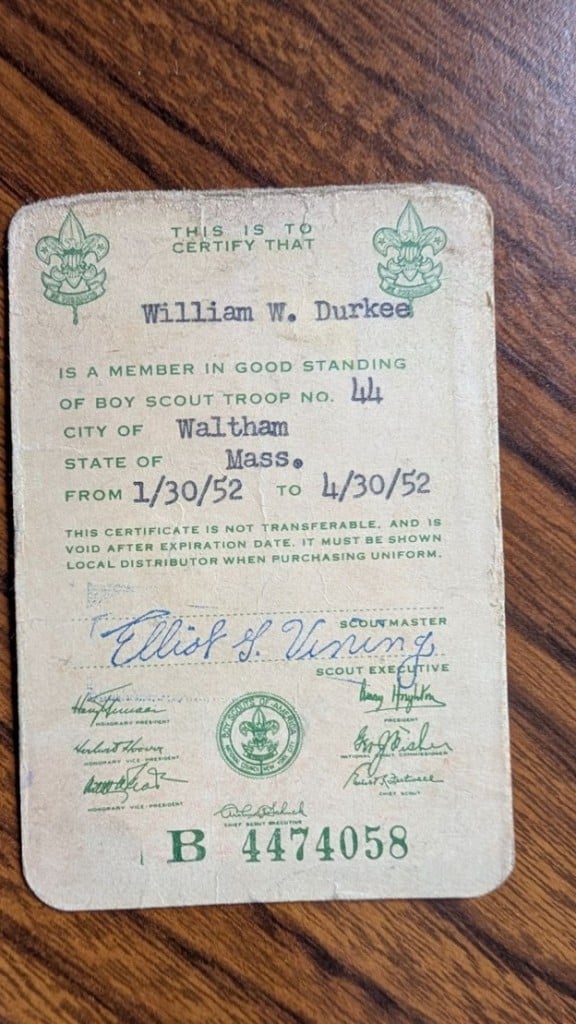
For years Waltham had its own campsite for scouts — Camp Ted. It was a local camping property where troops held outings and training weekends until the 1970s. Located in what is now the Pigeon Hill area, it was named after Waltham landowner Theodore Storer.
In his presentation Logan showed off patches, merit badges, uniforms and camping equipment from his early days of Waltham scouting up to current gear in use. Over the years improvements such as lightweight cookware, compact propane stoves and solar charges have led to safer, faster cooking, he said.
Scouting thrives in Waltham
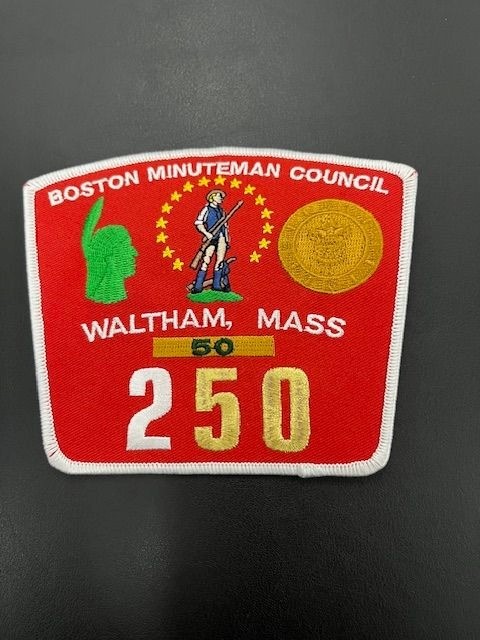
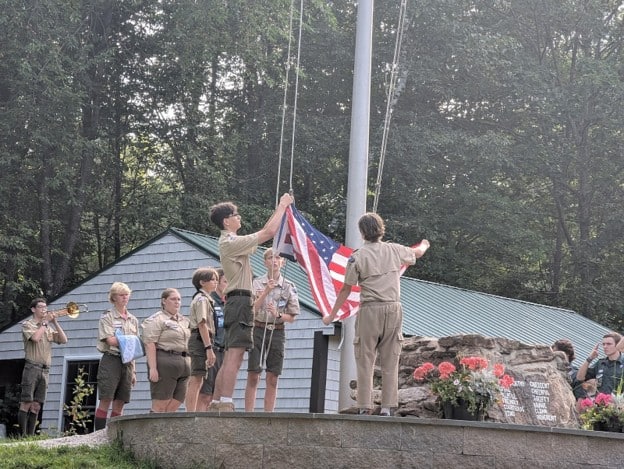
Today, there are two active Cub Scout packs in the city (248 and 250), along with Scouts BSA Troop 250. The goal remains the same — to offer an exciting, fun program for the city’s youth based on learning core scouting and leadership skills. Scouts go camping at least once a month, often to Cannon Mountain and Lonesome Lake in New Hampshire, with activities ranging from backpacking to snowshoeing to shooting sports.
Recently, two scouts in BSA Troop 250 earned Eagle Scout, which is the highest rank. Twins Ameya and Atharva Mahajan achieved this goal by attaining 21 merit badges, serving in leadership positions and completing a service project.
“Scouting is youth-led, and we value this principle in everything we do,” Logan said. A dedicated group of adult volunteers ensures that activities are fun and safe while the youth leadership runs the programs they’ve developed.
According to World Scouting, more than 500 million young people and adults have taken part in scouting since its inception over a century ago. Waltham was a part of that history right from the start.
To find out more about Waltham scouting, visit the BSA Troop 250 website or email rlogan@troop250.com.
Author

Comments (3)
Comments are closed.








Kids today need outdoor experiences more than ever. If a 10-year old or even a 15-year wants to get outside and explore mountains, forests, rivers, and wildlife, Scouting offers them that chance and to learn the skills needed to do it well and safely. At the same time, a young person can develop leadership skills, not from a textbook, but by doing. And along with that experience comes self esteem and self reliance, not to mention lifetime friendships built on trust and accountability. Scouting isn’t what you think it is. It’s everything you ever wanted for your daughter and son. Thanks to dedicated volunteers like Robert Logan and others, Waltham kids can still discover life’s great outdoor classroom.
I remember the scouts coming to Our Lady’s Parish for Mass on Sundays and I loved the smell of the camp fire .
I worked at Camp Ted in the early sixties. I had nature boys group who were sons of the Girl Scouts leaders from Cedar Hill.
This article brought back many memories of Camp Ted.