
Government-run housing faces potential accessibility loss, ‘dire hopes’ for future state funding
Update (Mar. 23): This article has been updated to reflect the fact that the Waltham Housing Authority is not directly run by the City of Waltham.
Waltham’s government-run affordable housing may face future financial struggles, the Waltham Housing Authority’s executive director told commissioners this week.
At the WHA’s Board of Commissioners meeting on Tuesday, Executive Director John Gollinger said he has “dire hopes” for how much funding the department will receive in next year’s state budget.
Still these challenges won’t be immediate. Gollinger said that the organization was “still above water” after the first third of its fiscal year. “Sometimes it’s an ebb and flow. You get all sorts of money, and then you get nothing, and then you get all sorts of money [again],” he said.
At the moment, the WHA is still owed close to $390,000 in previously allocated but yet-unpaid state funding.
Some commissioners also expressed concern over the security of the department’s city support. One commissioner said that Mayor Jeannette A. McCarthy has so far been “pro-housing,” but expressed that “the clock is ticking” on when she will leave office.
The WHA may lose two accessible properties
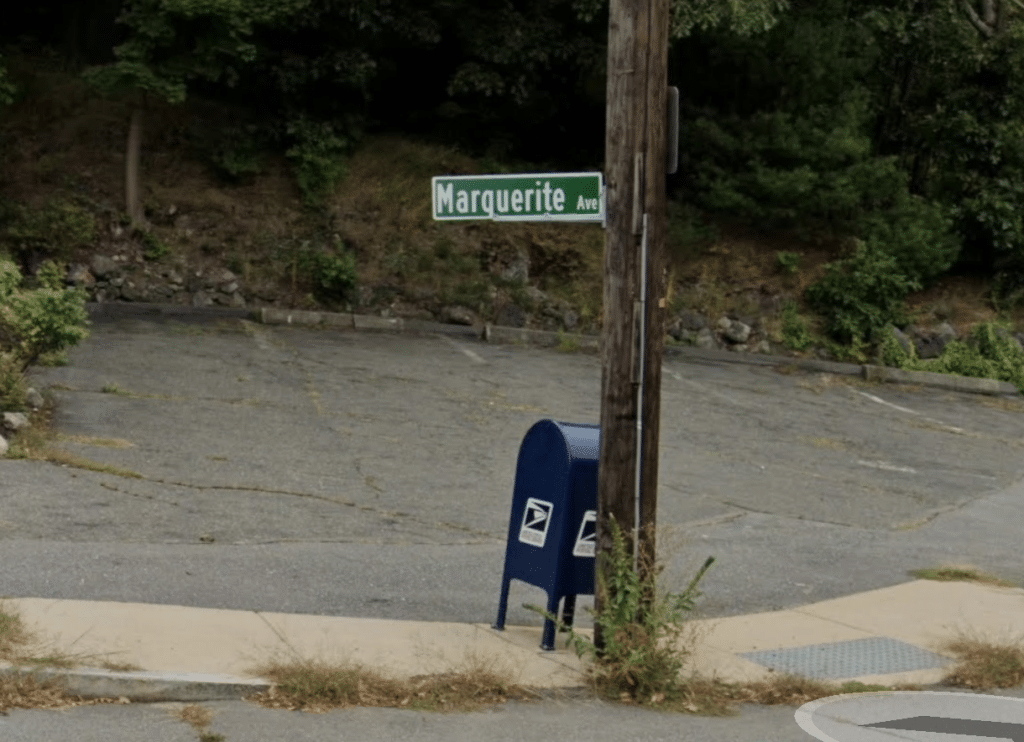
The board also discussed two houses on Marguerite Avenue whose 30-year leases from the state ran out in October 2025. Assistant Executive Director Mark Johnson said the two houses are some of the WHA’s few large handicap-accessible properties and it was in discussions with the state to renew the leases. Currently, he said, it was being offered a five-year lease for both houses, but was pursuing a 20-year lease instead.
Johnson said that both houses require modernization, which would cost between $70,000 and $75,000, and one of the two also currently requires between $20,000 and $25,000 in repairs due to damage from a previous tenant. He said the WHA was currently pursuing state-level voucher funding to pay for that construction.
Still, Gollinger pointed out that because neither property is profitable for the WHA — and, in fact, that it loses money on them — it may not be able to continue renting the houses in the long term.
Additionally, the WHA’s Board of Commissioners:
- Congratulated the WHA’s maintenance employees for their high scores at its last performance review.
- Discussed the state of the Section 8 housing vouchers the WHA administers. The WHA is permitted to issue 455 vouchers in total. Gollinger told the board the WHA has been able to financially support administering 390, issuing them to additional people when current recipients turn in their vouchers, move or pass away.
- Heard a report on ongoing construction. The WHA is currently working on a number of different construction projects, including installing security cameras and repairing windows at Chesterbrook Gardens and renovating eight to 10 kitchens at its Beaver Brook properties. Johnson said these projects were experiencing delays: “It just seems like the process for getting our contracts executed … has been slowed down significantly.”
- Received an update about annual budgets it approved in January. Gollinger told commissioners that the Executive Office of Housing and Liveable Communities found a calculation error in its median salary figures, reducing one of its budgets by $15,017 for FY2026.
Author

Comments (1)
Comments are closed.


Artie,
Excellent recap of the information we commissioners received, reviewed, and voted on this month. A minor correction – the Waltham Housing Authority; John Gollinger Executive Director; is an independent, state and/or federally-chartered body that owns and manages public housing, with tenants typically paying 30% of their income in rent. (Waltham has both MA EOHLC housing and US HUD housing) The city-run affordable housing department is the Waltham Housing Division; Collette Casey-Brenner Housing and Community Development Director: is a city of Waltham office that develops policy, secures funding, and works with private developers to create restricted-rent, non-profit, or affordable units (with tenants typically paying 30%-70% of their income in rent.) Many people confuse the Waltham Housing Division, the Waltham Housing Authority, and privately owned senior developments such as St. Mary’s Apartments and The Mill. Your article succinctly described our ongoing issue with two housing units that the WHA runs for the state. Hopefully, these issues can be worked out quickly.