Charles River Watershed Association 2025 Report Card provides ‘A’ grade for Waltham portion of the river
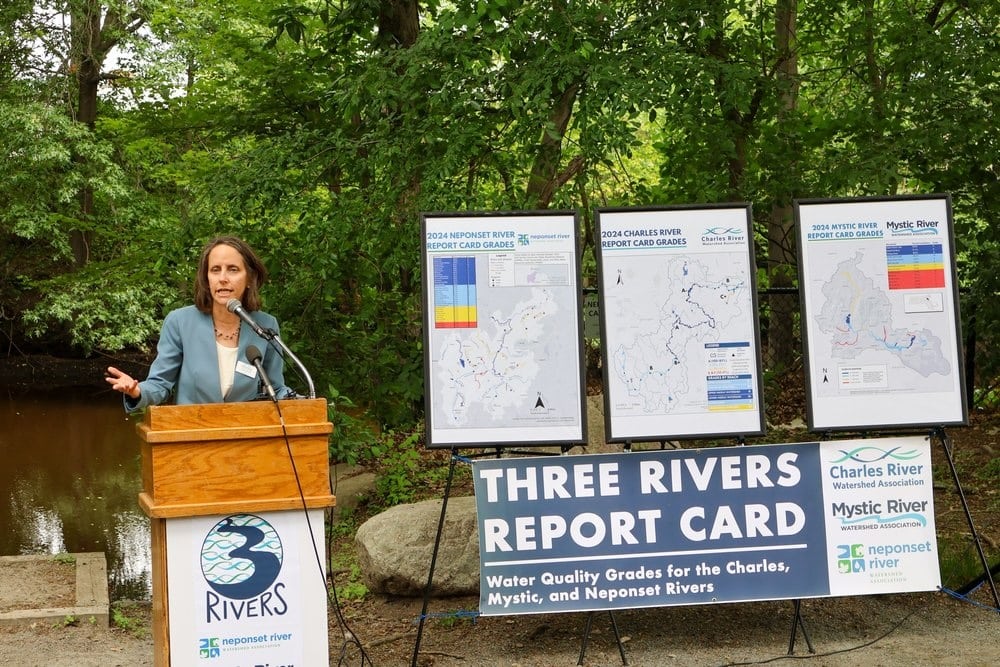
The Waltham portion of the Charles River watershed received an ‘A’ grade on the Charles River Watershed Association’s 2025 report card. The report card, released on May 6, covers the Charles River, the Mystic River and the Neponset River, all of which flow into the Boston Harbor and make up the Charles River watershed.
The lower middle watershed’s ‘A’ rating is an improvement from the ‘A-’ it received last year. Overall, however, grades were lower than they were last year, according to a press release by the CRWA. The organization thinks this is mostly due to outdated infrastructure such as ineffective storm drains, combined sewer systems and illegal discharge pipes. The CRWA’s concerns were brought to the forefront earlier in the year in response to a plan put forth by the Massachusetts Water Resources Authority that they felt did not properly address aging infrastructure and how it dumps sewage into the Charles.
A volunteer-driven grading process
The first watershed report card was issued in 1995 to educate the public about the health of the river and the challenges it faces. Grades are calculated via water samples collected at different points along the river by hundreds of community volunteers. The water samples are tested for E. coli, cyanobacteria and combined sewer overflow percentages. All of these contamination types directly affect the safety of the water for recreation and wildlife.
Heavy rainfall and flooding due to climate change-driven weather patterns increase the odds that sewage and bacteria will make their way into the river. Drought and heat keep water levels in the watershed lower, meaning that any stormwater overflow makes up a larger percentage of the existing water. Sewer pipes that are illegally connected to the river dump sewage directly into it. The cyanobacteria blooms that result from the untreated stormwater overflow are toxic to people and wildlife. In the past three years, CRWA estimates that more than 136 million gallons of raw or treated sewage have made their way into the Charles.
Evidence of stalled progress
To the CRWA, grades being nearly the same as last year is a sign of stalled progress. Their 2025 report cites the Chicago and Willamette Rivers as well as the Seine in Paris as success stories in creating healthy and resilient watersheds through increased investment, and suggests that a similar approach be applied to the Charles River watershed.
“These grades make it clear that progress has stalled,” said Emily Norton, the executive director of the CRWA. “To achieve a truly clean, healthy and swimmable Charles, we need to make the necessary investments in reducing stormwater runoff and ending sewage discharges.”
Related news
New MWRA proposal continues to allow sewage dumping into the Charles River
Toxic cyanobacteria bloom threatened Head of the Charles Regatta
Water quality report card gives A- for the Charles River in Waltham
Author