
‘We’re due for worse disasters’: Brandeis project documents residents’ memories of flooding to prepare for future
When confronting the rising threats of climate change and flooding, Waltham has an extraordinary resource: city residents who have collective knowledge of what has happened in the past.
That’s the idea behind an extensive new website about flooding in the city, replete with maps that show resident-reported flooding areas, the location of stormwater infrastructure, FEMA flood maps and oral histories from people who have witnessed the city’s rainwater woes firsthand for decades.
The Waltham Flood Stories website is the work of three Brandeis University faculty members, as well as graduate and undergraduate students, who began conducting oral history interviews last winter and have since compiled 32.
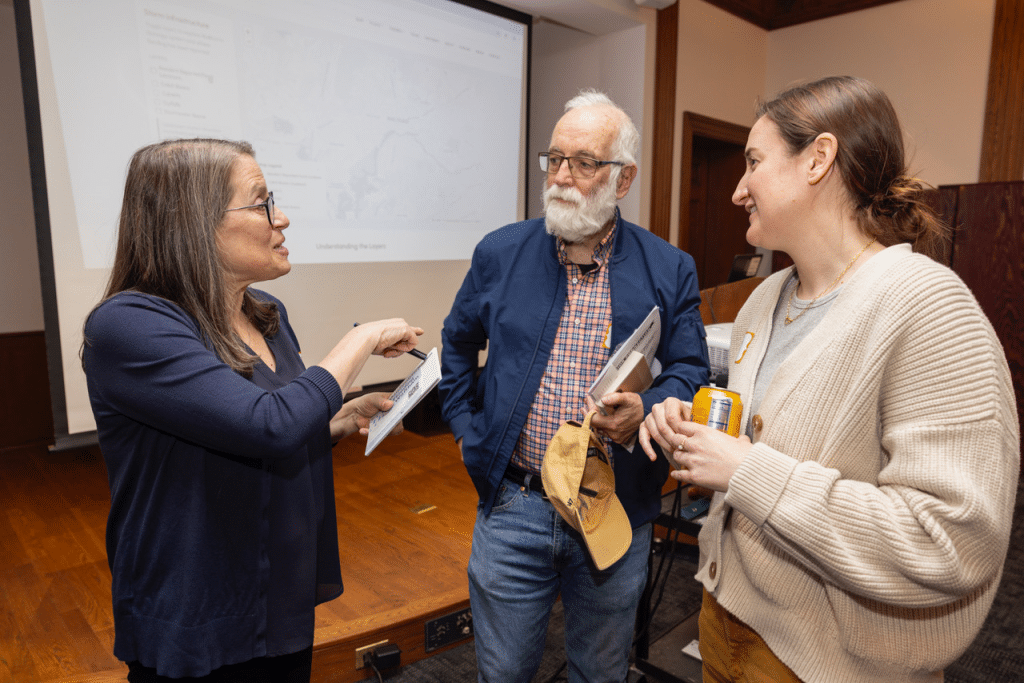
The researchers spoke about their work and played a selection of oral histories at the Waltham Public Library on May 11.
“At its core, our project is about creating a more just and resilient future for Waltham,” said Sara Shostak, academic dean of the School of Social Sciences and Social Policy at Brandeis.
Shostak noted that the project website includes insights about how historical and current development shapes flooding and what people have done to respond, both individually and collectively. “These stories powerfully demonstrate that the lived experiences and insights of Waltham residents are vital to creating equitable and effective responses to climate challenges,” she added. “At the same time the interviews document the inspiring history of environmental advocacy and stewardship in Waltham.”
Understand the history of flooding
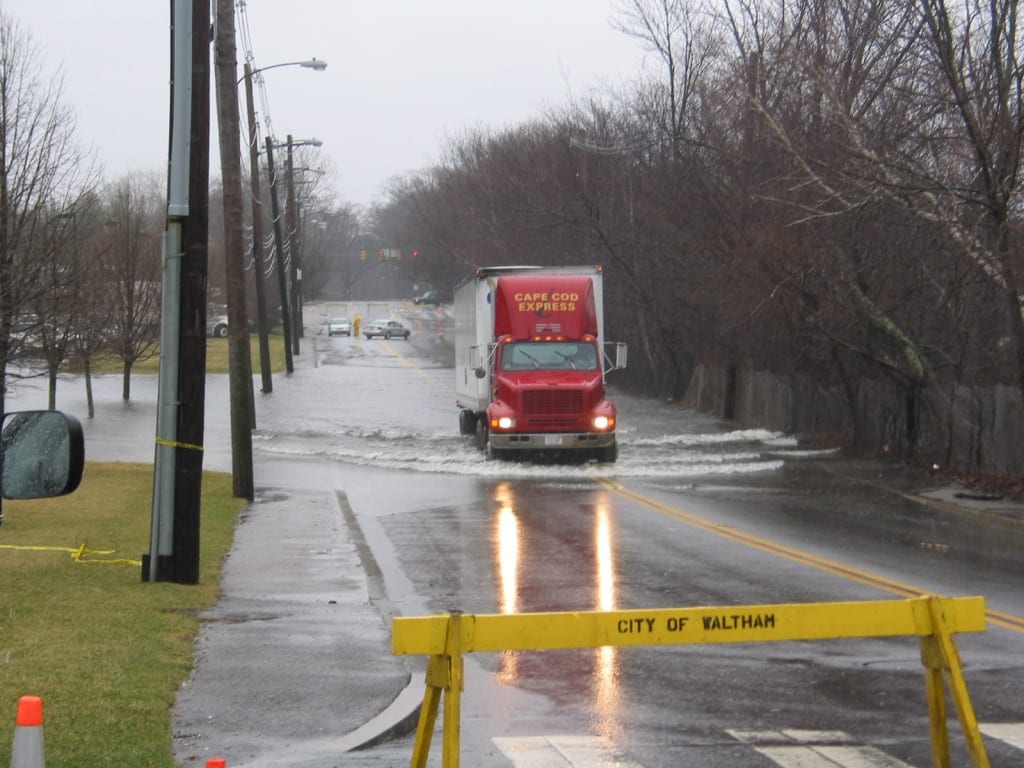
Flooding from ocean storm surges or from massive rainstorms tends to get the most attention, according to the researchers, but more mundane flooding that isn’t widely reported has a significant impact on property damage and quality of life. Residents have this historical knowledge.
Shostak’s faculty colleagues in this research effort are Sarah Mayorga, department chair and professor of sociology, and Rachel McKane, Jack Meyerhoff Chair in American environmental studies and assistant professor of sociology. They have sought to build connections across generations and culture by helping residents understand the history of flooding in their neighborhoods.

“We want residents to build trust in their own expertise and also see it in one another,” said Mayorga. The stories of those who have experienced flooding are rarely taken into consideration in flood maps, and a central goal of this project has been to create an opportunity for information sharing.
Waltham residents (identified by first name on the site for privacy) have some vivid stories to tell. Danielle Jacques, a doctoral student in sociology, played and spoke about several of those stories at the library event.
Mike traced the Hardy Pond Association back to its origins in the early 1990s, when neighbors organized around a stalled dredging project. He told how that early work grew into decades of stewardship, including confronting illegal dumping and managing invasive species.
“As part of that, we had a massive cleanup,” he said. “I think there was 100 people including Boy Scouts and Girl Scouts and neighborhood groups and just a lot of citizens. The amount of debris we pulled out of the woods in the wetland areas is, I mean, I’m talking about a wall of junk that might be 30, 40 feet long and 8 feet tall at numerous sites … around the pond. So, it was literally tons of debris that we pulled out.”
Colleen recounted a problem in the Hardy Pond area where a homeowner had a grove of peach trees whose fruit would routinely fall off and clog a storm drain, creating flooding in the area. Neighbors would get angry and say, “We appreciate the peaches … love the peaches, great thing. But also, can you harvest them so that they don’t end up in the drain?”

Some of the stories spoke about preventing overdevelopment as an important aspect of mitigating flood risk and how awareness of that risk has raised the level of environmental activism in Waltham.
Marie told the researchers about the Beaver Brook Watershed Coalition and efforts to preserve open space around the former Metropolitan State Hospital.
“We fought tooth and nail to save that land. The state wanted to put a corporate office park there. So, there were golfers who wanted to put a golf course there, a sledge dump … all sorts of awful things. And I have to say that during COVID, it proved what the value of that was because in the early days during the shutdown, the park was absolutely overrun with people hiking with their children. And so, it introduced a whole generation of people to the value of open space and hopefully future environmentalists — the children.”
Longtime residents have seen the effects of climate change. Andy, a farmer at Waltham Fields Community Farm, described the impact of an unhelpful mix of drought and heavy rain.
“At least the past two years we’ve gotten about 3 inches [of rain] for the whole summer. So maybe an inch a month, and a lot of that comes in small bits or it comes in a downpour, and a lot of that’s lost. It doesn’t have time to sink into the soil, and it runs off. … I especially don’t remember the drying up in the summer and the sudden storms that either are tiny, some of them miss us entirely and dump 2 inches on the next town, and if they hit us, they dump 2 inches on us and then a week later it’s gone, and then six weeks pass and we get nothing. So, irrigation has become really important.”
Joie Grandbois, director of sustainability at Historic New England, which manages the Lyman Estate, noted that our predecessors found ways to address water issues.
“They had cisterns and things like that to gather water. … But when we think of it in today’s context, and we look at how storms aren’t necessarily increasing in frequency, but they’re increasing in size and the amount of water they drop and then the dry period between them is so much longer,” she said.
She advocated for finding ways to capture water and avoid drawing on the local water supply or wells, especially when the water table may already be low.
‘We’re due for worse and worse environmental disasters’
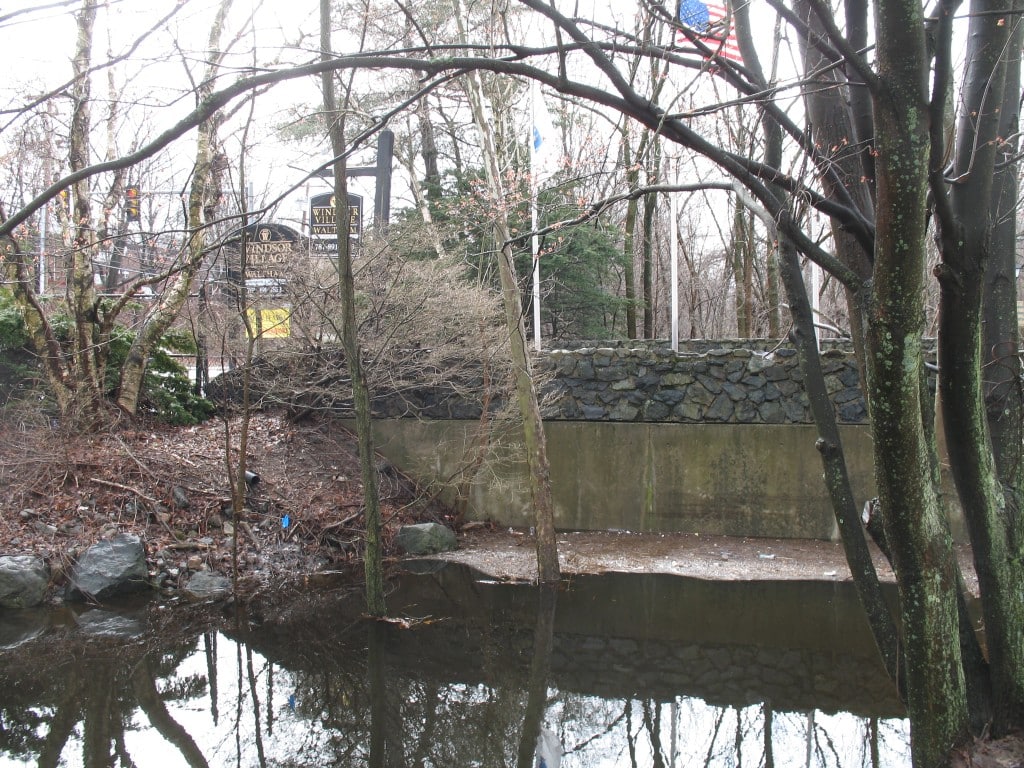
In some of the video interviews, residents discussed how aging infrastructure, such as Waltham’s buildings, bridges and housing stock, tends to be addressed piecemeal, if at all.
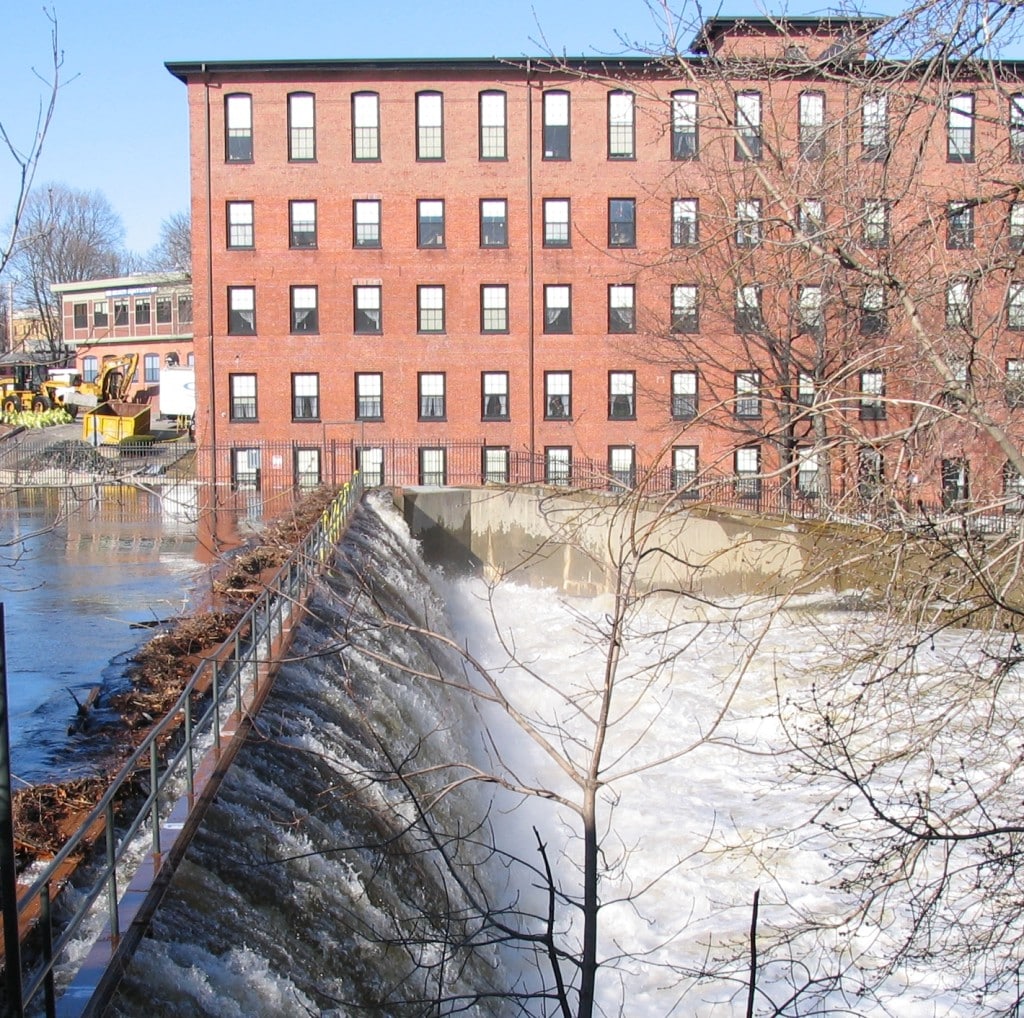
“I have a strong sense,” said Marc in his interview, “that much of the problems that we face in our communities comes from the idea that we’ve decided as a culture to deprioritize investment in maintaining and repairing infrastructure. … whether it’s crumbling road bridges or culverts that are failing or dams that don’t belong there anymore. That to me is a key issue. Without maintaining these things, we’re due for worse and worse environmental disasters, especially as climate change introduces new risks to the community.”
Risks now and in the future argue for a climate action plan, suggested Kam Maali, who leads Waltham’s chapter of 350 Mass, a group pushing the state to move from fossil fuels to more climate-friendly energy solutions. He and other 350 Mass members have been working on a proposal for a climate action plan for Waltham.
“Because of climate change, the atmosphere holds more moisture and then eventually … there’s going to be major downpours. That’s how it’s going to just continue to happen. And so, the city needs to figure out a way to address that, both for the public area, but also for neighborhoods and private residents. And again, one of the things that we’re advocating for is more trees and more greenery that … controls that erosion, and then just has someplace for water to go.
“Newton has a climate action plan,” he added. “Watertown is working on a climate action plan. So, we should think about how are we going to respond? Instead of just waiting for it to happen or hoping that it’s not going to happen.”
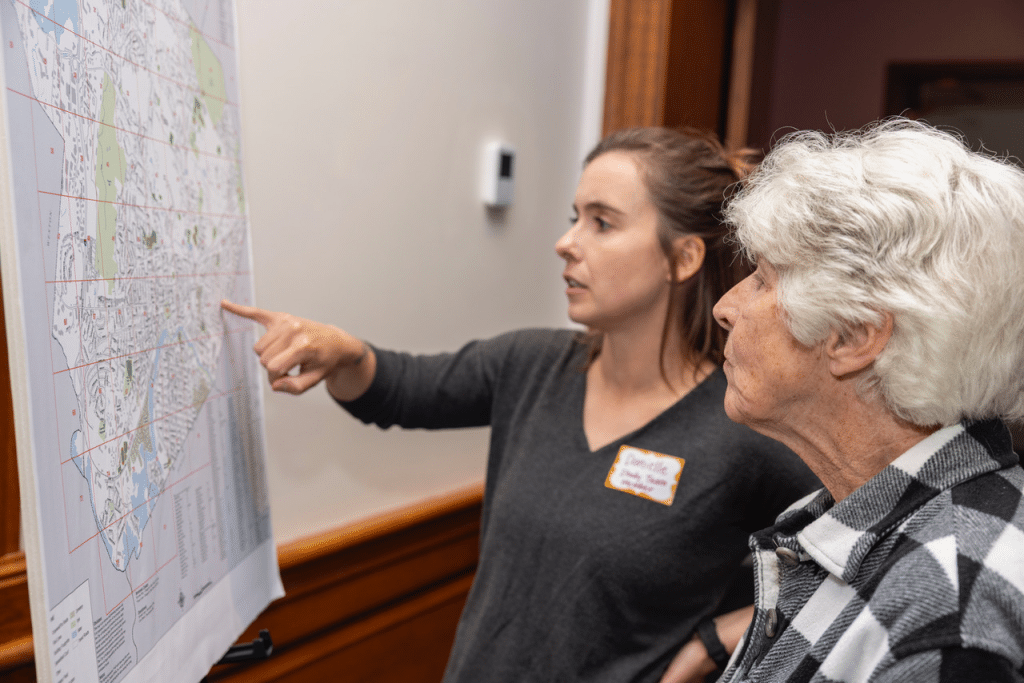
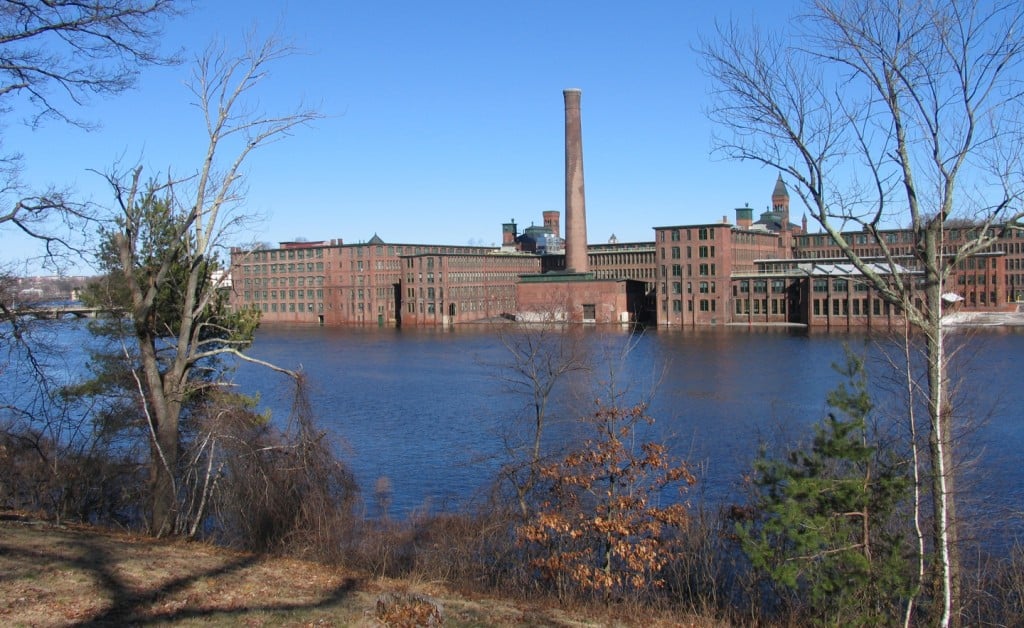
The Brandeis researchers have presented their work to the Waltham Land Trust and are working with the Charles River Museum of Industry & Innovation to develop a walking tour along the Charles River that will highlight past and present water issues.
The project is titled “Building Climate Resilience via Collective Memory: An Oral History of Flooding in Waltham, MA.”
“Our hope is that, moving forward, our project will provide a resource for individuals and institutions, including Brandeis, to come together to take care of the environment and each other,” said Shostak, who is also a professor of sociology and health: science, society and policy.
The project has been supported by grants and funds from Mass Humanities, the Mass Cultural Council, the Mandel Center for the Humanities and the Theodore and Jane Norman Fund at Brandeis. Members of the full team are listed on the site.
The Samuels Center for Community Partnerships and Civic Transformation (COMPACT), described as part of the university’s long-term commitment to Waltham, also supported the project.
The researchers continue to be interested in oral histories, and anyone interested in being interviewed may contact them at walthamstudy@brandeis.edu.
Related news
Floods in Waltham – local memories help prepare for climate-related challenges
Author
Comments (1)
Comments are closed.


This project is a powerful reminder that we must take climate change seriously in New England. While watershed infrastructure upgrades might not always make for the most exciting headlines, they are critical for our city and all the wonderful neighborhoods here in Waltham. True resilience requires us to move past temporary fixes. As Sara Shostack noted, we need a viable, long-term plan to create a more just and resilient future for Waltham. I commend Brandeis University, the Mandel Center for the Humanities, and the Waltham Land Trust for doing the vital work necessary to energize our community to face these climate realities head-on. We need more of these collaborative partnerships to address the key issues facing our city.