
Citizens Police Academy Week 2 – Women in law enforcement
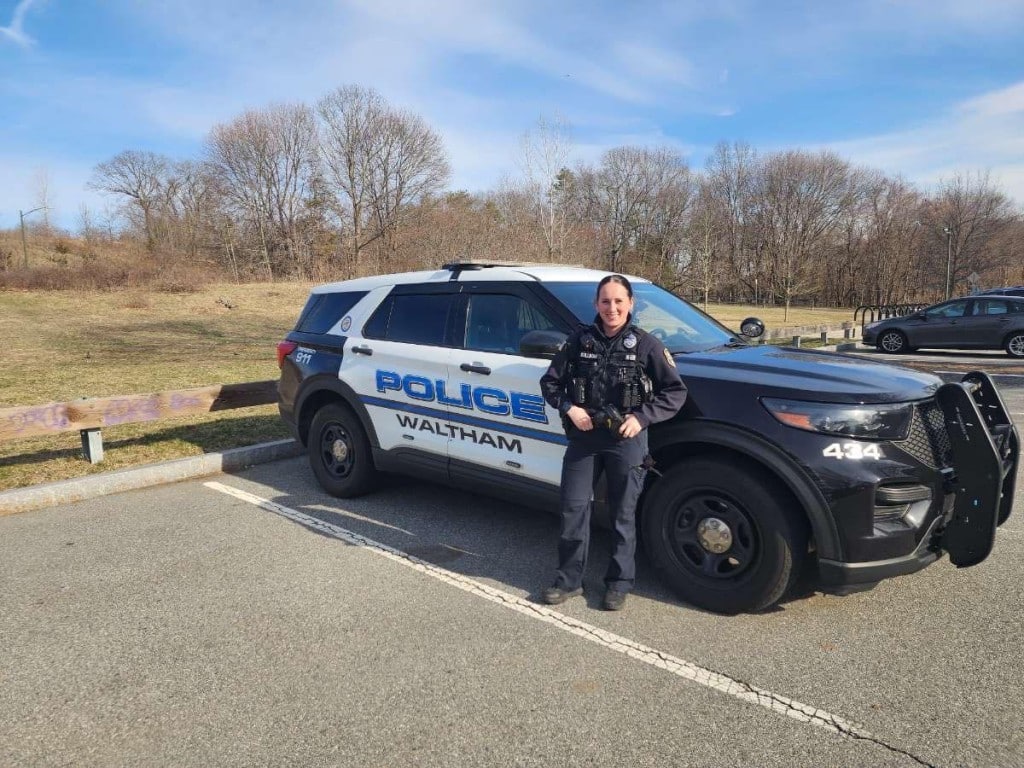
Week two of the Waltham Police Department’s Citizens Academy gave residents a candid look at the experiences of women in law enforcement and a deep dive into the constitutional rights that guide everyday policing.
The evening opened with a conversation led by Officer Tracy Capello and Officer Eileen Williams, two longtime members of the Waltham Police Department who shared their journeys entering a career that was, at the time, almost entirely male.
Capello joined the department in 1995 after working in health care. She told participants that witnessing the effects of violence on her patients inspired her to pursue police work. “I wanted to be in a position to address the causes of what I was seeing,” she said.
Williams, who entered the force in 1998, said her decision was shaped by family members who were officers. She added that she could never imagine herself in a desk job.
Both women recalled the challenges they faced when they started training, noting harassment and hazing from fellow recruits in an era when female officers were rare. Capello said some of the tough tactics used in training, while difficult, ultimately helped shape stronger officers. Today, with 18 women serving on the Waltham force, both officers said the culture has changed significantly, and they feel respected by their male counterparts.
They also pointed out practical changes over the years, such as uniforms designed specifically for women. In the early days, women wearing men’s uniforms sometimes risked split trouser seams in the line of duty. Officers carried nearly 14 pounds of equipment on their belts and vests. In 2003, the department adopted tactical vests designed for women, improving both protection and fit.
When asked whether women are assigned different work than their male peers, both officers emphasized that calls and duties are gender-neutral. “We’re all trained the same,” Williams said. “We all take the same risks.” Both agreed that they love their work and could not imagine another career.
Law and order in practice
The second half of the session shifted focus to the legal foundation of policing, with Detective Sgt. Patrick Dean walking participants through key constitutional principles, noting that knowledge of the law was the most important aspect of policing.
Dean explained that much of law enforcement hinges on understanding and applying the Bill of Rights, particularly the Fourth, Fifth and Sixth Amendments. For instance, the Fourth Amendment requires that searches be backed by probable cause and, in most cases, a judge-issued warrant.
The group explored the distinction between reasonable suspicion — the facts suggesting someone might be involved in a crime — and probable cause, which implies a stronger likelihood of guilt. Dean also clarified the difference between detention and arrest, and reviewed when Miranda rights must be read to suspects before interrogation.
Participants learned about common legal terms often depicted on television, including the difference between felonies and misdemeanors, what takes place during an arraignment, and the discovery process, during which prosecutors turn over evidence to the defense. One point that surprised many attendees: In Waltham, prisoners are allowed as many phone calls as they wish.
Participants came away with a clearer understanding of how constitutional rights shape daily decisions made by police officers. As one attendee remarked, the session demonstrated how law on paper becomes law in action.
Author




Comments (0)
There are no comments on this article.