Waltham Minutemen showed up for the Revolution
For the longest time, if you had asked where Waltham’s militiamen were on the famous day in April of 1775, when the British marched on Lexington and Concord, the answer would have been simple.
Waltham didn’t show up for battle that day.
That was the claim heard by Wayne McCarthy, board president of the Waltham Historical Society, about eight years ago when he listened to a talk by an expert in the battle. McCarthy, who spent 20 years as a reenactor in the annual Lexington Green celebration, knew the assertion was wrong but at the time lacked the documentary evidence he needed to refute it.
Now, as the 250th anniversary of the battles of Lexington and Concord approaches on April 19, McCarthy and colleagues in the Historical Society are working to develop a definitive account of Waltham’s contribution.
Much is now known, including that Waltham showed up.
But the story begins well before the battle.
Without doubt, almost anyone who has studied a dollop of American history knows “one if by land, two if by sea.” Perhaps less well known is that the land route would have taken the British to Concord by way of Waltham. With a slightly different turn of history, Waltham could have been the initial skirmish of the Revolutionary War.
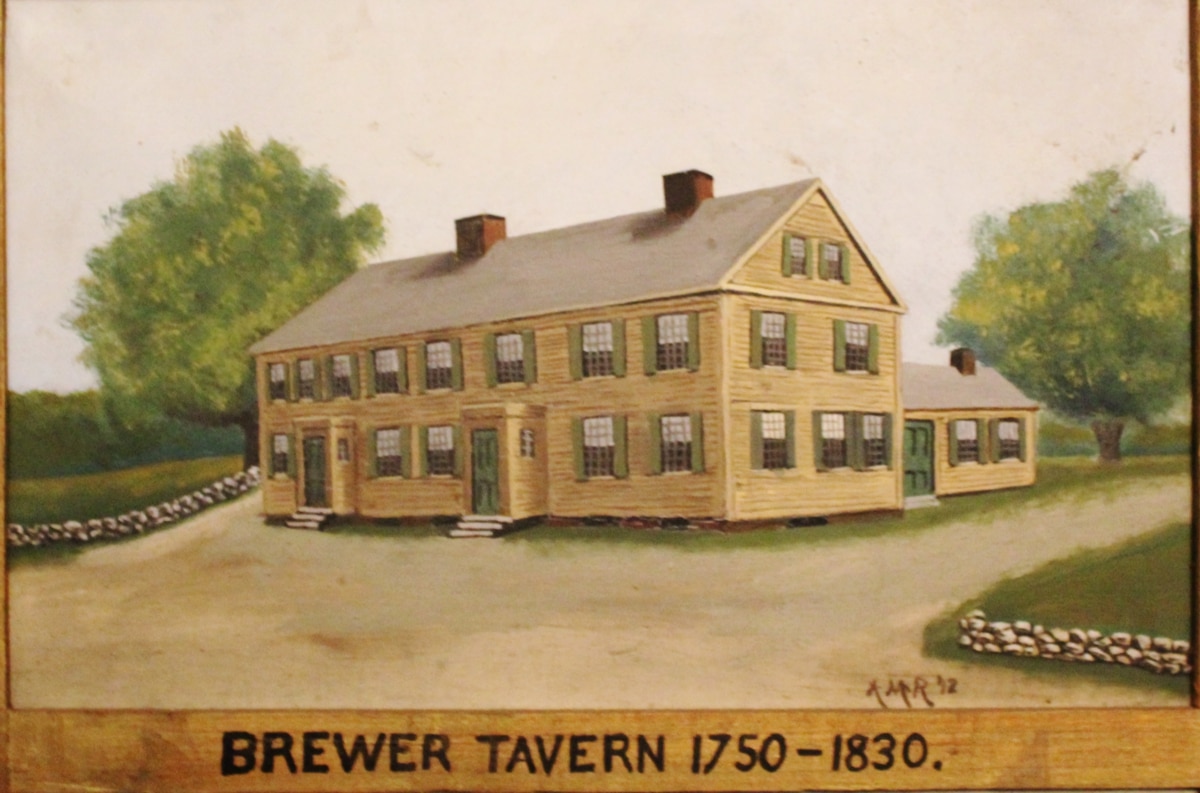
Waltham owes its status as a minor player on that day to a couple of British spies who were sent to scout land routes in late 1774 and early 1775. On a February excursion, Capt. William Brown and Ensign Henry De Berniere had dinner at Brewer’s Tavern, located on the current Gore property off the eastern section of Main Street. They were surveying roads and landmarks outside Boston, McCarthy said.
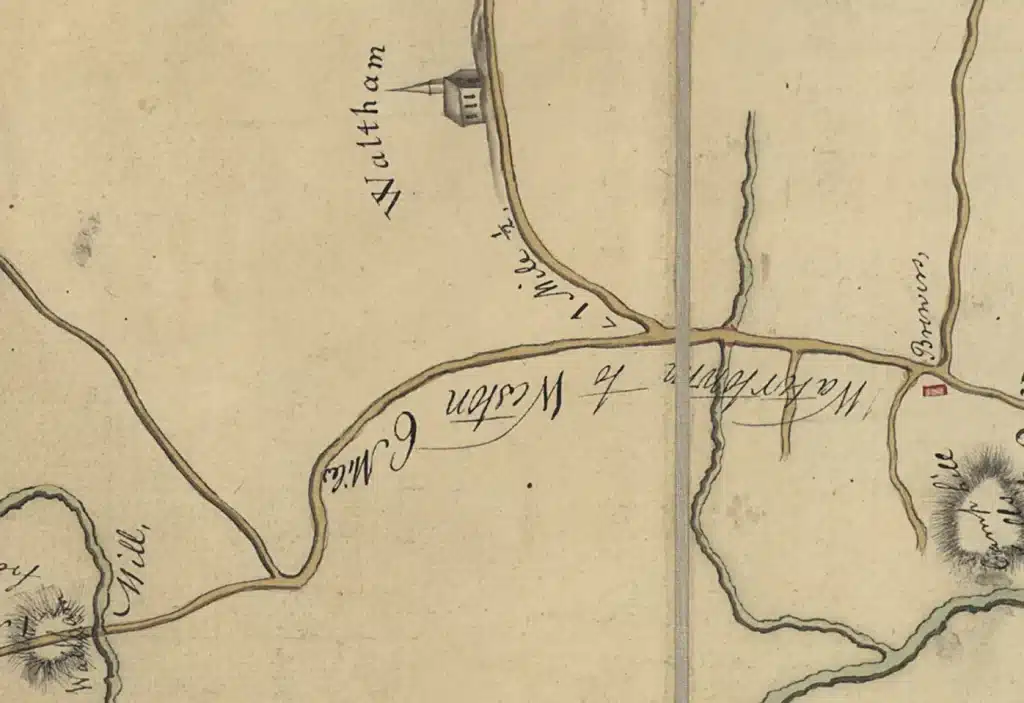
Their tradecraft, however, lacked finesse.
“Apparently they made their maps visible,” he said. A waitress guessed what they were up to and warned them they would get an unfriendly greeting if they continued on their way.
During a subsequent trip on March 20, 1775, they mapped roads to Concord. Again they were recognized. A loyalist steered them back toward Boston along what is now Massachusetts Avenue after learning that the local militia was looking for them.
The pair had seen enough. They told Gen. Thomas Gage, commander of British North American forces, that the hilly terrain on the land route — picture Prospect and Bear hills — was too vulnerable to ambush. The Mass Ave. route would be preferable.
The land route suffered another blow on March 30, 1775, when a contingent of British Regulars (smaller than on April 19) marched along the Charles River to the Great Bridge in Watertown, which soldiers would need to cross to get to Waltham and beyond. They discovered that two cannons had been placed on the other side. No Minutemen were present, but the soldiers decided not to press their luck. They turned around and went back to Boston through Jamaica Plain, destroying anything along the way that might provide cover for an ambush.
Their destruction of property raised alarm among colonists about British military intentions.
Battle day
On April 19, McCarthy said residents of Waltham may have heard a loud volley of guns coming from Lexington Green at 6 a.m. and realized a fight was underway.
Word went out for Waltham militiamen and Minutemen to muster at the corner of Lincoln and Lexington streets.
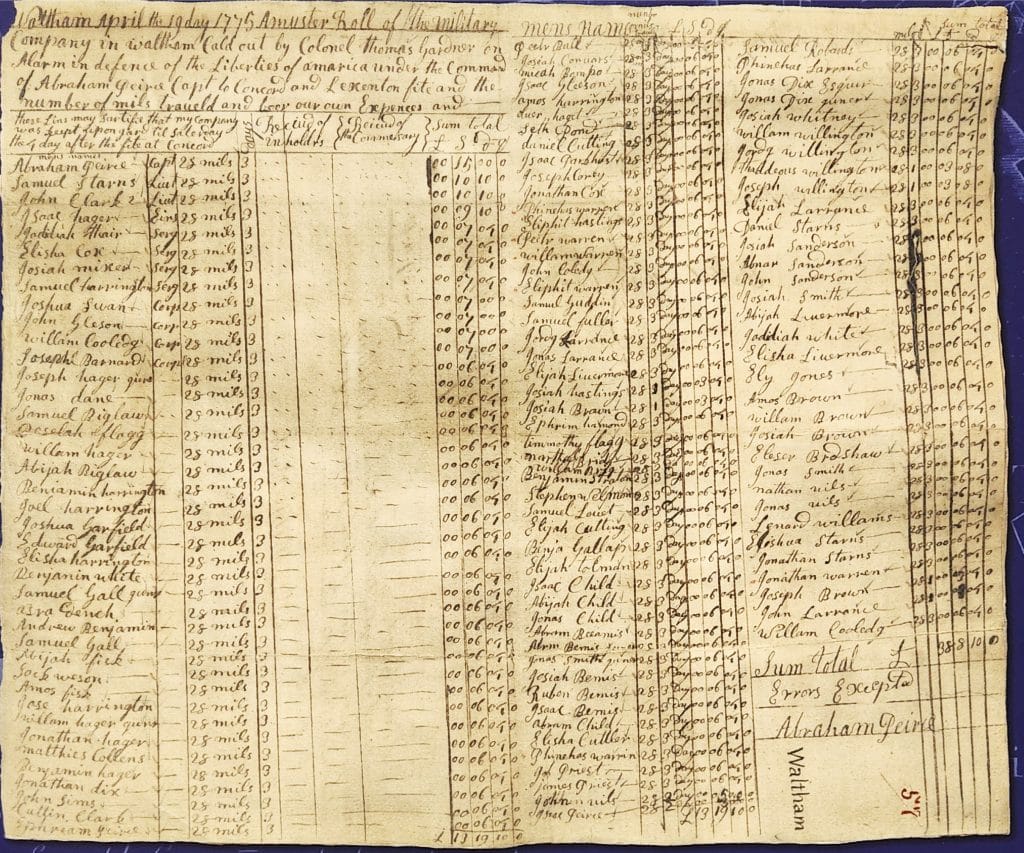
The term “Minutemen” — men ready at a minute’s notice — had been in use only since November 1774, and it’s not clear whether the 128 Waltham men who assembled made much of a distinction between regular militia and Minutemen.
Assembling the men and gathering their powder for muskets probably took about three hours. Their powder was stored under the pulpit of the First Parish church at Beaver and Lyman streets, where there is now a rotary. Colonists may have believed that the British would be less likely to search a church.
One account of the Waltham muster came from an oral story told to Dr. Alfred Worcester of Waltham by his great grandmother when she was 90. He recounted this in an interview with WGBH in 1950. As a girl of 5 or 6, she had seen the Waltham Minutemen, and he recalled her words:
“[My] grandfather’s house was off of the corner of the Lexington Road and the Lincoln Road, and though we could not see them from where we lived, I ran across country to my Grandfather’s house and there the soldiers were on the opposite side of the road; a great lot of them. They kept coming, and their wives and their children with them. …. [The] danger was that the British might come back, march through from Concord, where they had been fighting, that we heard, but might come back either by Lincoln or Lexington. And if they came by Lincoln they would [come] down through the Waltham settlement, the Waltham Plains, and the town would be burned.”
The Waltham Minutemen set off toward Concord at some point that morning.
Similar to other small towns in the area, Waltham’s terrain was mostly agricultural, with dairy farms and small businesses such as mills and inns. The center of town was in the Trapelo Road area, not along the Charles. Prospectville was located in what is now the Cambridge Reservoir, and a number of Waltham Minutemen lived in that area.
Waltham joins the fight
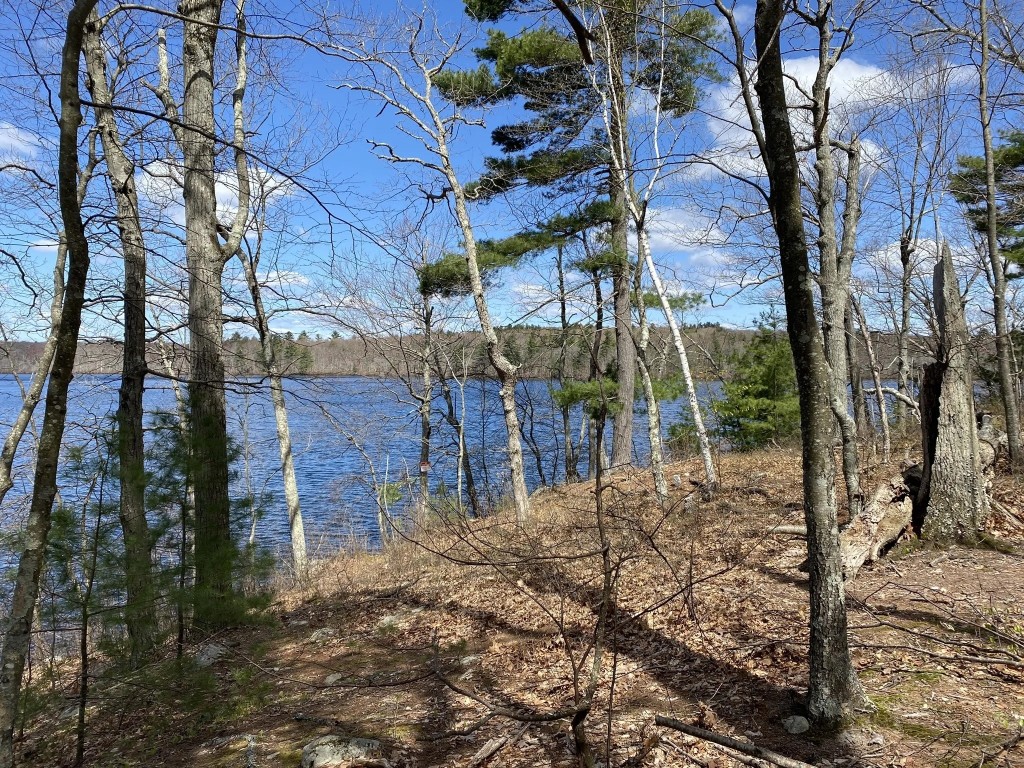
The Minutemen marched on foot to Sandy Pond in Concord, not far from Walden Pond. But they had gone too far. With the help of one of their number who was a fox hunter and knew the shortest way to Lexington, they set off in that direction, pausing periodically to listen for the sounds of battle, McCarthy said.
They reached Lexington just as the retreating British fired a cannon to hold the Colonists at bay. The British set fire to Munroe Tavern after using it to treat their wounded. One written account from a Waltham Minuteman described how he had used his cap to carry water and help douse the fire.
The British hurried back to Boston the way they had come. Had the British opted to return from Concord via Waltham, the Minutemen would have encountered them on their march to Concord and would have been well positioned on high ground to ambush the British Regulars. As it turned out, Waltham was spared any retaliatory burning.
The Waltham Minutemen joined units from other towns in pursuit of the British. They were paid for marching 26 miles, which corresponds to the distance from Waltham to Sandy Pond and then to Boston and back.
The hunt for more information continues, McCarthy said.
“We are finding that there were women involved, and some of the information that is most valuable was written by women in their diaries. Unless you go looking for that, you are not going to find it.”
For more information, visit the Waltham Historical Society. If you have questions and comments about this historic episode, please contact the Historical Society at inquiries@walthamhistoricalsociety.org.
Here is the muster role primary source document currently on display at the Massachusetts State Archives. It is the document submitted for payment of the Minute Men who responded on April 19th. Below it is the transcription of the names. Courtesy of the Waltham Historical Society.


Author