
Zoning review meeting draws impassioned speeches from community
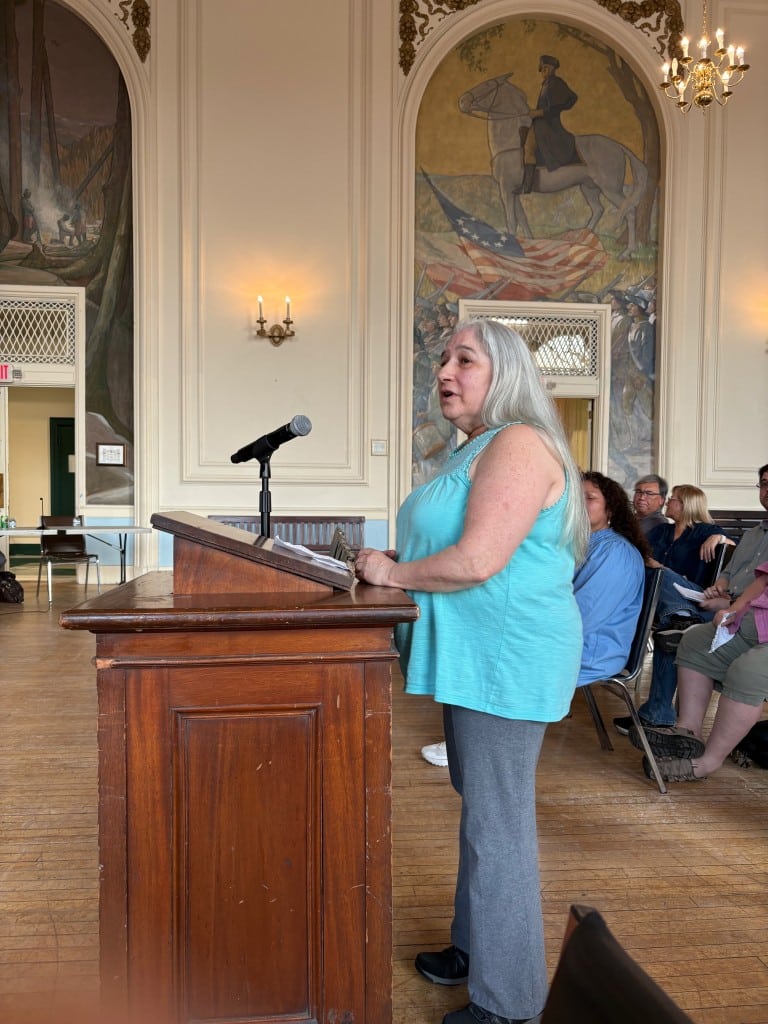
Over 50 Waltham residents came to Waltham’s Government Center last Thursday to push for change in the city’s zoning code.
Although the comments from the 22 residents who spoke at the public input hearing addressed a wide swath of issues, from housing density to walkable communities to greenspace to restaurants, a few consistent themes emerged: the high cost of housing in the city, dissatisfaction with the prevalence of parking minimums and ways that current zoning laws threaten Waltham’s historic neighborhoods.
This hearing, presided over by the City Council, was a part of the city’s ongoing zoning review. Other city officials, as well as representatives of CommunityScale LLC — the consultants that Waltham has hired to propose updates for the city’s zoning laws and codes — attended in the audience.
One of the standout themes of the night was affordable housing, which came up in almost three-quarters of the comments. Residents talked about experiencing extreme rent increases and having to move frequently as a result of unaffordable housing.
A few said they were being driven out of the city entirely by high rent prices.
“I’ve been at my current address for about six or seven years,” said Lexington Street resident Belinda Jentz. “At this point next month, I’m basically priced out of the City of Waltham,” she said tearfully.
Almost a third of the speakers pointed out ways in which Waltham’s current zoning codes don’t reflect the reality of living in Waltham — which some saw as actively detrimental to maintaining the city’s historical character.
“Currently, most of Waltham is illegal in a certain sense. What I mean by that is up to 72 percent of the city’s homes don’t conform with the present zoning codes,” said Mitchell Dipanni of River Street. “If any of those buildings were destroyed… the type and character of those buildings can’t be rebuilt.”
That 72 percent figure comes from an analysis by Waltham Inclusive Neighborhoods member Timothy Riley, who compared public data about existing residential lots and building sizes in Waltham with some of the city’s zoning regulations.
Dipanni said Waltham’s zoning code prevents the building of smaller “starter” homes and neighborhoods like those that exist throughout the city, and he advocated for less rigid, form-based zoning, one-space-per-house parking minimums, and eliminating density limits on lots to help create more affordable housing.
“[This] sounds pretty radical, but really is just going back in time,” Dipanni said.
Ward 6 resident Deb Herman argued that the current zoning code limits the prospects for young people to buy homes.
“Owning our own home: that’s part of the American dream. But since we’ve bought our homes, zoning has made [that] more and more difficult. It’s taken out the steps to go up in order to own a single-family home,” Herman said. “I’m not asking for a handout. I’m asking for the same opportunities for our kids and grandkids as we had.”
The most controversial issue of the night was parking. Although two speakers spoke about the importance of parking in the city, at least 13 others spoke against Waltham’s current residential or commercial parking minimums, saying they don’t reflect the needs of all residents.
Although most speakers focused on housing issues, they didn’t limit themselves to residential zoning. Some talked about requiring greenspace and trees around the city to reduce the effects of Waltham’s heat islands, more mixed-use and walkable neighborhoods along streets like Main Street and zoning for industrial processes.
What’s next?
The next step is for the City Council’s Rules and Ordinances Committee to discuss residents’ input with the consultants behind the scenes, said the committee’s chair, Councilor Cathyann Harris.
She said CommunitySense is conducting a gap analysis to find what other stakeholders around the city should be included in the review process. Not all of that will be done in public hearings, but she said the feedback they gather will at some point be made public.
Harris declined to give any further specifics on the timeframe, or on how future feedback will work. She said the committee and CommunitySense are figuring out the project’s next steps.
The city is required to hold a public hearing before implementing any legislative changes that come out of the review, but it’s unclear whether there’ll be another public input session during the process. Councilor Robert G. Logan said he hoped that would be the case and that ideally, the council would create opportunities for feedback at the beginning, middle and end of the review.
Many speakers expressed gratitude that the councilors and consultants included this public input session in the review process.
Riley, who spoke as a resident at the hearing, argued for more frequent public input hearings on zoning. He said at the moment, councillors only hear residents’ opinions when they come out to talk about specific developments, and miss general trends. “I think we should make citywide discussions like this part of our regular process,” he said.
The city most recently conducted a comprehensive review of its zoning code in 2015. Most of the changes proposed in this review went unimplemented except for one: reducing parking requirements in the Riverfront Overlay District that surrounds the Charles River, a change originally vetoed by Mayor Jeannette A. McCarthy.
Logan said that he was optimistic this review would create more lasting change.
Harris agreed. “I just feel more optimism about this process than I have about any of the ones in the past,” she said.
She said there’s more momentum for zoning change in Waltham in the wake of recent state legislation such as the Affordable Homes Act’s by-right permits for legalized accessory dwelling units and the MBTA communities law’s density requirements around transit lines. She said the act “made [City Council] look at things in a totally different way,” and built up momentum for larger reform.
Author

Comments (1)
Comments are closed.

I couldn’t agree more with Deb – our children cannot afford to buy a home in Waltham. It’s astounding that only one of the recommendations from a decade old zoning review has been implemented. Our city leaders seem content with creating the appearance of progress. As long as there’s some semblance of doing something, even their constituents are lulled into thinking they are working for them. However, in reality meaningful progress around many issues in Waltham remains out of reach. It breaks my heart to see so many people who love Waltham being priced out. 💔