
Burwell partners with Museum, bringing ‘Men’s Shed’ to Waltham
A “tinkering” club for the well-being of retired men: this is Malcolm Burwell’s vision for the “Men’s Shed”.
The “Shed” (referring not to a shack, but a group of men) is still in its beginning stages — a collaborative effort between Burwell and the Charles River Museum of Industry & Innovation, and a result of Burwell’s own search for purpose post-career.
“It’s quite a difficult transition here in America — we define ourselves by our job, and so as soon as that finishes, you end up with, ‘What’s my purpose in life? What’s my identity? How do I fill my time? Why do I matter?’” Burwell said. “It’s incredibly common, but the world doesn’t prepare you for it. And a number of men don’t make it.”
A mechanical engineer by training, Burwell tripped over the idea of a Men’s Shed on an internet rabbit-hole search; though new to Waltham, Men’s Sheds have existed since the 1990s. Beginning in Australia, the effort has since multiplied to more than 3300 units in over 15 countries — with strong roots in the U.K., but a much weaker presence in North America.
These Sheds, typically with eight to 15 members each, have proven an effective opportunity for men seeking connection.
“Men interact with each other shoulder-to-shoulder,” Burwell said. “They usually have another thing in front of them that they’re interacting [with]. Women interact face-to-face. They don’t mind talking about people, relationships, looking into each other’s eyes — but men typically are comfortable working shoulder-to-shoulder on a thing, on something, and the Men’s Shed is about doing that.”
The Shed would likely meet once a week, for three to four hours, and would be equal parts socializing and mechanics. Members of the club must meet a threshold of interest and basic skill in hands-on tinkering, but Burwell notes the club is far less interested in achieving than in building community.
A longtime donor and attendee of the Charles River Museum of Industry & Innovation, Burwell approached the museum about the possibility of collaborating to make the club a reality. The museum is now poised to act as the group’s sponsor, said Steve Guerriero, director of education.
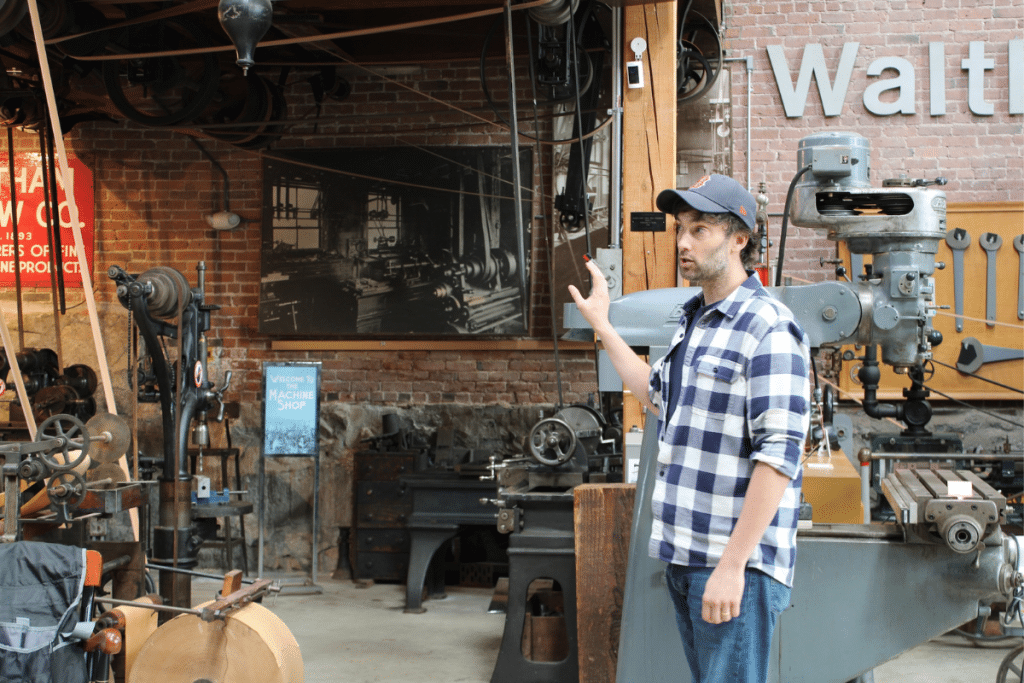
“We are a museum of people who fix things and build things and make things,” Guerriero. “And so that is directly connected to our mission. So we want to facilitate as best we can with him.”
The museum will house the club, allowing them to use the facility’s workshop and tools. The museum’s “oil-can” volunteer maintenance crew will also work with “Shedders” — perhaps even joining them — to share expertise on in-house tools and machinery.
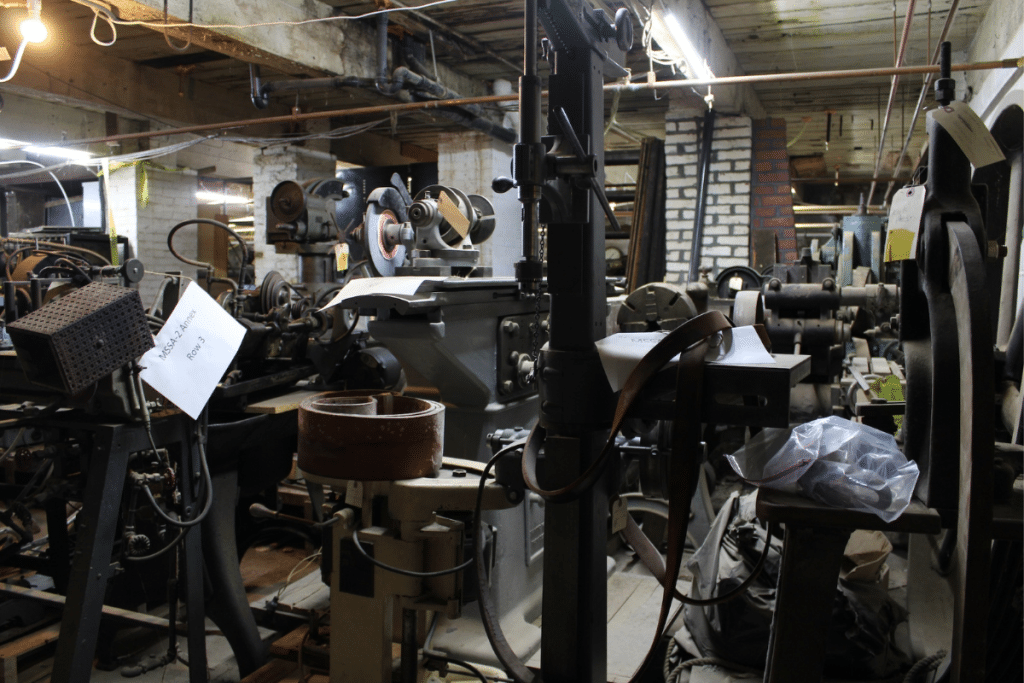
Club members will also be given items to tinker with from the museum’s massive storage: a space nicknamed the “Way-Back” housing countless pieces of machinery in various stages of repair.
The Men’s Shed will, in turn, benefit the museum. Items in storage workshopped by club members may be added to museum exhibits. A factory machine from Polaroid, Ediphones, glass lathes from the Raytheon plant, belt splitters and Trident missile system testing equipment are just some of the pieces waiting to be restored.
The museum’s existing exhibits also require skilled maintenance — an expertise Guerriero hopes the Shed will attract.
“We really have to look hard to get the right kinds of volunteers,” he said. “And so we would love to see the Shed operating here as a feeder program: you get somebody here, they get to know the machines, maybe they had worked in a shop and understand the principles of how the machinery works.”
Ideally, workshops would run on mornings when the museum is open, so visitors can watch the work being done.
Patrick O’Brien, director for Waltham’s Senior Center and Council on Aging, describes Burwell’s club as “exciting” with “a lot of potential”. The Shed may attract individuals who are hesitant to engage in other Center activities. If volleyball, pool tables, ceramics or luau events don’t appeal, a “fix-it” group just might.
“It’ll … get some [individuals] out of the house, get them involved, and hopefully make some new friends,” O’Brien said.
The only thing keeping the club from its first tinkering session? A co-leader.
Burwell — whose weeks involve consulting for deep tech companies, leading the Aston Martin Club of New England, acting as an officer in the Lincoln Freemason Lodge, and tinkering two days a week for local charities — needs help.
Ideally, the co-leader will be someone sitting in the “sweet spot” of retirement, which Burwell puts at four years post-career. Someone who is able to commit to a project of this scale (but is not already overcommitted), with the ability to build and run social groups. Most of all — someone who really enjoys hands-on tinkering.
Those interested in leadership or more details about the Shed can contact Burwell at mcburwell@aol.com.
Author




Comments (0)
There are no comments on this article.