Waltham to Weston link of Mass Central Rail Trail takes major step forward
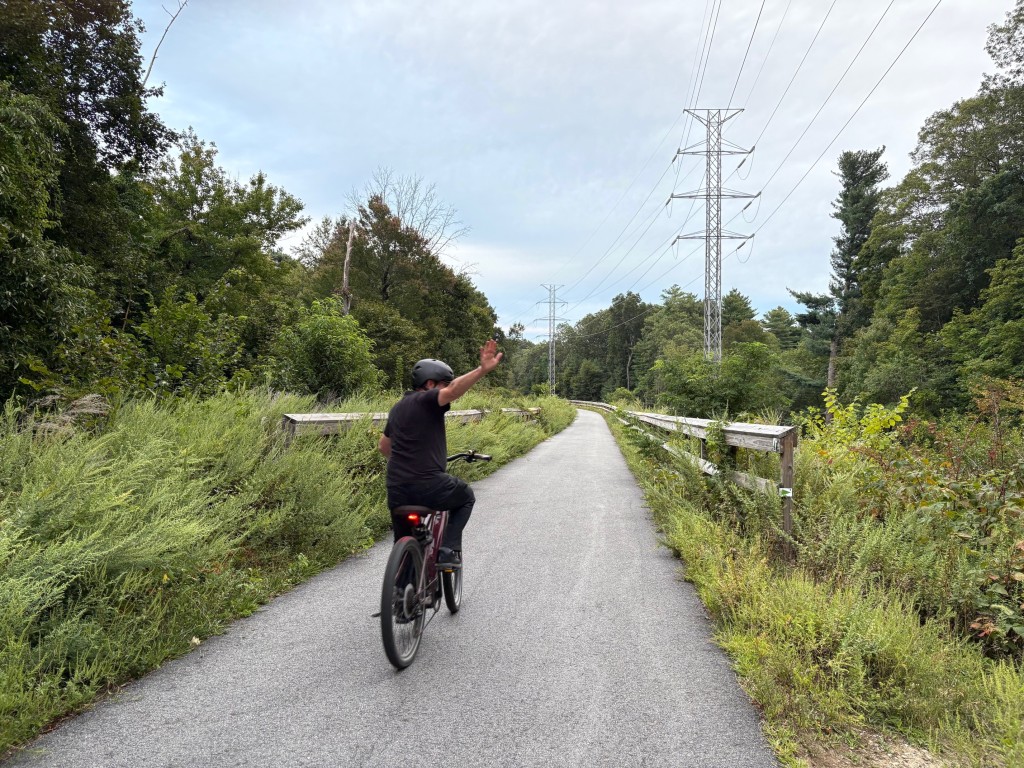
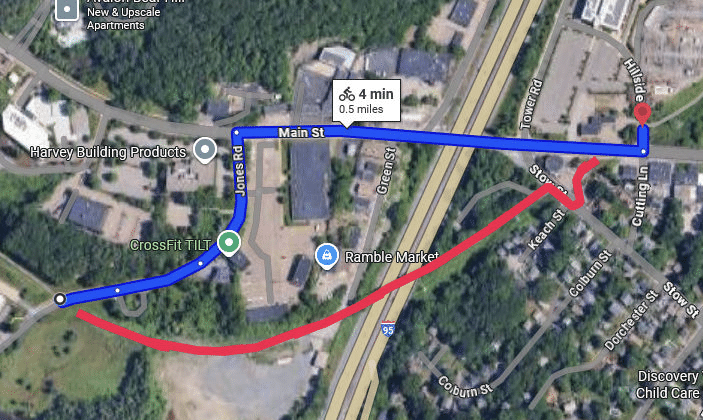
Cycling enthusiasts can rejoice about the completion of pavement on the path and old rail bridge connecting the Waltham and Weston segments of the Mass Central Rail Trail. Even with this milestone, however, the connection is not yet seamless. Cyclists and walkers have three main options for making the crossing from Waltham, each with its own challenges.
Crossing by the unimproved railroad bridge
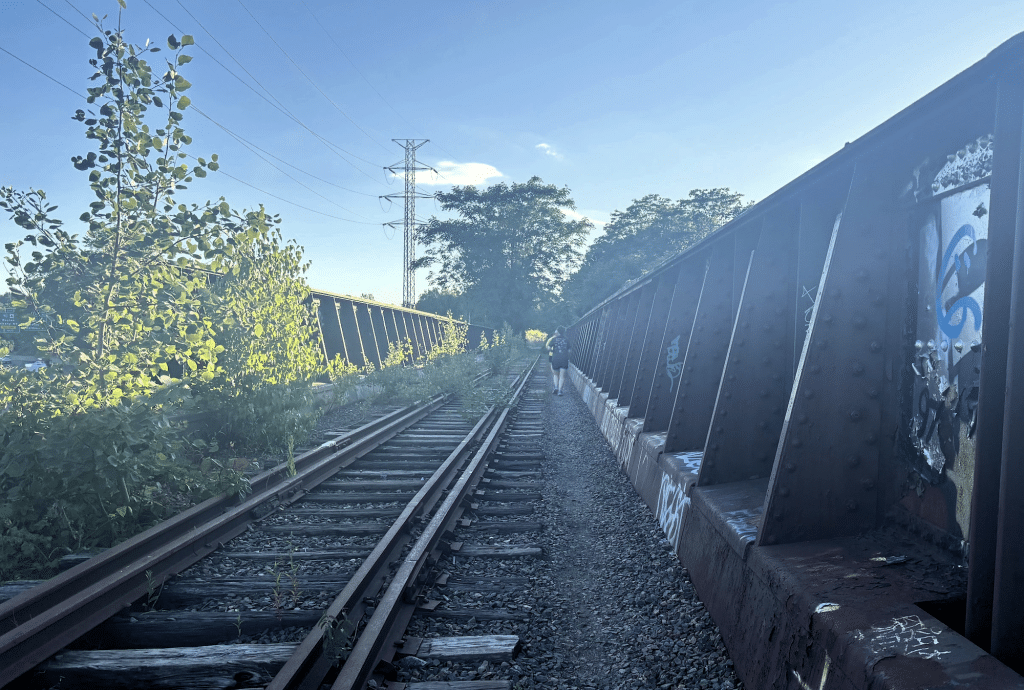
The shortest and most scenic route uses the unimproved railroad bridge over Route 128, just south of Main Street. While the path is walkable, vegetation such as poison ivy crowds the narrow singletrack. Cyclists face additional hazards, including a section with a steep drop-off on one side and another squeezed between the rails and a bridge wall.
Trail users can access this path from the end of the Waltham segment by turning left on Hillside Road, right on Main Street, and using the crosswalk beyond Tower Road. The trail entrance lies only a few hundred feet up the sidewalk on Stow Street.
An unofficial shortcut
Alternatively, cyclists can take an unofficial but convenient shortcut from Main Street, waiting as needed in the wide striped area between the right and left lanes on and turning left into the driveway before the octagonal Rockland Trust building. Exiting the bank parking lot on Stow Street, cross to the opposite sidewalk (looking right and left to avoid oncoming traffic). Turn right and the trail entrance will be about 100 feet ahead.
Cyclists can also go up Main Street to Stow Street, where there is a left-turn signal. The trail entrance., as described above, is a few hundred feet up Stow Street.
The official route
The official route runs along Main Street and Jones Road. Bike safety experts advise cyclists to ride centered in the travel lane when crossing Route 128. By controlling the lane when it’s too narrow for cars to safely pass, riders can avoid sideswipes and “right hook” turns. Motorists can safely pass after the bridge, where Main Street widens.
Bicyclists and pedestrians can also cross over Route 128 by walking on sidewalks. West of Route 128, Main Street has a sidewalk only on the south side. People using sidewalks need to cross Main Street either just before or just after the bridge over route 128. Jones Road has a sidewalk only on the west side.
Travel in both directions
The connection works in reverse, from Weston into Waltham, with similar cautions. No crosswalk exists at Hillside Road, so walkers must cross either before or after the Route 128 bridge. Pavement conditions on the Route 128 bridge are especially poor for cyclists, making it important to stay in the lane to avoid bad pavement and conflicts with turning vehicles. Some cyclists recommend waiting above the bridge to build speed when the traffic light turns green.
Riding safely with CycleSavvy and Bike Together Waltham
Cycling instruction and safety tips are available through CyclingSavvy, a program of the American Bicycling Education Association offering courses and resources. Local CycleSavvy instructor John Allen will be happy to ride with you and coach you. His contact information is available here. Bike Together Waltham is hosting an evening group ride of this new section of the rail trail on Sept. 17, from 7 to 9 p.m. They will return to Waltham for a group dinner on Main or Moody streets. They ask cyclists to use front and rear bike lights as it will be dark out.
Author