
A brother’s search for answers at Fernald
The New York Times on Nov. 12 published an in-depth story exploring one Massachusetts man’s decades-long effort to learn what happened to his brother, a former resident of the Walter E. Fernald State School in Waltham. Reported by Sonia A. Rao with photographs by Lucy Lu, the piece traces a deeply personal journey through one of the city’s most fraught historical sites.
David Scott of Brockton grew up knowing little about his brother John, who was born in 1955 with spina bifida and sent to the Fernald as an infant. John died there at 17, and for decades the family seldom spoke of him. It wasn’t until 2021, after finding his brother’s name on a list of people buried in unmarked graves near the Fernald campus, that David began searching in earnest for the truth about John’s life and death.

His search drew him to Waltham resident Alex Green, a former bookstore owner who has spent years researching the history of the Fernald and identifying those buried on its grounds. With Green’s help, Scott located his brother’s grave, arranged a long-overdue memorial service and pressed state officials for access to John’s medical and school records.
The records, finally released in 2024, revealed a bright child who thrived in early lessons before declining under institutional conditions that often stifled social and emotional development. Former Fernald teacher Susan Weiner remembered John as “a ray of sunshine” in her classroom, though she and others described grim realities within the school.
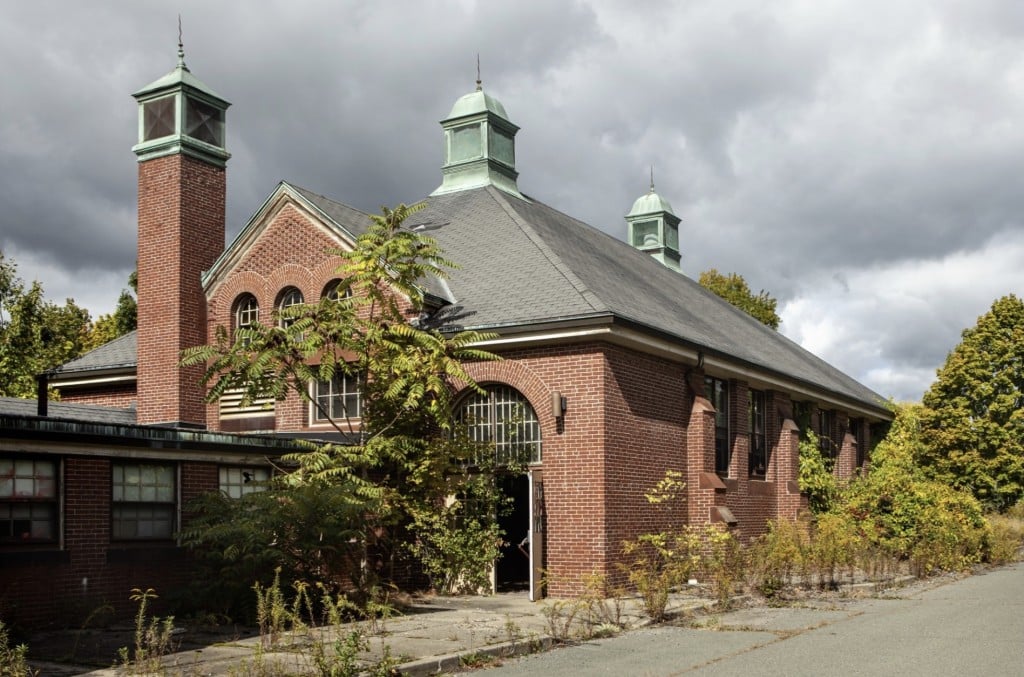
Once a leading institution for children and adults with developmental and intellectual disabilities, the Fernald became the subject of abuse allegations and human rights investigations before closing in 2014.
Scott’s quest reached Beacon Hill when he confronted Governor Maura Healey at a public forum, urging the state to release his brother’s records. When those papers finally came to him — a rust-colored folder holding 70 documents — Scott was able to piece together fragments of John’s story: his handwriting, his medical conditions, even a note that he “could be quite a flirt.”
The story, both heartbreaking and redemptive, underscores the legacy of institutional care at Fernald and other institutions like it throughout the country, and the ongoing efforts by families and advocates to bring dignity and recognition to those who lived and died within their walls.
Author

Comments (3)
Comments are closed.

I worked at the facility gorgeous almost 30 years and while Fernald had a checkered past, after the consent decree it became a model institution with amazing resources and facilities including behavioral programming, music therapy, recreational therapists, day programs with OT, PT and paid work opportunities, a fully functional adapted pool and a modern activity center. Most residents participated in regular ly scheduled community activities. These outstanding resources are rarely mentioned and should be part of Fernald’s history .
My family lived just over the barbwire fence that housed the teen boys. We would actually climb over that dividing fence to sled down their great hill off Trapelo Road. There was a young teen Paul who would sit at the fence and sing Beatle songs alot. We unfortunately were told to leave him alone.
The path to my friend’s house passed by their fence and sometime they would run to us excited to see us.
Once a few of us got brave and went to the fence to see them. There was a set of big African American nonverbal boys, then a few other boys. We asked them lots of questions and we giggled sometimes. Then one handsome boy stood forward and said “You know I’m not like them I’m like you” so sad. I said oh yes we can tell. He put his head down and ba is up… I will never forget how sad he and I felt.
Other instances like seeing them naked or screaming. One time a teen in very cold weather came naked onto our back porch asking for help. My mom let him in, gave him food and my brother’s coat till the police came and a Fernald employee came for him.
Many other stories we have that in retrospect was cruel and abusive and hard to tell
God bless those children that were given up because of their disabilities. Now no more horrific neglecting their institutions only group homes that are regulated and monitored.
My youngest sister spent time there many years ago, makes me sad to have read this story. I hated that place!