Bentley University President Brent Chrite denounces nationalism and comments on the current political “regime.”
The country has entered a period of political turbulence, which has been felt especially strongly in Massachusetts and Greater Boston. Under pressure from the Trump administration, the state and cities have had to navigate cuts to their funding and increased presence from immigration enforcement agencies. These issues have also affected educational institutions in the area, such as Harvard University, which has found itself in a lengthy legal battle with the administration.
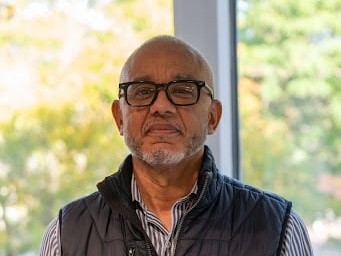
In a one-on-one interview with Micha Braaksma, Bentley University president Brent Chrite, commented on the current political “regime” and its effects upon local educational institutions.
Micha Braaksma: What philosophy do you now have at Bentley, and what focus does that bring to the work you strive to do there?
Brent Chrite: One of the philosophies is that business is global, right? And that provincialism, nativism and nationalism are massively unsustainable and unproductive, and do a disservice to, I think, any ethos in which it’s pervading.
I want students and this community to be intentional about always looking out and recognizing that there’s a big, vibrant, wonderful world out there and the U.S. is not necessarily the center of that world, which is not what many of us think.
And then to make sure that we provide students, faculty and staff with opportunities to challenge themselves geographically, to get them out of their comfort zone and visit and work in non-OECD countries, and to understand the Global South and what that means.
Braaksma: We’ve seen a lot of pressure by the Trump administration upon Greater Boston and on Massachusetts. Has Bentley been affected by any of these new federal policies?
Chrite: Absolutely.
There’s not an institution in the country that hasn’t been affected, whether it’s research funding, international students or grad-plus access to our students. So, yes, it is a serious and consequential set of challenges for us.
And there’s not a day that goes by that my leadership team and I aren’t focusing on some element of the new public policy regime and trying to ensure our capacity to serve and support our students and our faculty and create the kind of community that we all expect here at Bentley. So it’s an interesting time right now.
Braaksma: I mentioned those other educational institutions, Harvard being a primary example of that. What stance do you and Bentley hold on how that situation has been handled, both from Harvard’s side and the administration?
Chrite: Well, obviously, I think the cut in funding for Harvard’s research means that the country and the world will pay a price. Especially when you look at some of their scientific and medical research. This is, for me, unambiguously bad news and unfortunate, and I hope it’s temporary.
But I want to also say this: Higher education has much for which it has needed to atone. And we’re having conversations that we should have had a decade or two decades ago, and we didn’t. And I hope to leverage this crisis as an opportunity to reimagine operating models and structures and figure out how to more effectively deliver what we deliver and to be creative and innovative. And that’s our focus here at Bentley.
I do not support what’s going on. I think it’s a detriment to higher education. But we do have this jewel. We’re recognized for it, and I don’t want to lose it. And so hopefully folks can come to their senses. And in the meantime we’re going to focus on making sure Bentley can do what it’s done for 100-plus years. And that’s just creating amazing opportunities for our students to fulfill their highest aspirations and dreams.
Braaksma: Has the administration reached out directly to Bentley itself? Or has it been impacted more indirectly?
Chrite: Yeah, indirectly. And we hope it stays that way. Honestly, we think that because we’re a business-oriented university and we engage one another a little differently, there weren’t massive protests here.
There just aren’t some of the conditions here that we see in other places. I think that’s a very good thing. I think it is also an affirmation of the quality of this community. And we don’t have everything right. But I think there are lessons here. And so we’re keeping our heads down. We are abiding by the principles and values that we hold dear, not compromising on them. And we’re just, again, trying to support our students. And that’s what we focus on.
Braaksma: Should international students be worried about the current political climate in the context of immigration pressures through agencies like ICE?
Chrite: Well, I think that it’s hard to be a citizen of this country and not be worried, whoever you are. I worry about the humanity of what we’re doing as much as I appreciate the need for border security. And it was a mess not too long ago. And so I understand that.
I think for our students, we work very closely with them. And we have been really fortunate that we have not had any serious issues. And we hope to keep it that way. And so our international office continues to work closely with our students. We are working closely to make sure documentation and paperwork is in order. And we are hopeful that we won’t have any incidents like we’ve seen in other places.
Braaksma: If anything like that would occur, does the Bentley’s own Police Department work together with ICE? Do they cooperate?
Chrite: Well, there’s a set of conditions that ICE officials have. And our police officers are well aware of what those conditions are. We would, at Bentley, follow the law. And we would use that as a sort of guideline for us while also seeking to preserve the well-being and health of our population. And how we would navigate that particular intersection is unclear because it hasn’t happened yet. And we hope it stays that way.
Braaksma: Finally, you have your own plan for the future of Bentley called Falcons Forward 2030. Does that plan include adapting to the current political situation? And if so, what would that look like?
Chrite: Those plans came out long before any of us imagined what we’d be going through. So I can’t say that Falcons Forward 2030, which I’m really proud of, counted on that. But what we did include in there is a recognition for institutional design structure that enables us to pivot and react and anticipate at a pace that’s much more aligned with the marketplace.
We are much more nimble than other colleges and universities. We’re small, we’re private, we’re business-oriented, we’re healthy, and we can move. We’re trying to create the culture that enables us to do that and to anticipate what those movements will be before they get here.
EDITOR’S NOTE: This article is re-published with permission from The Vanguard, Bentley University’s student news site.
Author