
Waltham’s road to recreational cannabis retail
The process of opening Uma Flowers was rife with procedural delays, leaving residents questioning why Waltham was slower to welcome recreational cannabis than neighboring towns.
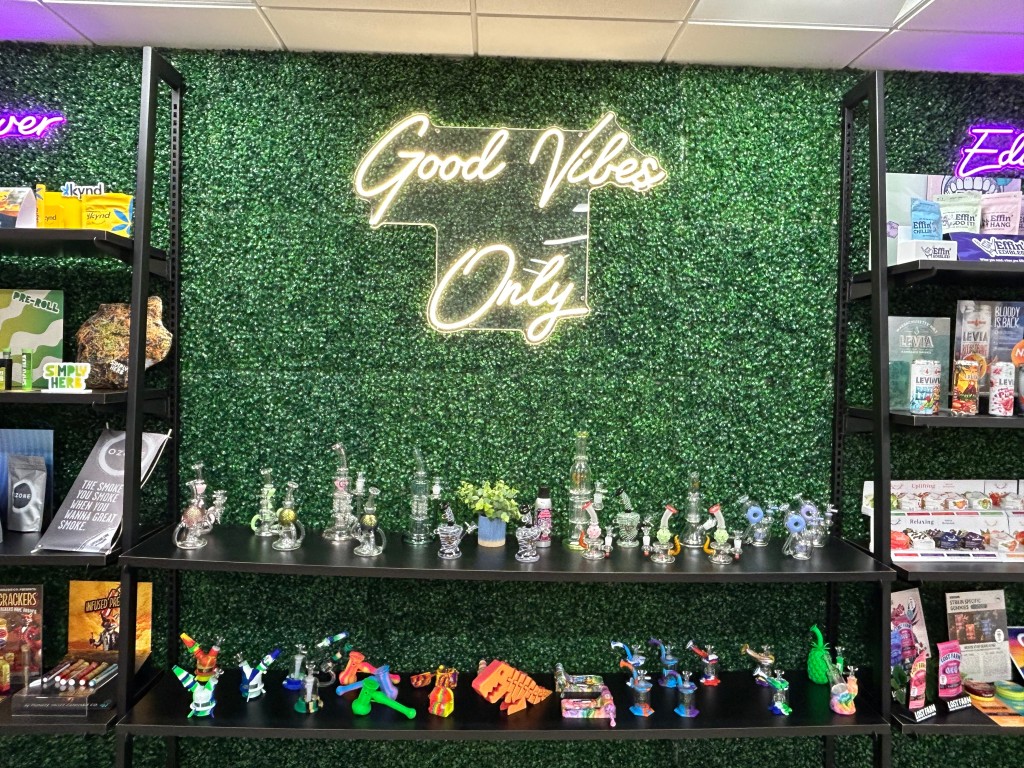
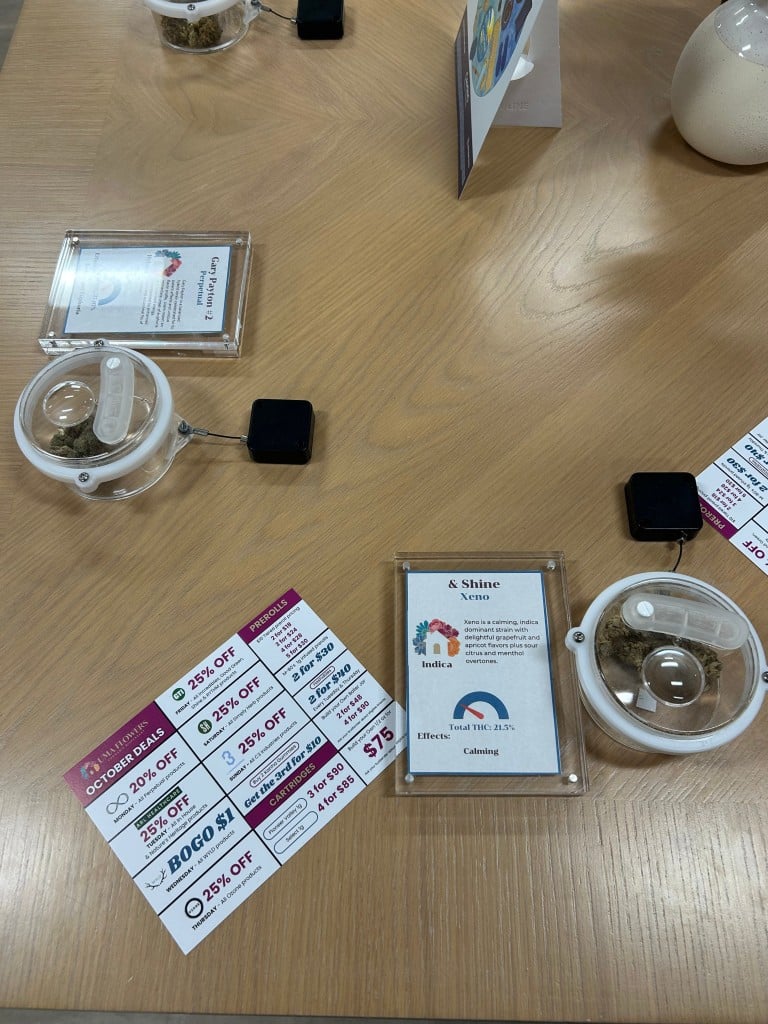
Uma Flowers, Waltham’s first recreational cannabis dispensary, opened on Bear Hill Road in May nearly a decade after Massachusetts legalized recreational cannabis and long after neighboring towns like Watertown and Newton opened cannabis retail stores. Uma Flowers’ debut reflects Waltham’s gradual acceptance of recreational cannabis.
The timeline
In 2016 the Massachusetts state ballot included a question that if passed would legalize recreational cannabis. Ahead of the vote, the Waltham City Council passed a resolution opposing the question’s adoption and urged residents to vote against it; 11 out of 12 councilors supported the resolution. Councilor-at-Large Carlos A. Vidal, the only councilor who opposed the resolution, declined to elaborate on the matter. Despite the City Council’s efforts, Waltham voted 14,156 to 11,735 in favor of legalizing recreational cannabis.
Following the vote, the City Council enacted a moratorium on cannabis-related businesses in June 2018 to develop local policies. This action was in line with many other municipalities’ responses of enacting temporary moratoriums or permanent bans. Waltham’s moratorium was set to expire at the end of 2018, though the city extended it until June 2019 to allow more time to develop policies. Ward 4 Councilor John McLaughlin, Waltham City Council president and ex-officio member of the Cannabis Control Commission, did not respond to requests for comment.
In January 2019, the city council held a public hearing and solicited input about the initial draft of the zoning ordinance. The ordinance required cannabis-related businesses to be situated in commercial or industrial zones, prohibited them from operating on Moody Street, limited operating hours and set required distances for how far they must be from schools and parks. It also limited the number of licenses issued in proportion to liquor licenses in the city.
To Faith English, a postdoctoral research fellow at Johns Hopkins Bloomberg School of Public Health focusing on drug equity and policy, these regulations are reminiscent of Massachusetts’ “puritanical” Blue Laws — restrictions that dictate when certain businesses, most commonly those that sell alcohol, can operate. English suggested that these regulations can be “problematic from an equity … and business standpoint,” limiting consumer access and revenue potential.
A long road for Uma Flowers
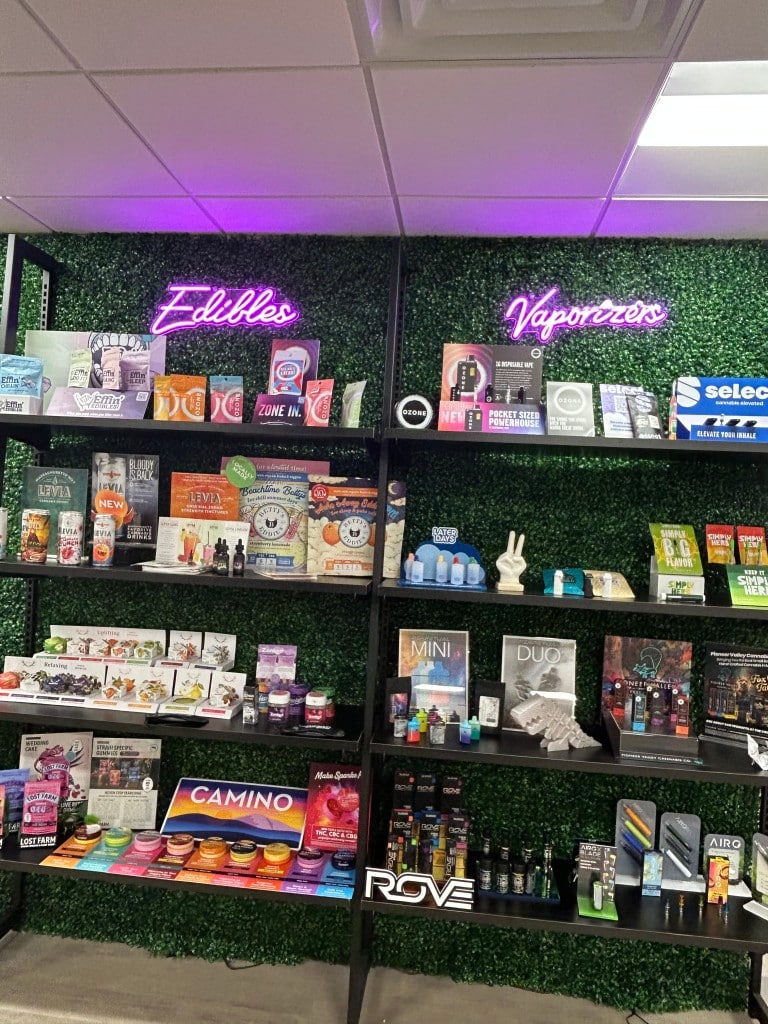
In November of 2019, nearly five months after lifting the moratorium, the City Council signaled its intent to move forward with allowing cannabis retailers in the city by passing another ordinance defining priority applicants and regulating host community agreements to Mayor Jeannette A. McCarthy’s office. HCAs are agreements signed by municipalities and businesses designed to address a retailer’s impact on a community.
Applicants must also undergo other approval processes at the state and local levels to open dispensaries, creating opportunities for delay at various steps throughout the process. For instance, applicants cooperate with local governments to hold a community outreach meeting with the public and provide any municipal permits associated with building or renovating space for an establishment. The state’s Cannabis Control Commission ultimately reviews all applicants and makes decisions around licensing.
After co-owners of Uma Flowers Priyanka and Tejal Patel completed these steps this year, Uma Flowers became Waltham’s first successful applicant. Neither Priyanka nor Tejal responded to requests for comment.
“That’s a very long, prolonged timeline,” English described. She estimated securing the capital and permits for a dispensary typically takes less than a year. Several applicants attempted to open dispensaries in Waltham before Uma Flowers, but none were successful.
“Speaking for myself, it definitely took way too long. It did make Waltham look like it was sort of dragging its feet on it,” said Ward 3 Councilor Bill Hanley. Hanley noted that some delays stemmed from construction at the dispensary, rather than as a result of the city’s policies. In addition, he suggested that the timeline for the medicinal dispensary coming to Waltham on Second Avenue, Middlesex Integrative Medicine, is unlikely to face bureaucratic obstacles, should it complete the necessary building permits first.
The Waltham Times previously reported comments from Priyanka Patel, stating that the opening process in Waltham took slightly longer than in other towns, but that was reasonable given that Waltham is “significantly larger” than Pepperell and Lunenburg, cities in which the Patel family owns dispensaries. In comparison to Waltham, Newton’s first recreational dispensary opened in May 2019 and Watertown’s in December 2020.
A slow adoption
Uma Flowers’ delays signify broader tensions among Massachusetts municipalities regarding recreational cannabis retail establishments. Data from the Cannabis Control Commission’s municipal zoning tracker indicates that 107 municipalities out of 351 cities and towns in Massachusetts have enacted a ban on all cannabis-related establishments; another 10 have explicitly banned retail establishments like dispensaries.
In a May 2020 Patch article, many Waltham residents expanded on their concerns about the effects of opening a dispensary and increased access to cannabis on issues such as traffic disturbances, youth health and public safety in response to a business owner’s plans to open a recreational dispensary. The dispensary never opened.
Another Waltham resident stressed a sense of concern regarding the quality of product sold in commercial dispensaries. They use cannabis in order to manage chronic pain, and choose to source their cannabis from a grower in California. The resident asked not to be identified due to legal concerns associated with their history of growing cannabis in the Netherlands.
“It’s all about the money,” they said, though they expressed that increased exposure to recreational cannabis as a result of Uma Flowers opening can eliminate some of the stigma around it. “It’s good that more people are aware that it’s a medicine.”
According to English, purchasing cannabis from commercial dispensaries is often safer “both in terms of the safety of a retailer versus someone selling cannabis illegally, but also in terms of removing the potential for consuming cannabis that could be contaminated with other substances.”
On social media, residents have expressed frustration about the delays and needing to travel to and pay taxes to neighboring towns to purchase cannabis, especially considering Waltham’s vote in favor of legalization in 2016.
English stated that towns can use tax revenue from the cannabis industry to support services such as mental health and substance use disorder programming, or direct these streams toward schools and parks — opportunities to leverage cannabis sales to invest in critical public infrastructure that could have significant equity implications.
As operations at Waltham’s first dispensary are in full swing, the city joins its neighbors in legally offering recreational cannabis. Middlesex Integrative Medicine is also in the planning phase, which points to projected growth in Waltham’s cannabis retail landscape. The long road to get there highlights how the impact of continued stigma and local policymaking shape the city’s business development.
This story was produced in collaboration with the Brandeis University Journalism Program, overseen by Professor Adriana Lacy with mentoring for student journalists by Waltham Times editors June Kinoshita and Mary Pratt.
Share anonymous news tips
You can leave a news tip anonymously, but if you would like us to follow up with you, please include your contact information
Authors


Comments (1)
Comments are closed.

Thanks for publishing this. I’m sure there are many opinions on this topic, but I, for one, am grateful to have Uma Flowers nearby as cannabis helps me with a couple diagnoses I have. I used to think of ‘weed’ as just that a weed and a scourge. But after some recent medical events, and doing my own research and such (since there is so little testing data to be had) I have found both cannabis and CBD to be very helpful over the long term with my diagnosis.