
Historical Society tour spotlights Revolutionary War patriots at Grove Hill Cemetery
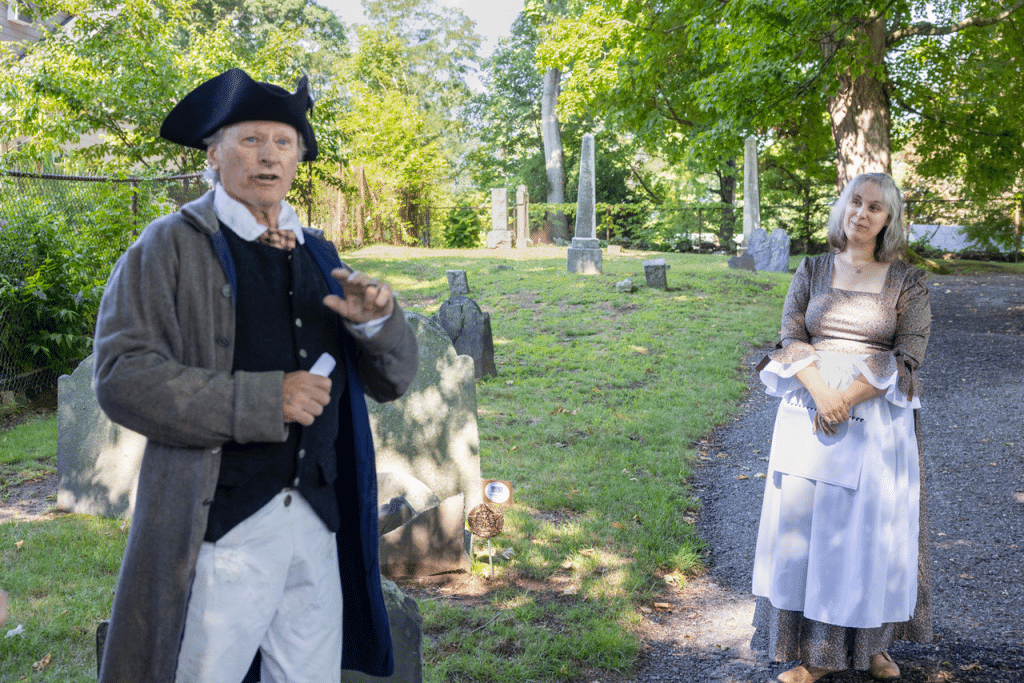
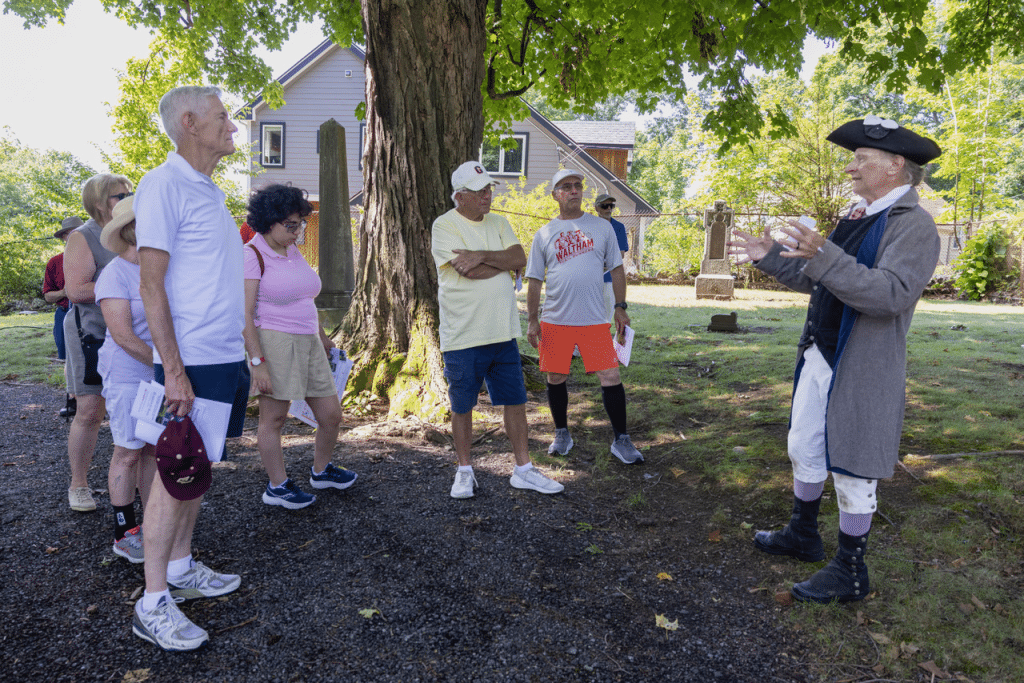
On Saturday morning, 25 people gathered under a punishing summer sun to walk among the graves of men who marched at the birth of the nation during the Waltham Historical Society’s second annual Grove Hill Cemetery tour. The 90-minute tour started on Aug. 1 at 10 a.m. and wound through the historic section of the burial ground on Grove Street. As temperatures climbed, organizers chose a route with maximized shade and offered water to participants.
The booklet distributed to attendees listed the names and biographies of each of the 49 patriots who fought in the Revolutionary War and are buried at Grove Hill. Participants also received a large map of the cemetery’s historic area.
Wayne McCarthy, president of the Waltham Historical Society and a past Captain Commanding of the Lexington Minute Men, opened the morning by describing the research underway to document the events of April 19, 1775, and the role the Waltham Minute Men played that day and in the days that followed.
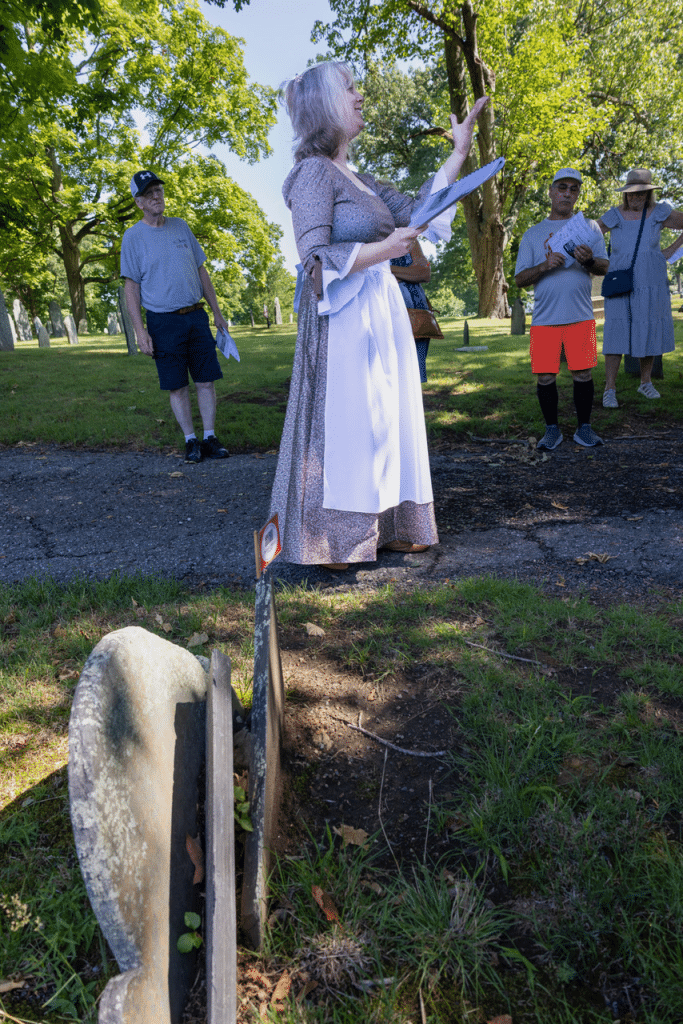
Desiree Genthner led the tour, stopping at the graves of Waltham men who fought and recounting their stories. She described the region’s geography in 1775 and explained that news of the confrontations was received later that day, April 19.
Genthner also discussed the Waltham Minute Men’s role in fortifying Dorchester Heights, a maneuver that forced the British withdrawal from Boston on March 17, 1776.
Stories were told about Abijah Child, Joseph Clark, Joel Harrington, Elisha Livermore, Josiah Mixer, Abraham Pierce, Peter Warren and Leonard Williams. The route also passed the grave of Nathaniel P. Banks, the Waltham-born Civil War general and Massachusetts governor who died in 1894.
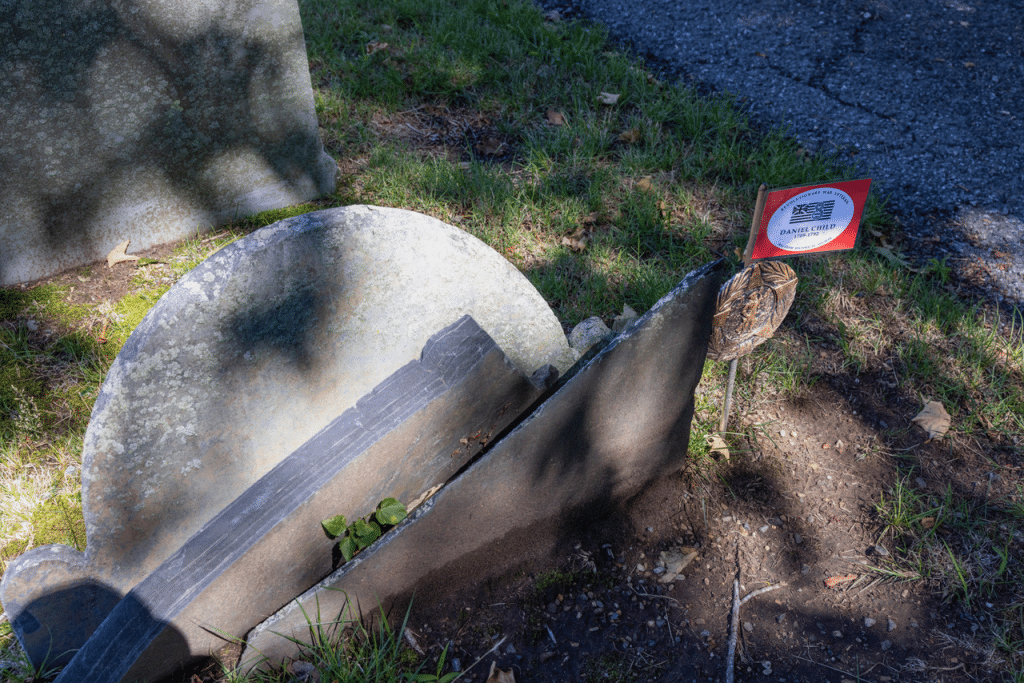
The Historical Society created new grave markers to identify Waltham’s patriots. The graves are often overlooked when military veterans’ markers are placed, because the Minute Men served before the Continental Army was organized. The tour also covered a corner of the graveyard used for the burial of enslaved people. The tour booklet describes the history of slavery in the area during the Revolutionary War and in the subsequent years.
Participants enjoyed refreshments following the tour at a space dedicated to the Revolutionary War at the Malone Archives and Records Center. Liz Becker of the Daughters of the American Revolution explained the role of women during the Revolution.
The tour attendees praised the handouts for organization and detail.
A note on spelling: the tour booklet uses “Minute Men,” reflecting 18th-century usage. The modern spelling is “Minutemen.”
Author





Comments (0)
There are no comments on this article.