
New study spotlights gains and gaps in how Waltham High serves immigrant English learners
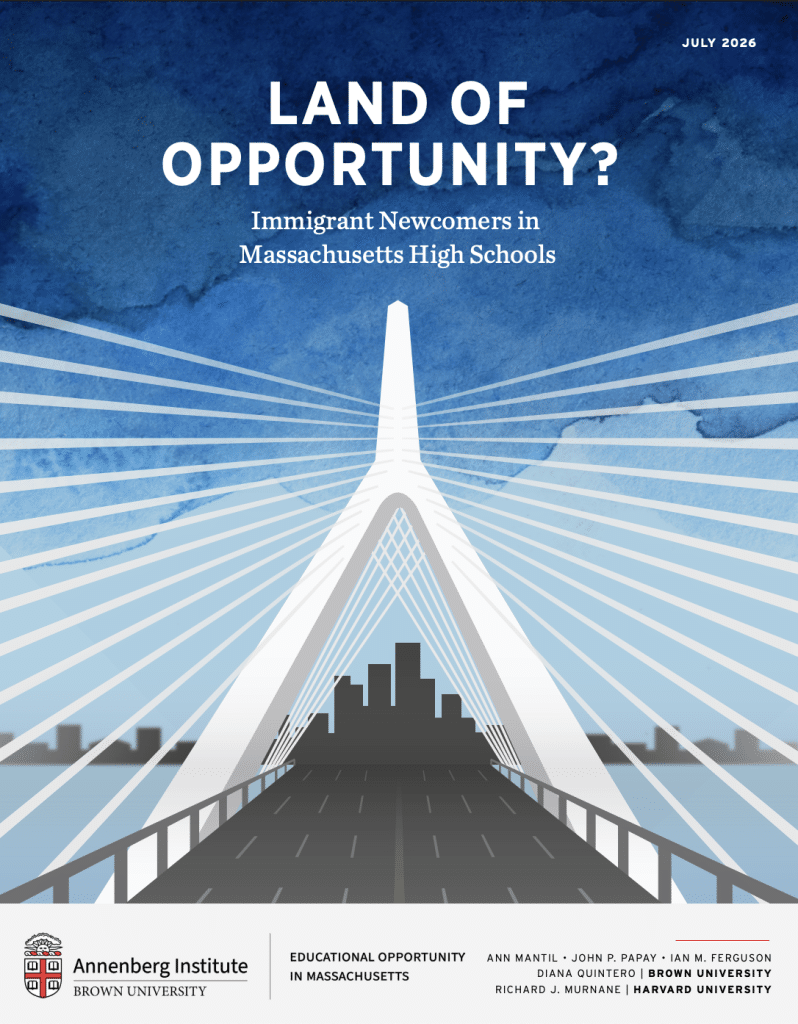
A new study from Brown University’s Annenberg Institute spotlights how Waltham High School serves its immigrant English-learner students.
The findings focus on “newcomers,” defined by the Department of Elementary and Secondary Education as English learners in their first year of schooling in the United States. The study tells a complex story of both the school district’s promise and its struggle to provide adequate access and equity for this population.
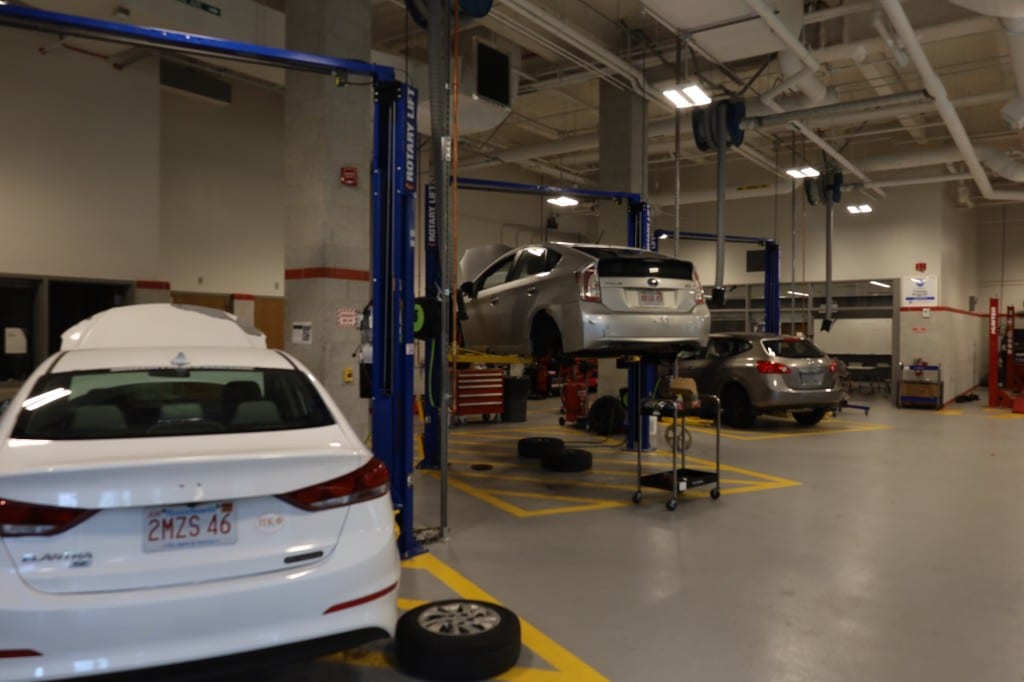
The report, Land of Opportunity? Immigrant Newcomers in Massachusetts High Schools, published July 28, singled out Waltham High School’s Career and Technical Education program as a rare bright spot for access in the state.
In Waltham, about a quarter of high school newcomers participate in CTE, a percentage similar to that of non-newcomers. Ann Mantil, lead researcher on the study, said this level of access for a usually neglected population is very rare across her findings.
“It was actually really unusual to see that among the districts in our study,” she said of newcomer participation rates. In Lynn, for instance, almost none were enrolled in the high school’s CTE program.
Waltham’s CTE admissions process has no minimum English proficiency requirement and accepts application materials in languages other than English. Researchers found that this ease of entry could correlate with high participation rates in Waltham.
However, the report also found that access alone doesn’t guarantee student success. In one cohort, researchers found that three-quarters of newcomers who entered Waltham’s CTE program had scored far below passing on the state ACCESS English proficiency test when they arrived in the district. Once enrolled in the CTE program, students spend up to half their day doing technical coursework. Researchers found that the rigorous schedule can preclude a newcomer from getting enough time to work on English-acquisition.
Statewide, the report finds that newcomers’ progress toward English proficiency is slow — and slowest for students who need it most. Just 6% of Massachusetts newcomers who arrived with low English skills were proficient by the time they graduated.
Demanding frameworks, limited time
Teachers in the CTE program hold state endorsements to teach English learners, called Sheltered English Immersion endorsements. However, researchers spoke with instructors who said this qualification is not sufficient.
As a Chapter 74 program that promises students a real-world trade credential by graduation, CTE coursework can be dense and demanding. One anonymous instructor told researchers they lean on Google Translate to teach newcomers in their class. Another unnamed instructor described a message they had received from administration, though it was unclear how high up: “The goal is not for these students [newcomers] to be certified, that we should soften our goals and they’re just here to get exposure.”
Assistant Superintendent Shannon Conley disputed the statement, saying it is not reflective of the current leadership’s vision. The study’s interviews were conducted in spring 2024. Superintendent Marisa Mendonsa did not begin her tenure until summer 2024, and Conley came on board in summer 2025.
Conley agreed that Google Translate is used in CTE classrooms as “an informal, immediate bridge for technical vocabulary,” while the district works on long-term training. While CTE instructors bring invaluable expertise from industries such as automotive tech, carpentry and culinary arts, Conley said that giving them more strategies to teach English learners is “an ongoing and dynamic priority.”
Conley said the district has allocated grant money to targeted English acquisition support for CTE students. “Regarding the instructional practices in CTE, the study highlights critical systemic needs that the district is actively working to support,” she said.
Mantil described a structural tension facing CTE programs statewide as they try to serve newcomers. The state frameworks for Chapter 74 are extremely demanding even for native English speakers, she said, and instructors report having little room to slow down. If students don’t pass final certification exams, the time spent in some fields is essentially wasted.
The report found that CTE teachers in Waltham think the solution is to give newcomers more time in high school to complete both technical coursework and English acquisition. One anonymous teacher was quoted as saying, “if there was one thing that we could get from the state to support these students, it would be two or three more years.”
The tension arises when the imperative to educate conflicts with students’ own priorities. Many newcomers observed in the study work full-time jobs outside of school, and support family members both in and outside the United States. Two or three more years of high school is often not attractive or feasible for a student with these circumstances.
Delayed arrivals bring more challenges
Another layer of difficulty in Waltham is the timing of newcomers’ arrivals. In the 2023-24 school year, less than 30% of newcomers enrolled in high school at the beginning of the year, compared to Woburn’s 70%. A quarter didn’t arrive until March. Coming late doesn’t mean students get more time to complete requirements; they’re held to the same standards as students arriving six months earlier.
“Missing so much of the school year may exacerbate feelings of disorientation among newly arrived immigrant teenagers who possess little prior knowledge of how American schooling works,” the report states.
The study attributes this to the newcomers’ region of origin. In Waltham, many newcomers are from Central America, where intense summer heat keeps travel across the border to a minimum. School calendars in this region are also different, with classes ending between October and December. Students might wrap up a school year in their home country, and come to an American school district only to find they’ve missed the whole first half of the curriculum.
A district and state, in flux
In the two years since the study’s data was collected, Waltham’s English learner population has plummeted. It’s a statewide phenomenon that is widely attributed to a surge in immigration enforcement.
Hard data on the most recent decline is not yet available, as enrollment numbers for this school year are expected to be released by DESE in the fall.
Mantil said that swings in enrollment — a sharp rise after the pandemic, and now a sharp decline — leave districts such as Waltham with a moving target and almost no time to adjust.
“How do we keep up when we can’t even predict what next month is going to bring, much less next year,” she said. Her hope is that districts facing similar phenomena start comparing notes.
“I hope districts are speaking with each other about this shared experience that they’re all going through,” she said. “We face the same obligation we’ve always had to meet those students where they’re at, to educate them, to help them be as successful as they can on their path to graduation.”
Correction made Aug. 5, 11:58 a.m.: The article incorrectly stated that the Lynn Public Schools district enrolls a “similar” number of newcomers as the Waltham Public Schools district. In fact, the two districts enroll many newcomers from the same region: Central America. Lynn actually enrolled far more newcomers than Waltham at the time of the study’s data collection.
Author

Comments (2)
Leave a comment
When commenting, please keep in mind we are a small non-profit focused on serving our community. Our commenting policy is simple:
- Common sense civility: we’re all neighbors, but we can disagree.
- Full name required: no anonymous comments.
- Assume the best of your neighbors.




Teaching multilingual learners has been my honor and career for the last 20 or so years, from kids to adults. They’re up against so many challenges and genuinely want to learn English, but core content teachers are generally unprepared and have a million other competing interests to deal with, while simultaneously getting little support or access to resource teachers. I was a MLL as a kid, and today English is my main language, while I’ve lost some of my heritage language, which is something I’d like to see kids avoid repeating. If only Mass had a policy of welcoming bilingual education, and on the federal level we had people willing to look at hard problems without easy solutions. And that’s putting it extremely mildly for what’s happening to education on the federal level.
Great article! May the sunlight lead to better solutions!