
Federal rule change could weaken protections for Waltham’s historic properties.
A federal advisory board last month voted to support regulatory changes that could weaken protections for historic properties. It’s a proposed new system of historic preservation that, if finalized, would not require local input on federally connected projects.
The Advisory Council on Historic Preservation voted 16-5 on July 24 to advance a rewrite of Section 106 of the National Historic Preservation Act of 1966. The rule change is now under review by the Office of Information and Regulatory Affairs.
Section 106 requires federal agencies to consider the impact of projects involving federal funds, permits or licenses on historic properties. In Massachusetts, a parallel state law applies the same rule to state-funded projects.
“This really does affect local commissions, local properties,” said Jordan Tannenbaum, a former Advisory Council vice chairman who also served on the Waltham Historical Commission in the 1980s. “That’s why it’s so important for folks to be aware of this.”
Under current rules, agencies must consult with local and state preservation officials to advance such projects. The rewrite would also endanger a requirement that agencies consult Native American tribes on projects that could affect tribal cultural sites.
In Waltham, the Historical Commission is regularly told about qualifying projects and can raise concerns if it believes a historic site is at risk.
The commission has recently handled several such cases, including a proposed cell antenna in the steeple of New Light Church. New Light Church occupies a structure built in 1870 and added to the National Register of Historic Places in 1989.
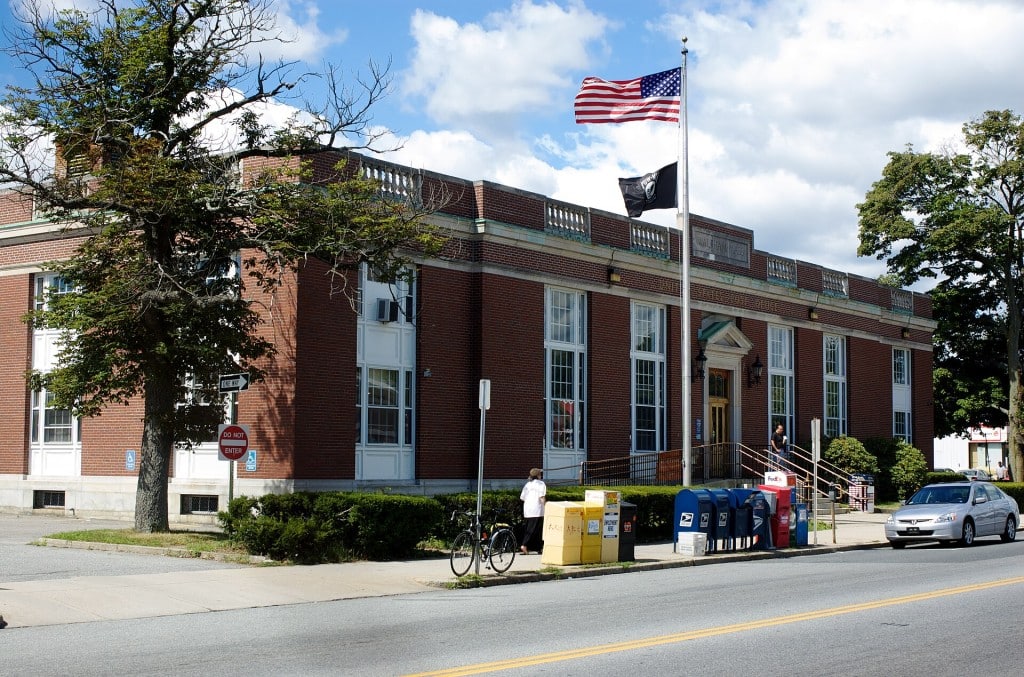
Other examples of Section 106 projects under review include the proposed demolition of an old house and barn near Beaver Street, once owned by the University of Massachusetts, and an ongoing exterior renovation of the Waltham Post Office at 776 Main St.
Because these projects involve the federal government, the historic sites get an extra layer of protection.
Now, the extra layer is at risk.
Mort Isaacson, chair of the Waltham Historical Commission, said he is skeptical that removing local input would save money or time, as Advisory Council Vice Chairman Travis Voyles, appointed by President Donald Trump, implied.
“It’s not a bloated bureaucracy, from what I see,” Isaacson said, pointing out that the commission is a volunteer board supported by a single part-time staff member. “Right now, it seems like the system is working. It prevents some harm to our historic resources.”
That makes the proposed changes more frustrating, said Tannenbaum, noting that he opposes removing the federal government’s obligation to invite local input into the process.
“What they’ve done is a travesty… they basically eviscerate the protections for historic and cultural properties,” he added.
Tannenbaum argued that the underlying law, the 1966 National Historic Preservation Act, requires public involvement in the review process and that the proposed rewrite conflicts with that requirement.
“The statute says the public has to be involved in this process,” said Tannenbaum, a lawyer who spent 10 years on the Advisory Council. “Now these regulations say the federal agencies can determine whether or not they want to involve the public. It’s a direct violation.”
Like Isaacson, he disputed that the rule change is needed to cut costs or delays, pointing to existing tools that streamline the process while keeping public input. He said consultation between local, state and federal officials has led to compromises that saved historic buildings and saved developers money.
The rule has not yet been finalized. Once published in the Federal Register, it will be open for public comment for 30 days. Consulting firms tracking the process expect publication before the end of 2026.
Advocacy groups contend that the public comment period is a real opportunity to change or stop the rule, noting that a proposed rule can be withdrawn or substantially revised before it’s finalized, but a final rule is hard to reverse. “That’s why we’re encouraging everyone to write to their [representatives, write to their senators, write to the Park Service, [write] wherever you can,” Tannenbaum said.
The Waltham Historical Commission is expected to discuss the proposal at its next meeting on Aug. 10. Any formal comment from the commission would require a vote of its members.
Author



Comments (0)
There are no comments on this article.