
Councilors acknowledge importance of community support in mental health
Content Warning: This article contains discussions of suicide and substance addiction.
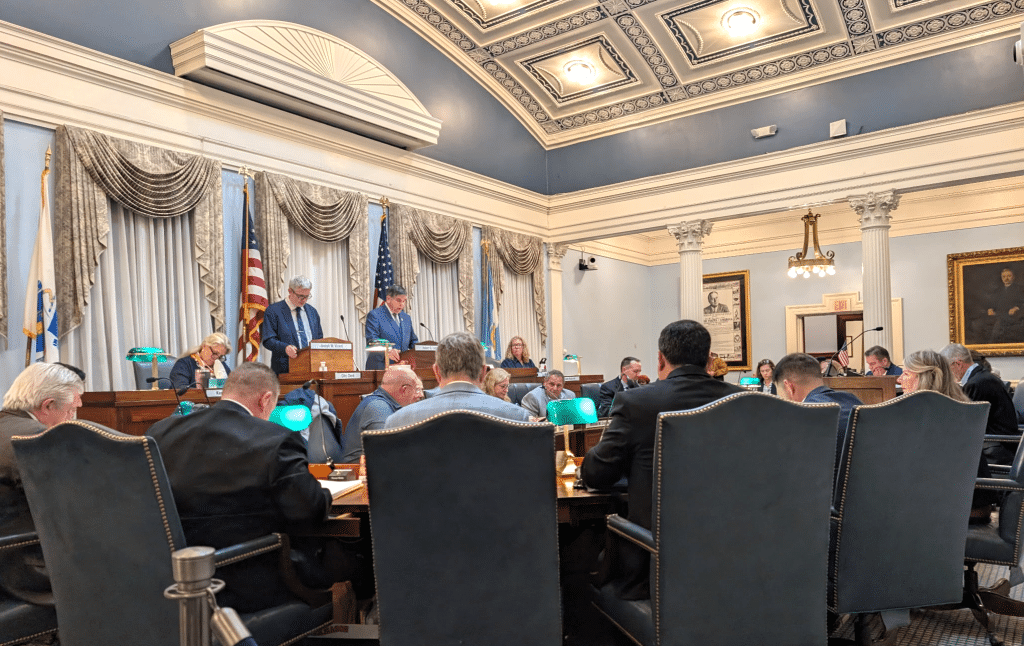
September marks both National Suicide Prevention Awareness Month and Recovery Awareness Month. City councilors formally recognized both at their meeting this week, discussing the effects that community members’ mental health challenges can have on them and the people around them — and communities’ responsibility to provide support to their members.
Ward 8 Councilor Cathyann Harris talked about how widespread substance use disorder can be, and how addiction can affect all parts of a community. “Addiction doesn’t care who you are, what your name is, how much money you have, where you live, whether you’re housed or unhoused.”
Harris shared a personal story about her sister, who died as a result of a substance use disorder, and the impact of that death across her family. She said this month was a time to recognize “the loving memory of those that we have lost” to substance use disorder, and to learn from their stories in supporting other community members.
“I’ve relived the moments, the weeks before [my sister] passed away. And I’ve walked back some of the things, the tough love that I gave. Screw the tough love,” Harris said.
Instead, she emphasized the importance of reaching out to loved ones with a substance use disorder, helping them to maintain hope and supporting their recovery process, which she described as a lifelong personal journey. “Go out and do the outreach, support those in our community. Don’t judge them, love them.”
Ward 6 Councilor Sean T. Durkee spoke about how suicidal ideation can affect every part of a community, and how the death of one community member can have a huge impact on everyone who knows them.
Durkee called attention to populations that are disproportionately impacted by suicide, including older men, veterans and first responders, who die by suicide at 1.5 times the rate of the general population in Massachusetts.
Few people realize suicide statistics are also disproportionally higher for workers in the construction industry, Durkee said, which the CDC has recognized as having one of the highest rates of suicide deaths nationally. He talked about some of the factors that could lead to mental health challenges and insufficient care in the construction sector, including high rates of job-related injury and chronic pain; job insecurity; relationship strain and sleep deprivation caused by long commutes; and a stigma against asking for help.
Durkee emphasized that communities should talk more openly about mental health to combat that stigma. Contrary to popular belief, many public health institutions agree that asking someone about whether they have considered suicide doesn’t actually increase the risk someone will attempt to die by suicide. He pointed residents toward public 24/7 crisis hotlines, and both he and Harris requested the council hear from community groups and outside experts in the coming months about substance use disorders, suicide prevention and Waltham mental health resources.
Another important way to work toward suicide prevention, Durkee said, was maintaining community connections. “It’s pretty simple: reach out to someone you haven’t spoken to in a while. Just ask how they’re doing,” he said. “If we can help one person, I think we’ve done our job.”
For help in recovering from addiction, call the free and confidential treatment referral hotline (1-800-662-HELP), or visit findtreatment.gov
If you are in distress, need to talk or thinking about suicide, you can reach out to these 24/7 resource lines:
- The 988 Suicide & Crisis Helpline. Call or text 988 or open a chat at 988lifeline.org.
- The Massachusetts Behavioral Health Help Line. Call or text 833-773-2445
- For veterans: The Veterans Crisis Line. Dial 988 and press 1, or text 838255.
- For LGBT+ youth: The Trevor Project. Call 1-866-488-7386, text 678678 or open a chat at www.thetrevorproject.org.
Author



Comments (0)
There are no comments on this article.