
Waltham museum puts on ‘striking’ exhibit
The newest exhibit at the Charles River Museum of Industry & Innovation is particularly relevant during this politically turbulent period. “We’re living in a time of protest,” said show creator Maya Colman.
Based on her Tufts graduate school thesis, “When Waltham Strikes” demonstrates “labor rights and labor issues are not a thing of the past,” said Colman, a former intern at the museum. The exhibit features artifacts, maps and publications.
“This is still happening around us,” said Colman, referring to the current strike of unionized Republic Services sanitation workers, the recent work stoppage by Fenway Park concession employees and similar protests.
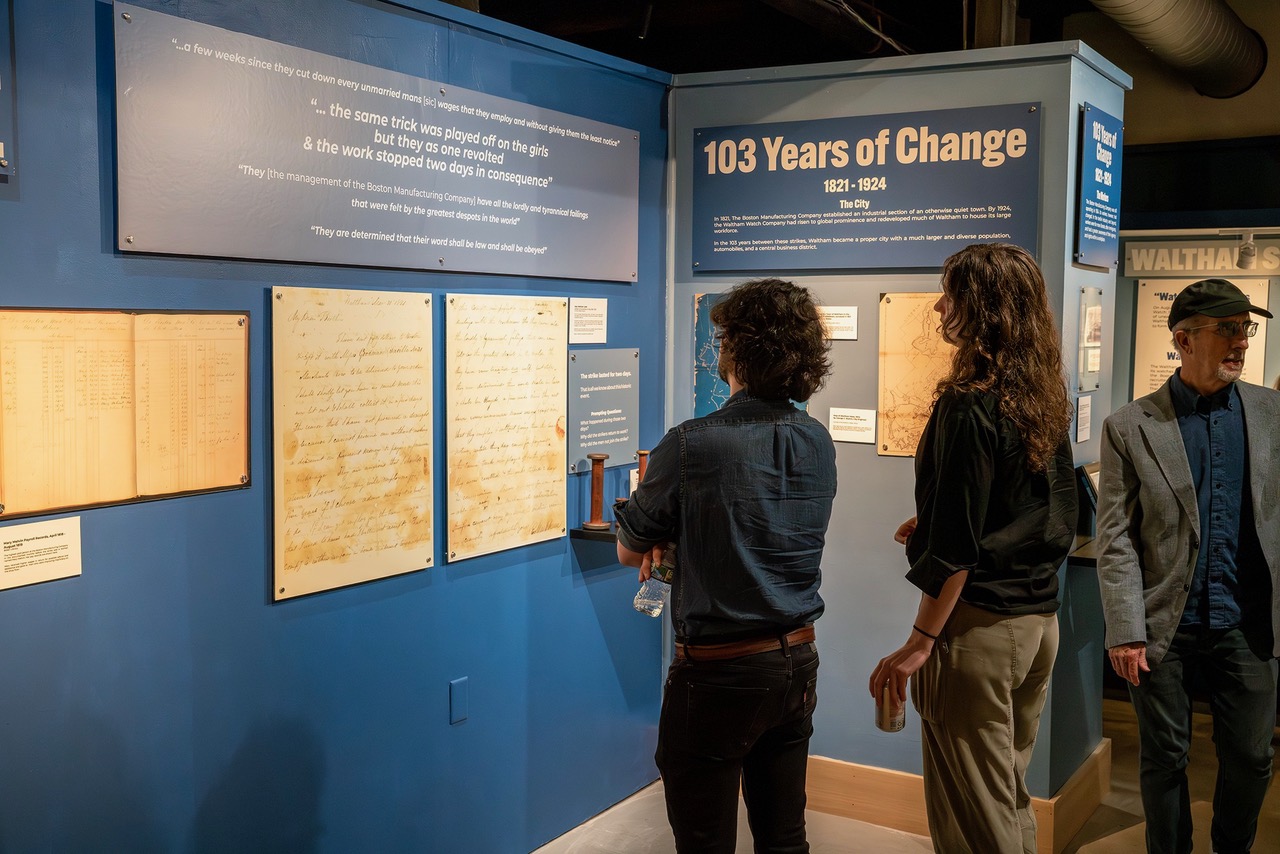
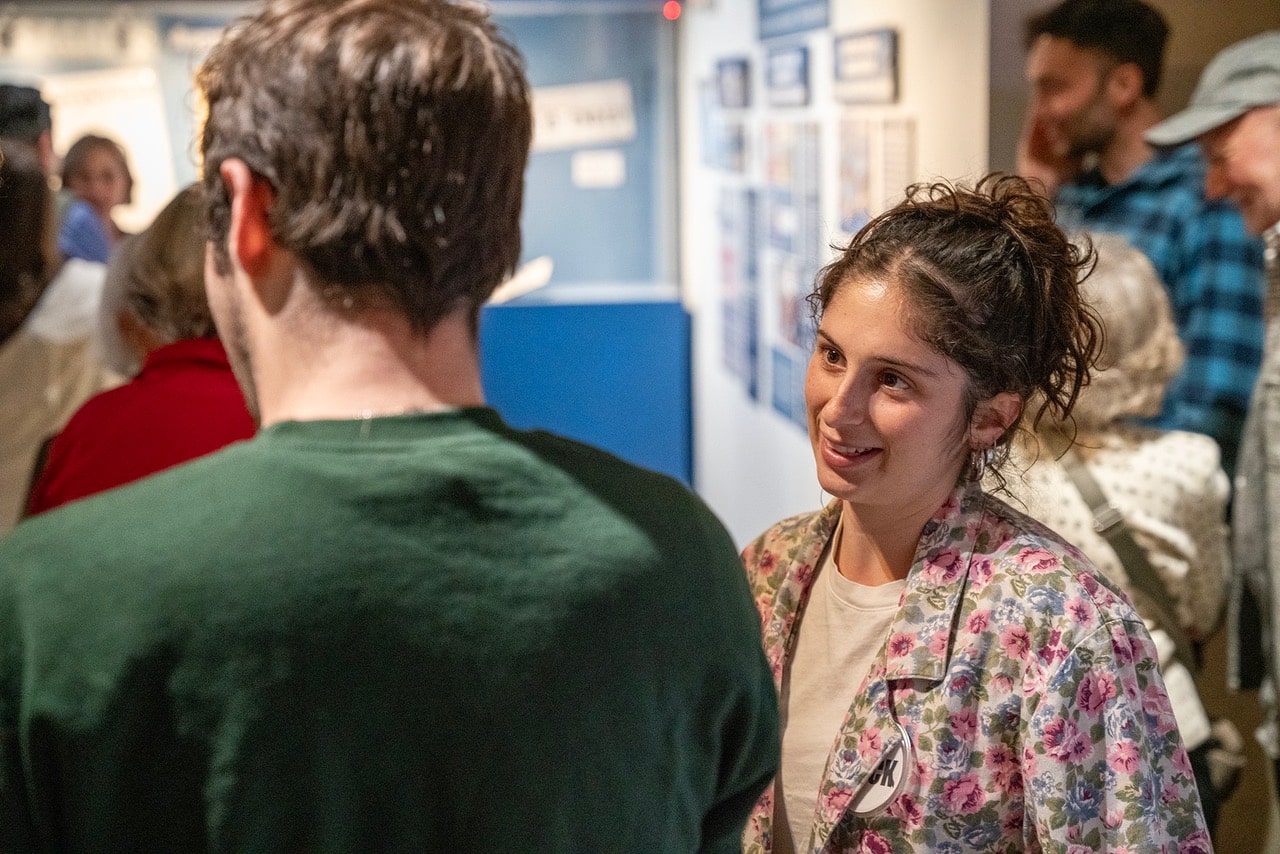
“When Waltham Strikes explores how this city’s industrial innovation was technological, corporate and social. Studying these labor movements deepens our understanding of industrial Waltham and its workers,” according to Colman’s exhibit text.
Typically, during bargaining between a union and an employer, “a strike is the last resort,” museum education director Stephen A. Guerriero said. The exhibit’s goal is “to highlight why strikes are used, how effective they can be and how organized labor comes to strike.”
Women lead the charge
More than 200 years ago, women working at the Boston Manufacturing Company in Waltham led the first industrialized labor strike in the U.S., according to the museum.
Surprised to learn this type of protest took place in the United States all the way back in 1821, Colman was inspired to delve deeper and discovered earlier academic research mentioning the BMC women workers’ unprecedented action.
One of the main goals of the exhibit is “un-erasing the first industrial strike,” said Guerriero.
Back in 1821, “the wage cuts that [the women] were on strike against were issued to the [unmarried] men first,” but the men didn’t protest. When asked why she thought female BMC workers took such an unprecedented step to fight for their rights, Colman said that the women may have made the decision because they had “far more to lose.”
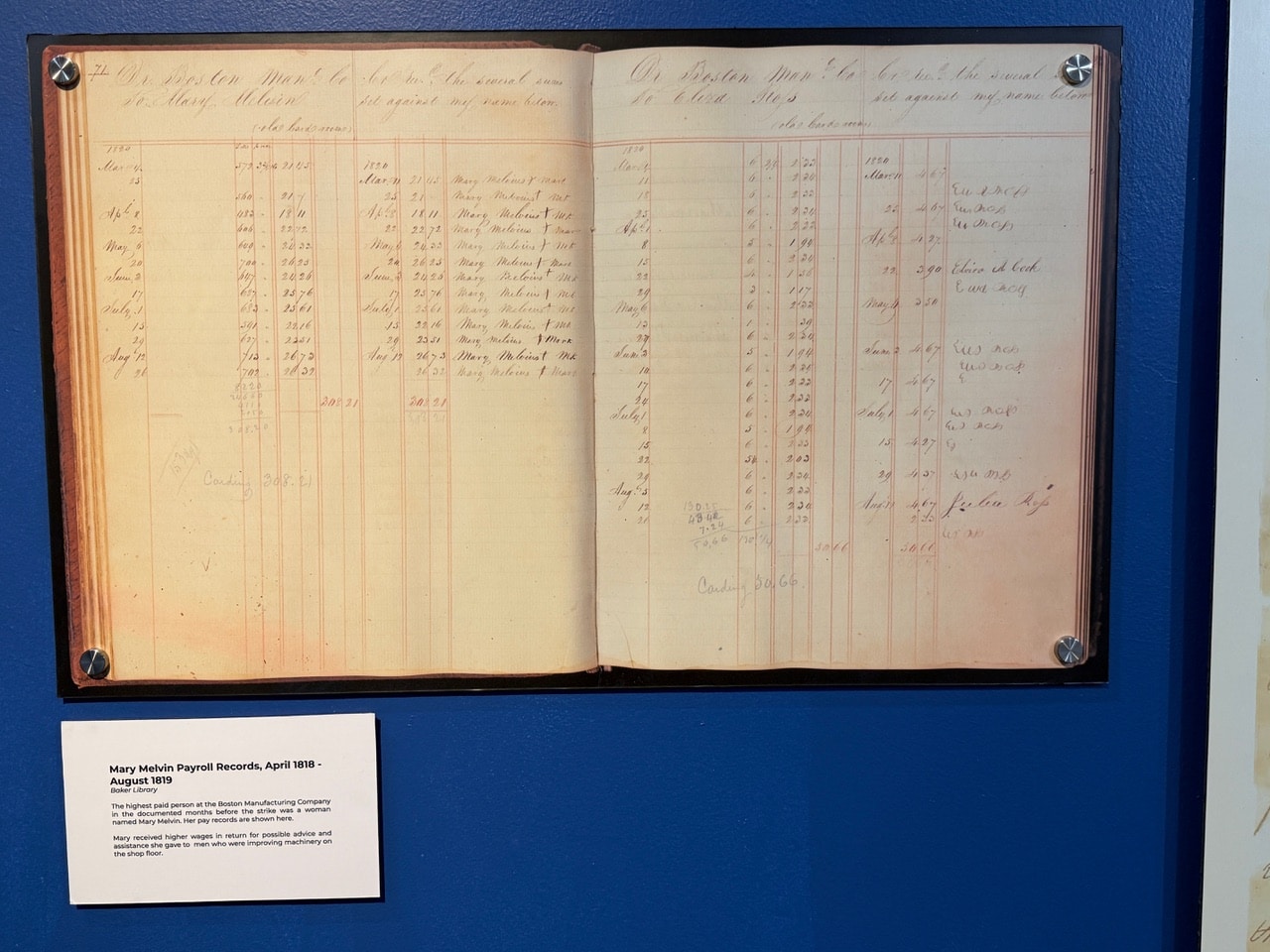
In the early 19th century, BMC paid the women workers well for their technical expertise working on and repairing the mill’s complex machinery.
In fact, a woman named Mary Melvin was listed as being the highest paid person on that payroll – even above the male factory floor overseers, said Colman.
For the Mill Girls, as they were called, other opportunities for good jobs with comparable pay were rare, if they existed at all.
The company’s action was viewed as “shutting the door for wage advancement for women,” said Colman.
Ultimately, the strikers did not achieve their goals. The drastic pay cut was a reminder that “someone above you can change everything,” she added.
Continuing to take a stand
The exhibit features information on another early city strike that took place about 100 years after the Mill Girls took a stand in 1821.
On Aug. 11, 1924, “workers at the Waltham Watch Factory left their benches in protest of unexpected wage cuts. Before long, 2,800 Waltham Watch Factory employees had joined to form a massive striking body,” according to exhibit text written by Colman. “They felt that their loyalty was being disregarded, and their way of life was being threatened.”
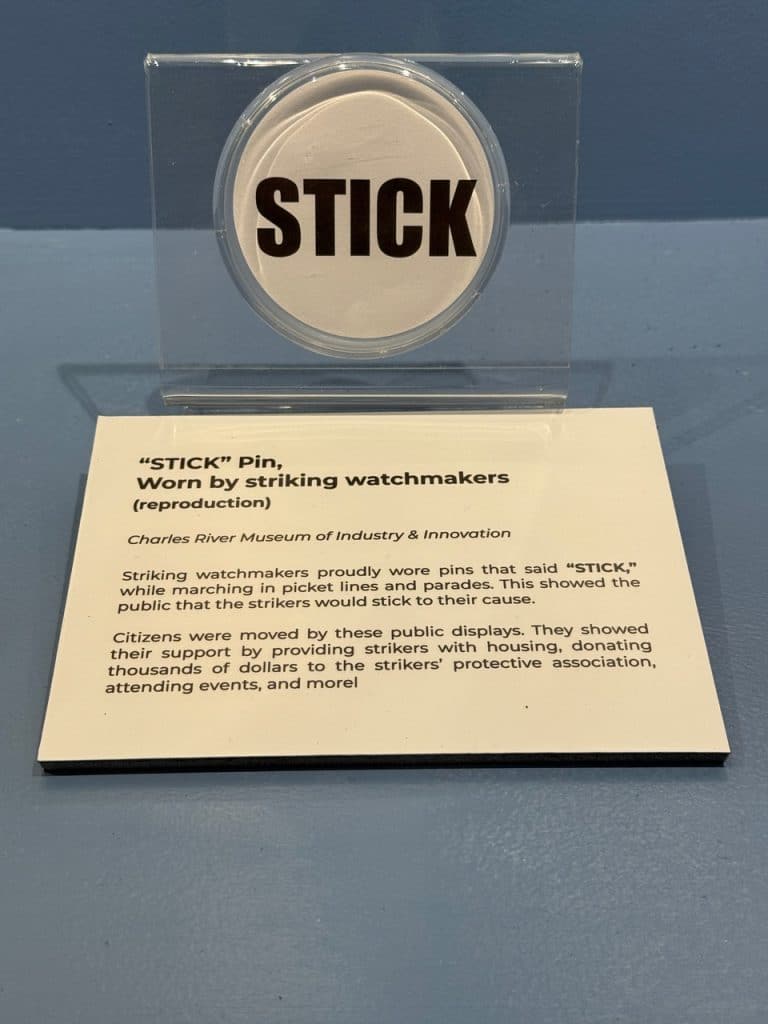
The strike ended on Jan. 8, 1925, and like the women in 1821, the Waltham Watch Factory workers’ demands were not met. “However, they were allowed to return to work and given the power to collectively bargain in the future,” according to Colman’s text.
Organized labor strikes continue today, and Guerriero emphasized they are “never an impulsive decision.”
More information
Visit “When Waltham Strikes” for more information.
On Sept. 24 from 7 to 8 p.m., the museum will hold a panel discussion on strikes. The panel will feature representatives of labor organizations, including the Newton Teachers Association and the Massachusetts Teachers Association.
On Wednesday, Oct. 1, from 7 to 8 p.m., there will be a free Mill Talk titled, “Why are Workers’ Stories Missing at Historic Sites?” The talk is open to the public, but registration is required. Visit the website for more information.
The Charles River Museum of Industry & Innovation is located at 154 Moody St., Waltham. Parking can be found at the public lot behind Embassy Theater at 42 Cooper St. Take a short walk across a footbridge next to the lot’s lower level and follow signs to the museum. For more information, visit the museum’s website.






Comments (0)
There are no comments on this article.